
Alexander Grabovetskiy, woodcarver, School of Woodcarving · Published 2023
How long does super glue last on a wood carving?
Quick answer: Five years is the figure I gave for super glue. The Back Cutting lesson has it, and so do my lessons on the lily box and Venice Room. In one of them I added that it may be more. Wood glue lasts much longer, I said in Back Cutting.

Super glue on a carving lasts, by the figure I gave, five years, and I gave that figure with a maybe. It sits in the Back Cutting lesson, in Lily Box 3, in Lily Box 11 and in Venice Room 77.
The question began in part 3 of Venice Room 1. A couple dots of glue failed to stick, and I said I did not know what was going on. Every lesson I name here is linked.
Ever squeezed glue onto a joint and wondered how long it would hold? Did a bottle let you down? Then read each line below with the words I said beside it.
What this page holds
- Glue dots in part 3, and the tape.
- A five-year figure, and the doubts I put beside it in my other lessons.
- A wood hardener and wood glue, which I said last longer.
- Breaks, cracks and thin spots.
- Where I said to leave it off, raw wood and stain.
- A table of every lesson.
What happened to the glue dots in Venice Room 1.3?

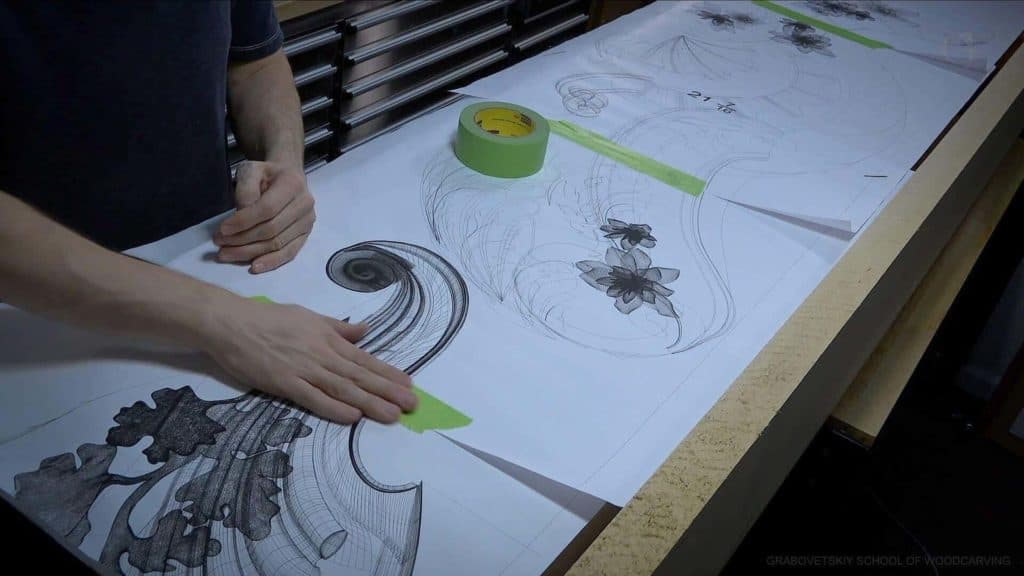
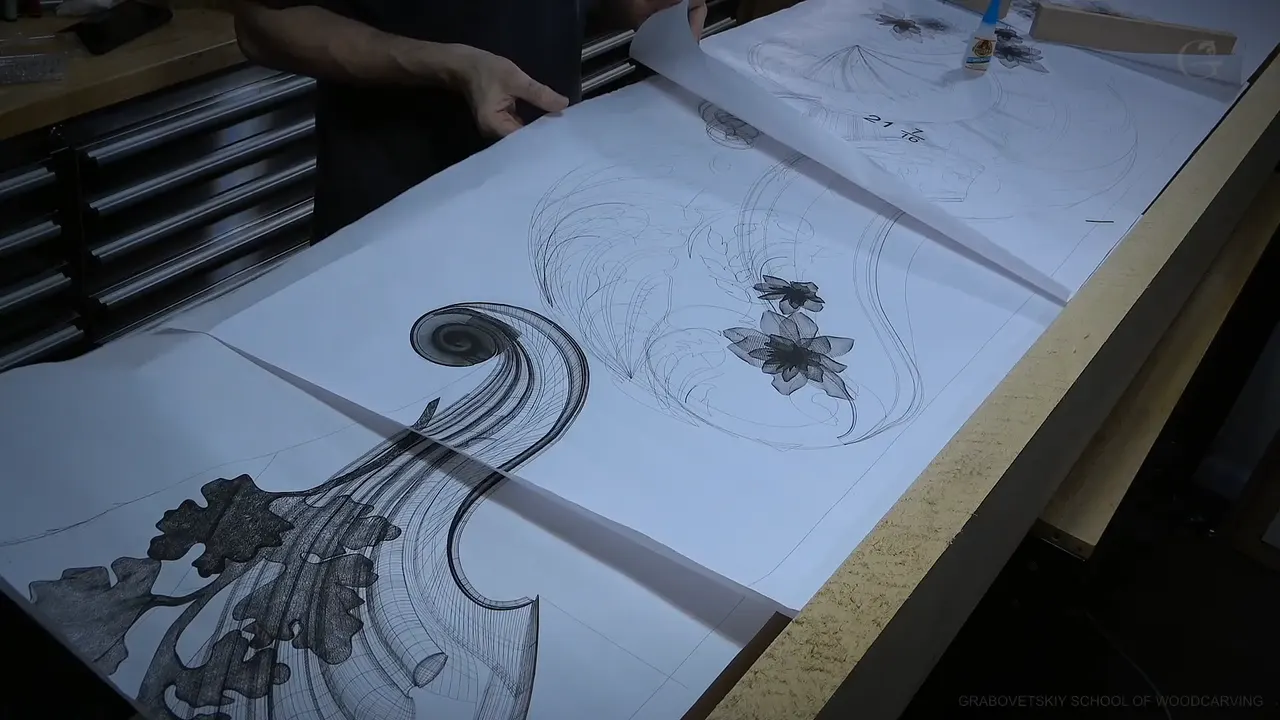
My first thought is on the video: "Maybe I should use just super glue, a couple dots." Then I said I needed to line up perfectly. About the glue, my next words were "A couple dots is what I need. It did not stick."
I had two guesses. One was some kind of weight for a few seconds, and the other was that my glue is "a little too old." "I don't know what's going on," I said.
Of course, I said, there is a smarter way. I could use blue tape, and in my case it's a green tape. Or I could use double-sided tape, which I like because it's really thin, and both will work.

My plan was to use a couple spots to hold it in place. Peeling it, I said, is kind of tricky sometimes. "I should forget about it," I said, and "It's just too sticky, all right?"
My next line was "I'll just tape it, all right?" "Oh, it's actually holding." After that, "So it's not that old of a glue overall anyway."

For one spot, "I can just tape it like that." For the other side, "exactly the same way I can do right here on that side."
Why could I not miss by even one millimeter?
"It's important for me not to mess up," I said, "because I do have movements right above on both sides." Another spot had a bigger cost: if I mess up, I said, I will have "a hard time to line everything up later with the real brackets." "So I cannot make mistake, not even one millimeter" (0.04 in).

The reason was the house. In my words, the framing in the house, in that particular room, is based pretty much on the design, and "they're not going to do the framing inside of this room until I've done."
The lines on that paper came from software. I told you not to pay attention to those multiple lines. They were "generated from a 3D software I used." In part 2 of that lesson I said I used a CAD program for the main outlines, plus some hand drawing, and "with the CAD, it was much quicker for me."

On printing, I said I don't have a big printer and I don't plan on getting one. I had thought about a big plotter. "I really don't see the big advantage of it," I said. In part 3 I said I went to just a local office, "and they do offer a print."
How did the paper stay put in parts 2 and 4?
Part 2 has my plan not to glue the paper, because I would reuse my papers, and to use just the push pins at first.
Part 4 has a measure. The board was inch and seven-eighths approximately, I said, and then "exactly inch and seven-eighths right here." That is 1 7/8 in (47.6 mm). I wanted that same figure "from this edge to that edge." "I can put my first push pin."

On the edge I left "approximately three millimeters" (0.12 in). "I think I'm making a mistake," I said, and after that "So we are on the right track" and then "So I get scared for just one second, okay?"
On the other side I said "I've got to make sure it's 1 7/8 on this side also." "And looks like it's not," I said, and "Going to put my push pin."
How long did I say super glue lasts?
Back Cutting has a thin glue, "really liquid-y" and I said it "just penetrates, and it makes it stable" and called it "one of my favorite, favorite methods."

I said there are some doubts about super glue next to wood glue, and wood glue will last you a lot longer. About super glue: "the lifespan of the super glue, I think it's about five years. Maybe it's better now. I'm not sure."
Then, in my words, "Five years. So even if I love that, it's not the best way to stabilize wood."
A chipped piece is in Lily Box 3. This wood is crunchy, I said, and I would use just the yellow glue. "I wouldn't use super glue, okay?" A student in my classes in person had asked about gluing broken parts with it, and I said some wood carvers do.
And "I don't like how long it's going to last, okay?" "It's going to be for five years, some people say. No more than that."
Lily Box 11 starts with a different bottle, a gel super glue. I used it before, I said, and "it holds really good." As far as I know, other super glues hold only up to five years, and this one claims to hold "really, really, really long time."

In Venice Room 77, part 8, I liked that a glue "penetrates all the way through" and I said it will probably not last too long. It is "usually just about" five years, I said, "10 years at all." "Depends on the brand."
I named two ways out: "either glue that part to something else," or "reinforce it on the backside if I want to do the CA glue." "I have to be really careful with that," I said.

Part 9 has this. "I need to read a little more about this glue, by the way," I said. "Maybe it's not five years, maybe it's more." That glue was "a more professional-grade CA glue."
I told you I was reading that even people who love to do marquetry use it. It "fills gaps between veneers." And "I doubt those professional marqueters, people who's doing marquetry, they would use anything that is not going to last."
What did I say lasts longer than super glue?
Wood glue. My wood glue in Back Cutting was diluted 50/50 with the water. It "penetrates inside those resins," I said, and "becomes more resin-like" and the method is "good only, only if you're not planning to stain."
Someone asked which glue is better in the April 2020 livestream. For inside interiors I use a normal yellow wood glue, and a different one for outside projects, I said. Of the first I said "a premium glue" that "holds forever." It "doesn't create a dark line," while the outside one "creates the brown line." I also said I'm buying them by gallons.
For wood that has to take stain, I named a wood hardener. "I'm not sponsored by anyone," I said. It is made for rotten wood, "for the outside pretty much" and "it penetrates really deeply on inside and dries really quickly." I penetrate twice, sometimes three times, and "after that stuff, you're still able to stain it, okay, and it's stable."
Where do I still reach for super glue?
A break. In Lily Box 6 I said "Maybe I'll just glue it back, okay?" Then, "And I'll use super glue." It would be the fastest, I said.
In Carving Hashemi Flowers 41 I had undercut too much, and I said so. What you could do, I said, was take it out and redo that deeper, or "I can use a small, tiny super glue" and "glue that back."
Furniture Panel 21 has a glue I called "actually like super glue." It "just dries really quickly," I said. "Put little bit on a toothpick."

A crack. Lily Box 7 shows micro cracks, and I said I could "just put that super glue inside of those cracks" and "maybe even just insert some chips, carving chips."
A hidden spot. In Lily Box 12 I said I would put a small amount of super glue inside, right away, and that it will be hidden anyway. It was a gel, and "there is a way to reinforce it."
That gel, I said, "from other super glues probably right now, at this moment, at this point of my life, is most favorite." The others "just don't hold as nice" and "This one, so far, I did not have any problem."

A thin spot under paint. The stabilizing lesson has a really thin glue that "actually goes all the way through." The spot was "still really fragile, but still solid." That spot was going to sit at about shoulder level, I said, so "there's a chance somebody's going to hit that." You can still break it, I said, but it is a lot harder to break. With paint over it, "there's absolutely no problem."
In Chamomile and Bow Rosette 1 I said "Couple drops right in the center and penetrate that thing." In Room 77, part 8, I said "that's a paint grade, so I really don't worry about it." Part 9 called one super glue "probably the best I ever saw." And "it really stabilizes wood."
When do I say to leave it off?
Raw wood. "If I would leave it just raw without any finish, I wouldn't use that glue. I would just keep it like it is," I said in the stabilizing lesson.

Stain. For paint the thin glue is "great," I said, and for furniture "it's wonderful" as long as you do not plan to stain.
About a shellac finish or any lacquer finish, I said you can also probably stabilize it with that super thin super glue. In the chamomile lesson I said it is a good idea only if you're planning to put some kind of finish on it, or paint in my case.
Can super glue and tape hold a block while you carve?
I described the sandwich method in the tools lesson: you take a piece of paper and glue both sides of it. One side goes on the project you work on, and "another side to the block of wood."

I use it "all the time on big projects even." I did lion head onlays for one of my clients, 48 inches boards (122 cm), and they were "just held by piece of paper with the sandwich method."
That day I said my plan: "I'm going to use just blue tape, regular blue tape and super glue, okay?" "I'm pretty sure any brand will do," I said.

"On small one, it works fine," I said, but this carving would go deeper and bigger, and I would do the same on a block of two by four, with "Couple pieces of blue tape." If you don't have blue tape in your country, I said, you can use any painter's masking tape, which is "going to be easy later on to remove."

"I'll glue it tape to tape," I said. It would take about 10, 20 seconds before I could screw, I said.
Which lesson said what?
The table sets each lesson beside the words near the glue. Lily means the Lily Box course.
| Lesson | What I said about the glue | Words nearby |
|---|---|---|
| Part 3 | The dots of super glue failed to hold | Weight, or old glue |
| Part 3 next | Taping it came next, and then it was holding | Glue not that old |
| Back Cutting | My lifespan guess for it was five years | Not sure, though |
| Same lesson | Glue for wood lasts a lot longer than that | Not the best way to stabilize |
| Lily 3 | Some people say super glue holds five years, no more | Not for broken parts |
| Room 77.8 | Five years, 10 years at all, by brand | Reinforce the backside |
| Room 77.9 | Maybe it is more than five years | A professional grade glue |
| Livestream 2020 | Yellow glue is the one for inside interiors | A premium glue |
| Stabilizing lesson | A really thin glue went in before the paint | Raw wood gets none |
| Chamomile Rosette | A couple drops went right into the center | Only under a finish |
| Lily 6 | Super glue puts the break back on | The fastest way |
| Hashemi 41 | A small, tiny super glue could put a piece back | Or redo it deeper |
| Furniture Panel 21 | A little bit goes on a toothpick | A quick drying glue |
| Tools lesson | I planned blue tape with super glue for a block | Easy to remove later |
The course page holds all twelve workshops of Venice Room part 1. Each lesson named here sits inside tuition to the school, paid monthly or yearly and renewed automatically until you stop it. Wikipedia has short pages on cyanoacrylate, wood glue, masking tape, veneer, wood stain, adhesive, wood carving and Venice.
How it's done
- Plan a couple dots. Part 3 had super glue dots, which I planned, and I said they did not stick.
- Reach for tape. Tape came next, and I said it was actually holding.
- Name the age. In my lessons I put super glue near five years, with a doubt beside it.
- Choose wood glue. That figure is outlasted, I said, by wood glue.
- Glue thin spots under paint. A thin glue went into a fragile spot that paint was going to cover, which I called no problem.
Frequently asked questions
What lifespan did I give super glue?
Near five years, in Back Cutting, and I added that maybe it's better now and I'm not sure. In Room 77 I said it depends on the brand, and I wondered if it might be more.
Where do I still reach for super glue?
For a break, in Lily Box 6, and for micro cracks, in Lily Box 7. A hidden spot gets a small amount too.
Does anything outlast super glue, in my words?
A yellow glue that I called a premium glue that holds forever, in the April 2020 livestream. In Back Cutting I said wood glue lasts much longer.
What did I guess when the glue dots would not stick?
What to carve next