
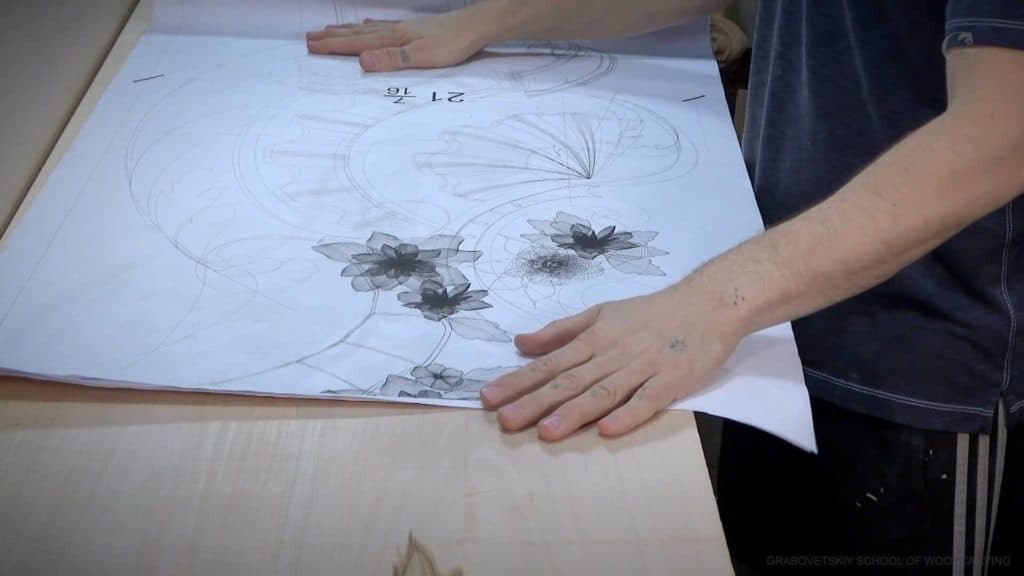
Alexander Grabovetskiy, woodcarver, School of Woodcarving · Published 2023
What does a wood carver mean by "normal people"?
Quick answer: In workshop 1, part 1, I call local makers normal people who work every day. Of Italy in the 15th century, I say they stayed in one place. Other lessons use the words for people who do not mind how authentic a carving is, and for people who would never think about the geometry.
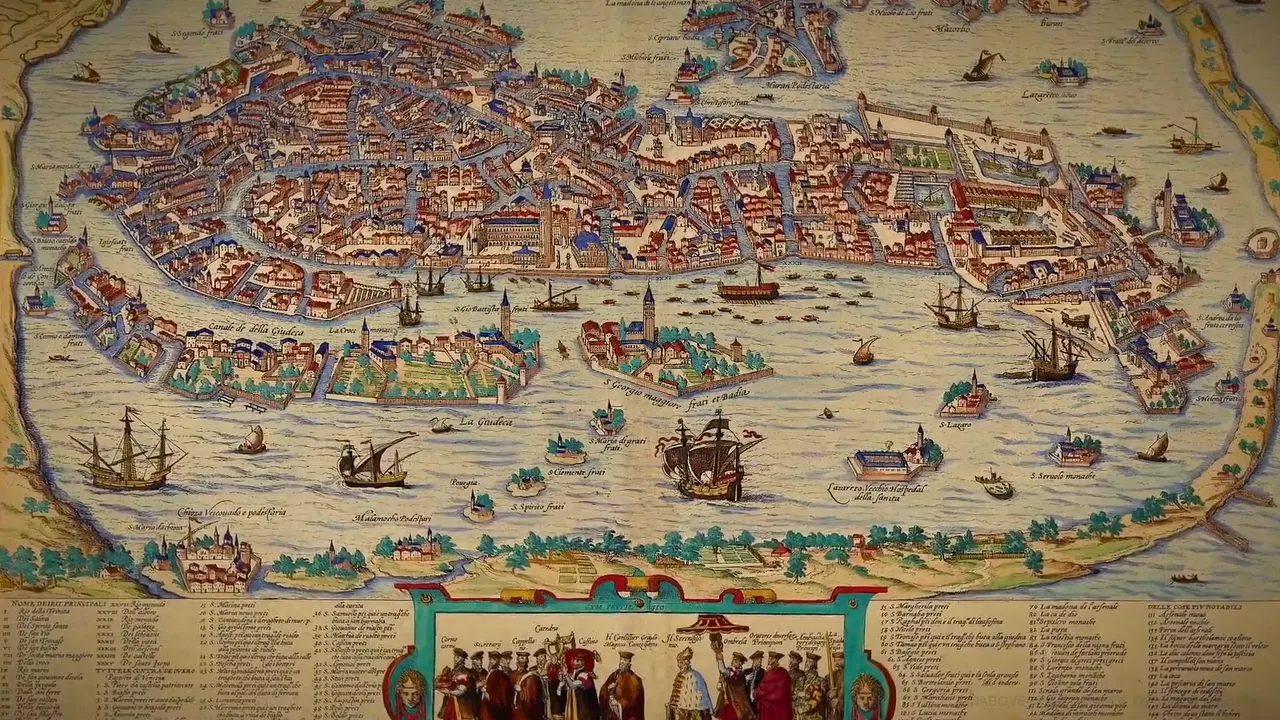

In this first video of workshop 1, I say that in 15th century Italy the ordinary makers "stayed right in the place." It introduces a new project. The rest of the page follows two words from there through my other lessons, and every link below opens for everyone.
Ever stood in front of an old carving and wondered who made it? A famous name, or a man who lived in one town? Here I talk about the second kind.
Who were the normal people of old Italy?
On places, saying Italian, or German, or French is "not accurate," I say, "because in those countries, and especially in 15th century, we're talking about people living in just one town." Take Venice. A certain people there, "wisemen, I call them," "developed their own techniques."
Of the design, I say "it's actually developed in every town." Did they travel? "Yes, they would travel and look for other designs and they would bring home the ideas, but how they would do it, they developed on their own."

My proof is closer to home, "I can prove it actually, even in the United States." On one side are the first European immigrants of Pennsylvania. In the Boston style, they carve "exactly the same shell design." And then: "But when you look at those two different shells, they look different."
Shading is part of it too, with "how they shade it, what side is supposed to be shade it." My reason is short. "Just because local" makers were "just normal people, they would just work every day and they didn't go too far."
That was "just about 300 years ago right here in the United States." Next: "But think about 15th century in Italy."
What did my client ask for?
The client, whose name I will not mention, "asked specifically for research and to match the design, match the details, what they did in Italy in Venice in 15th century." Then, in my words: "I had to research, I had to design, I had to draw, I had to model, even 3D model on my computer until we agreed, yes, it looks authentic."

Who looked at it? "There's a lot of different designers." Then "the high ranking designers and architects," and "PhD level research level in historical ornaments and designs." One more line: "People checked and rechecked everything and that would be really accurate."
Why is this project everyday life for me?
Most of you will not be able to do it, I say, "because this project is pretty much for me everyday life." Also "So that is just a production project."
On size, I say "I am not expecting anybody to follow me because it's huge." The project is "the whole room." Still, "I think there's a lots of stuff I could probably show during that project."
Design comes next. It "is unique because it has to be really authentic to Venice, Italy, 15th century design style," and "absolutely matching to Venice just the design."
What goes into a room like that? The list has "the foliage flowers and stuff like this, some acanthus," and "more like Italian style acanthus, some drapery." The drapery gets its own line: "really beautiful drapery."
How big is the board for this project?
The middle part alone is "10 foot long" (about 3 m). "So that is really, really, really, really long piece." The figures: "About 300 centimetres long and about a little over 50 centimetres, almost 22 inches wide."

Thickness grows gradually. "To this point, from the wall," it will be "about nine inches" (about 23 cm). A shell will go "right in the middle."
Machines have a place. "I do have some machines involved, of course, because it's a huge and I have a big planer which can take about 25 inches wide boards" (about 64 cm). The first layer "it's about two inches thick" (about 5 cm). And the plan: "I'm going to apply the second layer, the third layer, and go on and go on."
"I prepared the board only for the middle part," I say. "But I also want to be smart how I approach it," and "I glued only first board." A saw is in the picture. "Yes, they would use a bow saw to be authentic, but like I said, this is a production work and I have to be smart." The carving will all be by hand, "of course, but if I can incorporate a jigsaw or a scroll saw, sometimes I will."
Why had I not shown such work before? "there's a reason," I say. One is "interest or not." The second reason is plain: "not all clients really want to show what they're getting."
What did parts 2 and 3 show on the board?
Part 2 talks about paper, "I did print some paper." For the main outlines, "I used just the CAD program," with "some hand drawing, but with the CAD, it was much quicker for me." The tape gives "approximately 20 and a half inches" (about 52 cm).

The paper stays loose: "I'm going to reuse my papers." I plan push pins "at first." A saw gets a line, too: "any jigsaw will work." On time, "at least three months."

The board lies on the workbench, and "nothing supports." "I did not clamp it, I can move it easily, and that is not the right way to work, I guess." My plan is "so-called cookies," and "it's just rubber on both sides." A cookie can sit "right underneath of my board, and it's going to give me enough height for my blade to travel."

A plotter came up. "I don't have a big printer, okay? And I'm not planning to get one." Of a big plotter, "I really don't see the big advantage of it." On the pattern, "So when I'm talking about the shell, so I'm talking about this part right here."
Part 3 starts with the paper. "And don't pay attention to those multiple lines. That's actually generated from a 3D software I used in this case." It names the 3D software, Rhino and Blender, "an open source software." I printed the pattern at "just a local FedEx office, and they do offer a print."

Holding the sheets down comes next. "Maybe I should use just super glue, a couple dots." Then "It did not stick." And "maybe my glue is a little too old." Later: "Oh, it's actually holding." Then "So it's not that old of a glue overall anyway."

One line sets the limit: "I cannot make mistake, not even one millimeter." The framing in that room goes "based pretty much on the design," so "they're not going to do the framing inside of this room until I've done."

Do normal people notice how authentic a carving is?
In a livestream from April 2020, I say the design has to be authentic to Venetian design, specific to the second part of the 15th century and the beginning of the 16th. I list the concaves and convexes, the movements, the head developments and the scrolls. The architects get a line: "some really big architects look at it, and they should say if it's okay or not."
Then comes my answer. "For common people, for just the normal people, it doesn't make a big difference."

The other side: "But for the architects who are really picky about authenticity, to be authentic, it's really important. What tools you're using, the movements you're using, even finish."
The same talk turns to finish. "If you go to northern countries like, let's say, in England," I say, "They never use any sandpaper or any other sanding techniques. They use a chisel finish." Of "South Europe, like in Italy," I say "they just smooth everything because they treat wood same like marble." Then: "Even in Italy, it's different cultures." Sanding "takes longer, by the way, and sometimes it's impossible to sand."
Lily Box 8, part 8, has deep undercutting in classical carving, in some palaces. There is a reason, I say: "Not because it looks better. It's just much quicker." They "would get paid only after the work is done," I say, "And to get that quicker, they would just eliminate some of the details." In my words: "It's all about money, all about how quickly you can get the payment for your work."

Then: "For common people, it still would look nice. Overall movements, they still would look really beautiful and nice." And "only people who would know, it's just other tradesmen, they know exactly why they've done it."
Workshop 50, part 3, has a steak in it, and it ends on tools. "But for average person, it really doesn't matter. As long as it tastes good and I'd rather pay $12 than $1,000." Then the tools: "So that's exactly the same applying to those tools, I can get a job done with much cheaper tools, and it's still going to look beautiful and nice."

Would anyone check the geometry?
Workshop 72, part 6, has one more answer. A movement goes up. "It would be just a counter direction. So if this one goes up, so this one going to go down a little bit, not much, but a little." Then: "And again, like I said, nobody's going to apply ruler or look for that stuff. Well, maybe some people."

Next: "But normal people would never actually think about that stuff, and they even don't know." I add "Most of the people don't know about those rules and the geometry in wood carving and everything else, like architecture and so on."
Then: "But it's still going to make pleasing to the eye." Next: "So a human brain going to read it, okay," and it is "a lot better for the human brain."

Who hires a carver?
Clients come up in Dining Table Apron 17. "So common people, they don't really care about the wood carving." The number I give is "like 90% of people alive."
Richer clients are different, I say. "I can't even tell the names. It's private." Then "It's millionaires and billionaires." "Those guys, they actually love wood carving, and they are more traditional than modern." "They like traditional styles inside of the houses."
A livestream about money has one more. "By the way, I do have lots of emails from architects and just normal people asking me almost daily, just to estimate some carving." One architect wrote about a 17th-century mantel, and my answer was "Yes, absolutely, I have no problem carving it, and that would be a joy for me to carve that chimney."
My school comes up in a question and answer livestream. "I have some professors of design part of my school with the PhD," and "I have doctors, lawyers, and on and on, and just the normal people like me, just the furniture makers and the cabinet makers or carvers."
That livestream also goes back to the old towns. "But back then, 15th, 16th century, people stayed home, okay? Not too many people traveled." The craft people were "born in a small town, and they stay right there." "They stay right there, and they learn from previous generations who also lived in that same town."
What is the normal people way to say it?
In part 3 of Modern Acanthus 2, I am working on the first shape with a big tool, and it is "a stage number one. It's still boasting." Then you could "just say the normal people way. It's creating a shape."

In Workshop 55, part 5, I talk about modern sculptors, with "normal people who's doing a sculpture, they usually add on." They "add clay or other media." The "modern-day sculptors," I say, are "using a lots of clay and concrete and so on." A wood carver is different: "you chopping out."
Which videos use these words?
The table lists the lesson, who I mean, and my own line. Each row is a video you can watch.
| Lesson and part | Who the words describe in that video | My line |
|---|---|---|
| Venice 1.1 | Local makers of furniture and shell designs | normal people |
| Livestream April 2020 | People who see no big difference in authenticity | common people |
| Venice 72.6 | Anyone who would never think about the geometry | would never |
| Venice 50.3 | The average person in my steak comparison | average person |
| Lily Box 8.8 | People who still see a nice look | common people |
| Apron Workshop 17 | Working people with small businesses, like 90% | normal people |
| Questions and Answers | Furniture makers and cabinet makers in my school | like me |
| Million dollars livestream | Architects and others asking me for estimates | just normal |
| Modern Acanthus 2.3 | Plain words for making the first shape | a shape |
Where can you watch these lessons?
This page follows Venice Room 1, in the first Venice Room course, and the later videos are Venice Room 50, Venice Room 55 and Venice Room 72.
Others sit in the apron course, the lily box and modern acanthus. The design principles course and a furniture panel lesson are two more places to look.
If a word here is new, a plain definition is one click away: wood carving.
Want to hear all of this in my own voice? Start here.
How it's done
- Start with the old towns. Part 1 puts the makers of Venice in one town, each town with its own techniques.
- Read the client's brief. The client asked for research and for the details that Venice used in the 15th century.
- Check the board. The first layer of the board is about two inches thick, with more layers to come.
- Hear the other lessons. One lesson says common people see a nice look, and another says architects care about authenticity.
- Compare the clients. Lesson 17 of the apron course says common people don't care much, and richer clients love traditional styles.
Frequently asked questions
Who are the normal people in part 1?
Local makers, who did not go too far, in my words. For 15th century Italy, I say people were living in just one town.
Do common people care about wood carving?
In lesson 17 of the apron course, I say common people don't really care much. Richer clients are different, and I say they like traditional styles.
Who checked the Venice design?
In part 1 I say there were high ranking designers and architects, with PhD level research in historical ornaments and designs. People checked and rechecked everything, I add.
Was a bow saw part of the plan for this board in part 1?
What to carve next