
Alexander Grabovetskiy, woodcarver, School of Woodcarving · Published 2023
What does a wood carver mean by "inconsistency"?
Quick answer: In Venice Room workshop 5, part 9, I checked my movement with a finger and said it finds slight inconsistency, and that by eye it cannot always be done. My other lessons carry the word beside beads, thickness, a rasp, a tall wall and flowers.
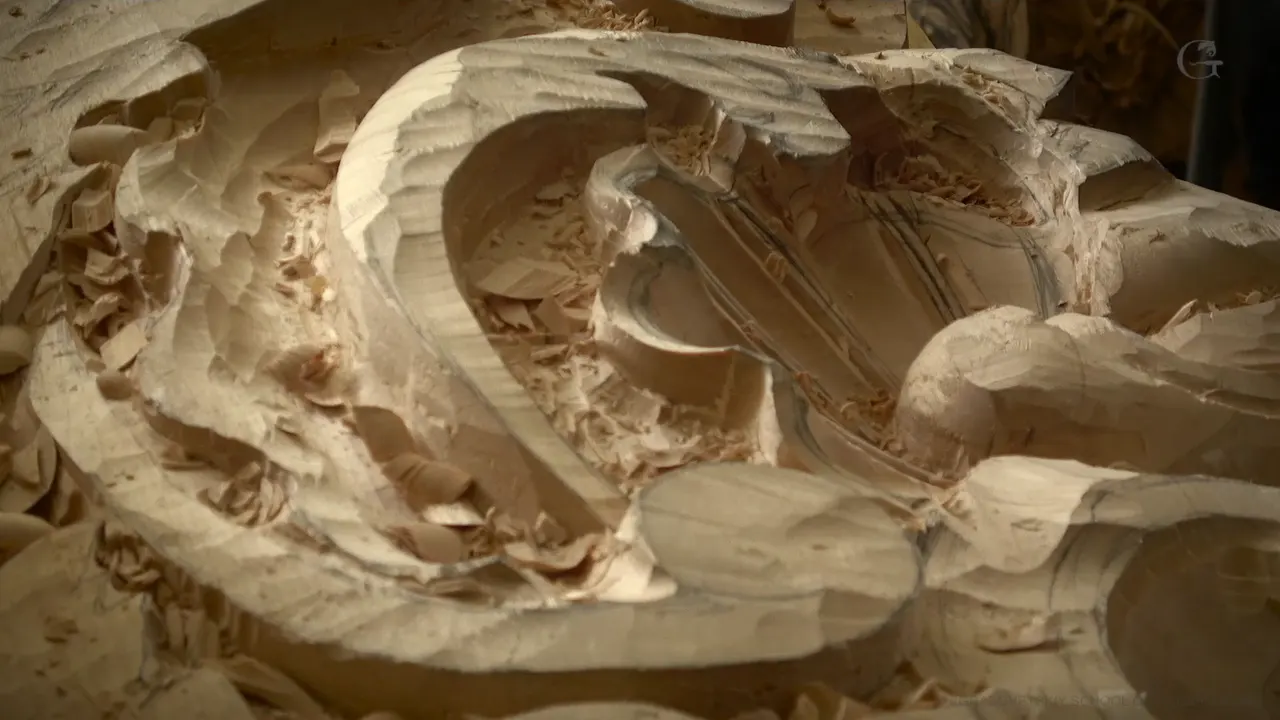

In part 9 of Venice Room workshop 5, I cleaned a side and checked my movement with a finger. A finger, I said, can find slight inconsistency. By eye, it is not always possible. Other lessons of mine use that word beside beads, a thickness, a movement and a wall. Every lesson I name is linked, and a table near the end lists them.
Ever run a finger over a carved surface and find what your eye had passed over, or stop partway through a pass to look again? These are my own words. They come from part 9, from the parts beside it and from lessons in other courses, each with the tool and the number I said beside it.
What this page holds
- My words in part 9, in the order I said them.
- Parts 8 and 10 of the same workshop.
- Lessons where the word sat beside a rasp, beads, a thickness and a wall.
- More lessons where a finger found what the eye did not.
- A table of those videos, so you can find each one fast.
What did part 9 say before the word?
The part opens with a bead and a call I had not made yet: "I need to make the decision." The bead would sit on the right or the left, and I had shown the right.
Next came a tool: "Okay, I'm going to take again the same number three, and I'm going to excavate a little deeper." Two phrases follow, "Gradually going downhill" and "until it's really consistent and nice slope." If cleaning is needed, my plan is to "grab the same tool and just clean it." I also said "Get this side also done."

What did my fingers find in part 9 of the workshop?
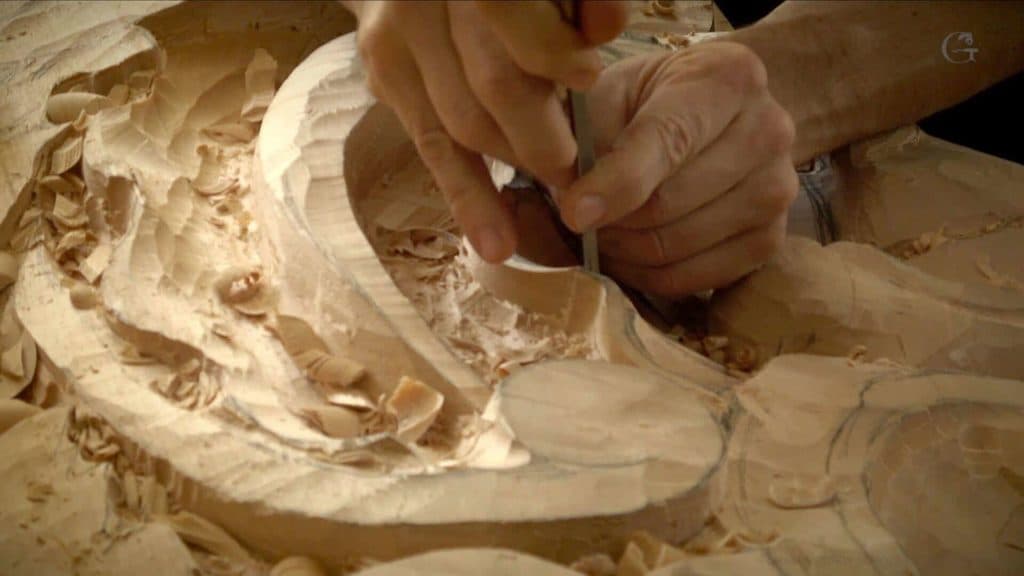
The word sits in this stretch: "All right. I clean it, and I check with the finger how nice my movement is, and I can feel. Sometimes it's much better to check with the fingers because fingers can detect slight inconsistency."

The line after it reads "By eye, it's not always possible, and I can feel it, so I still have to work my way in and make it really smooth." Then "And again, just clean." A need came up too: "I can see I need to make little deeper cut right here." Then "That is good."
Looking is another check. "I can always check and look from the sides the distance between this cut and the upper part. So that's going to give me good idea how consistent am I. Or I should say, I am."

Then "this side now" with "I should use probably a little bigger number three." Next: "let me think if I should go deeper than that." A gouge for one chunk came up too: "Let me get the number seven" and "excavate some of that chunk." I added "Maybe I should go a little deeper. I think it's going to give me really nice three-dimensional look."

The part closes on a need: "Up here, I need to go deeper with the number seven."
What do parts 8 and 10 of workshop 5 say beside it?
Chunks at the sides come first in part 8: "on the side, those chunks, they're supposed to be lower." Next: "I need something flatter" and "Maybe number three will work also. Yep. Number three is actually also good in a quarter inch" (6.35 mm). A fear came with it: "I'm afraid with the number three, I can create the damage to the side of future convex. So I have to keep an eye that I'm not digging in."

More lines come from part 8: "I don't think I did deep enough convex right here, so I need to dig little deeper" and "that is not the final step what I did." I planned "the same number 11 and 3 millimeters" (about 1/8 in), to "create much deeper cut." I wanted a convex "really almost half a round" and my reason was "it has to cast a lot of shadows." Another line: "I start digging too deep, and I can damage the sides of my future convex. So that will be not nice."

A line about the camera sits in part 8 as well: "I apologize that I am covering with my hands, but there's just no way I can position anywhere else my camera." Then: "Well, maybe I could use a different angle. So let me see. Maybe from that side."
The tool comes back in part 10: "number 11 and 3 millimeters. Veiner. Number nine will work also, by the way. So I'm not limited to this one." Why so deep? "That is all about the shadows."
A size sits in part 10 in two units: "I think I should probably use 14 millimeters or so, half an inch." The two figures sit close together: 14 mm is about 0.55 in, and 12.7 mm is exactly 1/2 in. Another line reads "I don't think I did enough my number seven cuts when I was working on it yesterday. I should create little deeper, but it's okay."
A line in part 10 says "consistent" instead: "If you would ask me why I did my concave cuts in the middle yesterday, if I still have to go all the way. So if I wouldn't do those concave cuts, it would be much harder for me to get a really consistent look." The part's last line is "This one needs to be sharpened."

Does a rasp plan ever sit beside the word?
The word sits beside a rasp plan in part 3 of Venice Room 6: "It still doesn't look like what I want to see. Let me use a rasp, and figure out what is going on with this edge. Just something off. Something bugs me." Next came "Now it's just a shadow. It's got little inconsistent look right there."

A verdict followed: "Yeah. I'm too aggressive." After that: "Oh, no, I just going to use my old way. Just gouge and touch out this side." Then: "It's still not what I want to see, but much better." Next I planned "a slight cut right here" and after it I said "Okay, now it's much better."

Did the word stop me before I removed too much?
It did. First came, in part 2 of Venice Room 8, "Let me chop this one a little more, although it's not finished yet right here, but just at least some of the material I don't really need." The tool I planned next was "a number nine," to "kind of rough that out."
Then came the stop: "Let me double-check what I'm doing." Right after it: "Let me stop removing too much of the material because I don't want to create inconsistency later on." Further lines were "Couple clean passes" and "maybe number 11 again, just to clean the upper part right here."

Where do beads come in?
Chamomile and Bow Rosette 3 has beads in part 3, and I said "I need to measure again the distance between." Then "let me start my divisions." My plan for one spot was to "just go backward and go that direction." About that spot: "that is a good spot to hide inconsistency if there is going to be any."

That part also has "pretty close, maybe about one millimeter off this side" (1 mm is 0.04 in). About the last one: "half a millimeter by the end" (about 0.02 in), and "now at least I know exactly the size of those beads."

Beads show up again in part 4 of Venice Room 100, on the right-hand side of a future convex. "I want to make sure my surface right here is really nice," I said, and it should be "flowing nicely."
For a tool I named "a skew gouge, which is about number three." The plan was "just shave it." Fuzz was no worry: "I don't worry about the fuzz when I'm getting it." A number 11 veiner, I said, could clean it afterward. The aim was "to make it really nice movement for my beads." Of one spot I said it "does look okay here too, but still just slightly right on top of those fibers" in case I caught some "inconsistent movement." Then: "And that looks good."

What about a thickness?
I talked about the grain in part 3 of Roman acanthus 16: "keep an eye direction of grain, or the grain of the wood. Really, really important." Then my word: "I can see there's some inconsistency in the thickness. And I'll just attack that from inside, from my undercut side, and also work on this side at the same time."

The same fix came back, with "inconsistency of the thickness" and "for me, it's better just to attack that from inside." After it: "Okay. Looks good." The edge got a reason too: "when I cast a shadow, you can see this edge is actually catching the light."

Is there a wall in it too?
Furniture Panel 19, part 12, belongs to the carving stage of a furniture panel. It uses the word in a warning about depth: "I really don't want to make it too deep right here in this section, because this part should be raised just slightly above that surface right here."

Next comes the word: "if you're going to lower that much, then you're going to have an inconsistent look right here." Then "too tall of a wall on that detail."
The middle spine came up next, and I thought it would look better with the middle spine. Nearby: "in visual, it has to be parallel. Again, law of repetition." Then a plan: "I'll create extra concave cut on the side of the spine. A little deeper, I should say."

Did a flower leaf matter too?
In Hashemi Flowers 6, part 1, the word is about leaves: "I will take a smaller number eight. Maybe half an inch" (12.7 mm). I added "I will need to find the middle line of the leaves."

That leads to the word: "I'm doing just the eyeballing, really. We are doing flowers, and if there are going to be some inconsistencies, it should not be a problem." My ridge was off center: "I never put my line in the middle of the leaf." About the marks I said "those ridges between, you can see those ridges, the tool marks, they actually look like veins of the leaf."
Do other lessons put a finger in the same line?
They do. Modern Acanthus 5, part 1, was about an excavation under a leaf. The tip was "Don't cut too deep" and "put your fingers and your fingers can feel if you are too much." A figure followed: "I kept approximately three millimeters thickness" (about 0.12 in). About less wood I said "I could go little less. It's okay, but it's gonna become fragile."

Lily Box 7, part 13, has a blend left: "all that's left, just the blending." Then "let me think, number 7. Number 7 will do, and 6 millimeters" (about 0.24 in). On roughness I said "I can feel if there is some roughness" and "You can't see, but you can feel it with the fingers."

The third is part 12 of Venice Room 17, and it starts at a bump. It says "I do have a small concave, but there's a bump." My need was "probably just the number five quarter inch" (6.35 mm) for "planing little bit right here" and to "get rid of this bump." After that: "Double-check" and "sometimes fingers give me a lot better idea what is going on."

Which videos carry the word, and with what?
Every video below has the word, or a finger check, with a note on the tool or the number beside it.
| Video | Beside the word |
|---|---|
| Ninth part, Venice Room 5 | Fingers on the slope, with a three and a seven in my plans |
| Venice Room 6, third part | A rasp I planned to use, then my old way, and a slight cut I planned |
| Venice Room 8, second part | Number nine planned for roughing out, then a stop so that I would not remove too much |
| Chamomile and Bow Rosette 3-3 | Bead divisions, about 1 mm (0.04 in) off on one side and half a millimeter at the end |
| Fourth part, Venice Room 100 | A skew gouge near number three for the beads, and a number 11 veiner for any fuzz |
| Roman Acanthus 16, part 3 | Thickness seen by eye, and a fix from the inside |
| Furniture Panel course, lesson 19 | A wall that would stand too tall if I lowered the detail that much |
| Hashemi Flowers 6, part 1 | A middle line eyeballed, with a smaller number eight at maybe 1/2 in |
| Modern Acanthus 5, part 1 | An excavation under a leaf, with about 3 mm (0.12 in) of thickness left |
| Lily Box 7, part 13 | Number 7 at 6 mm (0.24 in), and a feel for roughness that the eye cannot see |
| Twelfth part of Venice Room 17 | A bump, a number five at a quarter inch, and a double-check |
Where can you watch part 9?
You can watch part 9 inside workshop 5 of the Venice Room course. The whole lesson sits on one page, Venice Room 5. The other lessons here sit in the Hashemi Flowers, Furniture Panel, Roman Acanthus, Chamomile, Modern Acanthus and Lily Box courses. Everything on the site sits inside the tuition.
Where on your own board would a finger tell you more than your eye? Pick up a chisel or a gouge, run one clean pass, and then give the wood a touch of wood carving with your fingertips.
How it's done
- Pick a tool for the hollow. My plan in part 9 was a number three, to dig a bit deeper.
- Clean what the tool left, using the same tool. Cleaning stays with the same tool. Before the word, I said I clean it.
- Touch the surface. My finger tells me how nice the movement is, and I can feel.
- Check the distance. I can always look from the sides at the distance between a cut and the upper part.
- Name the next tool. Number seven for a chunk, with a note to maybe go a little deeper.
Frequently asked questions
Which tool did I plan first in part 9?
Number three, to dig a bit deeper. I said I should use probably a little bigger number three, and for a chunk I said "let me get the number seven."
What about the chunk in part 9?
Number seven, to excavate some of that chunk, and maybe deeper still. It should give me a really nice three-dimensional look, I said.
Which lesson puts the word beside a thickness?
The Roman Acanthus course, lesson 16, part 3. Some inconsistency in the thickness, I said, and my plan was to attack it from the inside, from my undercut side.
Which lesson puts it beside a wall?
What to carve next
- Venice Room Part 1 course page
- Venice Room 5
- Venice Room 6
- Venice Room 8
- Venice Room 100
- Venice Room 17
- Chamomile and Bow Rosette 3
- Roman Acanthus 16
- Furniture Panel 19
- Hashemi Flowers 6
- Modern Acanthus 5
- Lily Box 7
- Hashemi Flowers course
- Furniture Panel course
- Roman Acanthus course
- Chamomile and Bow Rosette course
- Modern Acanthus course
- Lily Box course