
Alexander Grabovetskiy, woodcarver, School of Woodcarving · Published 2021
What does a wood carver mean by "I hope you're going to like it"?
Quick answer: In workshop 110, part 2, I said it as an idea arrived, ahead of the idea itself: waves along a line I found a little too boring. In my other lessons the same words come as I start a part and beside a finished spot.
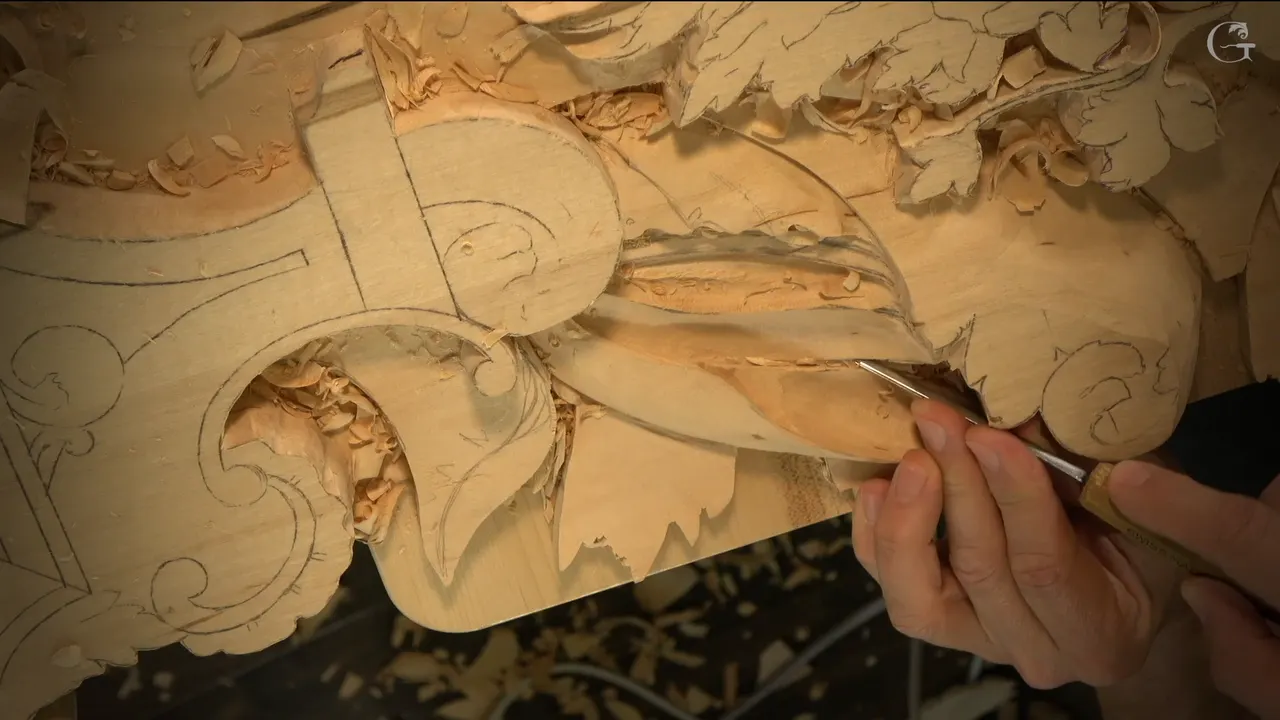

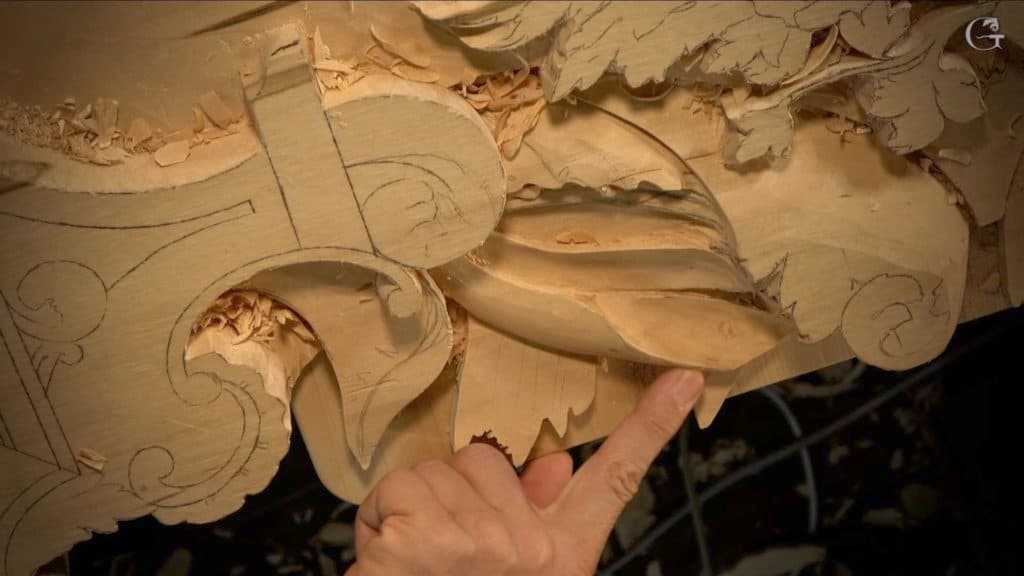
In part two of workshop 110 a new idea came to me, and I said I hoped you would like it before I told you what the idea was. It was waves along a line at the edge that looked dull to me. The same wish turns up in my other lessons, before the first pass and beside a finished spot.
Have you ever changed your mind halfway through a wood carving piece? Did you say so out loud, or keep it to yourself? This page follows one line of mine. Workshop 110, part two, comes first, where the line sits in the middle of the work. After that come my words from other lessons, each one named and linked, with every size in millimeters and inches, my figure first.
What did I do in the second video of workshop 110 before that line?
It opens mid-pass with an undercut, "slightly more on this side." My pick was 1 millimeter (about 0.04 in), "and yes, it's still number 11." The goal was an even deeper shadow, "carefully." I asked myself "Do I need it" and answered "Not really, but every little bit helps."
Sorry came next, for covering with my hand, "I know I'm covering with my hand" and "I'm sorry that I have to." A spoon came into it, "I'll take number three and just a spoon," a small one, 5 millimeters, 3/16 of an inch. Then "3 millimeters, 5 millimeters will work." The 3 is about 1/8 in, and the 5 is the 3/16 in I had just named.

A tiny tool was on my list too. "I guess I need a really tiny, small 1 millimeter, and I'll take just number 11 and try to grab it, hook it." A little later, "Just hook it." Then I said "I love it, except what I can do, I can actually use 1 millimeter and exaggerate that separation," this way, "and maybe opposite way also."
A spoon was my next idea. "I really don't need to do that" and I thought it would look better. Then, "Okay, wonderful. I like so far the development." Next I planned to clean inside a little and undercut underneath.

For that undercut I said a number 11 of 4 millimeters (about 5/32 in), but "in this case, I'll take a spoon veiner," to lay "right on the side" for my cut. Another idea was 2 millimeters (about 5/64 in) for "a little deeper excavation" and maybe attack from this side. A new thought came, "1 millimeter pretty much right away" and "I think 1 millimeter will do." It stayed the number 11.

"I'll take care of this wall" came next, and I would blend it slightly into the undercut. A different spoon was next, probably a number three, "and let me use 12 millimeters first," about half an inch. The point was to clear some of that stuff.

The stem came after it. My next size was 4 millimeters, with a slight undercut underneath it, "My future stem, I should say," for "an extra shadow spot." I would attack from this side also, "until I going to meet at the point."
What was the little change?
Right there I said "I've got an idea. Okay, I'm going to make a little change, and I hope you're going to like it." My wish came first, and the idea came after it. Then: "If you look from above, okay, so we're pretty much done with that section."

Then came what I did not like. "I kind of don't like, just a little too boring, this line." My answer was "Why don't I make some waviness, okay? Like real-life waves," right "on the edge." I said I could do some concaves and convexes too, "just the slight ones." Those were options, not passes.
Why those? "I think it's going to give me a more beautiful look" and right behind it, "I hope it's going to give me a more beautiful look." A knife was the tool I named, probably just a knife, to hit that edge. The last words in the captions are "Get rid of my watch. And I'll create that waviness" with the waves still ahead.

What did I say about my own work in the first and third videos?
Workshop 110 has two more videos, and both hold my verdicts. Part one has me saying "I know maybe you don't see as much, but I think it looks awesome" and "Personally, of course," the same. It ends on a plan, "to create some kind of cut right here" then "this part belongs to this ray" and "that ray continues underneath."

The third video says more. After a pass, "it looks much better that way, so you can see, it just casts a slight shadow." After the undercut, "But see how nice that shadow I just created" and "gorgeous." Near the end came "Yeah, I know it's a tiny spot, but still" with "it just worth it."

Where else do I say it before the first pass?
Carving hazelnuts 1 puts the wish beside two plans. One was a realistic-looking hazelnut that would be "hand-carved" and the wish for that idea followed. The second was "a deep excavation" with the rest "all 3D" and the wish, and "Let's start."
My next step there was the background line. "The final is going to be about five millimeters or three-sixteenth of an inch." As of then I would take about 6 millimeters (about 1/4 in) and just draw all around.

Furniture panel 35 carries it after a flip over and a detail that was going to wrap around another one, "which goes all the way right here." After the wish came "Let's start" and my first tool was going to be just a micro tool.
Lily box 8 has it after I said why I put smaller items all around a bigger flower. "That's why I'm putting a lot of subdivisions, a lot of notches" with a note that it would make sense "once you see altogether how it looks." The wish came with an okay on the end, and then "Let me think the way I should go with this detail."

In Flower rosette 1 the wish follows glue. "That way, with just a spray glue, I don't have to wait until it dries" and "It's really quick, and for a small project like that, it's actually excellent approach."
Chamomile and bow rosette 1 puts it beside the part with the rosette, "not equal-equal both sides, and it looks organic." Beside it came "I kind of like that detail" and the same hope for you. A new course was ahead.
In Acanthus over moldings 1 the leaf has a raised part right in the middle. "Anatomy of that acanthus, really interesting" and my wish came right after it. Then "Let me glue that piece to the board."
Does a slow process get the same line?
Venice Room 104 says so. "But most of the time, this process is not that fast" and "so let's start." My wish was for the process itself. The carving on the walls, I added, could be applied to any type of framing.
The same course, Part 10, has Venice Room 113. A good time to outline around the flower, I said, "which is not a really complicated flower," so "somewhat more simple ones." For those flowers came the same hope, then "so let's do them" and my pick for the outline was a number 11 again, at 10 millimeters (about 0.4 in).

Where do I say it over a result?
Venetian flowers rosette 6 has it over work I did "off camera." First I said I would work "off camera because I want to make sure I'm really close to the surface with my face and I don't want to stick my head in the camera." Then "Well, I'm happy, I am happy with the result, okay" and "as of now, and I hope you like it."

Later in that video I said "Let me pull this out and get rid of some of the mess, and I'll show it to you." Then "Here you go" and "the final result" with the wish beside it. "We started with just a simple drawing and finished with that composition."
Carving floral and molding for the panel 14 shows two pieces together, "with the first piece" and then the wish, "so that is the first piece, and that is the second piece." Earlier in that video, after "just clean up and clean up," came "I hope it helped" and "I hope you liked that course." I also said "People, thank you very much" and "I really do appreciate you students who's watching all of those segments for multiple years from day one some of you."

Venice Room 96 carries it over an acanthus. "Yes, I've done my acanthus," which "transitions to the main body" and the wish came with it. Right after it came a note, "please understand," about "the live project" and editing done "on the fly." In Venice Room 93 it followed a line I called beautiful. "I hope you see it and I hope you like it, all right."

Hashemi flowers 40 puts a like on both sides. "And I do like what I see" and "I hope you also like it." An option followed: "I could take a V tool and create a center channel, and add even more detail."

In Chamomile and bow rosette 4 the piece sat on a darker background, "the look," going on a panel above an element, with moldings to come. It ended with "have fun making it."

Carving hazelnuts 2 ends the day. "Keep an eye on those center points, also important not to lose them." Then "It does look like mess, but that's okay" and the wish. The day ended on "enough for today" with about one-inch chunks, which is about 25 mm.
Grape onlay 3 sits near the end. "Not the main idea, the main idea gonna be those guys" and then "Have a wonderful rest of your whatever day, night, morning." In Grape onlay 6 the words were "with the same tool, just go around" and the wish.

Plate with butterflies 9 ties it to a butterfly. "We're going to refine everything, and that's going to look even better." Next to it stood "this lesson of work on this butterfly."
Grinling Gibbons 16 sets it beside a stem. "Maybe you don't see that well, but it's right there" and a short wish, then "I'll see you once I've done it." And in A simple tip for back cutting it follows a tip about foam, "because of those ribs" and "I can create the pressure without the breaking." That wish was for the idea.
What do I ask of you after I say it?
A few of these lessons ask for an answer. In Hashemi flowers 21 I told you I was moving my shop, and that "the tools and approach is still the same." After it came my wish. "For me, it's really important to hear from you, just to give me some feedback. Just say something, email me, or leave a comment."
Roman acanthus 8 has the ask right before the wish. "I would like to ask you, please ask me any question, and I would love to answer that right in the videos." Then "the whole reason is actually to show the way I do."

The floral and molding course says where to ask. "Comment, okay? Comment and ask me questions, I'll answer. It's better to comment below the video than to send me emails." In Venice Room 104 the wish was about an iPad idea, and "If you'd like to know a little more, just comment below the video." In that lesson I said a print would come out 36 by 48 inches (about 914 by 1,219 mm).
How do the pieces fit in the table?
The rows name the spot each line stood beside.
| Lesson | What stood beside the line |
|---|---|
| 110, second video | A 1 mm number 11 and a plan for waves |
| Hazelnuts 1 | A deep excavation and then the start |
| Furniture 35 | A wrap-around detail and a micro tool |
| Lily box 8 | Small notches around one big flower |
| Flower rosette 1 | Spray glue on a small project |
| Chamomile 1 | A part that looks organic |
| Moldings 1 | A raised part in the middle of a leaf |
| 104, the walls | A process that is not fast |
| Room 113 | Ten millimeters for the outline |
| Rosette 6 | A result shown as it looks now |
| Floral panel 14 | The second piece shown with the first |
| 96, the acanthus | An acanthus that runs into the body |
| Hashemi 40 | A V tool I could still take |
| Hazelnuts 2 | A mess I said was okay |
| Butterflies 9 | A butterfly still to refine |
Is there a spot on your own board where an idea hit you in the middle of a pass? Everything named here sits inside full access to the school. The Part 10 course page has the rest of workshops 110 to 121, and workshop 110 holds all three videos of this one, in Venetian style.
How it's done
- Say the idea out loud. I told you a little change was coming, with a wish that you would like it.
- Name what you don't like. The words were "I kind of don't like" that edge line.
- Plan the change. I planned waves on that edge line, with slight ones as options too.
- Pick the tool. My plan was probably just a knife, to hit that edge.
- Clear what is in your way. I said the watch had to go, and then "I'll create that waviness."
Frequently asked questions
Where did I say this line in workshop 110?
In workshop 110, second video, as a new idea arrived. It came ahead of the idea itself: waves along the edge of a line I did not like. The last words in the captions have a knife in my plan and a line about my watch.
Which tools did I name in that video?
A number 11 at 1 millimeter (about 0.04 in), a spoon number 3 of 5 millimeters (3/16 in), another number 11 at 4 millimeters on a spoon veiner, and probably a number 3 of 12 millimeters, about half an inch. For the waves, a knife.
What else did I plan for the edge line?
Besides waves, I said "I also could do some concaves and convexes, just the slight ones, just going that way." I thought the edge would look more beautiful for it, and I hoped so.
What to carve next