

Alexander Grabovetskiy, woodcarver, School of Woodcarving · Published 2022
Is it worth adding a small extra step in wood carving when the tool is already in your hand?
Quick answer: A sharp point I did not need still went in on lesson 161, and I said so. The reasons in my other lessons ran from a tool within reach to seconds of work, wood to spare and paint over the top.
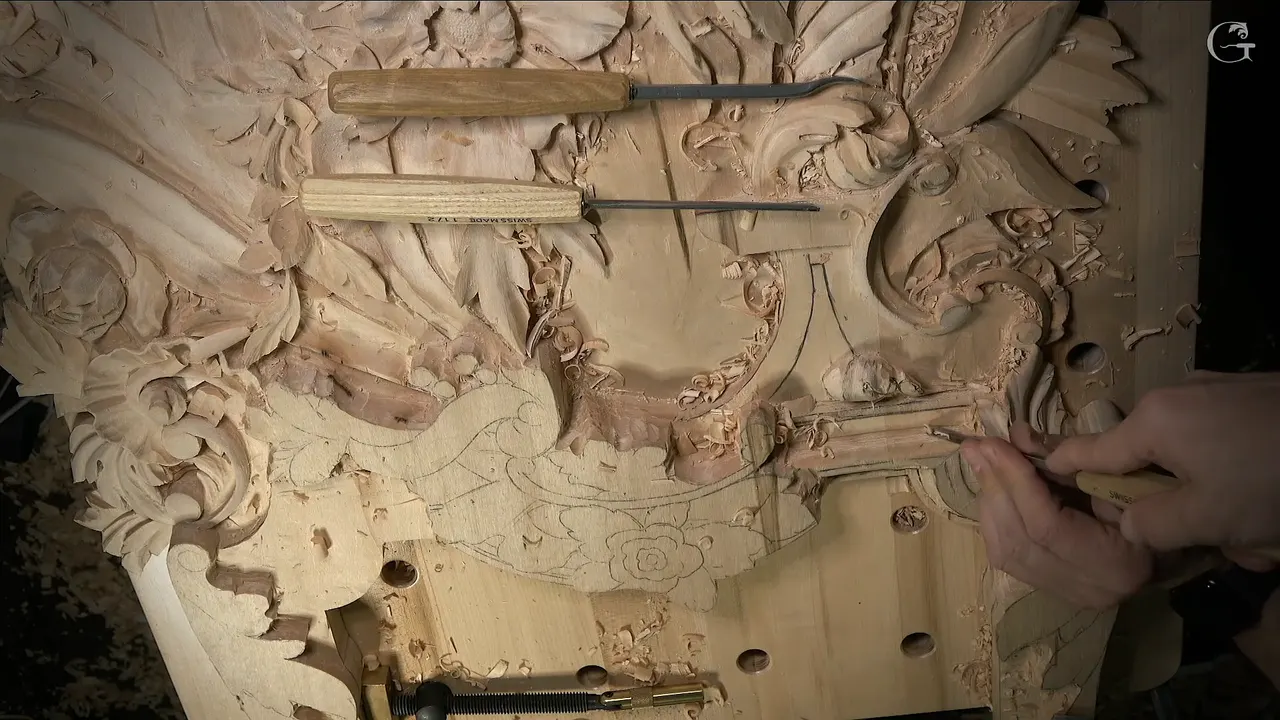
When I say "why not" at the bench, I can name what the step costs me. The reasons come in four kinds. A tool sits ready in my hand, or a step takes seconds, or I have wood to spare, or the piece will be painted. My first video in lesson 161 had me say it about a sharp point I could do without, and a cleanup came right after.
Two small words. The video I made for this lesson runs about 570 words, not enough to show how I use them. So I searched my other courses. "Why not" turns up in at least 115 transcript files, and I read twenty-odd of those moments. Each is cued and linked below.
Ever stood with a gouge in your hand and one more small step ahead of you, a step nobody asked for? Was it worth the trouble? Then watch what I look at, before those two words leave my mouth.
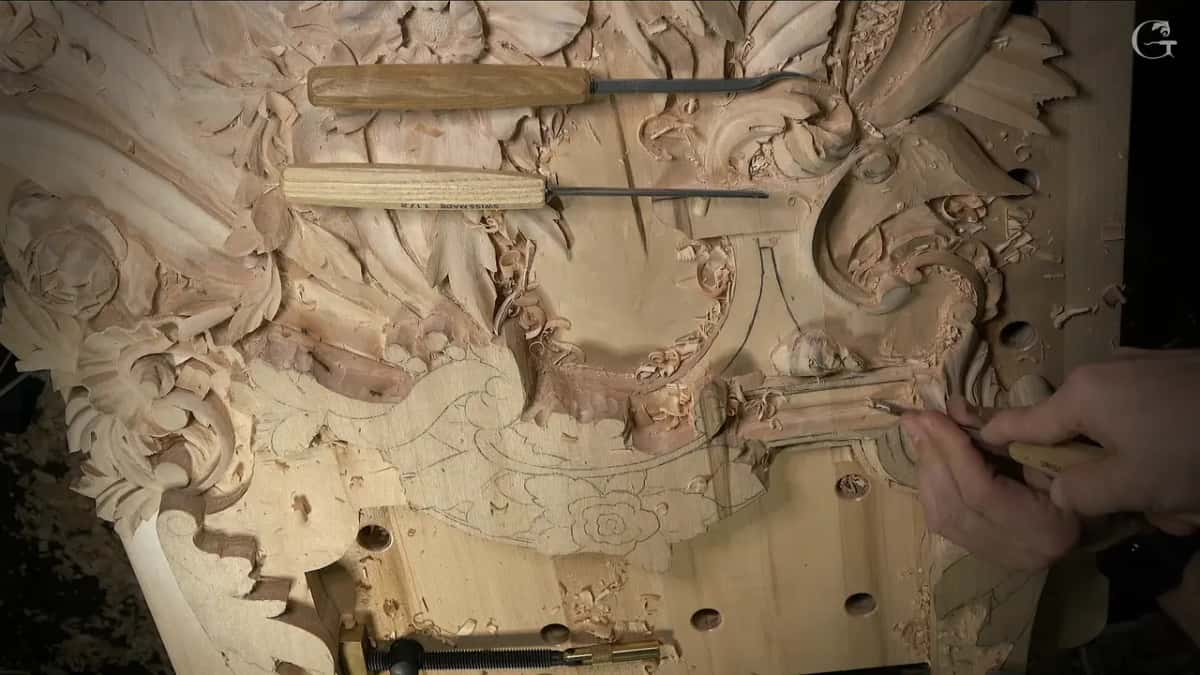
What was the "why not" in the first video of lesson 161?
The video opens on flat wood. "Now it's flat, and I can go deeper now," I said, and I guessed "four millimeters or so" (5/32 in) down to a point I could see (00:11-00:31). Cleaning came first, and it mattered: "Just because I cleaned that, that makes it a lot easier to figure out how deep I should go" (00:44-00:50).
A bigger tool looked possible, "maybe three millimeters" (an eighth of an inch), and I said it would be easier to go down. I went with the one millimeter (0.04 in) anyway. The groove was only about a millimeter deep at that point, well maybe a 16th of an inch, a millimeter and a half (01:01-01:46).

Half a millimeter (0.02 in) would give a super sharp edge, I started to say, and then I stopped myself: "it's not what I'm going to do." The big number one came out instead, three inches wide (76 mm). I set it straight down for a 90 degree pass going downhill (02:20-02:53).
Here is the line. "And that way, I know I'm going to have a really sharp point right there. I don't need a sharp point, but why not?" Next came: "And clean it with the half a millimeter" (03:06-03:25).
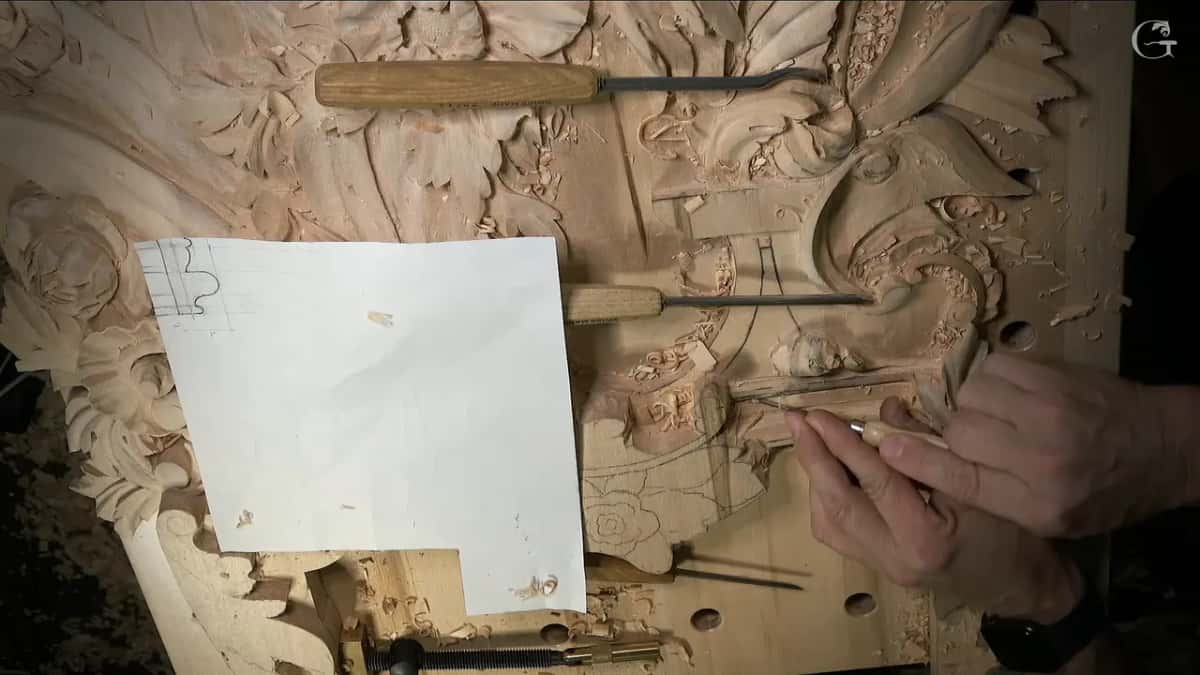
The fillet came next, with some kind of Roman ogee to follow, but I wanted the fillet first (03:25-03:41). For it I took a back bent. "I like to use my skewed one. That way I can work any direction pretty much" (04:07-04:36). Soon after: "That is actually really excellent. I know you don't see it, I'm sorry" (04:47-04:53).
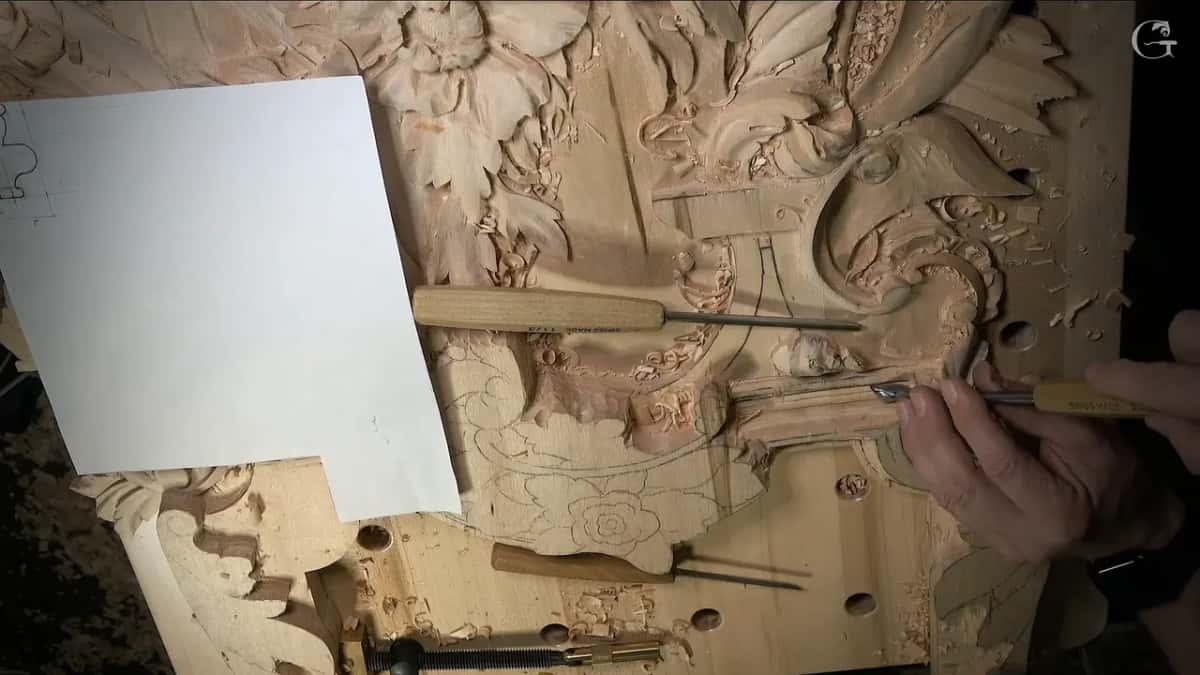
I would fillet all the way to the cut, go a little deeper, then make the concave "to create that effect of the Roman ogee" (05:11-05:24). The deeper part was another two millimeters (5/64 in), both directions. A two millimeter tool was in my hand, yet I said I could use the one millimeter: "I don't need two millimeters anymore" (05:45-06:07). That sentence says the opposite. The bigger tool was there, and I put it down.
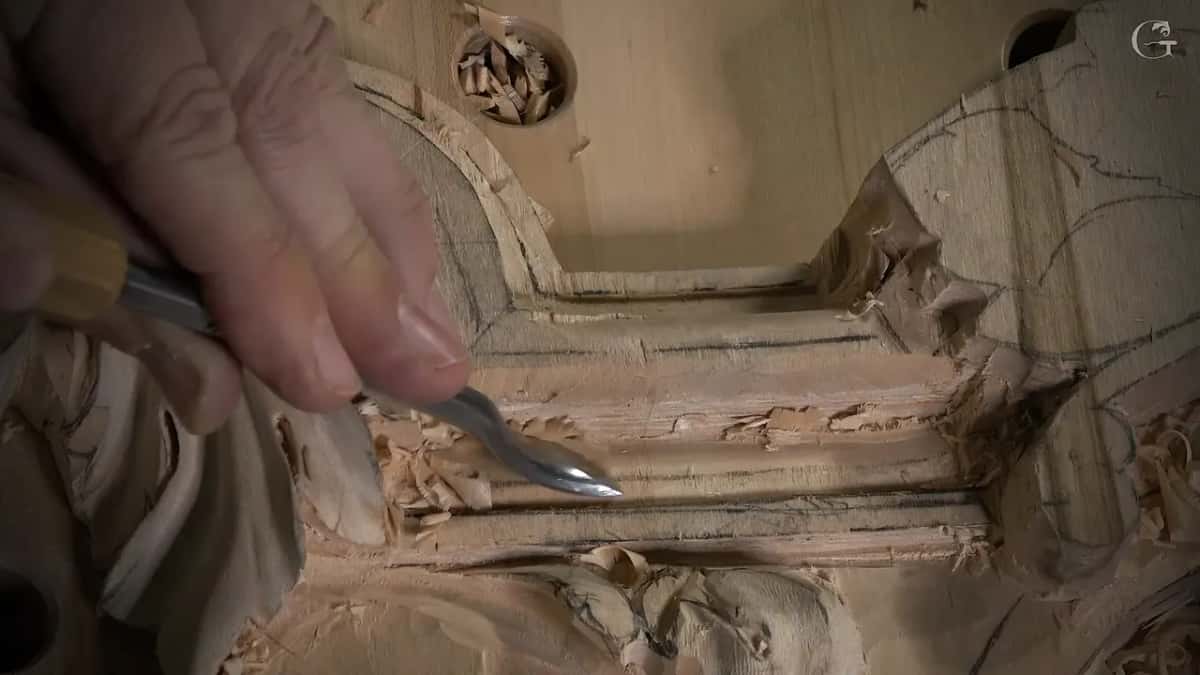
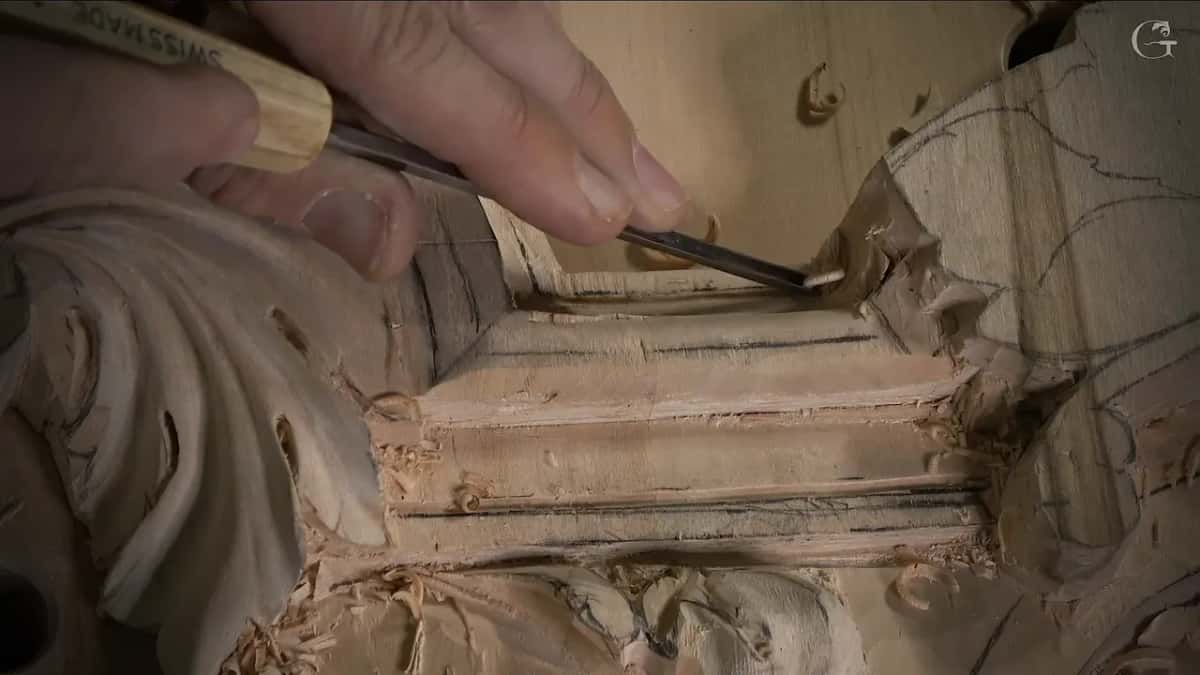
The part ends on a check. I said I needed to look at the 90 degrees and asked how to do it. In this case, "I really have to just pretty much eyeball it," or I could set a square, any type, close to the tool. The wall was at 90 degrees (06:19-07:16).
Is the tool in hand the whole reason?
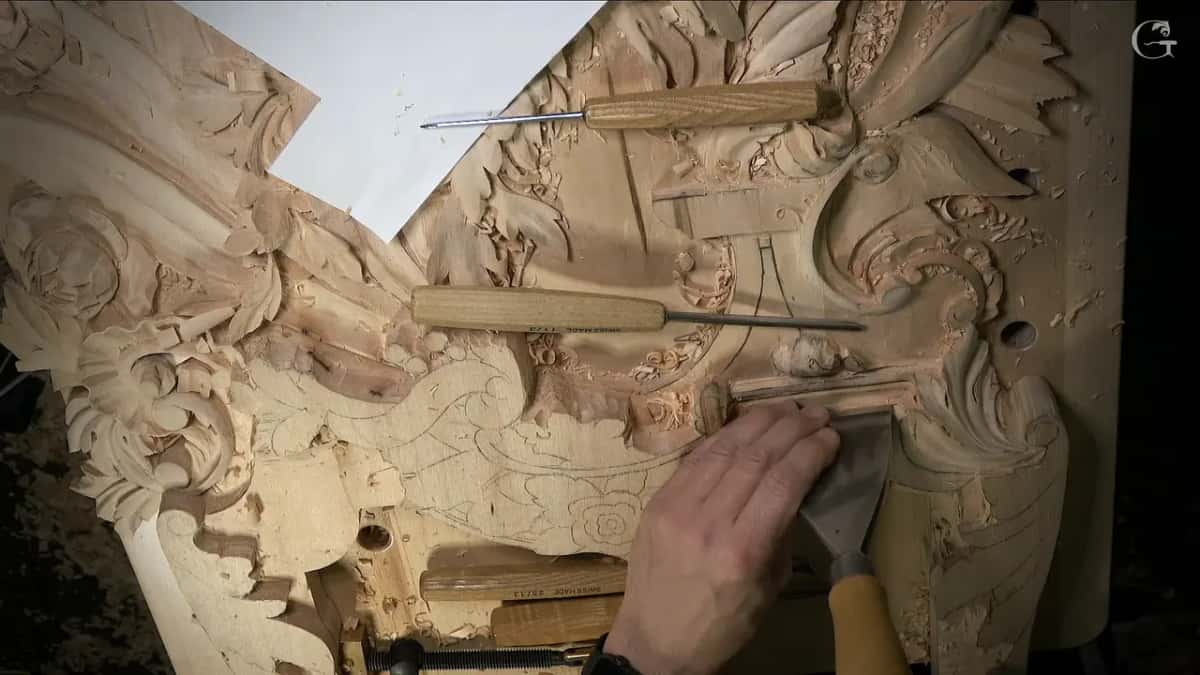
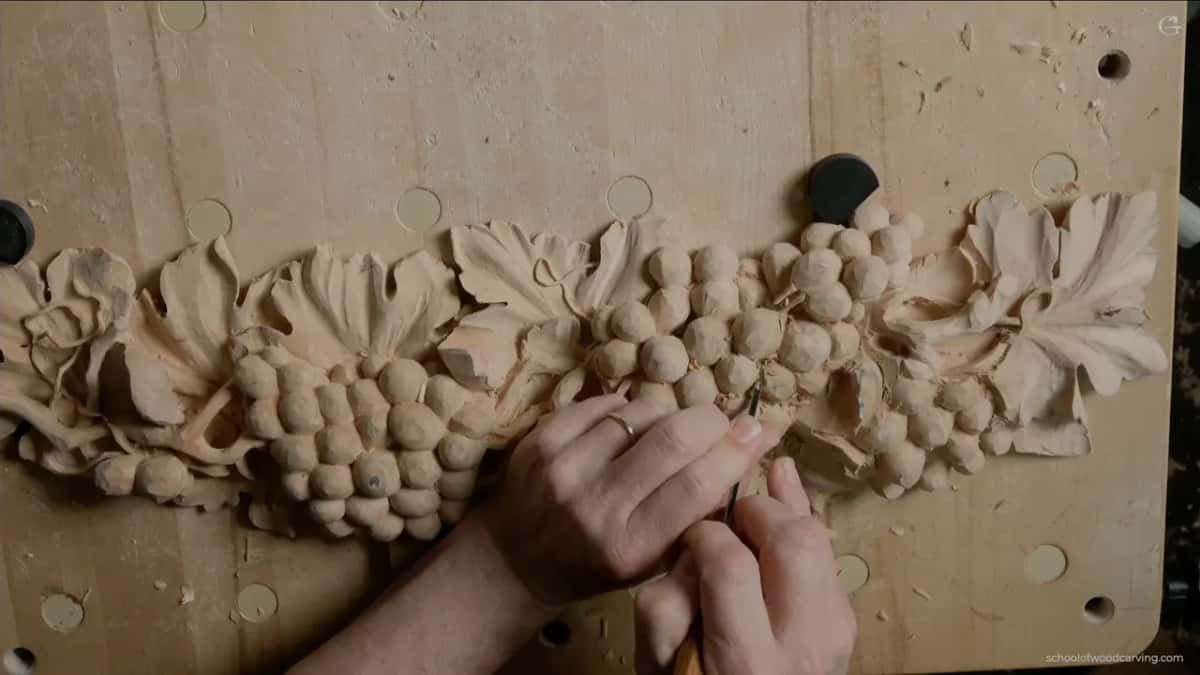
Often. In Grape Onlay 13, part 1, I was changing the size of a grape and said the plan was to excavate its approximate shape, "I'm just outlining it." I did not need to do it that way, and then: "since I do have that tool in my hand, why not?" Probably two millimeters (0.08 in) was the depth (07:23-07:57).
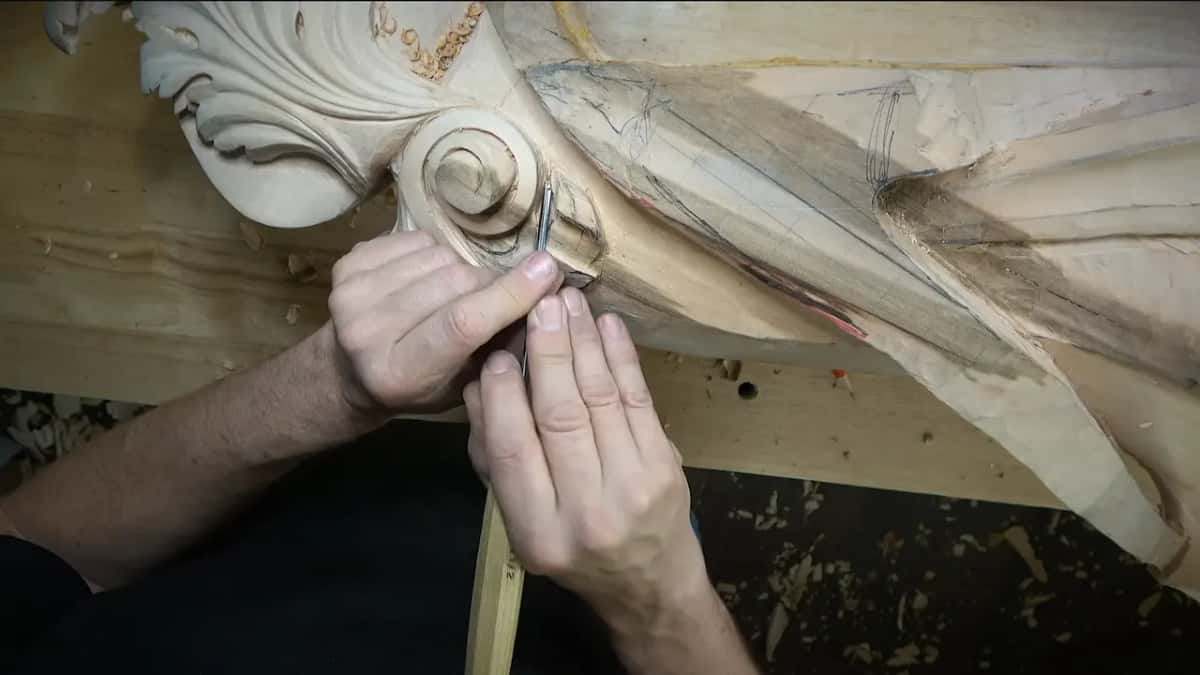
Same logic, different tool, in Venice Room 89, part 9. I cleaned a background with the flute of my tool at nine o'clock, then turned to three o'clock. A small number three could almost do that job, "but if I have the tool in my hands, why not use it?" (00:10-00:44). For the wall of my volute I picked number three, and a knife or a skew would have worked too.
The Tray of Blessing, lesson 3, part 2, puts a tray under my hands. I planned another pass with the flute at 90 degrees to the surface, and I called for taking that one right away too, since the tool was there. That pass could also be an eye, and I called that good (06:01-06:33).
A big tool counts too. In lesson 6 of the same course, part 3, I talked about a tool for a lot of material: "That's a tool. If it's sharp, why not?" (04:55-05:09). A number nine in lesson 37, part 6, was quicker still. It was 20 millimeters (0.8 in), there to rough out most of a section, and I said why: "When I don't have to spend a lot of time, why not use a big one?" (00:07-00:34).
How long may a "why not" step take?
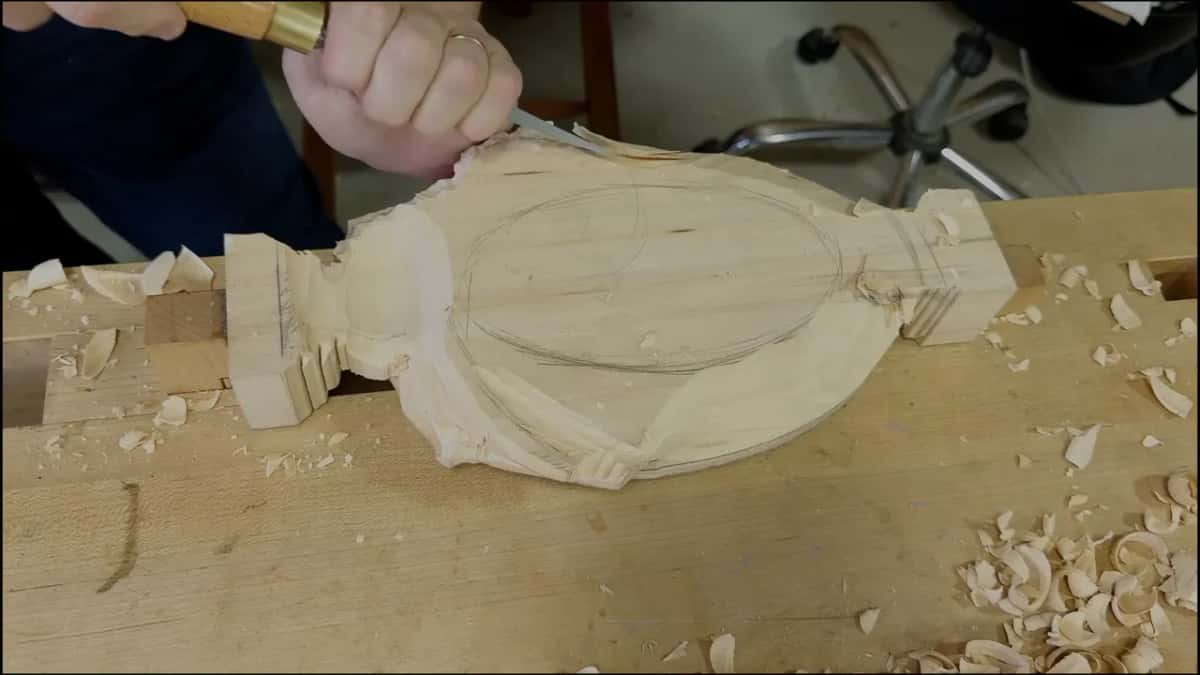
Seconds, in my own words. On lesson 14 of the panel course, part 2, I already knew my high spot and could have skipped measuring. I measured anyway, to the highest spot, because it costs only seconds, I said, and why not? About a quarter inch, six millimeters or so, had to come off (07:32-08:36).
A router plane gets the same answer in Furniture Panel 26, part 3. My pick was a quarter inch blade, six millimeters. "It takes only a couple seconds actually now to set up," I said, and the question was why not. What I like about it came next: "I can just do really, really quickly quick setup." After that I went looking for the deepest spot (05:32-06:44).
A drill is the same kind of answer. The panel course appears again in lesson 5, part 2, where I measured a spot with the same tool and said I was "about six millimeters, I'd say. About a quarter inch." Next: "I can just pretty much just grab my drill and drill it." Those two words came again. After that I looked: "Let me check if I did make mistake or not, and I hope I did not." And then: "I am right on the money" (14:34-15:45).
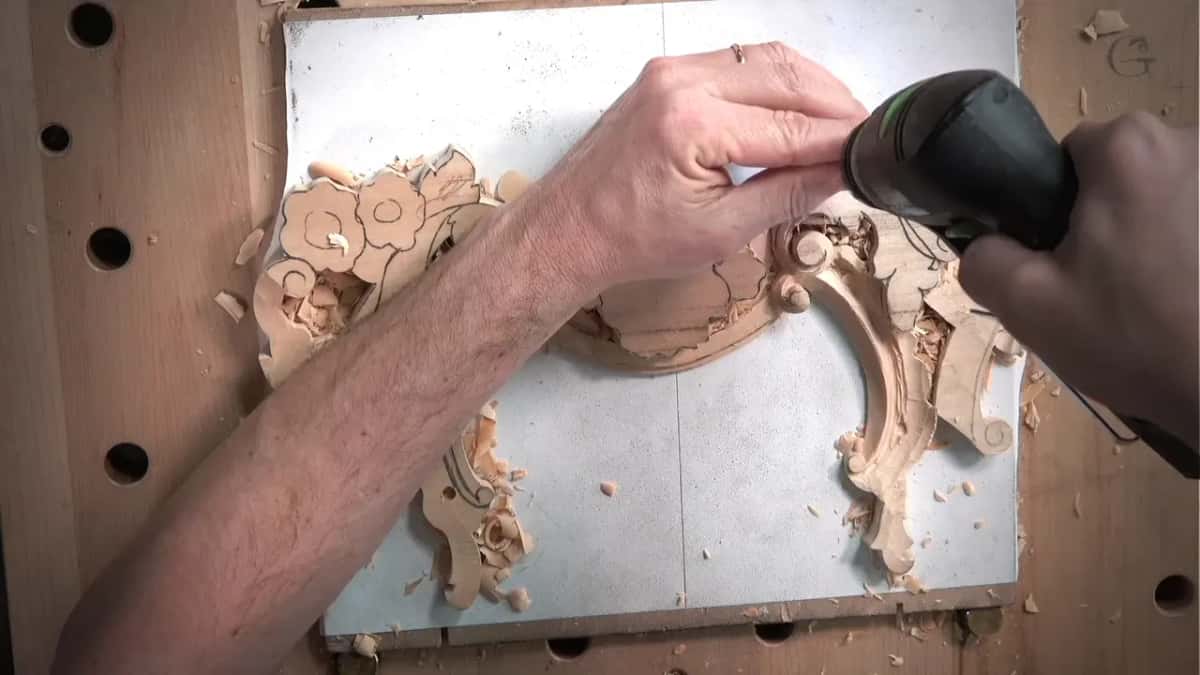
Sometimes I just like the tool. For lesson 12 of the floral panel course I planned a number seven, then changed it: "Let me use Sekira tool. It's going to be probably better." Next: "It doesn't really matter, but I kind of like to use it," and once again, why not (02:02-02:28).
Is there enough wood for a "why not"?
Deeper all around is the idea in Venice Room 20, part 8. My reason came with it: "Like I said, I have plenty of material, so why not using it, okay?" I then explained what I wanted, a concave inside, which already gives extra movement, and several separations on the edge, for really nice curliness (00:49-02:11).

The grapes show the other side. Grape Onlay lesson 10, part 2, has me saying there was "some meat" in the grape, so I could probably carve a little deeper. One part needed to be lower: "I need some space for that, although I don't need it, like I said, but why not?" Then came the limit, about three millimeters (0.12 in), and "Don't want to go too deep" (01:57-02:46).
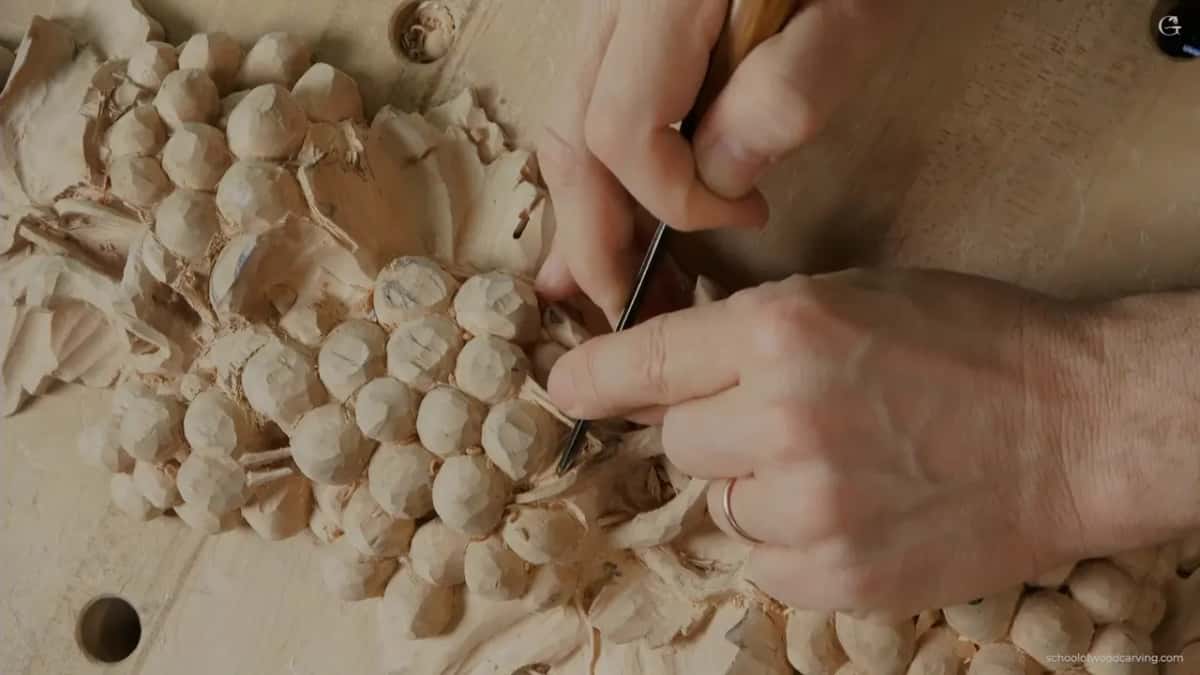
Lesson 13 has the same brake. "I also don't wanna excavate too much 'cause it's gonna be hard to clean up." I did not want a super excavation, I said, but a little more had its reason: shadow. That area would cast a little more, and it could drop slightly lower (11:56-12:26).
Depth in Grape Onlay 9, part 3, was about five eighths of an inch, about 16 millimeters. It was optional, I had said, "but you know, why not?" Depth is only up to you (11:35-11:58). Back in lesson 1, the grape project was somewhat advanced, I said, and the invitation was plain: "If you wanna challenge yourself, why not?" (03:30-03:44).
Does paint change the answer?
Several lessons say yes. Rifflers come up in Venice Room 82, part 6. I could have left a shape as it was or use rifflers to make a nicer one. "Just because it's a paint grade, so why not? I can just probably shape it really nicely." A beautiful transition came, and I was probably going to use a lot more of those rifflers (05:02-06:10).
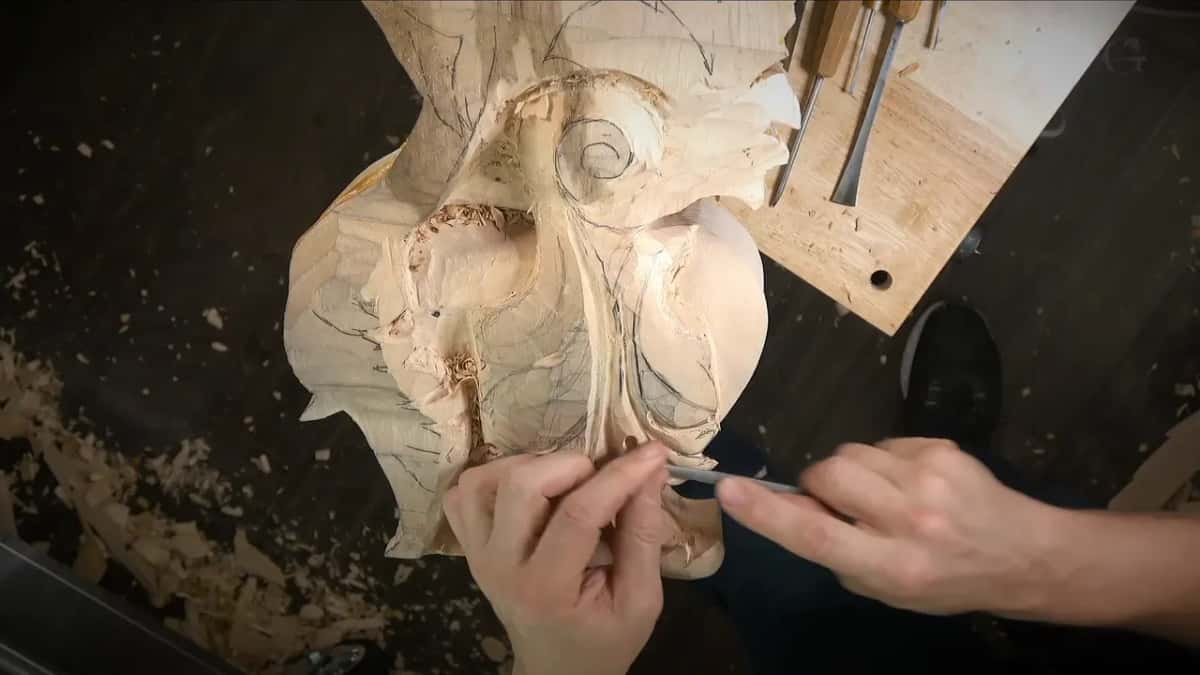
Rasps tell the longer story. Back in Venice Room 14, part 10, I said: "I just stayed for many years away from those rasps. I really did not believe in them." My teacher "never used them," I said, and some other famous woodcarvers did not use them either. A carver I saw used them, and "he's got some good results," so I said to myself, "Why not to try?" The project was special and going to be painted. A little fuzz stayed on the surface, "but that's okay," and the work went on (03:01-04:15).
The same habit shows in Venice Room 112, part 1. Off camera I rasped a little. "And I said to myself, 'Why not?'" The piece would be painted, and the rasp saved me time: "Just rasp it and forget it" (07:18-07:56).
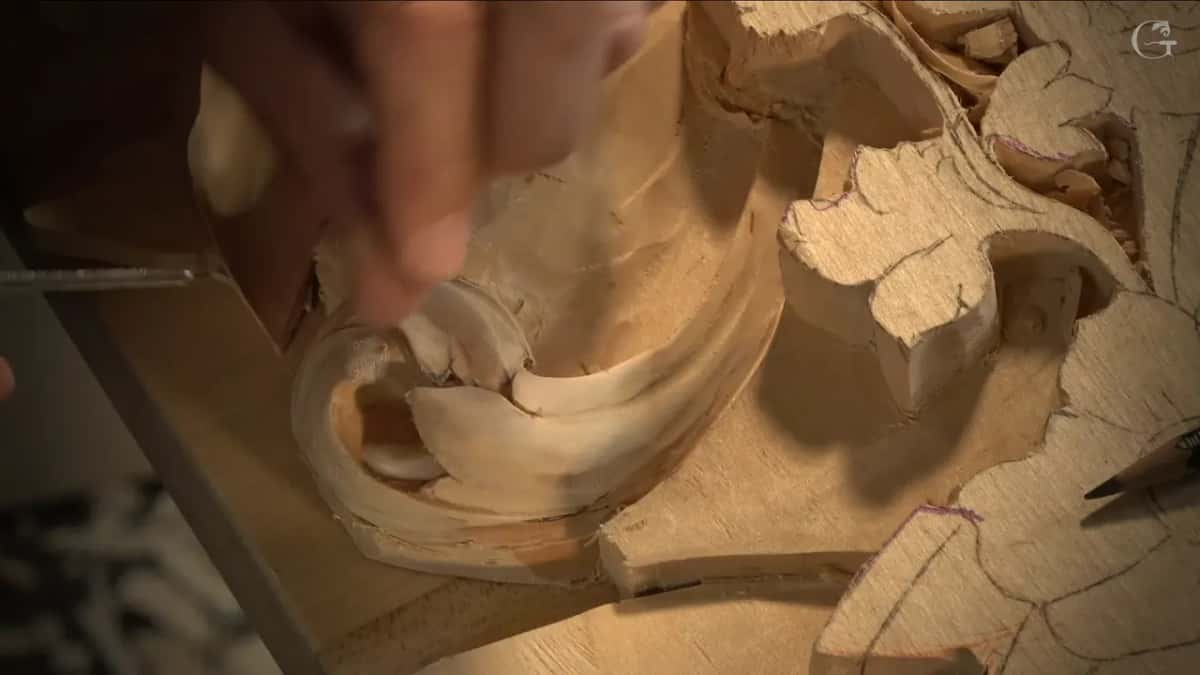
The other side of that sits in Venice Room 26, part 11. I reached for rasps for the overall shape. "Because I have those rasps, why not to use them? I'm still trying to excuse myself, okay? Still feels it's fake." My mind changed. It's not really fake, I said, and I should probably use them and still call it a wood carving (03:05-03:51). I really like how quickly I can get my job done, I added.
When did a "why not" come with a brake?
On a detail in Venice Room 37, part 9: "I really don't have to do that." Then: "There is really no reason. But on the other hand, why not? If it's going to make it look more beautiful, more interesting, why not?" Next I could take a number seven, about half an inch (13 mm), and a big one was not needed, I said (03:31-04:16).
A small one comes in Venice Room 32, part 10. Maybe I could add something really small, "just to give even more detailed look." Then I said why not and named the exit: "If I don't like it, I can always chop it out." Going underneath called for care, I said (04:27-05:11).
The big-tool video names what I held off on. I had not done the concaves and convexes yet, because "that would be big mistake to attack that too early" (00:57-01:17).
A backward curl in Venice Room 119, part 3, was optional, and it could look really good. I said why not. Another idea was a small leaf, and I said, "Let me think what I want to do." Refining that movement with number 11 came first (04:48-05:50).
Timing is the lesson in Acanthus over Moldings 3, part 2. A deeper pass was planned for later on, and then came a change of mind: "Well, actually not let me do it now." The reason, in my words: "If you know if I can do it now, why not?" The six millimeter tool turned out a little too big, so I put it back (16:44-17:46).
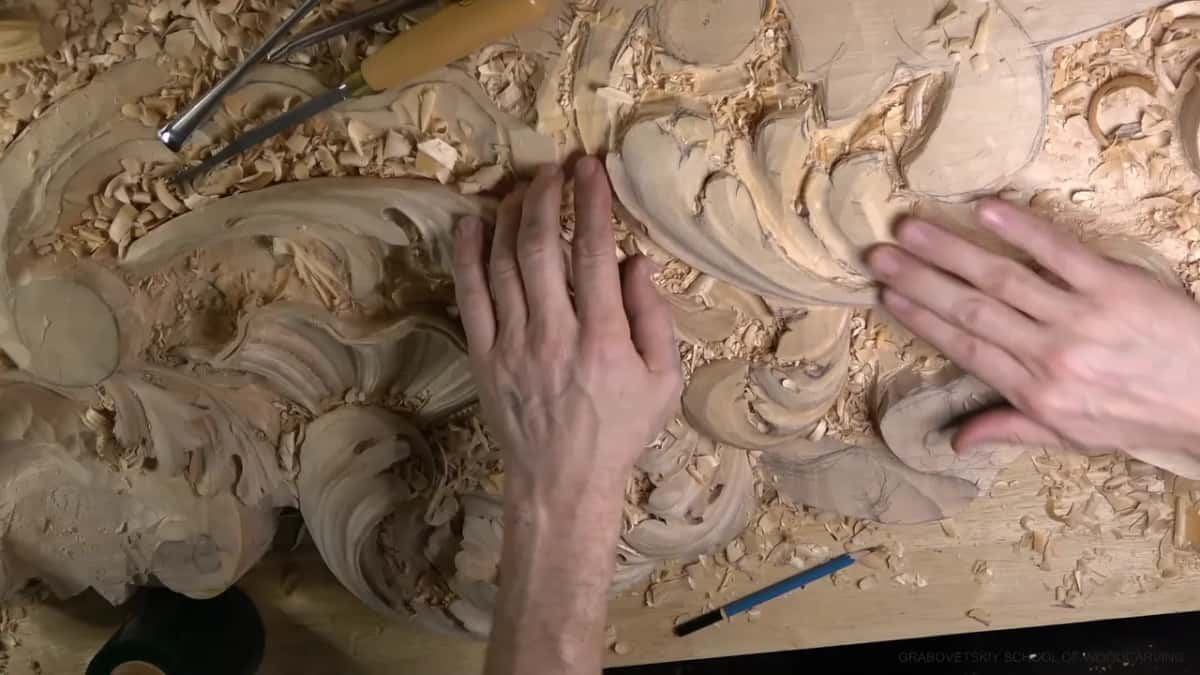
What did I check once the "why not" was out?
The sibling lesson shows it best. Lesson 160, part 3, has the pass about 3 millimeters (1/8 in) down, with a slightly bigger tool to follow, maybe just the 2 millimeters (5/64 in). "And yes, exactly the same on this side, actually. You know what? Why not? I can do it pretty much right away" (03:09-03:42).
My own look went wrong. "No, it doesn't look right." I measured next, and the second look flipped it: "Well, actually, it does look right. I'm sorry. I'm just looking at the height of it, and it does look right." That left approximately 2 millimeters (0.08 in) (04:01-04:27). Two looks, one false alarm.
What do these moments have in common?
Read side by side, my "why not" has a short list behind it. The tool is in my hand. A step takes only seconds in Floral 14 and Furniture 26, and Venice 20 and Onlay 10 had wood to use. Painted work covers Venice 14, 82 and 112. A cost sat right beside the words each time, whether seconds, wood or paint.
The brakes sit in the same lessons. One grape lesson stopped me short, because I wanted no more depth. Lesson 13 of that course warned about excavating too much, since the cleanup gets hard. Concaves and convexes waited in lesson 37, since attacking them too early would be a big mistake. Venice 32 let me chop it out if I did not like the result. Then, in lesson 161, the bigger tool went down, and the one millimeter did the job.
Where do these lessons sit in the course?
The opening video of lesson 161 belongs to Advanced Carving: Venice Room, Part 14, Workshops 156 to 163. The craft is wood carving, a branch of woodworking, and my main tool in these clips is a gouge, sometimes a chisel. The ogee is the curve I was building in this video, and a molding carries it along an edge.
Some of the moments above used a router plane. Others called for a drill, a rasp or a riffler. Several lessons were meant for paint, and the wood runs by its grain. My sizes come in millimeters and inches.
| Where | My reason, in my own words | What came next |
|---|---|---|
| Onlay lesson 13 | I already hold the tool I need | Excavate approximate shape, just outlining it |
| Floral Panel 14 | Measuring costs me a couple of seconds | Still measured to the highest spot |
| Furniture Panel 26 | A router plane sets up very quickly | Went looking for the deepest spot |
| Venice Room 20 | I have plenty of material to use | Probably go around here too, deeper |
| Venice 82 rifflers | Paint grade work, so use the rifflers | Shaped it nicely with the rifflers |
| Venice lesson 160 | Yes, exactly the same on this side | Looked again, measured, and said sorry |

What is in your hand right now, and how long will the next step take? Think about what happens if you don't like it. Look at the wood, the way I did, then pick up your gouge.
How it's done
- Clean the flat first. I cleaned the wood until it was flat, which made the depth easier to read.
- Pick the tool for the depth. Four millimeters (0.16 in) was my guess, three (an eighth of an inch) looked easier, and I went with the one millimeter (0.04 in).
- Set the wall straight down. The number one, three inches wide (76 mm), stood straight down for a 90 degree cut going downhill.
- Add the step nobody needs. A sharp point was optional, and I said so. Then I said to clean it with the half millimeter (0.02 in).
- Fillet with the skewed tool. My skewed back bent filleted in both directions.
- Check the wall. I set a square near the tool and read 90 degrees.
Frequently asked questions
What does a carver mean by why not?
In my lessons the words come after a reason I can name. Four of them came up: reach, speed, spare wood and paint. Lesson 161 gave me an extra point, and I made it anyway, with a cleanup right after.
Do you say it about every extra step?
Far from it. In lesson 161 I dropped the idea of a half millimeter tool for a super sharp edge, and later put the two millimeter tool down once the one millimeter was enough. In a grape lesson I stopped at three millimeters (1/8 in) because I did not want it deep.
How do you check a step you added on a whim?
Look again, as I did. Lesson 160 had me measure the height and find it right after all. A square on the wall read 90 degrees in lesson 161, and in Floral 5 I checked the drilled spot and landed right on the money.
What to carve next