

Alexander Grabovetskiy, woodcarver, School of Woodcarving · Published 2020
What does a wood carver mean by "mindset"?
Quick answer: The word is in part 9 of workshop 56, in my answer about making money with wood carving. In other lessons of mine it sits next to an immigrant and a bad economy, thinking before the cut, when to clean, how a client reads a design, and the way the old masters worked.
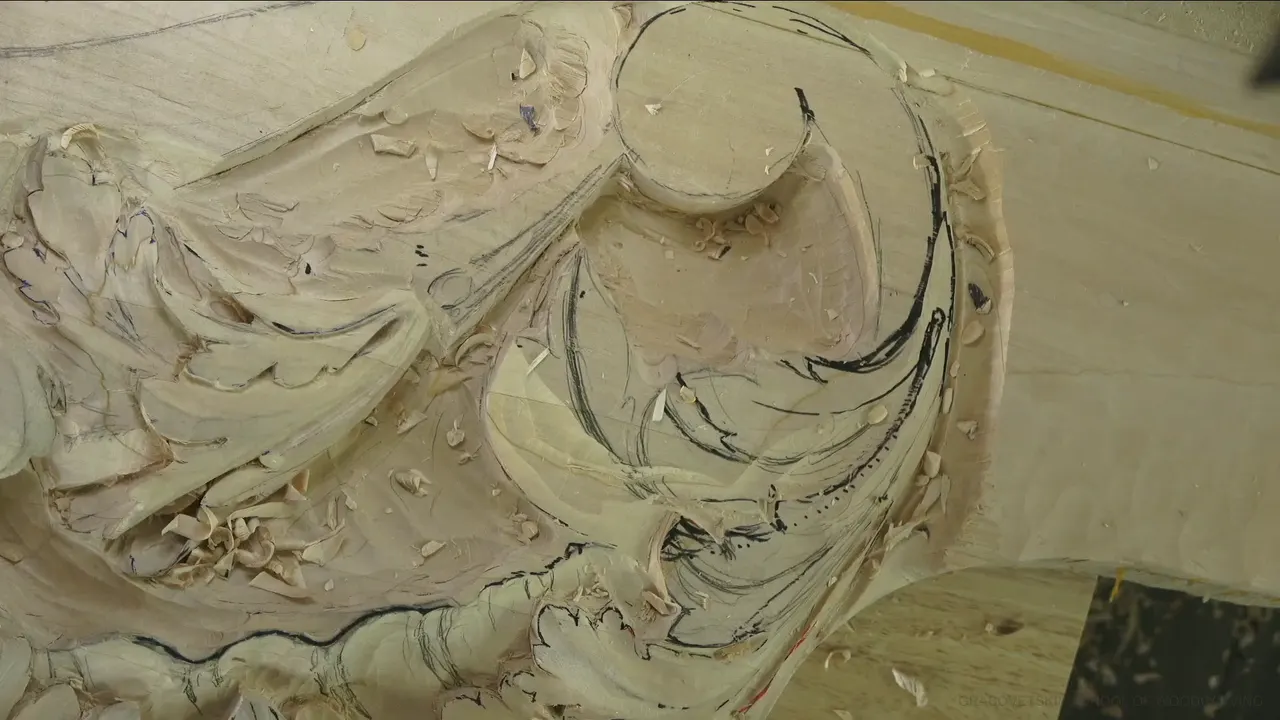

In workshop 56, part 9, I said, "It all depends on your brains, and your mindset." That was about money and carving. This page follows the word mindset through my lessons, because I use it for more than money.
Ever wondered if a carver's thinking matters as much as the hands? Would you like to hear what I said about the work I did before I carved full time? Would it help to see the same word in my design talks? Or at my sharpening stone? Let's start with part 9 of workshop 56. Next I'll point you to the other lessons, each with the words I used.
How did I use mindset in part 9?

Anyone thinking about making any money with wood carving and custom woodworking got this from me: "I would say absolutely yes. I would say yes. No doubt." And again: "Of course, you can." Then came the sentence that names this page. I also said it doesn't matter what kind of profession you have right now.
Some people I know used to be lawyers, I said. "Really big lawyer, actually," and he is doing woodworking right now, "not because it pays better." Maybe it's not, I said. Maybe it is. "It all depends what project you do." But it's just peace. I called it one of the most peaceful professions.
I'm carving all day long and every day, I said, and it's so peaceful. You just concentrate on your work, and your hands become like a machine, pretty much. "You're doing everything automatically." While I said this I was using a number seven in 14 millimeters (about 0.55 in), and I said I love those tools.
What was my work before I carved full time?

I used to be in different types of business, I said. Even while carving, I was still building homes. About nine years, in fact, I was a builder of custom homes, mostly high-end ones.
I also had a kitchen and bathrooms company, like a cabinet company, and a pretty big shop doing cabinets, furniture and bathrooms. Multiple employees worked for me, and people stayed for years. I had to run a business, and I also had to carve, because I still would accept some custom work and some commissions while I was building homes and cabinetry. Those were different divisions, I said, multiple businesses at once.

One day, a few years ago, a really famous woodworker came to my shop. He runs one of the biggest woodworking companies in the world, I have known him for a long time, and we had talked about me working for his company. He said, "Why don't you just concentrate on wood carving? There's a lot of companies who can do cabinetry, and there's a lot of builders, but not too many people who left in the world who can actually carve."
My answer: "Yeah, why don't I do that?" And I switched to carving full time, pretty much, quite a few years ago.
Did switching to carving cost me money?

I asked myself that in the part: "Did I lose anything economically, financially?" My answer was, "Probably a little bit in the beginning." A different type of business, in the beginning. After a few years of doing that work, I said, I didn't lose anything, and I actually gained. "So I'm blessed, I guess."
Can the hands work while the head stays free?

Your hands become "really auto mode," I said. You are working with your hands, but you still have your brains free, and you can use them pretty much for anything. You can listen to audiobooks if you just want to. In my case, I actually took university courses, besides the education I had before. That was college and university "not related to wood carving whatsoever."

Of my first college degree I said it is not a major in most of the universities in the world, and "I never worked a day with that degree." Next I went to another university and just took some marketing major, "but I never became a marketer." A third one followed, and I'm not going to tell you which one, I said. It's actually theological, theology and so on.

While I was carving, I was able to take some university courses, and some of them without any credits. It was not for the credits, but "more to fill my brains." Some of them I didn't take tests for, and some I did. I did not earn any degrees or anything. But I found it a good thing that you work with your hands and can still use your brains while you do.
How does mindset fit into my story about the economy?

Over in the antique style rosette course, workshop 5, I told what I saw when I came to the United States: a lot of opportunities, and I said that's not a joke. I was trying to build a business and make money for my family. English was part of it: "I couldn't speak any English when I came to United States." Then: "Well, it's not necessarily true." I didn't read the newspapers, and I didn't watch any American TV.
I was working, working, working, and building a business with multiple people working for me. After five years, when I already was successful in business, I read the newspaper and found out the economy had been bad during those years. "But I didn't know that."
The joke I told, a true joke I think, is that when an immigrant starts to speak English, suddenly he finds out there is a bad economy. The line after the joke: "for my mindset or anybody else's immigrant's mindset, it's a really good economy. All you have to do just work and see those opportunities. Don't be afraid."
Is thinking before the cut a mindset?

Over in workshop 16 of the dining table apron course, I said wood carving is not that complicated at all. "Anybody can poke a chisel inside of wood." The biggest challenge, I said, is design for carving, and understanding how it will work once you carve it.
"It's more. It's mindset. It's the ability to think before," I said. You have to understand how deep that chisel or that gouge will travel, I added. The same part has another line from me: "Looks like I made a little mistake right here." Next: "That's all right."
Do two carvers share one mindset about cleaning?

Part 2 of lesson 4 in acanthus over moldings has me saying that some of the spots I can do right away. "Why not?" There is a "different opinion about when you should clean," I said, and different wood carvers have a "different mindset."
I told about another carver who passed away a couple of years ago. He would clean before he moved to the next detail, and he wrote that in his book. The point in the book, as I said it: if you're not clean right away, are you gonna forget that? Probably somewhat true, I said. Some of the areas you forget, if it's a huge piece.
I found it better for me to divide the work in stages. Let's say stage number one: just roughing out and creating the movement, and creating everything first. After that I look back after a few days, maybe, and I usually get some kind of ideas what I would change.

Lesson 18 of the Grinling Gibbons class in Maine has a mindset line about cleaning too. Some areas look somewhat rough, I said, and there is still a lot of work to be done. "But mine mindset goes like that." If I spent too much time at the beginning cleaning everything and making it look perfect, and then I want to change something, "I get frustrated."
My logic, I said, is to work on the whole thing at first, make it look how it's supposed to look, and then spend lots of time cleaning up and making it to the perfection.
Whose mindset counts when someone else looks at the carving?

In lesson 5 of my furniture panel design course I talked about how you read a composition, and said it applies when you read a book too. If you do have a Western mindset, you always start from a left side and move down, left to the right, down. With an Eastern mindset, you start from the right point, the upper point, and read the other way. Most of my students are in the Western world, although from different countries, and most of them read left to right. I started my design movement from the beginning, moving from the left upper corner.
To prove it, I drew a diagonal line with a small vehicle on it. With a Western mindset, I said, I have absolutely no doubt that a car on my first line looks like it is going downhill, and a car on the line from the right top looks like it is going upward. With an Eastern mindset or reading, that second car goes downhill.
The law of movement lesson in my principles of design course has the client side. Sometimes I do have a challenge, I said. If I have a client from a different part of the world, "I have to design based on a mindset." The first question in design, when I'm designing for somebody: "what mindset do they have?" Western or Eastern.

Sometimes it's hard "because marriage." One design was for a couple, he a German and she Chinese, living in the United States. You can't change the brain, I said, even if you live there and still have the roots. "So the mindset is still going to read absolutely differently." I designed a twisted way, one diagonal for him and another diagonal for her, intermixed together. They were so happy.
The builder installed the piece, and when I walked inside the house, I found it installed upside down. I did not say anything. I didn't want to take time to redo that, and "they still don't know it's upside down."
Then there is part 12 of Venice Room 1. "When you generate it in three-dimensional world on a software," I said, "I had to keep in mind the mindset of those people who's going to look at it." In real life, I added, you have to actually do some changes.
Do I share a mindset with the old masters?

Lesson 15 of the furniture panel course has the machine question. Removing a background could be done with a normal machine, I said, with a router and a normal router bit. But then it's not as authentic an approach. At least I am trying to be authentic to whatever they did. "That way, I feel exactly what they felt. Same process, same mindset, same tools."
A correction followed: "Almost the same tools, I should say," because they did not have that type of router plane. They had just one made of wood, "but the idea was the same."
In the Maine coast sharpening class I told how the master I was an apprentice of taught me to sharpen tools. All by hand, and "the only way masters done for centuries." Then: "Same mindset, same setup." You take a stone and a gouge, in my case a number nine, and he taught me the right angle and the right movements, which you do not do with the hands but with your body.
That same master told me, "Think how many tools you have, and how you're going to execute that." Back then he gave me only one knife, and one gouge later on. "You have to master knife before you're going to get to the gouge."
Which lesson held which line?
Here are the places side by side, each with my words. The course name comes from the lesson itself.
| The lesson | What I was talking about | My words |
|---|---|---|
| Workshop 56, part 9 | Answering a question about money and carving | your mindset |
| Antique style rosette, workshop 5 | My story of building a business after I came to the United States | my mindset or anybody else's immigrant's mindset |
| Dining table apron, workshop 16 | Poking a chisel into wood, and knowing how deep it goes | It's mindset. |
| Acanthus over moldings, lesson 4 | When to clean a detail, right away or in stages | different mindset |
| Grinling Gibbons class in Maine, lesson 18 | Rough areas, and the whole piece before the cleaning | mine mindset goes like that |
| Furniture panel design, lesson 5 | How you read a composition, and a car on a line | a Western mindset, an Eastern mindset |
| Principles of design, the law of movement, horizontal movement | A client's roots, and a couple | the first question in design, when I'm designing for somebody |
| Venice Room 1, part 12 | Generating it in a three-dimensional world on a software | the mindset of those people who's going to look at it |
| Furniture panel, lesson 15 | A background taken down by hand, not by machine | That way, I feel exactly what they felt. |
| Sharpening class, Maine coast workshop | Sharpening by hand | the only way masters done for centuries |
Where can you watch these lessons?
This page's lesson, Venice Room 56, sits inside Venice Room Part 5, right after workshop 55. The other courses are one click away if you start here.
How it's done
- Think first. Understand how deep that chisel or that gouge will travel, I said.
- Work and look for the opportunities. "All you have to do just work and see those opportunities. Don't be afraid."
- Ask whose eyes will read it. Ask whether the client is from the East or from the West, I said, before you design.
- Shape the whole piece first. "Work on the whole thing at first," I said, and then spend lots of time cleaning up.
- Take the background down by hand. "At least I am trying to be authentic to whatever they did."
- Keep your head busy. Fill your brains while the hands work, I said, and in my case that meant university courses.
Frequently asked questions
Can a carver earn a living?
I would say absolutely yes, I said. No doubt. Of course, you can. Brains and mindset decide it, I said.
Did going full time cost me anything?
Probably a little bit in the beginning, I said, and it was a different type of business. A few years into that work, I hadn't lost anything. I actually gained.
Do my brains stay free while my hands carve?
Yes, I said. The hands carry on in auto mode, and the brains are free. You can listen to audiobooks, and I took university courses, besides the education I had before.
Do all wood carvers clean at the same time?
What to carve next