
Alexander Grabovetskiy, woodcarver, School of Woodcarving · Published 2020
What does a wood carver mean by "no problem"?
Quick answer: Close to the end of part 1 in Venice Room 69, I said my micro tools go right through the fibers, and my sentence closed on the words no problem. My Hashemi, Floral and Molding, Furniture Panel and other Venice Room lessons put those words beside a mess to clean, a deeper reach and a sharp tool.
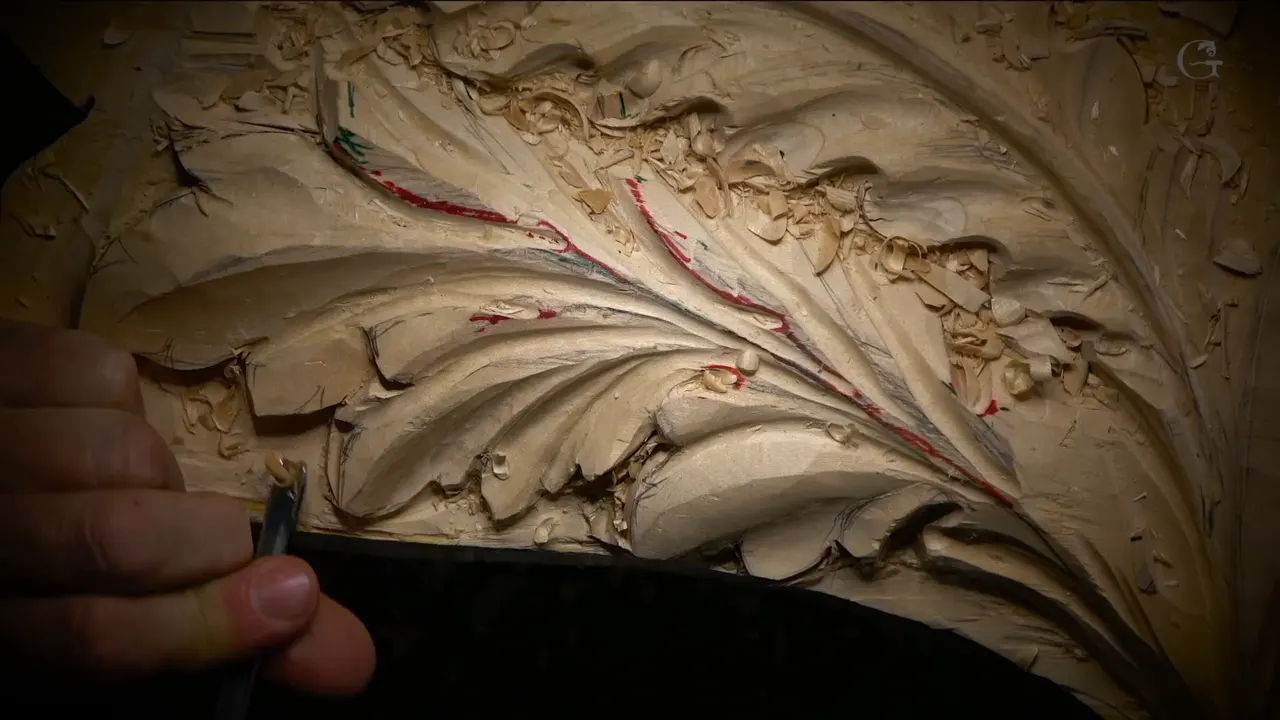

Late in Venice Room 69, part 1, I told you why I love my micro tools, and the answer closed on no problem. Those words sit beside a mess, more depth and a sharp tool in my other lessons, and each line is below.
Have you ever stared at a messy spot and wondered if you could fix it later? Do you ask whether a tool will slice through the wood? Then watch these lines.
What did I say in part 1 of workshop 69?
Part 1 opens on divisions. "And all of them are going to be subdivided," I said, and some of that work would happen off camera.
Next came a line about a break. "See? Well, I just broke on my way in. It's okay. I did not lose that detail, but got to be a little more careful."

A plan followed: "I can probably right away chop this triangle." For the spots after it I said "maybe this is too early, but here I could. And here I could." Then "that's already developing the main idea," I told you, and I named number five as my next tool. Later, "maybe bigger one. Bigger number five."
I told you "you should be able to see overall movement," and "that's pretty much how I develop a canvas." A warning sat beside it. "Don't get me wrong." Then: "There is still a lot of work yet needs to be done."

"Use whatever tool fits and establish better movement. And in this case, it's just number three." A need came next: "of course, I need to go a little deeper in some of the spots."
Then a ridge. "Let me hit little bit this ridge. Maybe just upside down number three and clean it a little better." Afterward I told you "Yes, I hit little bit that side, but it's okay. For me, it's more important to get a cleaner convex side."

For the inside I planned a gouge: "And inside, I'll clean it a little better with number 11, seven millimeters again" (about 0.28 in). "Just barely hitting the tops like this, okay?" And then "Wonderful. That is just wonderful."
My next line was a need to think. "Okay, let me think because I need another division right here." It would give me "curliness, beautiful curliness," and in this case it would be almost invisible. My size: "Number 11, two millimeters, and create couple more notches" (about 0.08 in). One more plan: I would need to undercut on that side.

Where does the phrase sit in that part?
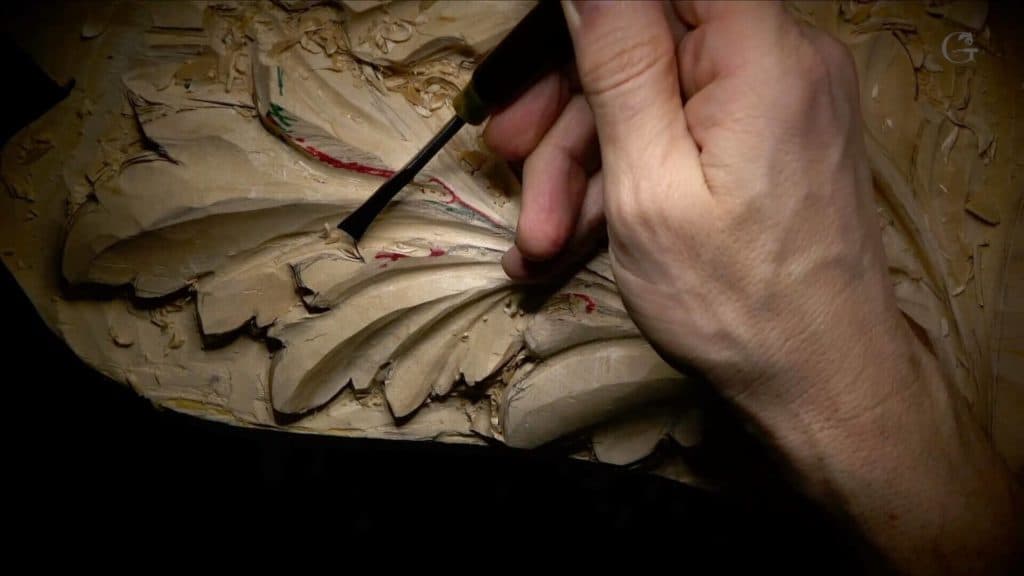
Close to the end I said "clean little better those movements, which micro tool going to help me a lot." Then came the reason I love those tools: "because it's a really thin metal, and it goes right through the fibers with no problem."
I kept going. "It doesn't have to be a micro tool. Any tool will work, even full size." And one more line: "I just like how it feels to work with them."

Did the same words come back in the rest of workshop 69?
Workshop 69, part 4, has a section I held back on: "I really don't worry about this section yet, although I could actually attack it right away." No problem finished that sentence. A tool came next: "Maybe I can take 20 millimeters number nine or something like that, like 3/4 of an inch, and chop a little bit. Not much, because I don't want to rush it."
Part 2 said it was clean: "Okay, and that's really clean. I don't need to sand anything or anything. It's just really good."
Part 3 had a second thought. "Later on, I will just hit that again with some kind of gouge or veiner and clean that. Well, actually, you know what? I can clean it right away, pretty much. Why not?" And it looked ahead: "Because it's all about acanthuses in this project. A lot of acanthuses."
Part 3 named a smaller tool. "Inside between those two things, I can always use a smaller tool, like maybe one millimeter, number 11" (about 0.04 in).
Part 5 had tool marks. "I really don't worry about the tool marks because it's not a big deal at all, for me at least." Next I added "I can clean them," and the two words closed that line too.

Part 7 turned to a ball shape, and it would take "a lot less effort to create that ball shape or whatever you call it, like a sphere shape, okay?" Next, "I can just slice through it, no problem. See? It's beautiful." The edge needed care: "I've got to be careful not to touch it because it's super sharp right now."
My bevel had a reason: "And why I didn't do bigger bevel on this particular tool, because I'm planning to use a mallet on that too."

When does a sharp tool mean no problem?
Hashemi Flowers 14, part 2, brought a number eight of 10 millimeters (about 0.4 in): "I'll remove some of it. Be careful how much pressure you create."
Resistance came up next. "If you do have a resistance, you feel like wood is not cutting, so that means your tool is not sharp enough." Then "it should really slice the fibers," I said, and I finished on the two words. On an end grain "it's kind of hard if the tool is not sharp," and "it can create a big problem."

"So you really have to use a small, tiny tool, like what I have," I said in Floral and Molding panel 13, part 3. "If you don't have that, you really don't have to worry too much."
Then: "But with a tool like this, I can get in the tiniest spots, and I can create my cut," and the same two words followed. "This one is a one-millimeter tool," I said (about 0.04 in), "Number 9. Really small, tiny spoon."
A number seven turned up in Hashemi Flowers 10, part 2: "this one is about half an inch or 13 millimeters. And I can use that tool safely," and again those words followed.
Something I did not expect turned up in Venice Room 77, part 10: "I've got that CA glue inside, the fibers, and it's just really solid, almost like plastic." I did not expect that, and I pointed at one side.

"For example, this side. See? It slices really good with no problem. But closer to the break point I'm getting, it's actually like a plastic." A thought came after it: "Maybe I should use that CA glue much more often and stabilize some of the work."
Is a messy spot no problem?
Lots of mess sat in Venice Room 66, part 12. "And here you go. I've got lots of mess on the side, but it's okay." Then "That mess can be cleaned," I said, and the same words came last. My tool choice: "Let me use number five or maybe number six. I'll check number five first."

Venice Room 73, part 1, had a messy section. "This section is looking messy. But that's okay," and "I can always clean it," I said, and again those words came after. One more idea: "And yes, I could give a small chamfer if I wanted to, which was really common also."

A spot sat out of view in Venice Room 64, part 8. "And yes, I can also clean that off camera," I said, with the phrase right behind it, and I gave the reason, "because you really don't see what's going on on the side."
After that I said "It casts shadow now. Beautiful shadow."

Lesson 19 of the Furniture Panel course, part 8, had a "number five, quarter inch" (about 6 mm), and I said I would create a small concave. "And it's okay if it's not too clean yet," and "I can take care of it no problem a little later." Then: "Maybe I should create a little deeper concave." Soon I said "it looks like number five is not giving me the reach I want."

Can a chunk come out, no problem?
Part 11 of Venice Room 83 had a chunk to take out. "I need to take out this chunk so it's on my way, and I can easily remove it," I said, and no problem followed, then the number nine. And more: "I think I can actually remove more."
Part 12 of Venice Room 75 weighed a risk. "Again, if it's not going to work, if I'm not going to like, I can always chop this out. It's no problem." And a caution: "I don't have too much thickness."
Part 5 of Venice Room 62 had two pipes in place. "I've got two pipes exaggerated. I can reestablish my middle line," and I closed on no problem.
Workshop 77, part 6, has an edge. "Actually, I could do all the way to the edge, no problem." In workshop 67, part 6, I left something for later: "Don't pay attention to those facets." And another line: "I have no problem to clean them little later."
Part 7 of Hashemi Flowers 44 had a knife. "And looks like I am successful. I got my separation." After that came "Now I can excavate on inside," and the same words ended it.
How deep can you go, no problem?
A small veiner came up in part 9 of Venice Room 62: "I'm going to take five millimeters right now, number 11 veiner" (about 0.2 in). Afterward: "I don't have to, it's just outlining," and then "I also need to outline this section." My sentence about the same tool ended on no problem.

Workshop 66, part 3, is about going deeper: "And I want to go deeper. Maybe even a couple inches if I'll be able to" (about 51 mm). "I have to blend it, but it's no problem. It's not a big problem because I still have some flowers going on inside." I added "But still, I have to be really mindful."
Later I said "See, it's already giving me some shadow," and then "But I know I can go deeper right here," and the line closed on the two words. The size was "maybe smaller," then "five-eighths of an inch, 15 millimeters or so."

Part 4 of Venice Room 68 brought out a number seven. "And just chop that down pretty much right away." Next came "I can go all the way to the first layer," and the phrase followed. What was left: "I left about one-eighth of an inch right now, about three millimeters, before I hit the first layer." Later in that part: "Looks like I'm still safe," and the same words again.
Workshop 68, part 7, went deeper. "So let me get a little deeper cut. Like I said, I can get really deep right here," and the phrase closed that line. The depth: "Like about 10 millimeters deep, I would say" (0.39 in).

Part 9 of workshop 72 had thickness to spare. "I do have enough thickness on inside. You can see, it's not undercut, so I'm safe to do that concave," and then the phrase came. Right after: "I don't think it's going to be any problem."

The number in part 10 of Venice Room 83 was "about an inch and a quarter I can take down," with the words after it (about 32 mm). Next: "But let me round this side. Okay? Fillet it, if you want to say it that way."
And part 2 of Hashemi Flowers 15 gave a big tool: "And I'll use a big number five at first. And that's one inch" (about 25 mm). "And now safely, I can actually remove a lot of material," and the same two words closed it. Then I added "Although, maybe I've raised it too high."

Which lines sit side by side?
Here is each lesson with the words I said beside the phrase.
| Workshop | What came with the phrase | Nearby |
|---|---|---|
| Venice 69.1 | a micro tool made of really thin metal | really thin |
| Workshop 69.7 | slicing a ball shape with a sharp tool | super sharp |
| Hashemi 14.2 | slicing the fibers, even on an end grain | not sharp |
| Venice 66.12 | mess on the side, then a number five | always clean |
| Panel 19.8 | number five, a small concave, not too clean | little later |
| Workshop 68.7 | going a little deeper, about 10 mm (0.39 in) | same operation |
| Hashemi 15.2 | a big number five, one inch (25 mm) | too high |
| Lesson 77.10 | glue in the fibers, one side sliced | like plastic |
Where can you watch every lesson named here?
Each lesson sits inside one of my wood carving courses. This workshop holds the part I started with, and workshops 62 to 73 are in Venice Room Part 6. The Hashemi lessons are in the Hashemi Flowers course. To watch them all, start here.
How it's done
- Subdivide the leaf. All of the divisions would be subdivided, and one spot even more.
- Chop the triangles. A triangle could probably be chopped right away, I said, and maybe the spots after it.
- Pick the next tool. Number five was my next tool, maybe a bigger one, and in this case a number three.
- Clean the convex side. Inside, I planned a number 11 of seven millimeters, just barely hitting the tops.
- Add notches. My plan for a couple more notches and subdivisions was a number 11 of two millimeters.
Frequently asked questions
Do you need a micro tool for the cut in workshop 69?
Any tool will work, even full size. My reason for loving the micro ones was the thin metal, and I added that I like how it feels to work with them.
How deep could I go?
Workshop 68, part 7, gave about 10 millimeters (roughly 3/8 in). Venice Room 66, part 3, gave maybe five-eighths of an inch, 15 millimeters or so, and workshop 83 gave an inch and a quarter (about 32 mm) to take down.
Was a messy spot a problem for me?
Workshop 66, part 12, showed a messy side, and it was okay, and workshop 73 gave me a messy section I could always clean. Tool marks in part 5 of workshop 69 got the same answer.
What to carve next