
Alexander Grabovetskiy, woodcarver, School of Woodcarving · Published 2021
What does a wood carver mean by "how in the world"?
Quick answer: In Byzantine Acanthus 1-2 I tell about a guy in a class who put a fly or a bee inside his carving, and the question people ask is how he did it. Other lessons carry the same wondering beside a black line that blends away, a small petal, a stem and a dot.
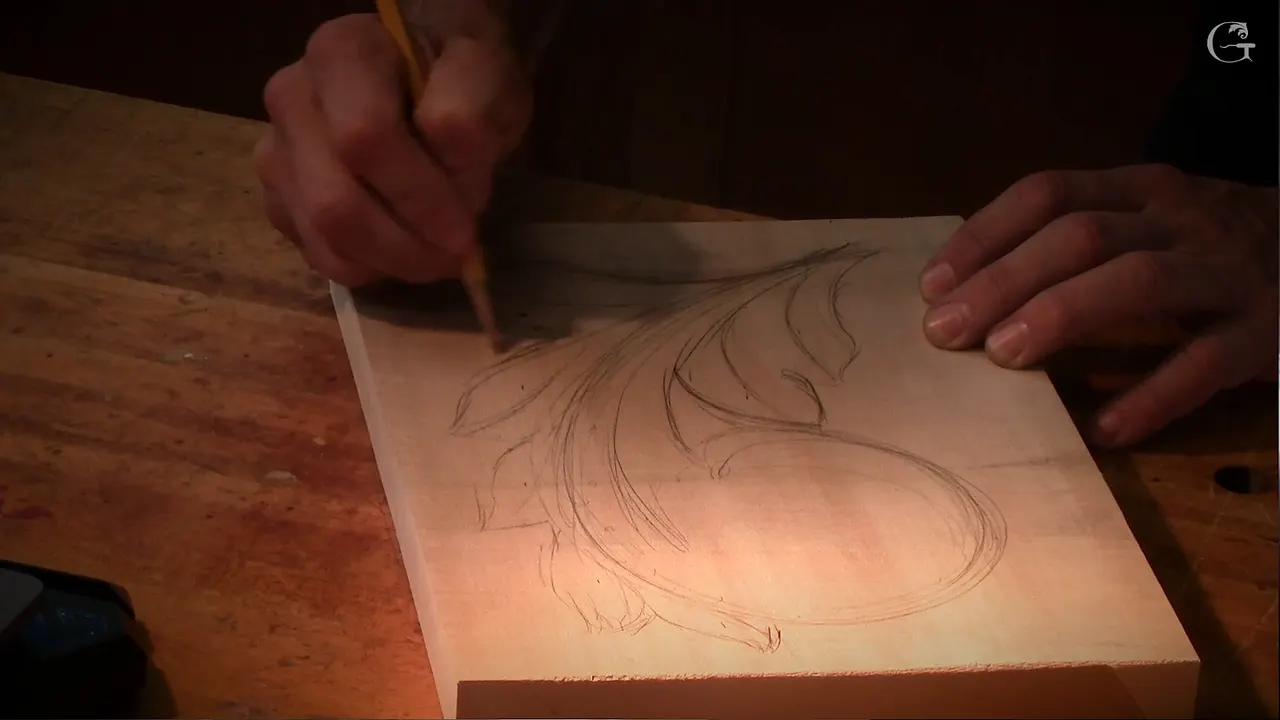

Byzantine Acanthus 1-2 has a guy in a class who put a fly or a bee inside his carving, and I say it is nice when people wonder about that. The same wondering comes back in other lessons of mine, and every lesson below is named.
Ever looked at a carved leaf and asked yourself how anyone got a tool in there? Ever had a visitor ask how you made one small detail? Below are the videos where I say it, what I was doing, and what came next.
What did I say in Byzantine 1-2 before the fly?
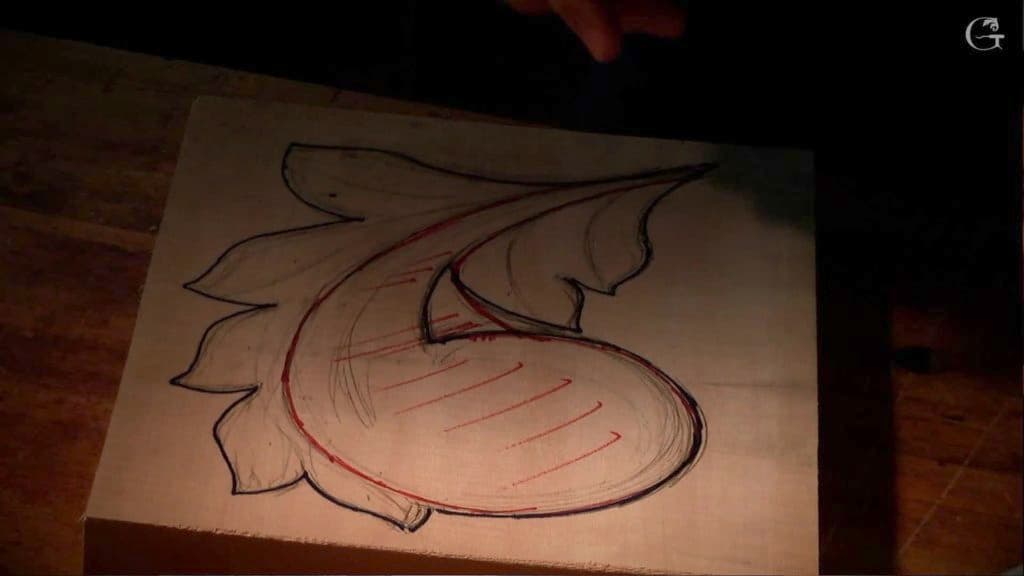
The part opens with "What I would love you to do." I stop there. "Hold on, let me check," I say. I want to recheck how it will look, and I add "It is Fibonacci, but I want to make sure it looks good."

One thought stops short after "What I could do." Later I say "I probably should get little bigger." Next comes "Again, I'm going to repeat that blue" and the blue is the first layer. I plan to write that down.

For the drawing I give a rule. "Don't worry about being perfect," I say, and then "on another hand, don't drift away like an inch" (about 25 mm).
Who put the fly inside, and what did people ask?
In one class, a guy carved "a small fly or bee or something like that" and he placed it inside "just to impress other people." I tell it in this part.

"It's nice when people asking," I say, and then I give the words, "How in the world did you carve that inside?" The reply in the story is "Oh, it's a secret. You're not supposed to know that. It's only to the secret societies idea."
Then the talk turns to the second layer, and its color is orange: "So the second layer, again, it's going to be orange." A request follows: "Please don't throw away whatever the cutoffs you're going to have. Okay? Keep them." I cut that talk short with "See? That's all to it. Okay, that's that second layer."

The next job, once that is done, is the transfer. I plan to lay the second piece down and use "my carbon paper I brought with me." One sheet will do for the class. I say "We don't have 16 people in the class, so really don't want to waste it. It lasts for years."
I ask someone for a ballpoint pen. Somebody asks "Is this any better" and I reply "No, no, no. Not gel. I don't like gel." What I do right now, I say, is "what you're going to do with both layers." In my case "I don't need to because I have already drew right on the board."

The plastic gets a warning. "Make sure you don't tear that, okay? It's kind of fragile." I use "a little thicker for just that case" and I say it will work. Next comes the cutting: "just use the scroll saw on the second layer."

Before you take it, I say, "let me tell you about the safety about the scroll saw." It is "also one of the safest tools." Still, "You still can damage yourself, okay? Be careful with that." I add "So the tension" and I ask to pull a saw out so I can tell them a little bit.
The talk that follows is about pulling the saw out, setting it up and finding blades, and "It'll take a little bit of time." I answer "Well, we're going to transfer then the pattern. Okay?" The part ends with "Okay, wonderful, people. So let's start. Who's going to start doing it?"

Where else do I say I put something inside a carving?
In the next video, Byzantine 1-3, I tell them "Make the decision if you want to do it or not now." The place for a bee, or a signature, is "before we're going to apply the second piece." People would not even know how it was done, I say, because it would look solid.

In Byzantine Acanthus 6, video 2, the line is "So if you want to put something inside, like a signature or something, it's time to do before you glue it."

Later in the course, Byzantine Acanthus 9, video 3, comes back to it: "you could place some kind of signature or bug inside." It can be done "in the first layer from solid," "without placing on top something." That, I say, "would be really challenging to understand."

The black line is the subject of Byzantine Acanthus 7, video 1. I blend "to the line without touching my first layer yet." The goal is "get rid of completely of that black line" and I plan to do it "with the number 11 later on, or number nine will work."
"It's going to blend together like a single piece," I say, and it will look "completely solid." I also say that "people will ask" about it.

Which hard-to-reach spots do people ask about?
In Hashemi Flowers 49, video 3, I say "I'll follow with number 11 again" and "as deep as I can." After that I name "just a half a millimeter" (0.02 in) for "even deeper excavation." My knife comes next, "I'll attack the edge with a small knife" and the plan is "I have to create a small petal on inside."
If you get it done, I say, "some of people who's going to see your work" will wonder how it is even possible, with that petal on the inside. But "there is nothing complicated, actually. Still the same. I would just use exactly the same technique. Just number 11."

Venice Room 18, video 7, has the same wondering about a bent tool. People "wonder sometimes" how it is possible "to get in just like that" and I reply "It's possible, okay?" The tool is the back bend: "so I'm able to actually even excavate a little bit inside, even undercut underneath."
Deeper shadow is possible too. "I really don't have to, but I am able to," I say. If I had a shorter back bend, "I could go even more extreme."

In Grinling Gibbons Maine 16, video 2, my plan is "let me undercut around first and probably this one is gonna be separated completely from the flower." I am doing "those bites" because "it's really uncomfortable to get my tool in." Then "Here you go. I can see a first layer."
"You don't see it probably but there's a little thing," I say, a stem that "is gonna go from underneath of this flower." I also say "I love it gives me more complex look." People gonna say the same of that stem. About the cut I say "I don't want to cut through."

In The Tray of Blessing 8, video 4, I say "you just kinda press on the site" and "it just becomes a dot." People gonna ask about "that small dot." Then someone says I broke the good tool. My reply is "I did that on purpose because now I can use a mallet and create a deeper, you know, dot."

When is the wondering about speed or a smooth look?
In Furniture Panel 15, video 11, I say "I'm not going to speed up." And "that way, you can experience the real life speed." Watching other people carving, "you just wonder" how they do it quick, "but they don't. They just show you the results."
I could edit that background removal and "make it only one minute long," since "you already got the idea anyway," but then you would not feel how long it takes.

Roman Acanthus 3, video 1, holds the question about smooth surfaces. Just before it I say "You're still human being, and you can't do like machine, although you can try to." Then: "you wonder, you have a question sometimes," about how those carvers get that smooth result.
In most carvings of England and Germany, I say, "you're not going to find those surfaces really smooth because that is in the culture. You leave chisel marks." I add "You don't use any sandpaper." When a surface is really smooth, "they probably sanded that completely."

Hashemi Flowers 1, video 4, carries the wondering about a whole design. "I know some people look at the designs just like that," I say, and they have "a big question inside of the head" about whether it is even possible to carve. Then comes "if you know the techniques, and this type of carving is all about the techniques, it's not that complicated as it looks."
A depth follows: "I left about half an inch" (about 13 mm). About the spot I say "I could go a little lower, and I probably should, and I will a little later."

What do I ask when I am the one looking?
In Venice Room 83, video 10, I have "a computer right at the front of me, my 3D model" and I look at "what I modeled." Then "sometimes I just wonder myself" how I did that, "Or why I have done it, what I've done." Of one side I say "see how deep this side is. So I've got approximately, I would say, an inch deep" (about 25 mm).

In Venice Room 92, video 11, I say "I have to be careful in this section." "The glue line looks almost like metal, just shines from the light source I have. Kind of scared me for a second." Next I thought "What in the world is going on inside of that wood?" My plan is "I'll use a spoon again, but that would be number seven and four millimeters" (0.16 in), "just to get in a space like this."

Furniture Panel 37, video 1, opens with "All right, I've got this part, but" and then my own question, how to "make it feel like it's gonna go right underneath." The tool I name is "the half a millimeter" (0.02 in), a "must have tool" for a furniture maker. "You can just get so much with that." The cut is "right here, straight down" with "My flute is up to about 12 o'clock" and "keep an eye how deep the background is."
How do I turn the question on my own choices?
How to Sharpen Skew Bent Gouge, video 3, brings "Some of you probably do have a question, why in the world do you need a skew gouge?" The reply is that it is "more useful than you think sometimes." "You can get with the corner really, just if you need to make a gouge cut, but you can't reach sometimes in a corner." Then "That's number one. The second, if you like to do tracery, like a Gothic tracery, that tool you just absolutely must have."
Then there is Byzantine Acanthus 8, video 1, with "The reason I'm using that knife": "a lot of wood carvers, they don't know the use of the skew." I ask why they supply the skew at all, "I mean, how you use it, okay?" And "the skew is one of the best tools actually you can have also for the wood carving. Fastest."
Beginner in Woodcarving Workshop 15, video 1, includes "I know some of you probably had that question in the side of the heads" and the question is "Why in the world he leaves some spots rough?" Part of my answer is "sometimes it's a good idea to leave it alone for a couple of days, even longer sometimes." I "work on something else" and "come back, and then you'll see all the mistakes you made."
In Carving Grape Onlay 12, video 1, I point to a couple of spots "which I did not touch." People may wonder, I say, and the words are "he didn't clean that." The answer is "I need to keep those high spots because I have to remember, at some point I will have to flip it and it's gonna rest on those spots and it's gonna be pretty solid." Those spots are "gonna serve me like legs."
Where did each wondering come up in my lessons?
| The thing people wondered about | Lesson and video where I said it |
|---|---|
| A hidden carving | Byzantine 1-2, 1-3, 6-2 and also 9-3 |
| A black line | Byzantine 7-1, where that line blends away |
| A tight spot | Hashemi Flowers 49, video 3, and Venice Room 18, video 7 |
| A stem and a dot | Gibbons Maine 16, video 2, and Tray of Blessing 8, video 4 |
| Carvers who look quick | Furniture Panel 15, video 11, and a smooth result in Roman Acanthus 3 |
| A design that looks hard | Video 4 of Hashemi Flowers 1, where people ask if it is even possible |
| My own work, seen again | Venice Room 83, Venice Room 92 and Furniture Panel 37 |
| Why I made a choice | Skew sharpening 3, Workshop 15 and Grape Onlay 12 |
Which spot on your own carving would make a visitor stop and ask? Every video named here sits inside one tuition plan. The Byzantine Acanthus course page lists all ten lessons, and lesson 1 holds this video and the two next to it. More wood carving and acanthus work waits there.
How it's done
- Decide early. A bee or a signature goes in before the second piece. The class hears in Byzantine 1-3 to make that choice now.
- Do it before gluing. In 6-2 I give the same timing for a signature or something else inside: before the glue.
- Blend to the line. In 7-1 the carving runs up to the black line without touching the first layer yet. Later I plan to remove that line.
- Let it look solid. Blended well, the piece looks like it came from one piece of wood. Visitors will have questions about it.
Frequently asked questions
Who carved the small thing inside in Byzantine 1-2?
A guy in one of my classes, as I tell it. His carving went inside to impress other people, and the reply in the story is that it's a secret.
When does a signature go inside a carving?
Before the second piece goes on, I say in Byzantine 1-3, so the choice has to come early. In 6-2 I give the same timing as the moment before you glue.
Can two layers look like one solid piece?
In 7-1 I blend toward the black line while the first layer stays untouched, and I say the result looks completely solid. The line comes off later.
What to carve next
- Byzantine Acanthus course page
- Byzantine Acanthus 1
- Byzantine Acanthus 6
- Byzantine Acanthus 7
- Byzantine Acanthus 9
- Byzantine Acanthus 8
- Hashemi Flowers 49
- Hashemi Flowers 1
- Venice Room 18
- Venice Room 83
- Venice Room 92
- Furniture Panel 15
- Furniture Panel 37
- The Tray of Blessing 8
- Grinling Gibbons Maine 16
- Roman Acanthus 3
- Carving Grape Onlay 12
- Beginner in Woodcarving Workshop 15