
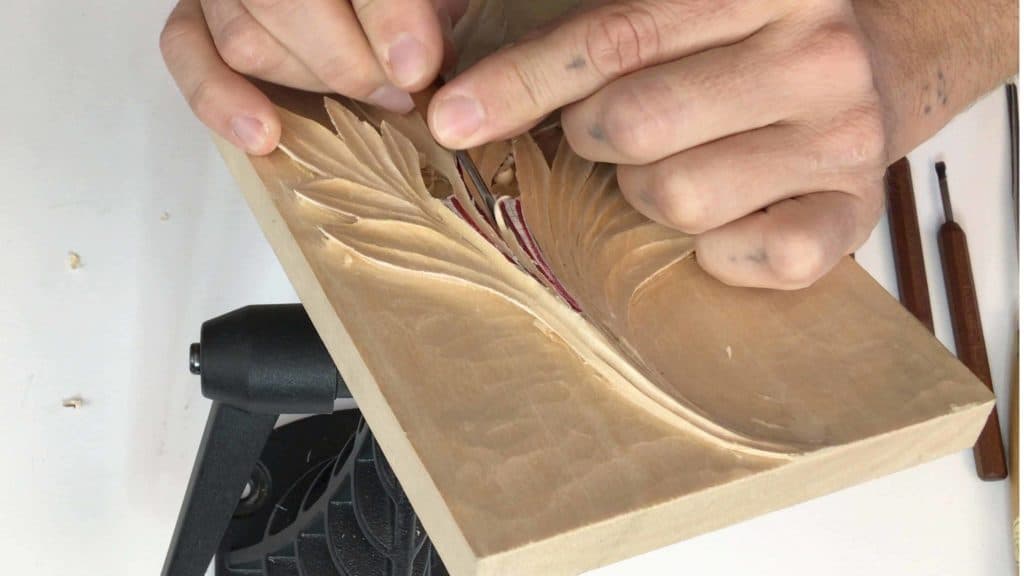
Alexander Grabovetskiy, woodcarver, School of Woodcarving · Published 2017
Is wood carving relaxing?
Quick answer: Wood carving is relaxing for me in its slow stages, though not every minute. On my Corinthian leaf the calm one was cleaning the background, probably my most favorite part. Over long hours my hands work on their own, but a dull tool or a deadline brings the tension back.
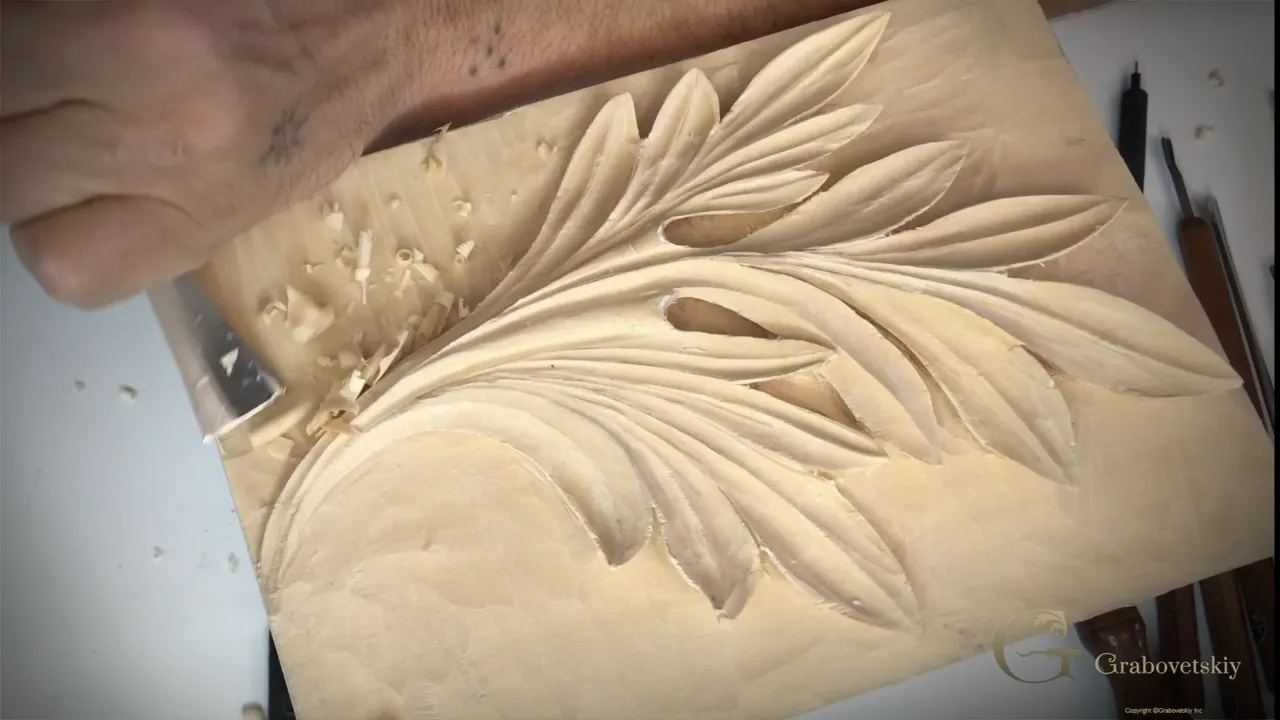
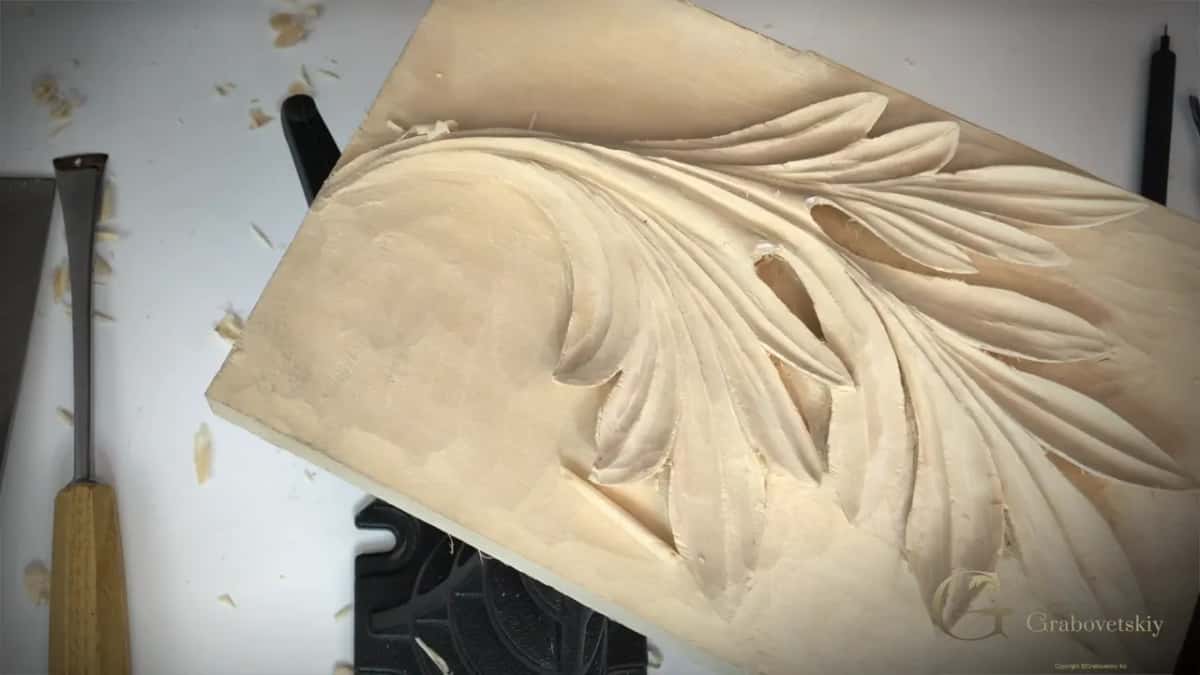
Wood carving is relaxing for me in its slow stages, though not in every minute of the day. On this Corinthian acanthus leaf the calm stage came last. The stage I like best on it, probably, is cleaning the background, and I said so in part 3 of lesson 6. I'll give you the quiet moments from my videos, and the moments when I don't relax at all.
Have you ever done a job with your hands and found that an hour went by without you noticing? Did your hands keep working while your head went somewhere else? Then you know part of what I mean by calm in carving. The rest is below.
Six things I said about calm and tension while carving
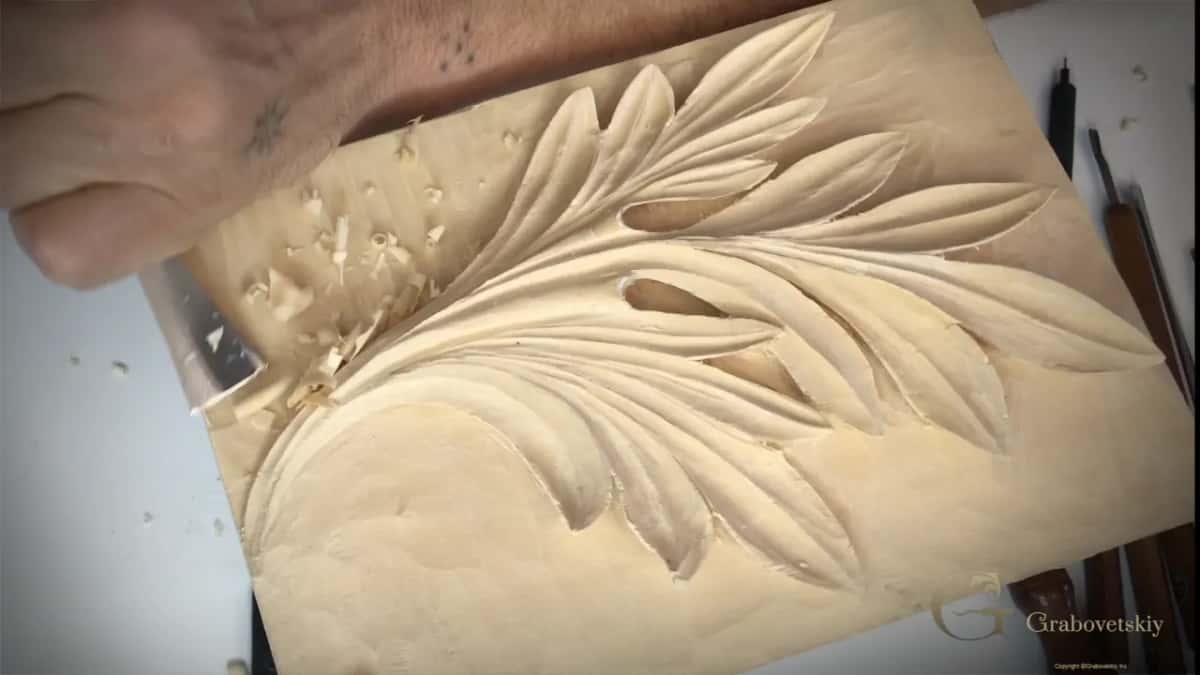
- Slicing the ground clean on this leaf is the stage I like best, probably.
- Extreme undercutting comes close.
- Long hours put my hands in an automatic mode, so I fill them with audiobooks and university courses.
- On the grinder you can relax until the last stage.
- Blunt tools tear the wood, and then you get frustrated.
- Paid work has deadlines, and deadlines bring tension, because you can't expedite with carving.
Which part of this leaf did I call my favorite?
The ground. About a sixteenth of an inch (1.6 mm) was still sitting on the background in part 3, left there on purpose, and why I leave it has its own page on lesson 6.
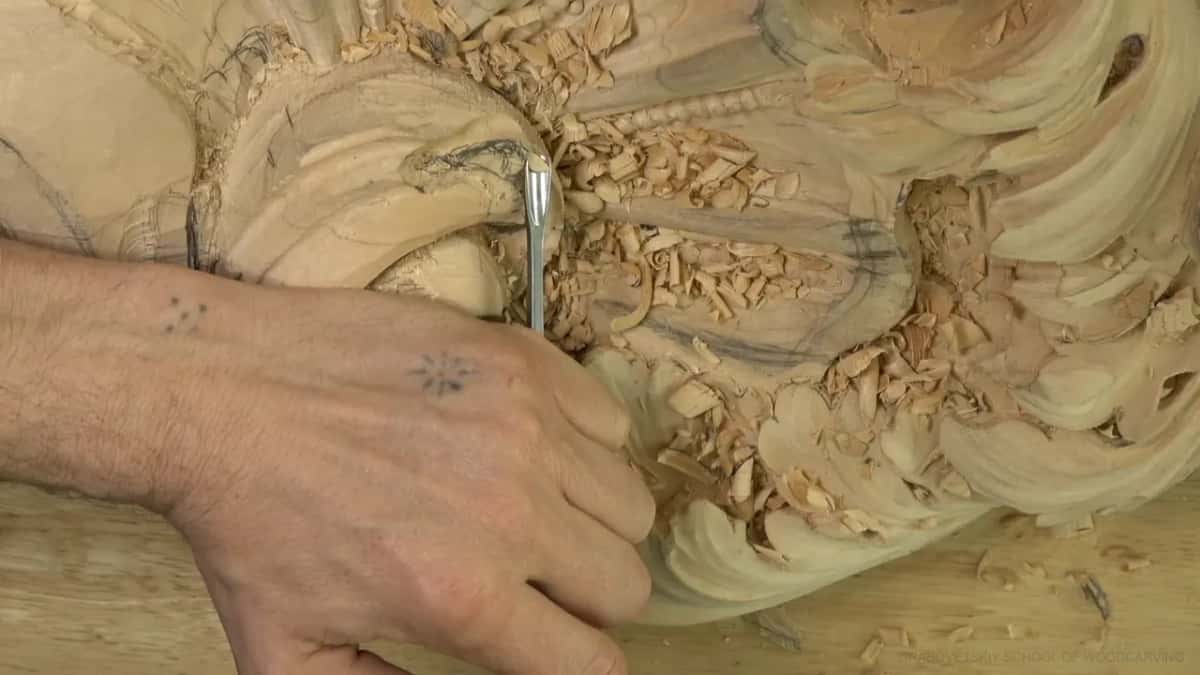
Before the ground, a tiny gouge of about one millimeter (0.04 in), a little more, went against the side of the high ridge. Not everywhere. Just some spots to give some interest, I said, and don't do it everywhere, otherwise it's not going to look as nice as you think.
As for the details, work on them as much as you feel comfortable, I said. Then a number 5 went down on the line, and I moved it inside, from the outside toward the center. Ridges came up behind it. And don't worry about those ridges, I said. Less than a minute later I said it again.
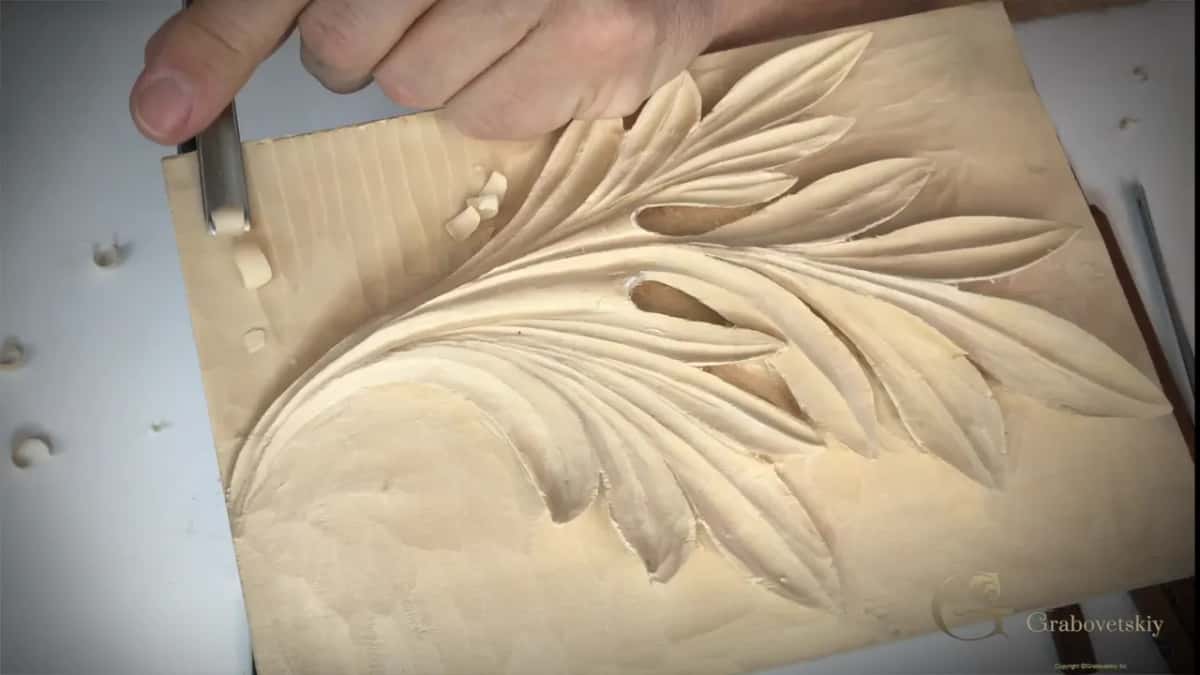
After that came any number three, in slicing movements, over and over across those ridges. For a few seconds there is no talking on the video, just the tool going over the ground.
Anyway, this is probably my most favorite part, to clean the background, and you're also training your hand to make your surface really, really smooth and nice. By the time you finish, you should have a really clean background without any ridges.
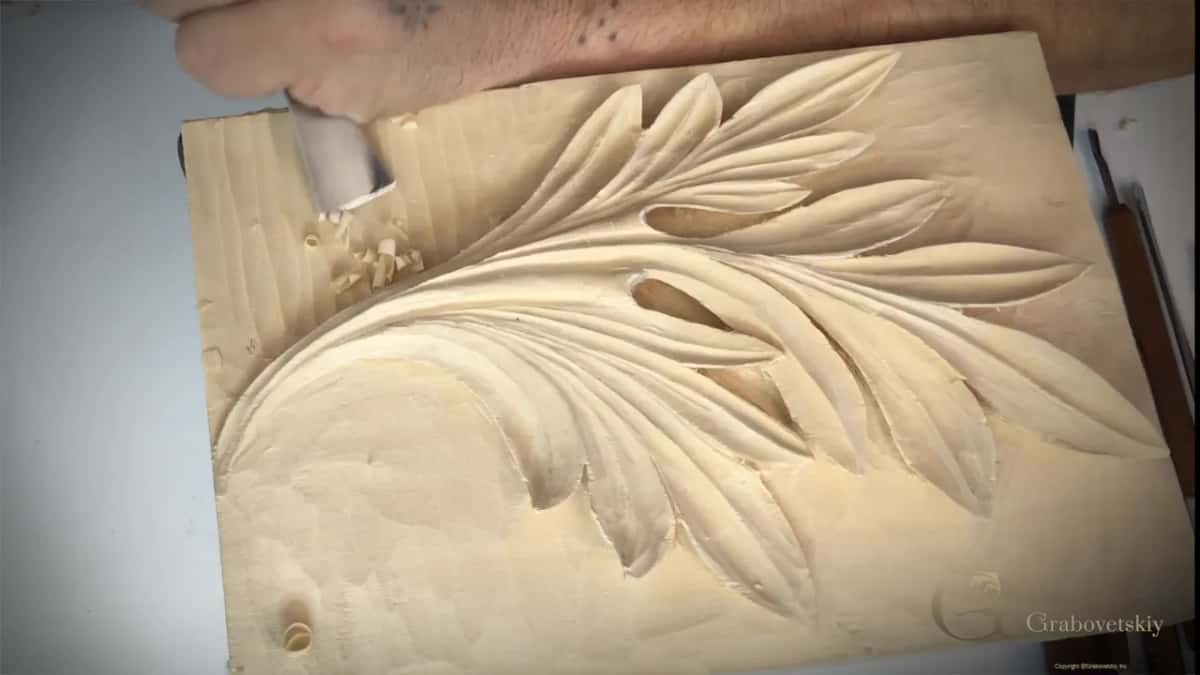
Take your time and clean, I said later. Again, don't rush anything. Just try to be careful, and it should look really nice. So right here is our acanthus leaf.
The other favorite sits in lesson 5 of this course. Starting the extreme undercut, I said it is probably one of my favorite parts, actually.
A background tool turns up in a quiet video on another piece too. The dining table apron has one, in workshop 10, where I said it's peaceful and then nothing at all for about a minute. The next words, after an okay, are background tool again.

Which wood carving benefits can I name from my own bench?
Here is the one I know best. When you're carving, you're carving with hands and brains, and with ears and eyes too, I told a live stream in April 2020. You concentrate on the carving, but it's like turning off, just like an automatic mode.
The choice is yours, I said, music or audiobooks. I chose to listen to university courses. Years ago I had employees who built homes for my business. I would send them to the job sites, and they did whatever they did, and I would spend my time in my shop carving, with a distance course going on VHS tapes. We didn't have internet back then. I passed more than one course that way, just because of wood carving.
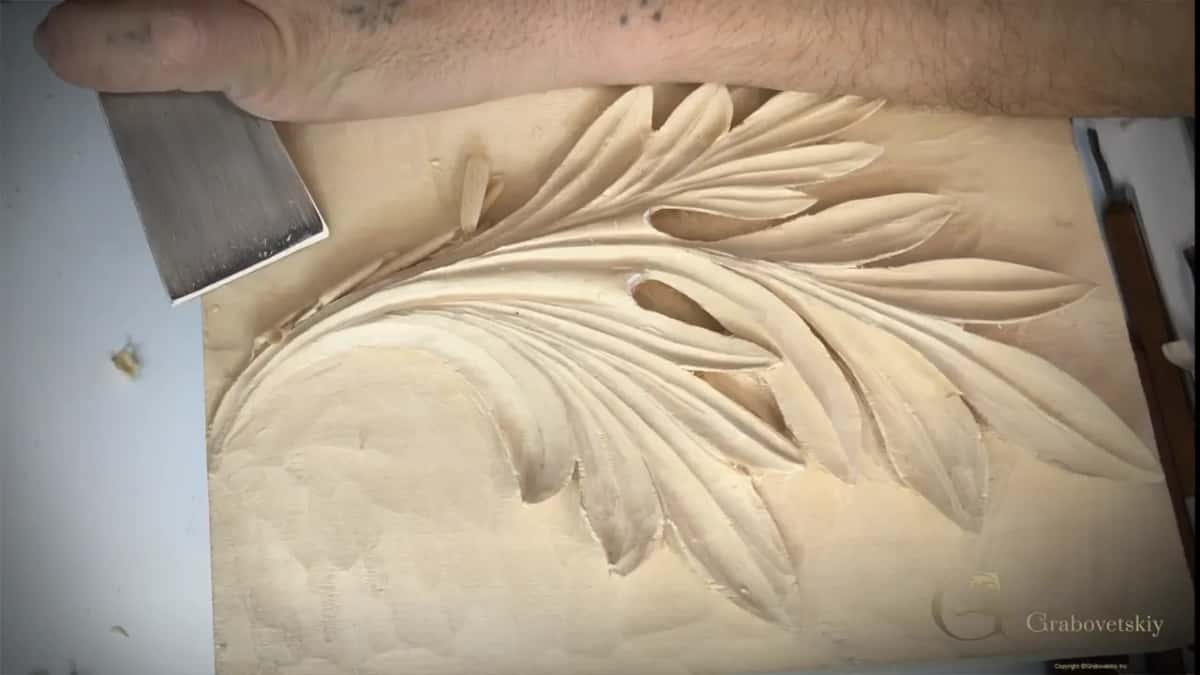
Someone asked me in workshop 5 of the antique style rosette whether I listen to anything when I carve all day long. I really don't like to be in quiet, I said. It used to be tapes, later DVDs. One whole university course I took just while I was carving some projects. I didn't want to waste my time just digging wood, because after a while it becomes an automatic mode, and you have to somehow fill your brains. And I can get lost in time when I'm doing it.
Music is in there too. In that automatic mode I listen to Mozart, Vivaldi and Bach, and to audiobooks and teachings.

On one Venice Room panel I said I'm carving every day, and it's so peaceful. I said that in the middle of a talk about money, and the money side has its own page in workshop 56. And by the way, I said in the same breath, I'm using a number seven right now.
Is wood carving relaxing all the way through?
No, and I would not tell you it is. Take grinding a gouge on a machine, in my straight gouge sharpening video. Don't apply too much pressure, I said. You really don't have to. You can just even relax while you're doing it.
Then it changed. You have to be really careful and constantly check, I said, a little over a minute later. The end of the grinding stage is probably the most important. Now you can't relax. You have to watch what you're doing.
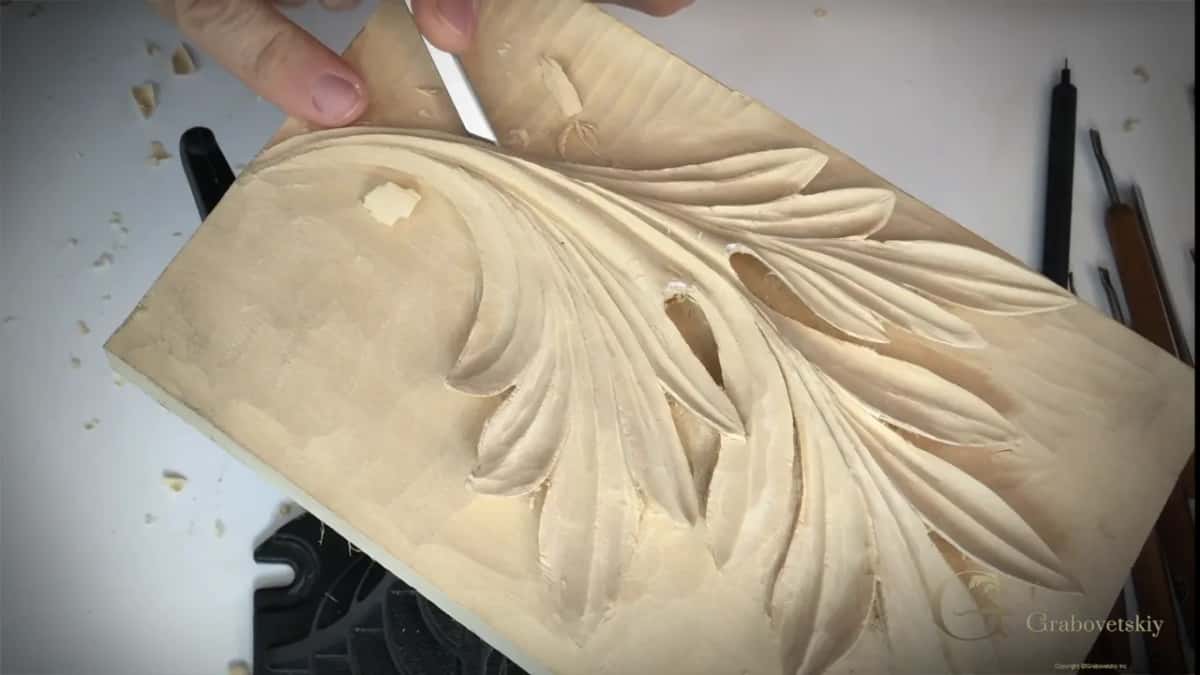
A dull tool takes the calm away faster than anything else I know. Lesson 13 of the floral and molding panel has it plainly. If your tool is not sharp, I told people there, you'll see a lot of tear outs. You're going to catch the grain, and you'll get frustrated. So make sure your tool is super sharp, almost like a surgeon's knife.
Back in lesson 1 of that course I said the same thing from the other side. A lot of success depends on the sharpness of your tools, and it's also going to eliminate the frustration.
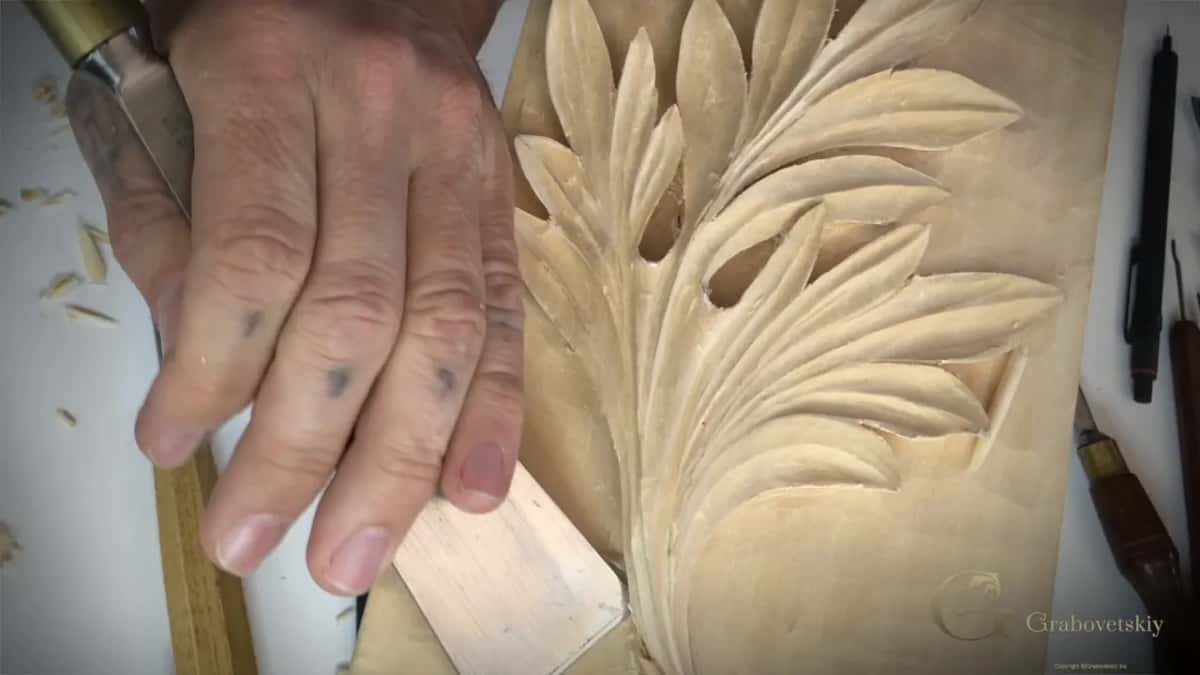
Some shapes are just hard. If you do those volutes, take your time, I said in workshop 62. They can be really frustrating. They're not as easy as they look. I was working on a slope, and it didn't really help.
And some frustration you make yourself. Don't overdo it, I said in lesson 3 of the modern acanthus. Overdo it and you get frustrated, because we could probably change the design later on, and you spent so much time on cleaning that area.
Some people say you have to take each detail to the finished look right away. Others say you'll have a chance to clean it later. I probably belong to the second group, I said in lesson 6 of that same panel course, because I make a lot of changes to the design later on. It gives me flexibility and a lot less frustration if I change a movement. I said it again in lesson 11. If you took away too much material and spent a lot of hours cleaning, it's really frustrating to go back and redo stuff. But again, it's just me. You don't have to do it that way.
Even the camera gets to me. I know it's kind of frustrating for me also when I'm losing some footage. That was on the furniture panel, in lesson 21, with a 1/16 inch grounding tool, a millimeter and a half, doing pretty much just the cleaning right then. At least I didn't lose too much.
Then there is the money. In a class on the Byzantine leaf I said I really enjoy people and teaching, and I want to probably try to master my teaching skills. And maybe more relaxed, because, like I said, I'm carving for a living, and it just creates a lot of tension. Deadlines and so on. And you can't expedite with carving.

During another live stream that April, a viewer called carving their meditation, until they break something. Yeah, absolutely, I said. I know. You got to have some problems to be solved.
Which small things make my day while I carve?
Small extras, mostly. On a panel in workshop 16 I added a detail I really don't need to do. It's still going to look really nice, I said, but something extra like that makes me happy. It's not boring every day, the same thing.
A movement did it in workshop 48. I've got movement number one, I said, and I was happy with it. That's really good movement. Not detailed yet, but that is somewhat what I want to see.
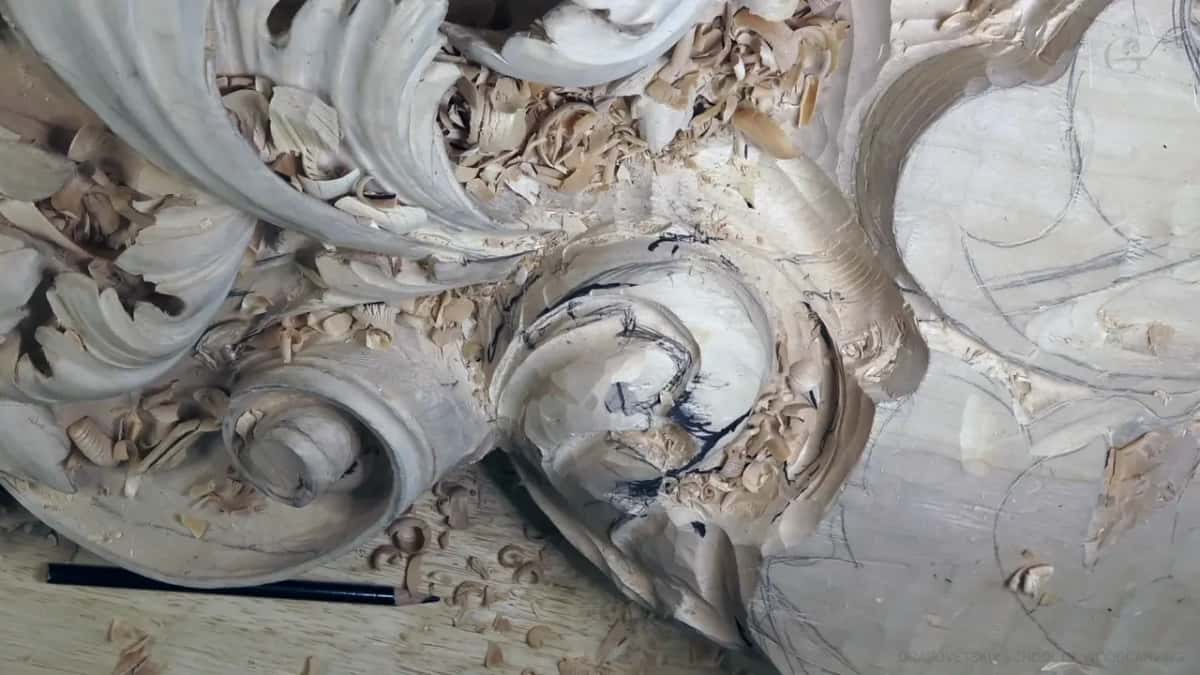
Some of what pleases me, nobody else will ever see. Workshop 17 had one of those. There, I can take a 1 millimeter (0.04 in) tool and completely connect the concaves underneath, I said, which is invisible to the naked eye. But I know what it is, and where it is. So that makes me happy when I'm doing it the right way.
The lily flower on the Lily Box was another day like that, and I didn't even want to stop and refocus the camera. I just want to keep going, I said. I want to keep working. This one is good, really good, and that's the shape I'm after.
Some jobs I simply call fun. The furniture panel had one in lesson 27. I was going to excavate one part, which is kind of fun, I said, because there I can go a little deeper with the same number 11. The Venice Room had its own, in workshop 63, where I said and now the fun part, before weighing two ways to approach a convex. And for the vase in lesson 1, I said to try the design process yourself, because it's fun. It's really, really fun. You should try it.
Even the type of work matters to me. Talking about a big job where the whole piece would get gold leaf, I said I enjoy carving more than gold leafing, for some reason. Somebody else would do the gold.
For the beginner cutting board, workshop 5, the picture I gave you was a boat with the Vikings in the ninth century, and only one knife. What beautiful things you can get done with one knife, I said. It's nice and relaxing. Then I pointed out that this type of carving is older than the Vikings.
What do I love to carve?
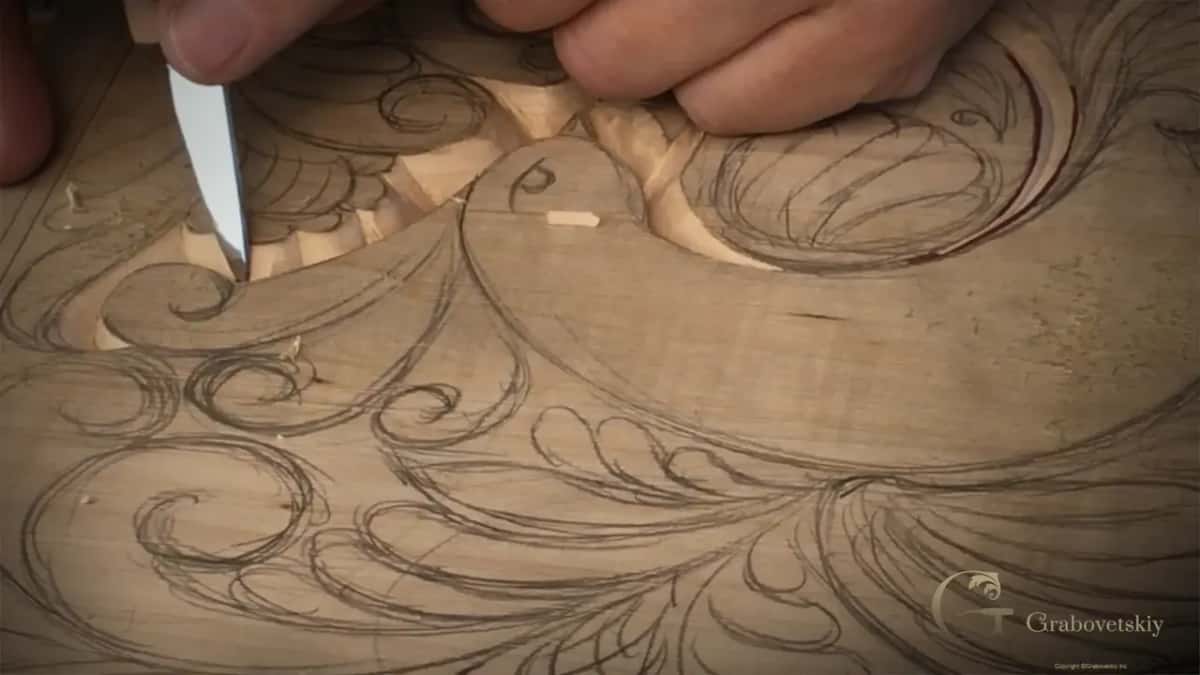
Tools first, to be fair. I love woodworking tools, and I really love wood carving tools, since I'm a wood carver, I said in my talk on choosing tools. When I came from Russia, I had only one gouge and only one knife, which I made myself.
And flowers. I do love carving flowers, I said on the Hashemi flowers in lesson 43, and I love carving roses. The Venetian rosette said it another way. There is no end to what you can create with the flowers, and that's why I love carving flowers.
Wood matters to me too. The best wood always is basswood, in my opinion, I said on a live stream that April, because it doesn't have too much grain, so you don't distract your eyes. But I also love to carve walnut and cherry, and oak, especially English brown oak. It's just beautiful wood.
| When it happened | The words I said on the video that day | Where you can find it |
|---|---|---|
| Slicing the ground. | My favorite part, probably, is to clean the background. | Corinthian lesson 6, part 3. |
| Most of grinding. | You can just even relax while you're doing it. | The straight gouge sharpening video. |
| End of grinding. | Now you can't relax, now you have to watch. | The same sharpening video, later. |
| Hours of carving. | After a while it becomes like an automatic mode. | Antique style rosette, workshop 5. |
| A blunt tool. | You're going to catch the grain and get frustrated. | Floral and molding, lesson 13. |
| Paid work deadlines. | It just creates a lot of tension, with deadlines. | Byzantine leaf, lesson 5 class. |
Is carving only some kind of soul therapy?
Not to me. While laying out the furniture panel design, I said the true art got minimized to just some kind of soul therapy, like it makes you feel good. But the true art is the real math, the real geometry, and that's a true craft. It takes some knowledge when you develop a piece of art, not just strokes of different colors and a random composition.
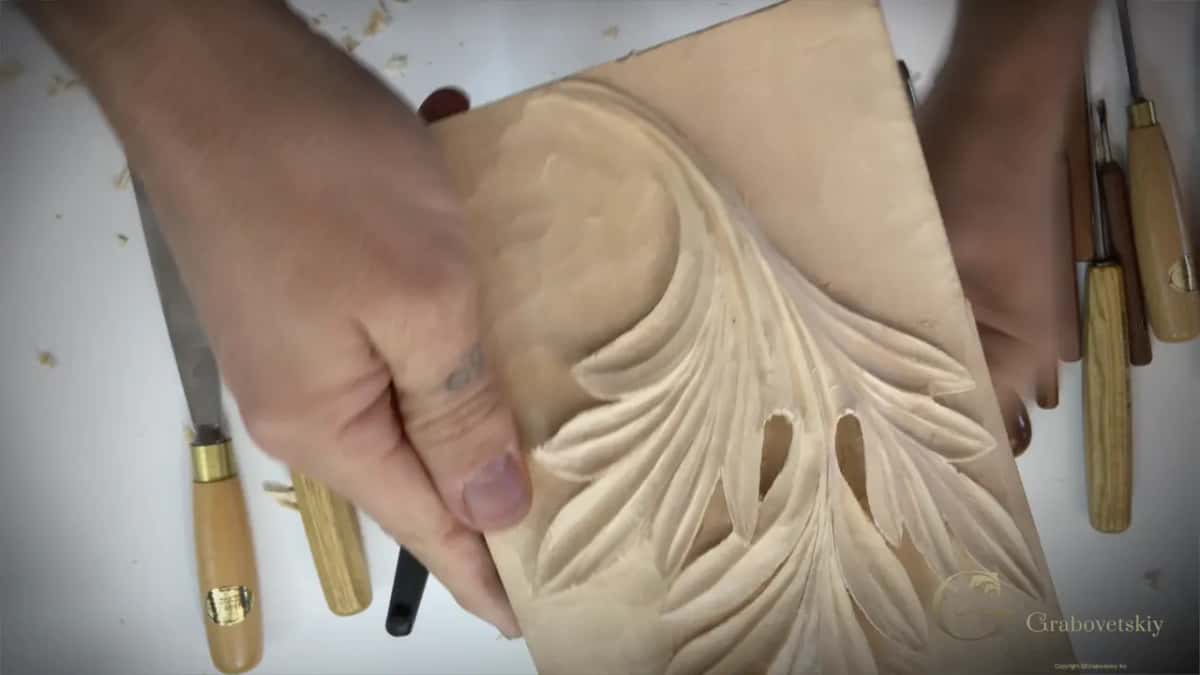
Patience has a page of its own, from lesson 3 of this course. Every carving lesson of the leaf is in the Corinthian course, and the third video of lesson 6 is where you can watch the ground go clean. Here is the Tuition page if you want to carve along with me.
How it's done
- Sharpen first. Make sure the tool is super sharp, almost like a surgeon's knife.
- Keep early work loose. Don't overdo the details early, because the design may still change later on.
- Let the ridges wait. Ridges behind the number 5 are fine for now. A number 3 slices them away later.
- Slow down. Clean with no rushing, and just try to be careful.
- Pick what you hear. Music, audiobooks or a course, it's your choice, and I chose the university courses.
- Watch the moments that count. At the end of grinding, stop relaxing and check the edge constantly.
Frequently asked questions
What does carving give you on an ordinary day?
Hours with a free mind. Once my hands work on their own, I chose to spend those hours on university courses, and I passed several of them while carving in my shop. A small extra on a panel, one I don't even need, can make my day too.
Can wood carving be stressful?
When it pays the bills, it can. I carve for a living, deadlines make it tense, and you can't expedite carving. Sharpness matters as well. A blunt edge catches the grain and tears the wood out, and you get frustrated, so I said to keep it super sharp.
Do you listen to anything while you carve?
Audiobooks, teachings and university courses, and Mozart, Vivaldi and Bach, because I really don't like to be in quiet. Long ago the courses came on VHS tapes and later on DVDs. I didn't want to waste my time only digging wood, and I can get lost in time that way.
What to carve next