
Alexander Grabovetskiy, woodcarver, School of Woodcarving · Published 2025
How many grapes should you carve in a bunch?
Quick answer: A carved bunch of grapes holds as many grapes as the wood allows, and when the count is open it follows a Fibonacci number. The thickness under my Cabernet tray allowed three.
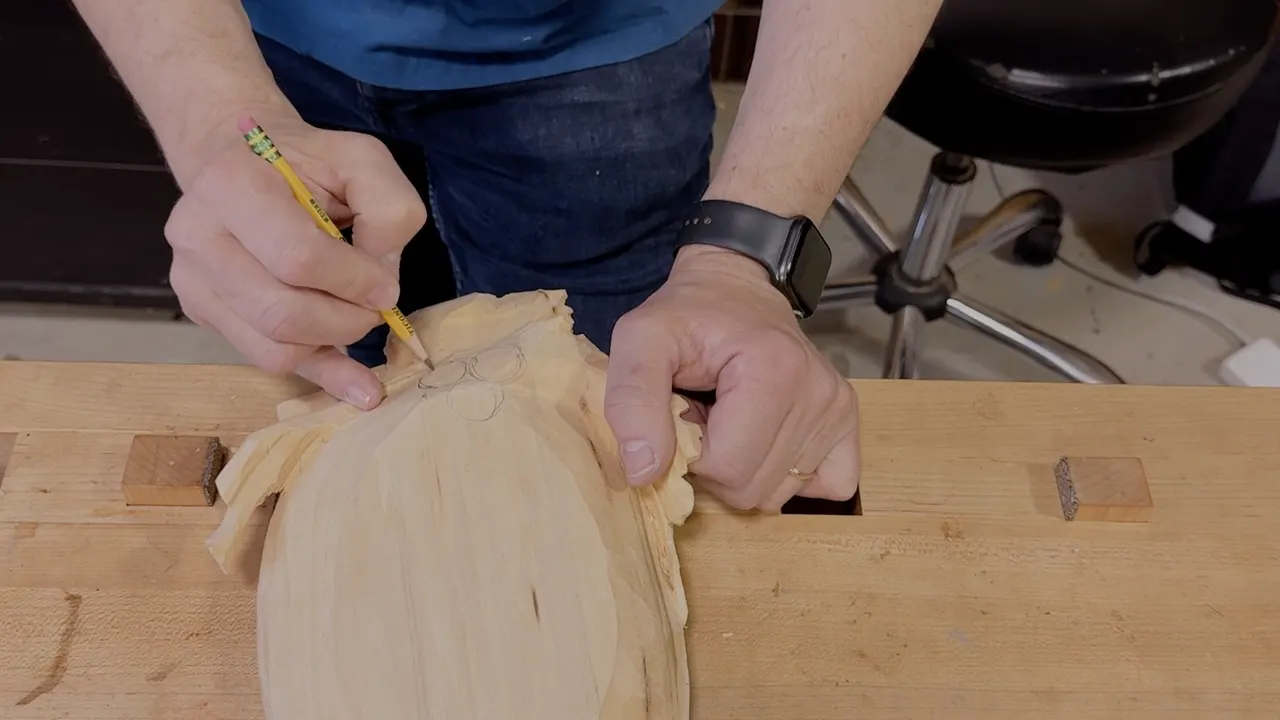
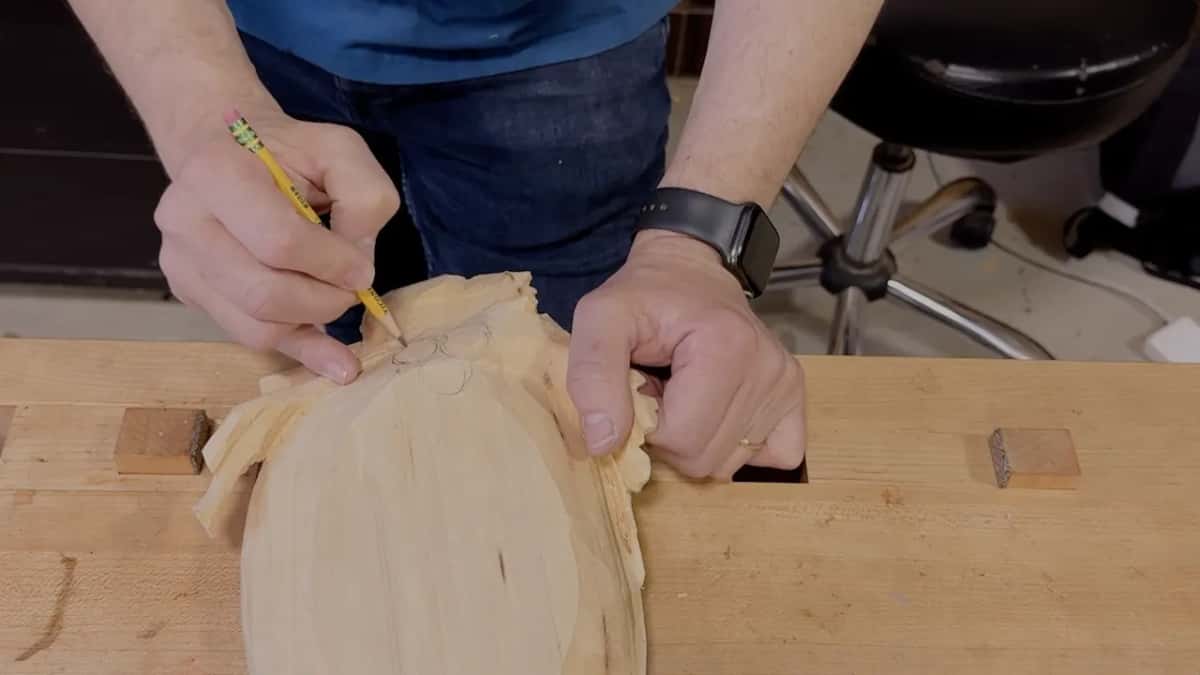
A carved bunch of grapes holds as many grapes as the wood allows, and I like that count to land on a Fibonacci number. On my Cabernet tray the wood had room for three.
Lesson 8 of The Tray of Blessing is where the question came up. I was carving the grapes on the back of the tray in front of a class, and someone asked if there is some style rule, that you always have three. My answer was Fibonacci.
Have you ever drawn a row of circles on a board and wondered if five is too many? Does the wood under one of them look thin? Then do as I did on camera. Check how much thickness you have, and estimate the next number.
The grape count in six lines
- Three grapes went on the back of my tray.
- More grapes needed more thickness.
- Eight would fit where there is space, I said.
- Where grapes meet, I look for a triangle.
- A grape starts at an inch or a little less, then comes down a little.
- Most people, I said, don't care about the math.
Why did I stop at three grapes on the tray?
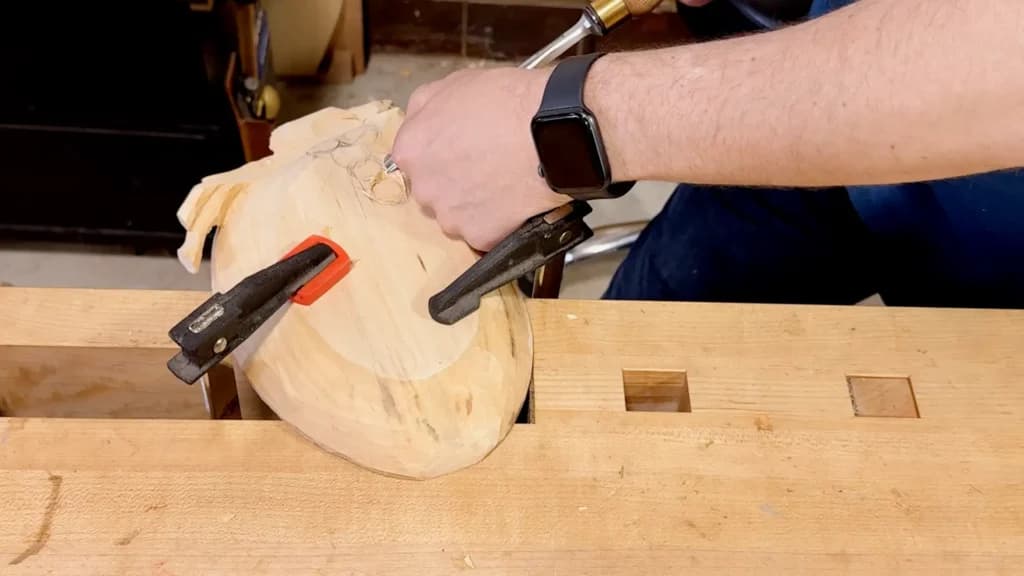
I started with the wood. Let me check how much thickness I have, I said, and up to that point I had plenty. No problem there. Then I went spot by spot. Right here I don't have too much thickness, so I have to be careful how much I excavate. Here I'm okay, and right there I'm okay. That's how I'll position it.
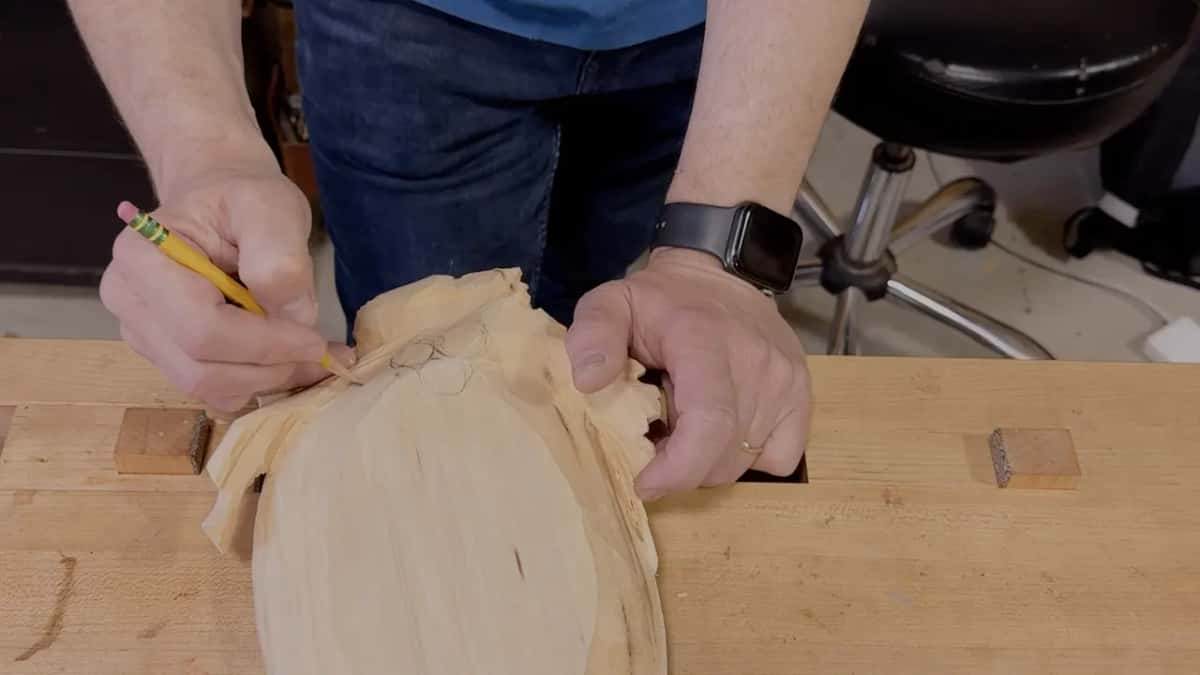
Then the class asked their question, and I told them. "In this case, I got three." I would probably put a couple right there if I had the thickness, but I don't have the thickness. Then it's going to be Fibonacci.
If it's a bunch of them, estimate the number that comes next. A lot of people have no idea about Fibonacci, I said, but it will make you happy, so you'll know. A certain number of grapes in a visible bunch pleases your brain more. Look at that, there's math involved.
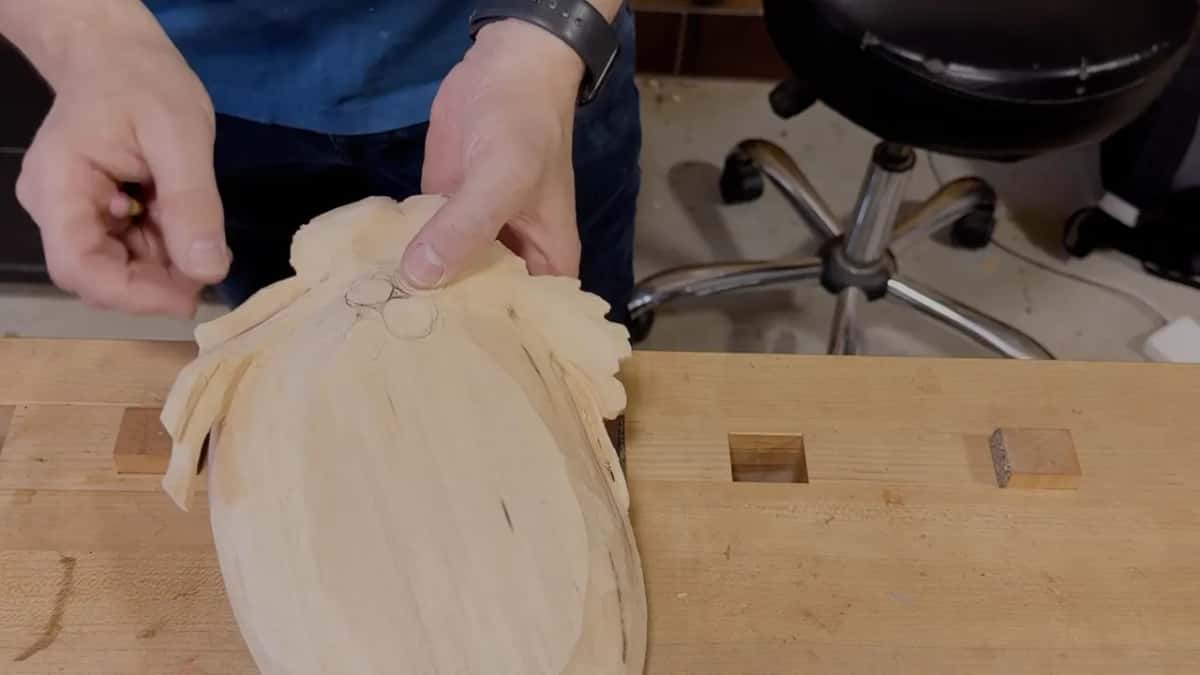
Someone asked if that is one of the design principles, and if people think in prime numbers, like one, three, five. Not that, I said. It's pleasing to the eye, and it's the golden ratio.
About ten minutes into the next video, I said something that sounds like the opposite. "You could continue, because I have plenty." A couple more would fit if you want, and you can put eight of them, like create a bunch, because you do have the space for that. Both lines are mine. The first was about a thin spot, and the second came when I had plenty.
Why not put four grapes around one point?
The key with grapes is the part between them, I said, and a lot of people miss it. Put four grapes together to make a quad, not a triangle, and it gets really hard to clean. So when you place grapes together like a bunch, try to hit a triangle. Those grapes have to connect. That's rule number one.

I told the class I would repeat myself one more time. Stay away from quads as much as possible. A triangle gives you a much better result. My first excavating point is that triangle, and I dig with the number 7, at 14 millimeters (9/16 in), toward my connecting spot. Then comes a second pass, and a third.

I used only the corner of the tool, pointed toward the line I drew. I wasn't digging with the whole body of the gouge, just a corner. Remember just the triangles and it helps a lot. The triangle is the key. Otherwise you get a big problem.
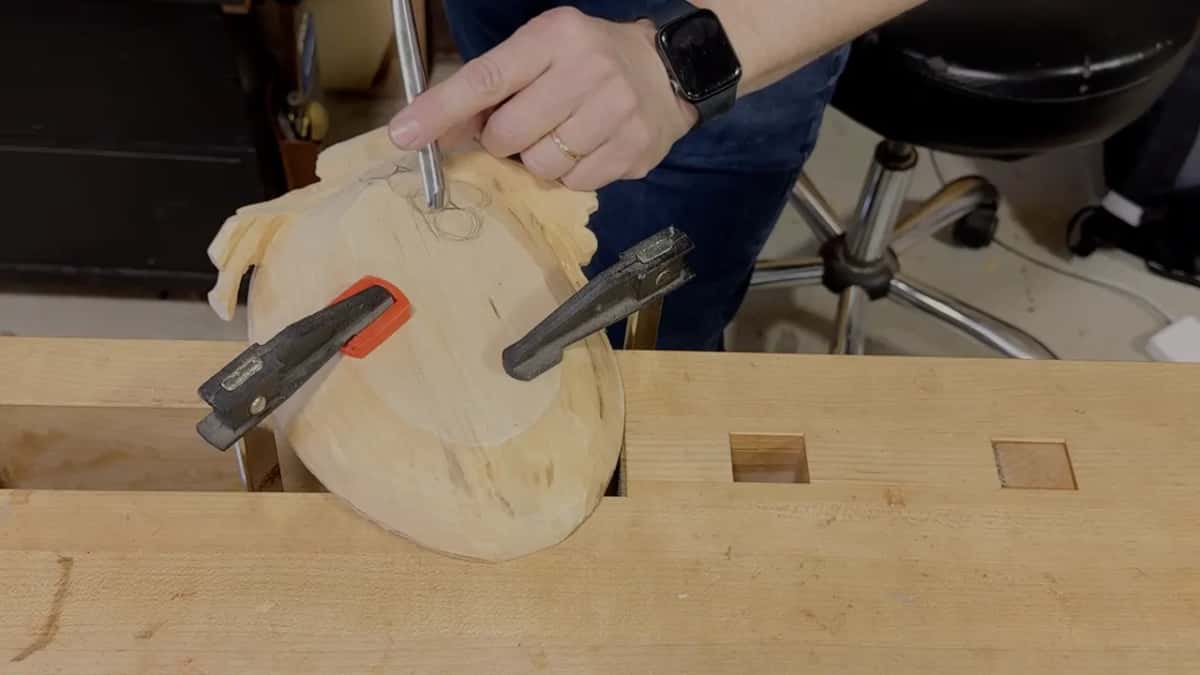
Good wood carvers still struggle with grapes, I told the class. Really good ones, even the ones who teach, still have a problem with them.
How big is each grape?
I wanted an extra large grape for now, because I can always make it smaller versus later. Before the first grape I asked the class how a Cabernet Sauvignon grape should look, long or more roundy, and the answer was round. Later, digging around one, I said I don't know if Cabernet is round or not, or anything about those names. Just in liquid form.
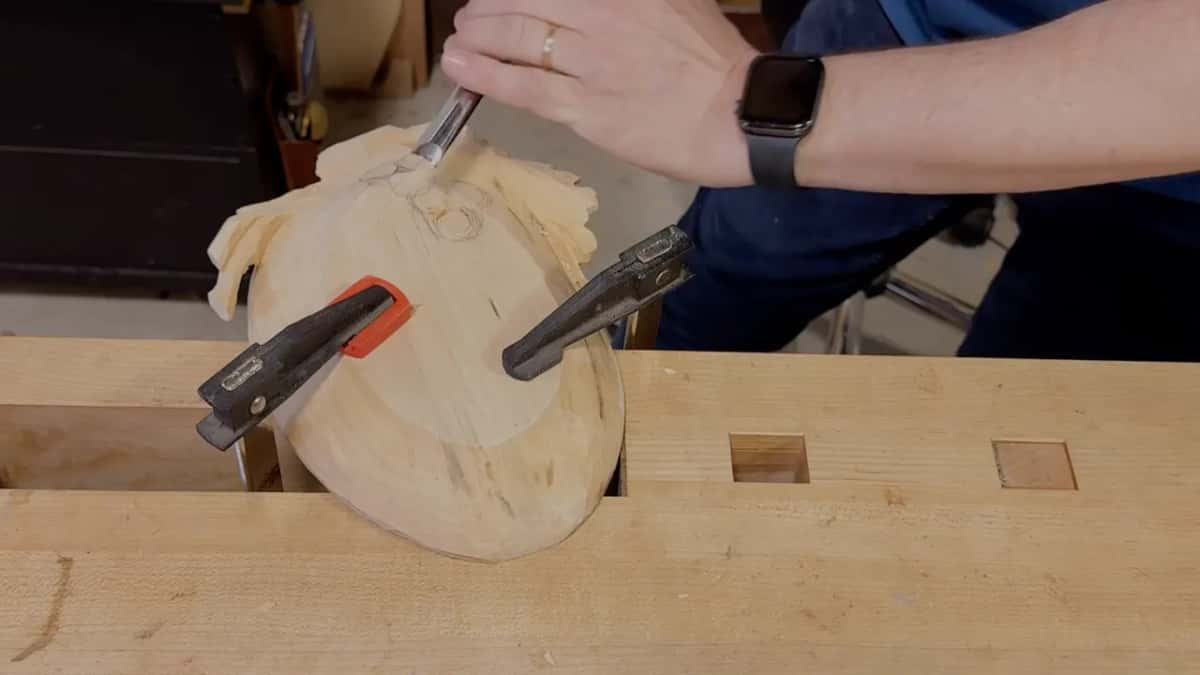
On size, I was looking at the overall composition, so I try not to make those small ones. They won't look like a grape. I usually try to get them at about an inch (25 mm) at the beginning, or a little less, maybe seven eighths to three quarters of an inch (22 to 19 mm). By the end they come down to about 3/4 inch (19 mm) once we clean them, and that looks good in carving.
Where does the bunch go on the piece?
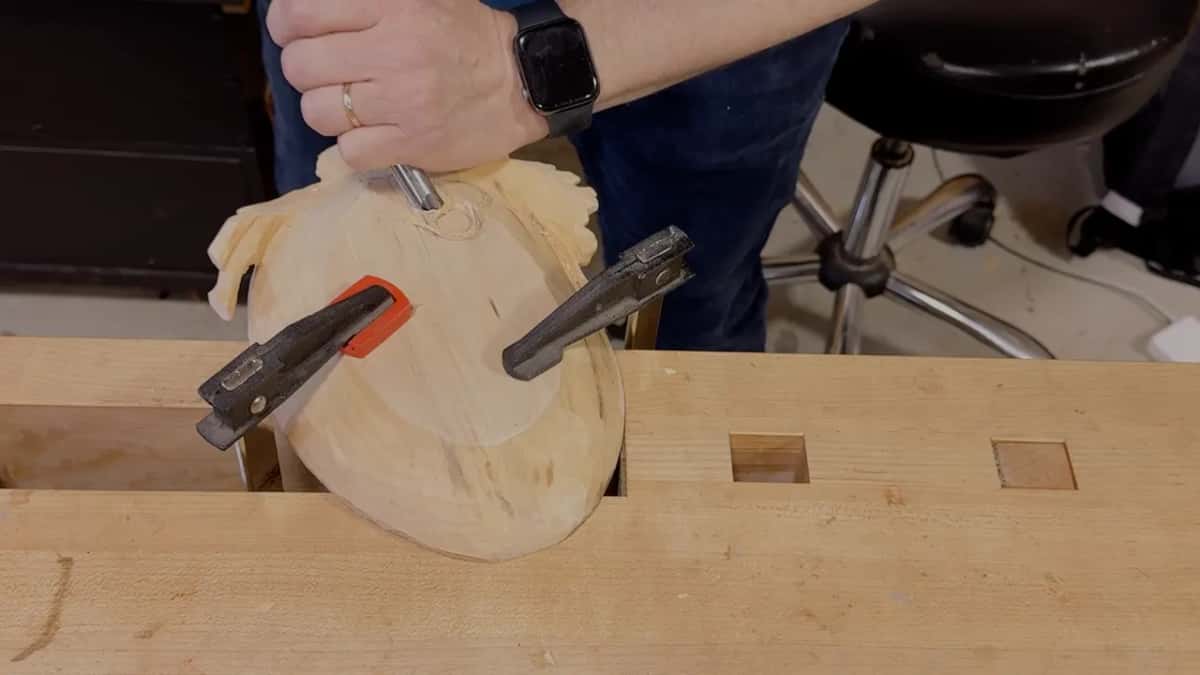
I reminded the class what I'd said about the golden ratio, and told them I'm going to move it right here to the golden spot. Where is the main focal point? If it would be 10 units, say 10 inches (254 mm), the middle is five inches (127 mm). Move it a little and it becomes six inches (152 mm). That's a simplification, I said, and it becomes your golden ratio pretty much.
The golden ratio is a subject of its own, and I used the plain version at the bench. My vase with grape leaves course puts it in numbers. If you know a little bit about Fibonacci, you know its golden ratio. It's like a 60/40 rule, six parts out of ten, and that's probably the easiest way to understand it. There I measured with my golden ratio caliper and found my golden center.
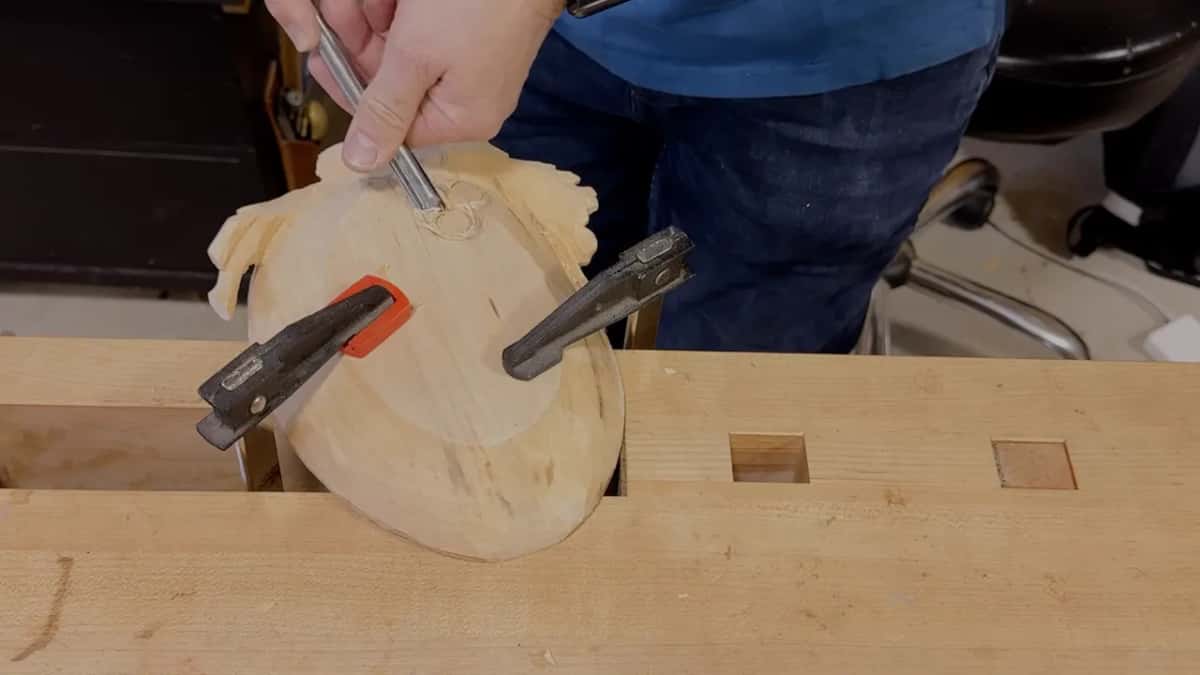
Does anybody count your grapes?
Most of the people don't even care about it, I said. They really don't. But if you want to express yourself, just for yourself's sake, that's a good idea. I don't explain to my clients why I did it that way, and I don't need to. Most clients don't understand it, and they don't care. As long as they like it, I'm okay with that, though I'll remember all my life why I did what I did.
The same honesty comes up in the butterfly plate course. I counted my way to 13, and it came right to the Fibonacci sequence. Don't have to, I said. If you don't feel comfortable with that, don't do it. Nobody's gonna count in this case, really.
In my Grinling Gibbons class in Maine the filler flowers came up too. They won't be the same, so let's count. I want to make sure it's by Fibonacci number. Even if you're not gonna see it, it'll bug me if it's not.
Where else did I count?
On the butterfly plate I looked over my flowers. I've got one, two, three, four, five, six, I said, and I don't like the idea that you have only six flowers like that. You probably guess why. Because six is outside of Fibonacci sequence.
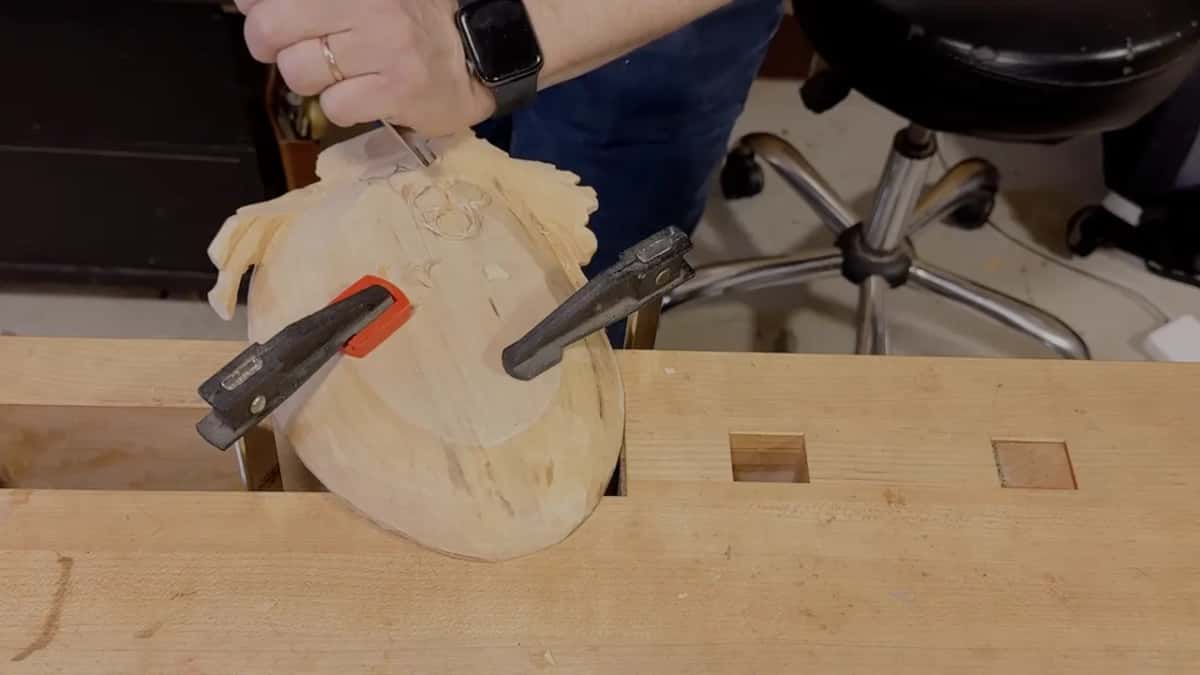
Five or three would be okay with me. The next Fibonacci segment would be eight, so a couple more had to go in somewhere. Another count came next, in case I had miscalculated. Still six. So I said, let me do a couple more.
On the furniture panel in lesson 14 I was counting leaves. There were five, and I said we need at least eight, because we have three flowers. If we follow Fibonacci numbers, it's got to be five, or else eight, and I think we should do eight.
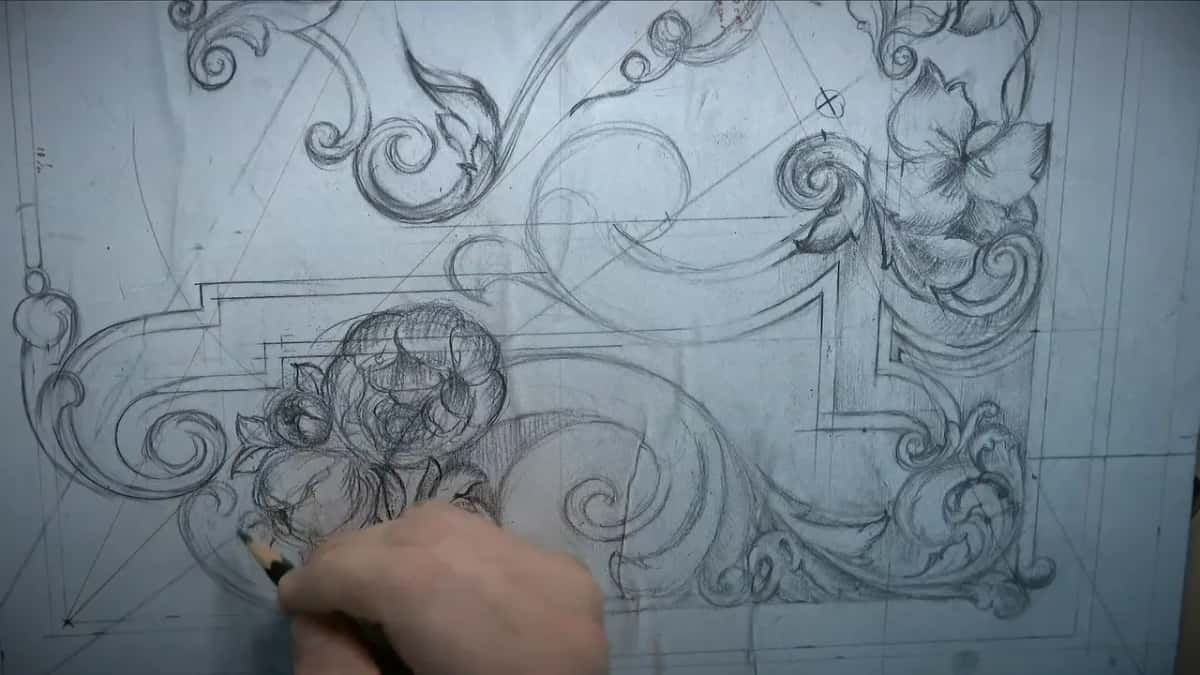
Where the last one would go took a few tries. No, it's not good, I said. Then, a small volute I can make even smaller, to stick in as number eight. In this design I'm trying to be pretty close to the Fibonacci numbers. We've got three flowers, and eight leaves.

Lesson 14 has a later video, and there I counted flowers. Three flowers, so let me do five of them, I said, because as you remember, Fibonacci. Three, five, or eight, or whatever comes next.
How many parts does a leaf get?
Every acanthus is supposed to have main divisions, either three or five or eight, I said in Venice Room workshop 52. It connects to the Fibonacci sequence. Though most of the time it's three or five.
Workshop 32 has those acanthus leaves again, and the count is the same. They usually had at least three divisions, I said. Some had five, which means they would add a couple more, or eight. So it equals a Fibonacci number. I think it makes sense.
By workshop 94 I said maybe I'd skip a side and just do a separation, which was also okay. That still counts as Fibonacci.
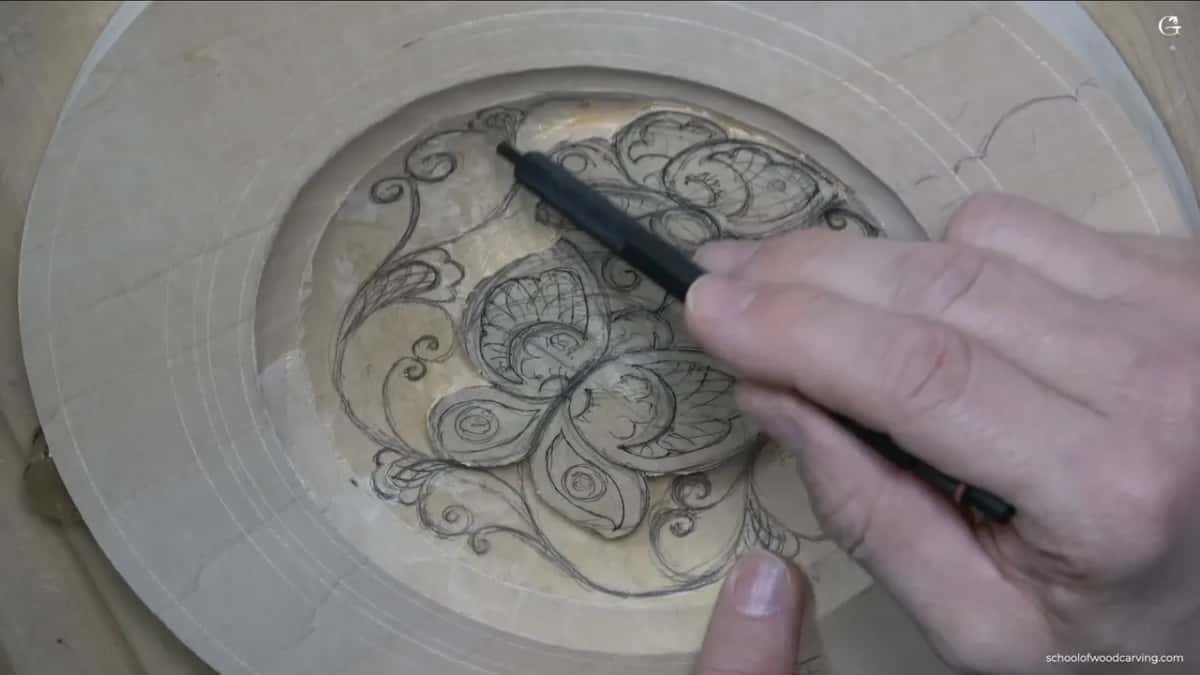
Another time I counted nine, which is not Fibonacci. Maybe I should just eliminate that completely, I said, and that way it's more or less like Fibonacci. That was workshop 99.
In workshop 139 I said I'm not going to calculate Fibonacci in this case, although it's a good idea. Always use Fibonacci sequence, how many lines you got.
For the Byzantine acanthus leaf I said it would be one division, two divisions, three divisions, and a five Fibonacci. Correct? My vase had five divisions, and inside each one I would create three main divisions, which is also Fibonacci sequence. The husk of a hazelnut wraps around the nut. It's not the petals, obviously, but I still went for five main motions. I had four main motions so far, and I needed to introduce one more.
Do petals follow the same numbers?
Back in the Hashemi flowers course I called it really complicated math, if you're familiar a little bit with the Fibonacci number and the number of petals on the flowers. Count the flowers, I said, and I'm not saying that's the absolute truth, but as far as I know it's always close to the Fibonacci number. At least with small subdivisions like this. So you can do five, you can do eight.

Botanists call the way leaves and seeds sit on a plant phyllotaxis, and Fibonacci numbers show up in many of those patterns.
The Fibonacci sequence adds each number to the one before it, so it runs 1, 1, 2, 3, 5, 8, 13, 21. It is named for Fibonacci, an Italian mathematician. I walked through it out loud in the principles of design course. One plus one is two. Two plus one is three. Three plus two is five, three plus five is eight, and eight plus five is 13. Thirteen plus eight is 21, and on and on.
Can the sequence set spacing too?
The furniture panel has a space I left with it. I'm actually still following the Fibonacci sequence there, I said. Say I left about 10 millimeters (0.4 in), and in my case that's one. Ten plus ten is 20, which is 3/4 of an inch, and that's why I left about 3/4 of an inch (20 mm) of space. I think it looks more appealing to the eye.
I don't know how it works, I said, but I think the whole universe is actually created like this, and you can find those rules almost everywhere in creation. That was lesson 2 of the furniture panel, and the numbers kept going there. The numbers ran 10 millimeters (0.4 in), then 20 (0.8 in), then 30 (1.2 in), and 20 plus 30 comes to about 50 millimeters (2 in) from the edge. Take a ruler, I said, and it's still inside the golden ratio.
Which counts did I mention, side by side?
| Job | What I did | Where | Result |
|---|---|---|---|
| Grapes under tray | Three grapes sat there, more needed wood | The tray | Thickness first, then the next number |
| Flowers on plate | Counted six, so planned a couple more | Butterflies plate | Six is outside of Fibonacci sequence |
| Leaves on panel | Had five leaves, said at least eight | Furniture panel | Ended with three flowers, eight leaves |
| Divisions per leaf | Said 3, 5 or 8 main divisions | Venice Room | Mostly 3 or 5, I said |
| Husk of nut | Planned five main motions, counted to five | Hazelnuts course | Counted four, then added one more |
| Space from edge | Worked out ten, twenty, thirty, fifty millimeters | Panel course | Ten plus ten came to twenty |
What about filler flowers in a group?
The number of flowers we put also falls on the Fibonacci sequence, I said in the ten elements lesson. But even those, I never put the same size. We're talking about a 20 millimeter, three quarters of an inch flower. One of them is 20, another is smaller, another one even smaller.
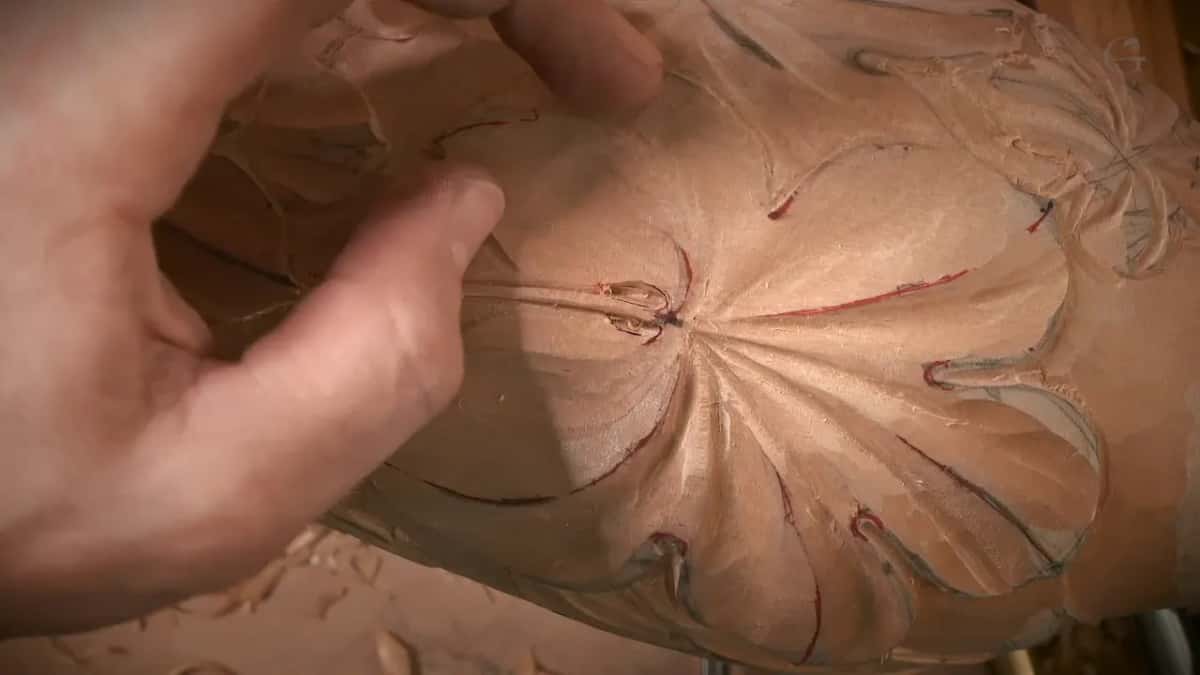
Say I got five flowers, or eight flowers. I consider that a single element, and I have to repeat that somewhere else. Say on that side it's five instead of eight, and the size is a little different too. It creates the depth, I said, so you're playing with the depth. That's the law of rhythm.
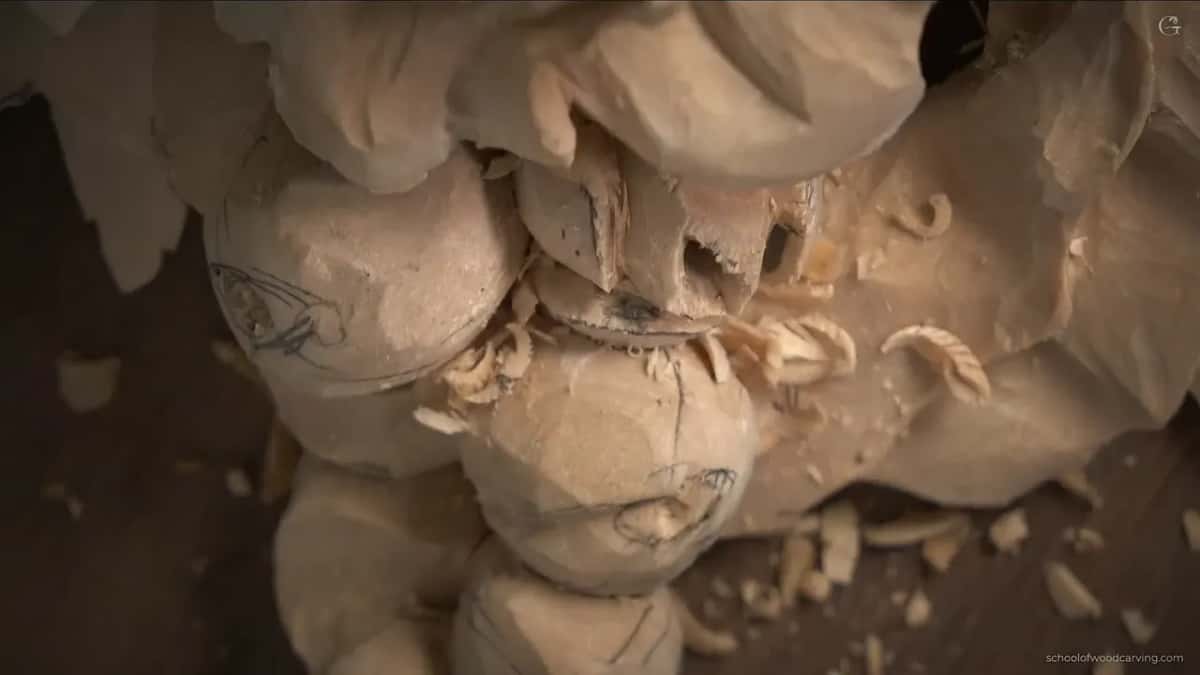
In lesson 18 of the Maine class I stopped to say it again. Fibonacci sequence, right? I've got four, and I have to do eight in total. The class is about the carver Grinling Gibbons, and lesson 18 has that count.
Can you carve grapes under your own tray?
The back of a wood carving holds a bunch if the wood is there. Which spot on your own piece has the thinnest wood under it?
The grape part of lesson 8 is in lesson 8 of The Tray of Blessing, with the class asking their questions as I go. Every lesson of the course sits inside Access, monthly or yearly, renewing automatically until you stop it.
How it's done
- Check the thickness. See how much wood is under the spot before you draw a grape. I went spot by spot on the tray.
- Start extra large. Make the first grape bigger than you want it, and bring it down later.
- Pick the next number. With a bunch, go to the next Fibonacci number, and let the wood have a say.
- Look for a triangle. Place the grapes to leave a triangle between them, not a quad.
- Dig toward the meeting spot. The number 7 at 14 millimeters (9/16 in), only its corner, pointed toward the connecting spot.
- Place the bunch. Move it toward the golden spot, about six parts out of ten across the piece.
Frequently asked questions
Is there a rule for how many grapes go in a carved bunch?
Estimate the next Fibonacci number, I told my class. The tray got three, since the thickness allowed no more at that spot. More would have fit with extra wood, and I said you could place eight where there's room.
Why do you avoid a quad of grapes?
Four grapes meeting at one spot form a quad, and a quad is really hard to clean. A triangle gives a much better result, so I look for one wherever grapes connect. Those grapes have to connect. That's rule number one.
How big should a carved grape be at the start?
Close to an inch (25 mm), sometimes slightly under. Cleaning brings them down, and I said 3/4 inch, which is 19 mm, looks good in carving. The very first grape I make extra large for now.
What to carve next
- Wood-Carving-Courses the-tray-of-blessing-cabernet-sauvignon
- carving-vase-with-grape-leaves carving-vase-with-grape-leaves-1
- carving-plate-with-butterflies carving-plate-with-butterflies-4
- grinling-gibbons-class-in-maine grinling-gibbons-maine-class-2
- carving-furniture-panel-design-part-1 carving-furniture-panel-woodcarving-course-lesson-online-14
- advanced-carving-venice-room-part-5-workshops-50-61 advanced-carving-venice-room-52
- advanced-carving-venice-room-part-3-workshops-26-37 advanced-carving-venice-room-32
- advanced-carving-venice-room-part-8-workshops-86-97 advanced-carving-venice-room-94
- advanced-carving-venice-room-part-9-workshops-98-109 advanced-carving-venice-room-99
- advanced-carving-venice-room-part-12-workshops-132-143 advanced-carving-venice-room-139
- carving-byzantine-acanthus carving-byzantine-acanthus-leaf-7
- carving-vase-with-grape-leaves carving-vase-with-grape-leaves-2
- carving-hazelnuts carving-hazelnuts-3