
Alexander Grabovetskiy, woodcarver, School of Woodcarving · Published 2017
Is Viking wood carving really Viking?
Quick answer: Viking style carving is a common name for carving that uses a single knife, and I call it only partly right. Northern carvers of the Viking era did use a knife, yet other European cultures and Asian ones from those centuries carved with exactly the same technique and their own ornament, and carving is far older.
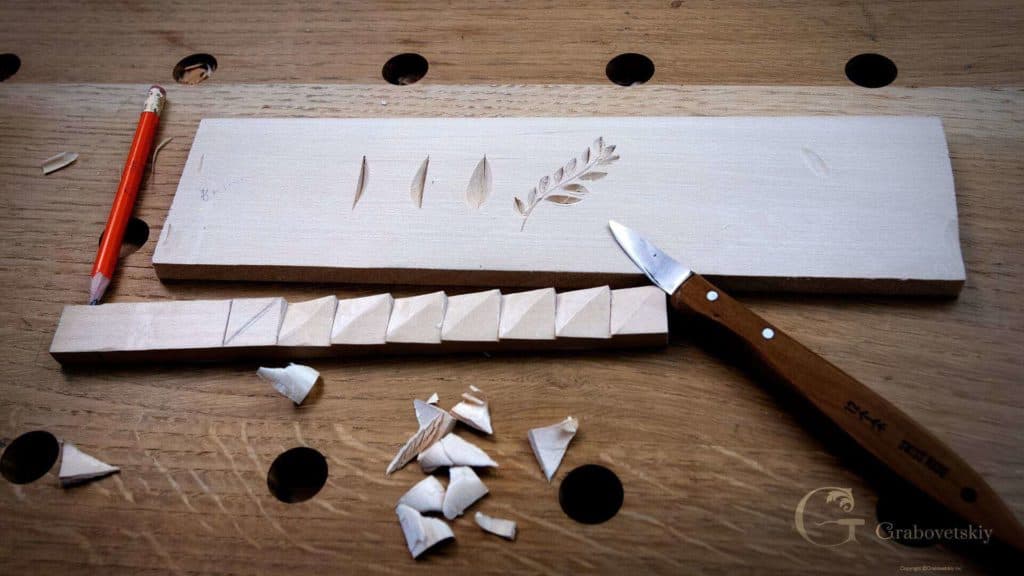
Viking wood carving is a name for carving with one knife, and the name is only half right. The northern people of that time did carve with a knife. But in this video of First Cuts for Beginners I said archaeologists found other European cultures, and Asian cultures too, from those same centuries, using exactly the same technique, and carving itself goes back much further than any Viking. Ornaments change with every people. The technique stays.
Is there a knife in your kitchen drawer? A table in your house? Then you already know the size of the kit those old carvers worked with, because one blade is what they all had available, as I tell it here. What follows is what I said about them on camera and where I said it, with my guesses marked as guesses.

Seven things I said about the Viking name
Calling it Viking style is not necessarily accurate, as I said in this video.
Their era was the 8th, 9th and 10th century.
Carving is older by thousands of years.
German, Slavic and Asian carvers worked the same way, as I tell it.
Nobody knows exactly how many tools the northern carvers had.
Even Viking styles depend on the period.
Ornament keeps changing with each people and each period, while the knife technique stays put.
Why do people call one knife work Viking style?
The boats did it. I told you here that the ancient boats people found, the ones the Vikings used, had really nicely carved designs on them, and that most of it was done with the same tool, a knife and a hand. While finishing one side of the board in the second workshop, I said it again. Archaeologists found boats with really heavy carved designs, and a lot of designs like that in the Viking culture. So it is just old European culture, I said, an ancient form of wood carving, and it looks really good once it is done.
I use the name myself. During workshop 50 of the Venice Room, my words were "Viking style, I call it," and in May 2019, I believe, I taught a weekend class of Viking style carving at the Marc Adams School of Woodworking. This video says it is not necessarily just a Viking style, and the rest of this page is why.
Is the knife the oldest carving tool?
I call it the most ancient tool, pretty much. That is how this video opens, with the knife as the first tool of the course, and I added that there are different forms of carving knives. In my video on BeaverCraft tools I said I love the knife, I do a lot of work with one, and I believe the most ancient wood carvers used only a knife. Their tools were limited to a simple knife and so on, I said on the sixth cutting board workshop, yet you are not limited at all in the design you choose.
How old is this kind of carving?
Older than the Vikings by thousands of years, in my telling. The Viking era, I said, means the 8th century, the 9th century, the 10th century, so those people lived only about a thousand years ago. But the history of carving goes way back. Carving existed 2,000, 3,000 and 4,000 years ago, and I added that even before the flood there were wood carvers. That last line is what I believe.
The video before this one, in the first workshop, carries the same thought. Every great master on the planet, I said, whether two hundred, three hundred or a thousand years back, started from this same point, even four thousand years back, almost all of us.
Carving the curly cutting board, I made the same point about that board. I chose that type of carving, and it is pre-Viking era. It existed before Vikings became known as Vikings, among Norman and Danish people too, before all those raids.
Were all northern carvers Vikings?
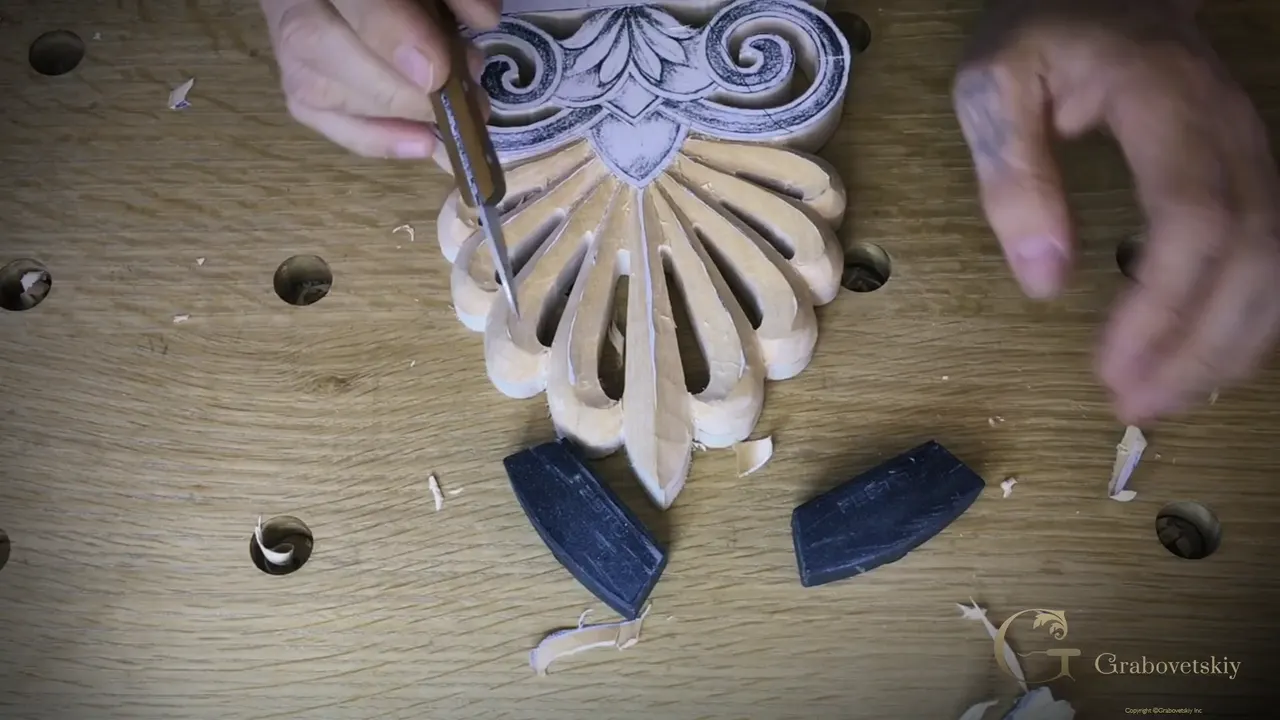
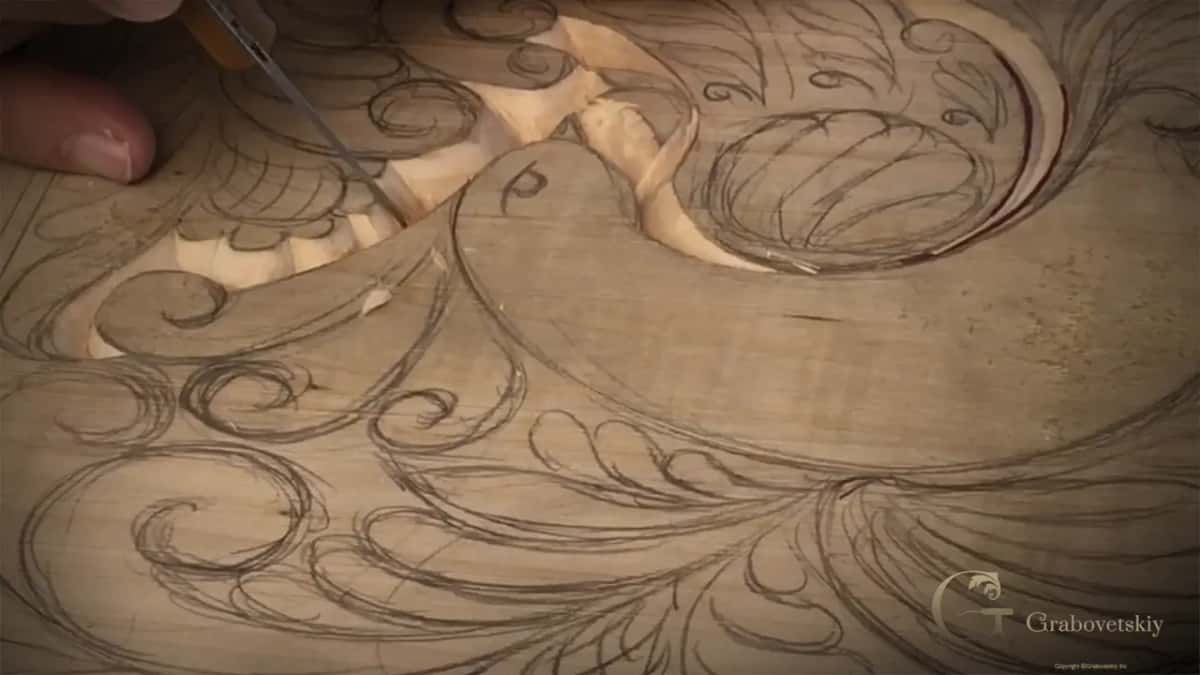
Far from it, and I said so while shaping a Greek acroterion with a single knife. Some call it Viking-style carving. I do not really agree, because not all northern people were Vikings, but they still used that same technique of one knife. I think even the British used one-knife techniques.
Which north do I mean? Norway, Sweden, Denmark, Finland, and Russia too, which may be the most northern country in Europe. In different parts they found carved wood dated between the 8th and the 12th century, and it was more of an ornamental chip carving style, done pretty much with just a knife.
Workshop 50 of the Venice Room drew the circle wider. Norwegian, Danish, even upper Slavic countries, pretty much the same Viking culture. An October 2020 livestream took it into Russia, where the north has a lot of Viking influence. Then I caught myself on "Norwegian style" of acanthus and changed it to Normans, because the first word was not accurate.
Which tools did the Viking carvers have?
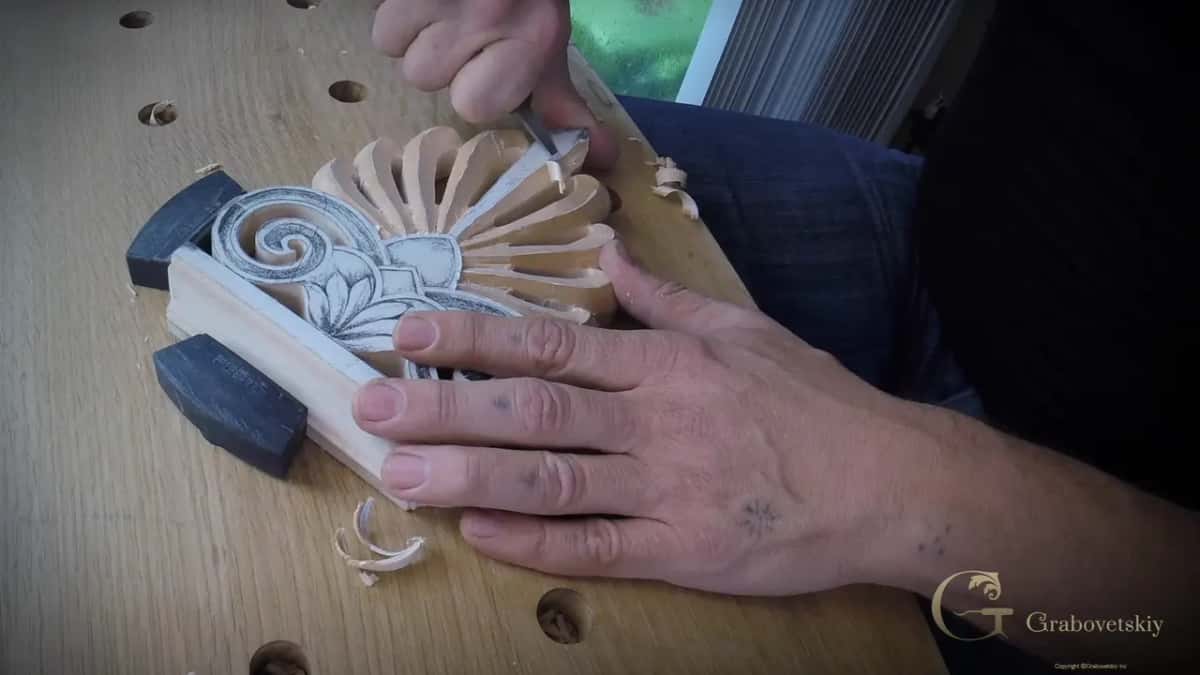
An axe, mostly, and knives for the carving. That Venice Room video began with a question about how people carved 1,000 years ago without 1,000 chisels. I had tried to answer it in the comments already, and said it again on camera for anyone who missed it. My answer started with the plain truth that nobody knows exactly how many tools they had, and it also depends on the country and location.
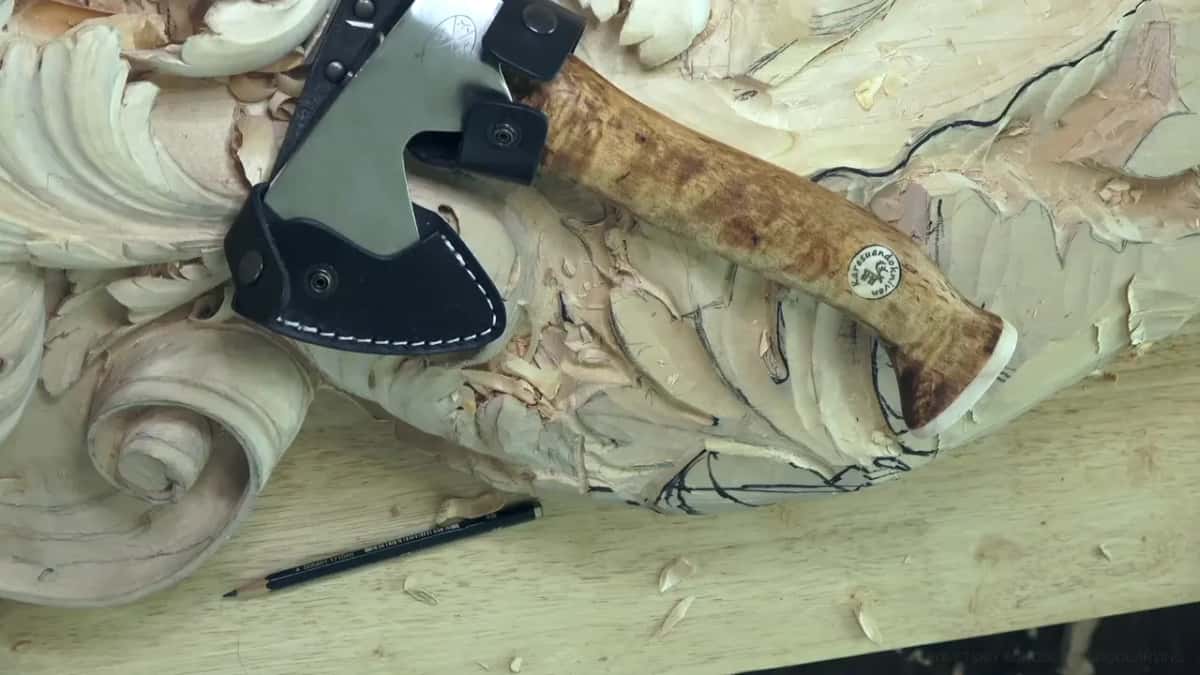
In Northern Europe, all they had, pretty much, was an axe. I showed one on camera. It is still pretty close in design to the original, and we call it topor. Mine even has runes written on it. That was the tool they used for boat building and so on, but for carving, I said, they used just knives.
An April 2020 livestream says the same about 10th century Norway, the Norman people, Vikings, who put some acanthus movements on their boats. All they had was pretty much a knife and an axe. And they did a really great job.
Did the south carve the same way?
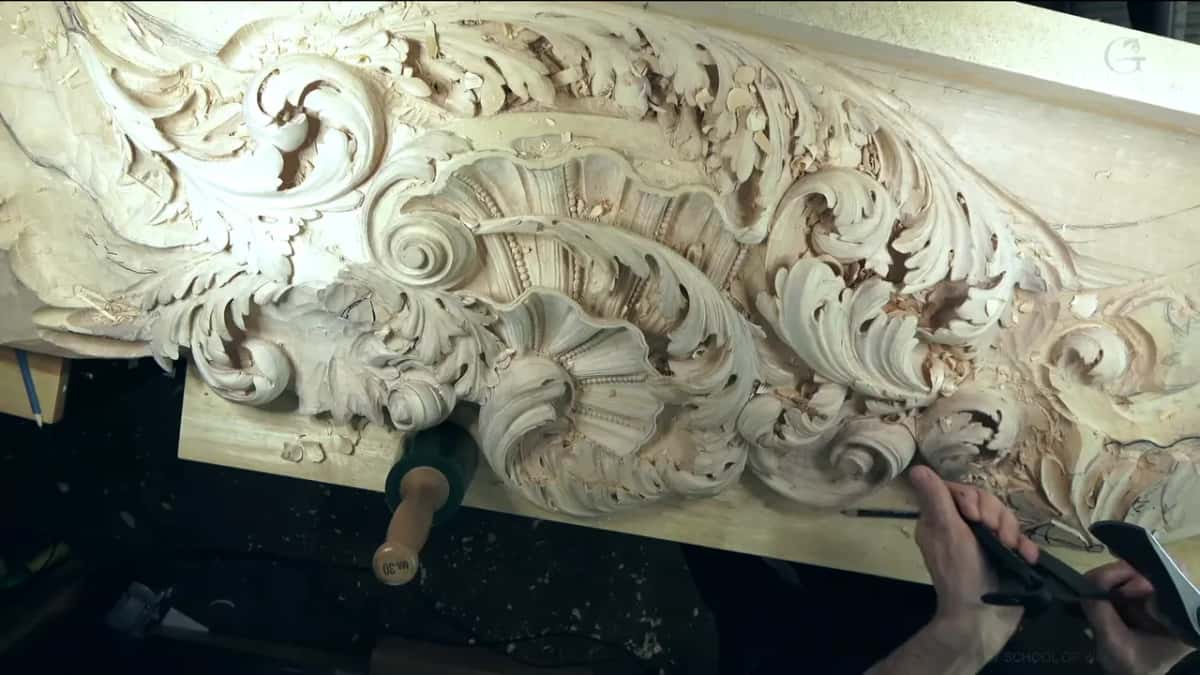
The south had far more tools, I said in that same workshop 50. In the northern part of Europe they had one knife, pretty much, or one chisel if you wish. Go to South Europe, Italy and Greece, and even Western Asia, modern Turkey, Syria, and Persia, which is modern-day Iran, and those people had thousands of tools, a thousand years ago. People sometimes do not realize how much beautiful antique art those places have.
Put that beside this video and the two lines seem to pull apart. Here I said archaeologists found Asian cultures, and cultures all over the Earth, from the 8th, 9th and 10th century, using that same knife technique. Both lines are mine, said in different videos, and I keep each with its own video.
One more thing from that answer about the north. The old northern work is beautiful, but it is not the same as the Venetian carving we were doing there, and one knife will not do that. I have done good work with just a knife and a gouge, and it takes much longer. Much longer.
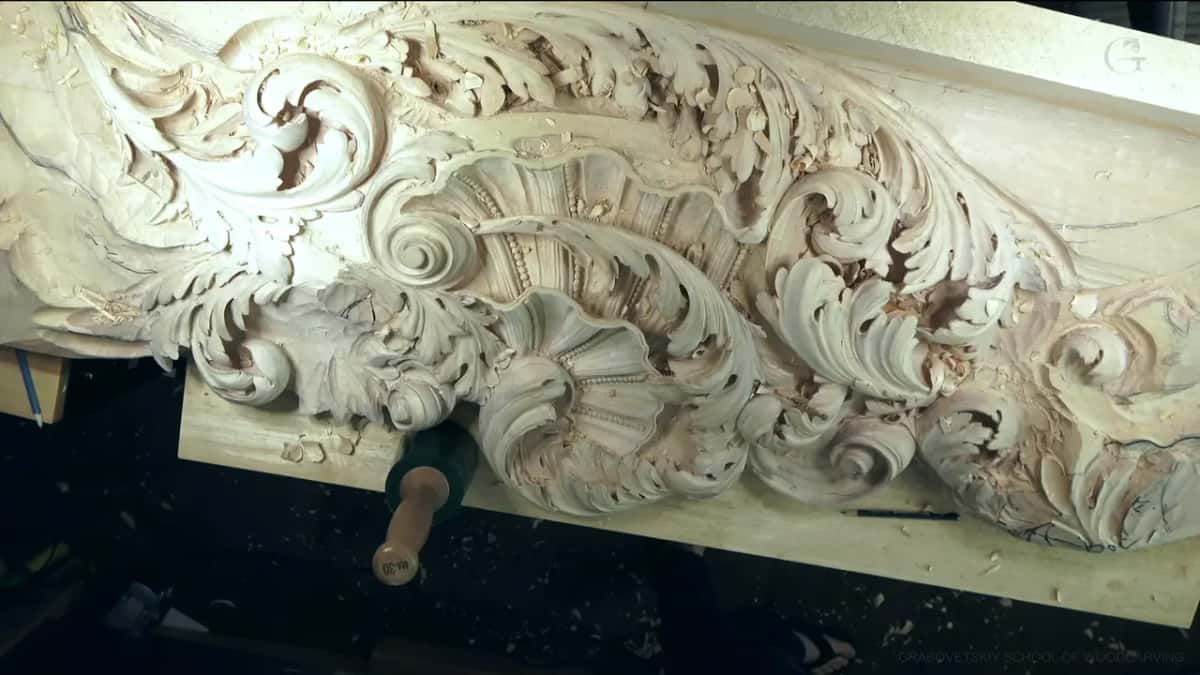
Which ancient wood carving techniques stayed the same?
The knife technique stayed, while the ornament kept changing. This video puts it plainly. They all had just the one knife available, and of course ornaments are different, styles are different, but the technique is still the same. With that knife they carved every beautiful thing they carved.
Take the acanthus. In Greece it looks different from the Roman acanthus, I said on the April livestream, and even Morocco has acanthus leaves, but every place developed its own. They all got the idea from somewhere.
A question on that October livestream asked about a Russian style of acanthus. Absolutely, I said. There is a Northern Russian style, a Southern Russian style, an Eastern and a Western one, and I called Slavic culture really ancient. Those people developed their own style, ornaments as well as acanthus. Even Viking styles depend on the period, so they differ too.
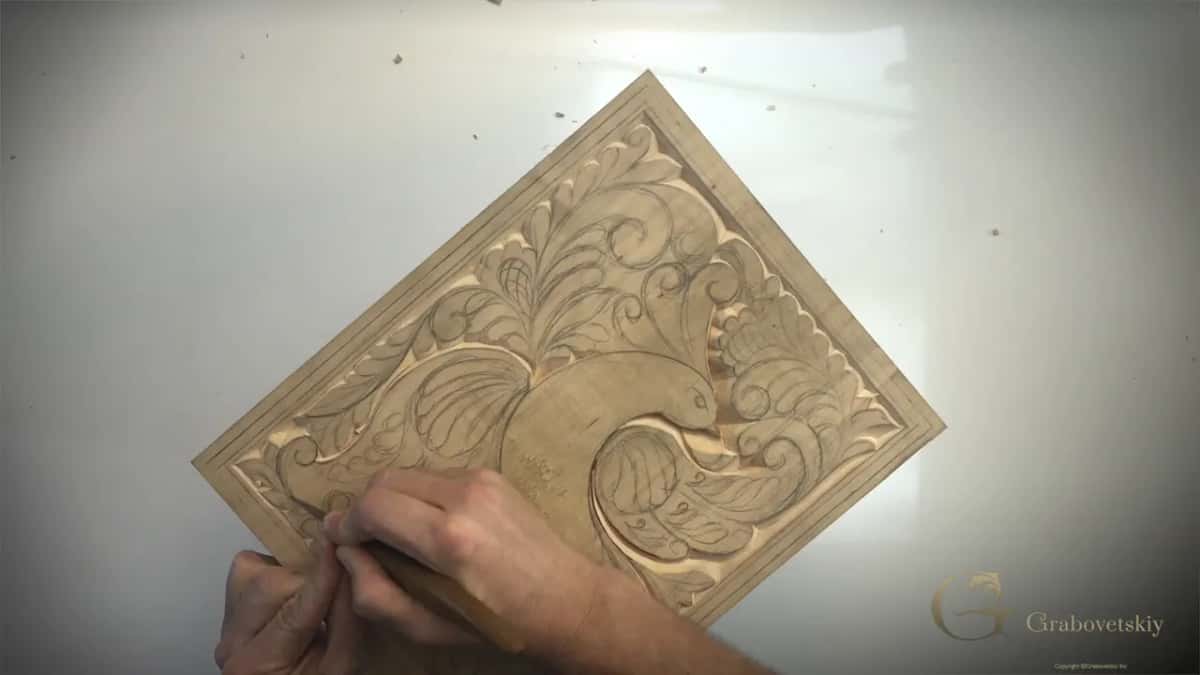
Knots tell the same story. Back on that same board I said the Celtic knots and weird movements in ancient carvings are most of the time made with the same knife technique I was using right then. The little flowers on my butterfly plate were a common detail about the 8th and 9th century, I said, and that style was pretty much all over Europe, Norman, Slavic and Germanic.
| Where they carved | What I said about their tools or technique | Which video |
|---|---|---|
| Norway, Denmark, Slavic north | one Viking culture, an axe for boats and knives for carving | Venice Room, workshop 50 |
| German and Slavic lands | the same technique as the Danish and Norman people used | First Cuts, video 2.4 |
| Asian cultures, same centuries | found by archaeologists still carving that way with a knife | First Cuts, video 1.2 |
| Britain, I think | carved the same way too, the way I see it | Greek acroterion, workshop 3 |
| Russia, north to south | regional styles of its own, with Viking influence up north | Livestream, October 2020 |
| Italy, Greece, Western Asia | thousands of tools back then, far more than one blade | Venice Room, workshop 50 |
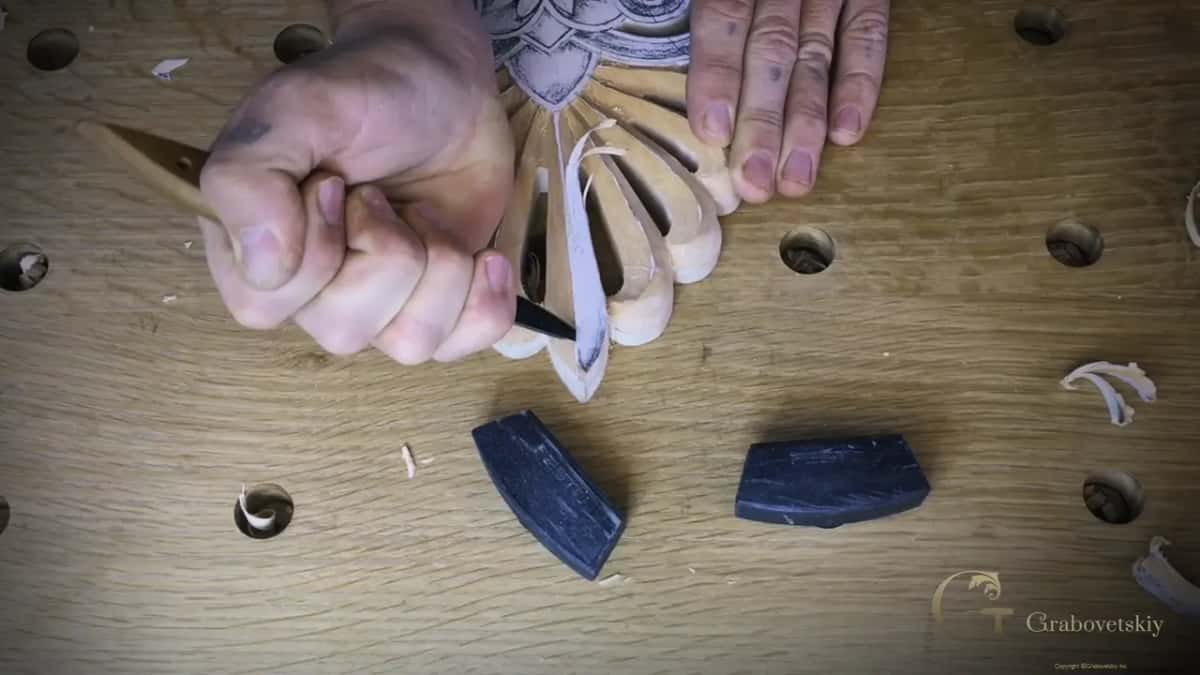
Did those carvers draw their curls by rule?
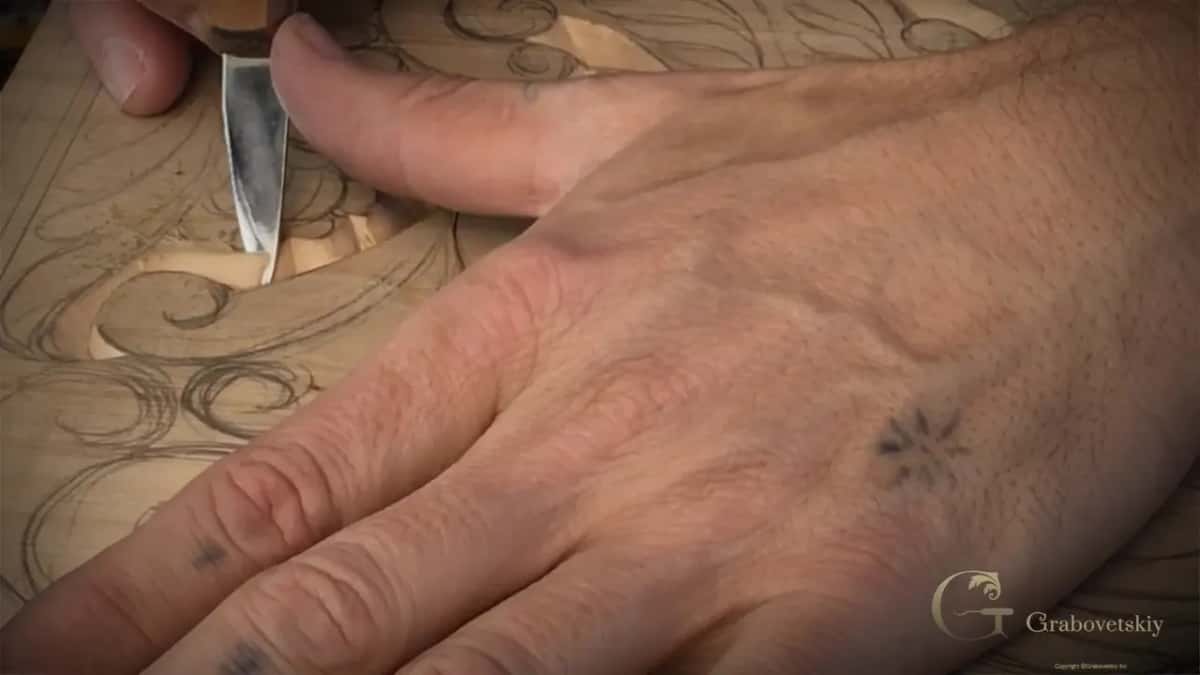
Up north, I doubt it. During the tenth cutting board workshop I told you those ancient people did not even know what the word volute means. Not all of them. In Greece they definitely knew. But in Germany or any Scandinavian country, they did not know the name, and it would just sound like a curl, because it curls. Call it what you like, I said, it is a beautiful detail and really common. Then I planned a second line about 3/32 of an inch (2.4 mm) away and picked up my number 12 smaller carving knife.
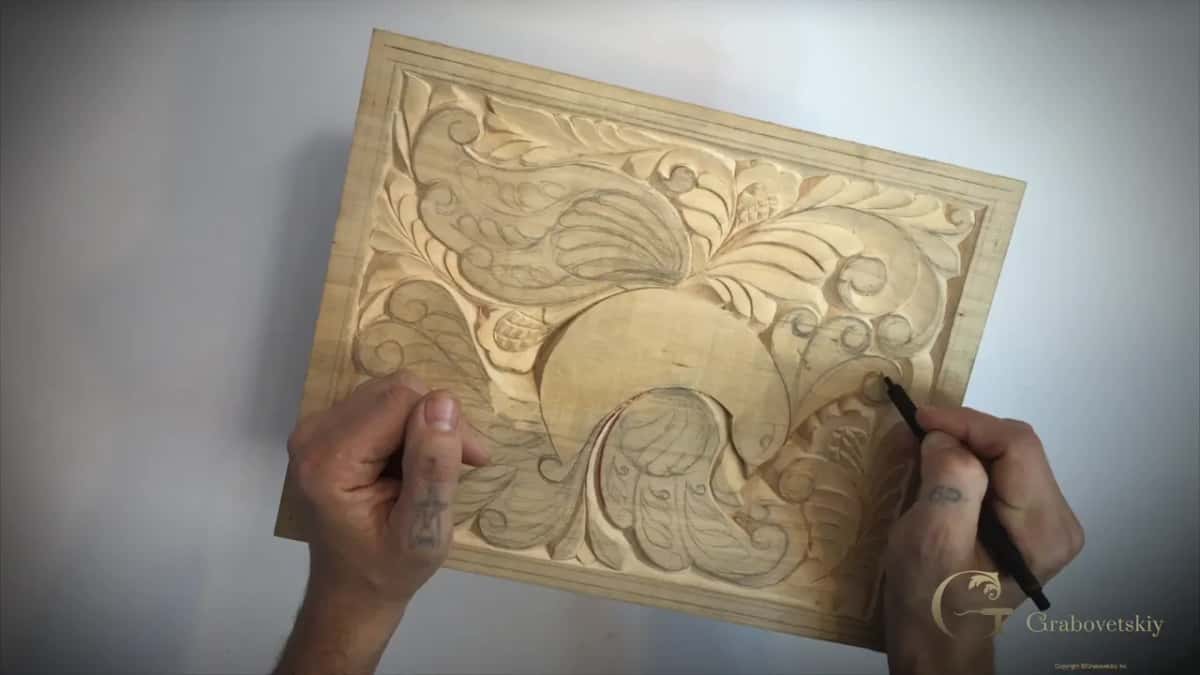
The next workshop went one step further. Do not take it too philosophically, I said there. Ancient Greece did think about math, while ancient Scandinavia did not know anything about mathematics and formulas, and did not care. Still, if you look at those ancient carvings all over Europe, in Germany and ancient Poland and ancient Russia, they look really organic, because you have that feel of flow inside of you.
I told the people carving the butterfly plate not to overcomplicate stuff. Greek and Roman carvers did the golden ratio and things like that. If you lived in Northern Germany or a Slavic country, you would not even overcomplicate it, and the visual would be enough.
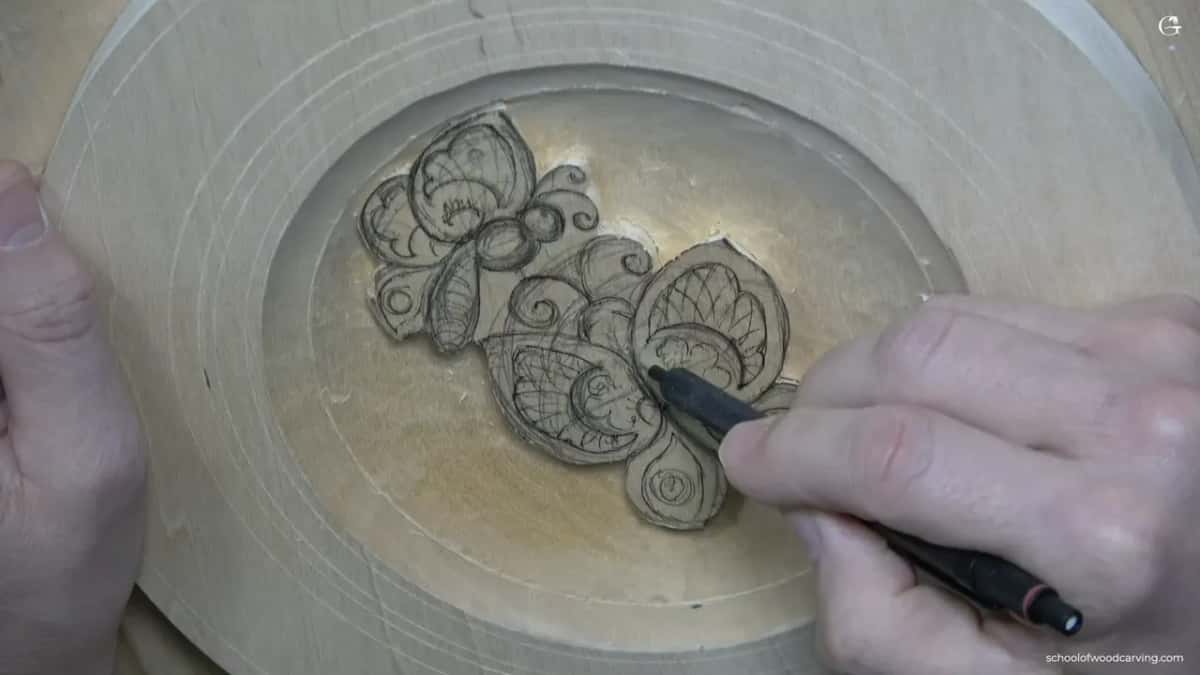
And when I drew the inside of a butterfly in workshop 4, I wanted to stay really authentic to that style, about 8th or 9th century, northern European. Just before that I said I like the simplicity of it. Still, it comes out somewhat complex. In stylized carving, I said, you have to be authentic, so I do not invent movements of my own. Go to Norway, Denmark, or the northern part of Russia and look at those really ancient buildings built from wood. You find that type of movement all over them.
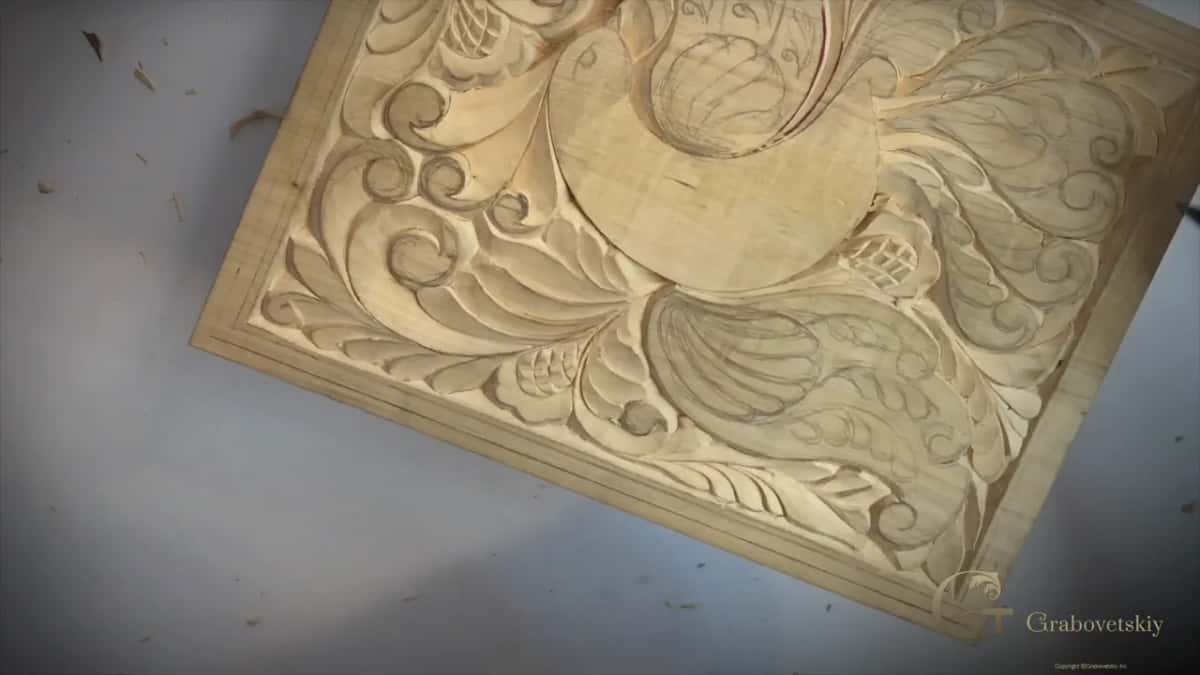
Can you carve the old way today?
This course starts right there, knife in hand, in its first workshop. I lay out the plan here. We begin with the most ancient forms of carving and walk all the way up to the most used classical, traditional carving, using just one knife. And believe me, with one knife you can do a lot of stuff, I said, and you do not have to buy all the tools behind me to get great results. On the Venice Room panel I called that old style pre-geometric carving, and said a beginner's course I have is based on one knife.
Three habits from my other videos carry over. Shaping the acroterion, I said one knife is probably the quickest way, taking really big chunks, and that the angle has to stay consistent on both sides. Of course, it takes a lot of force, and you can get really good results that way. At one point on the curly board I stopped to strop my knife on a piece of leather with green paste, about 20 strops, and said that in ancient times they had no green paste, but the leather itself will work.
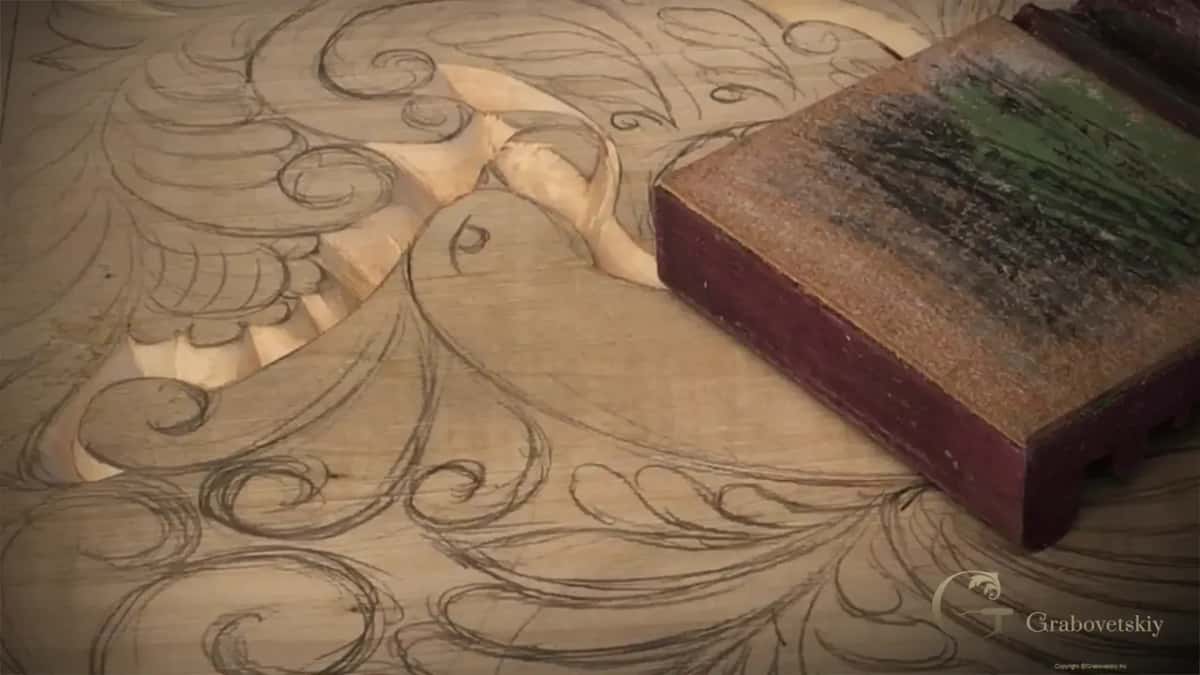
And copy the old work. The April livestream has me asking how 10th century Normans could know acanthus movements without traveling far and copying, the way other peoples traveled, looked at work, brought it home and developed their own flavor of acanthus. Copying is more than okay, I said, it is the only way to learn.
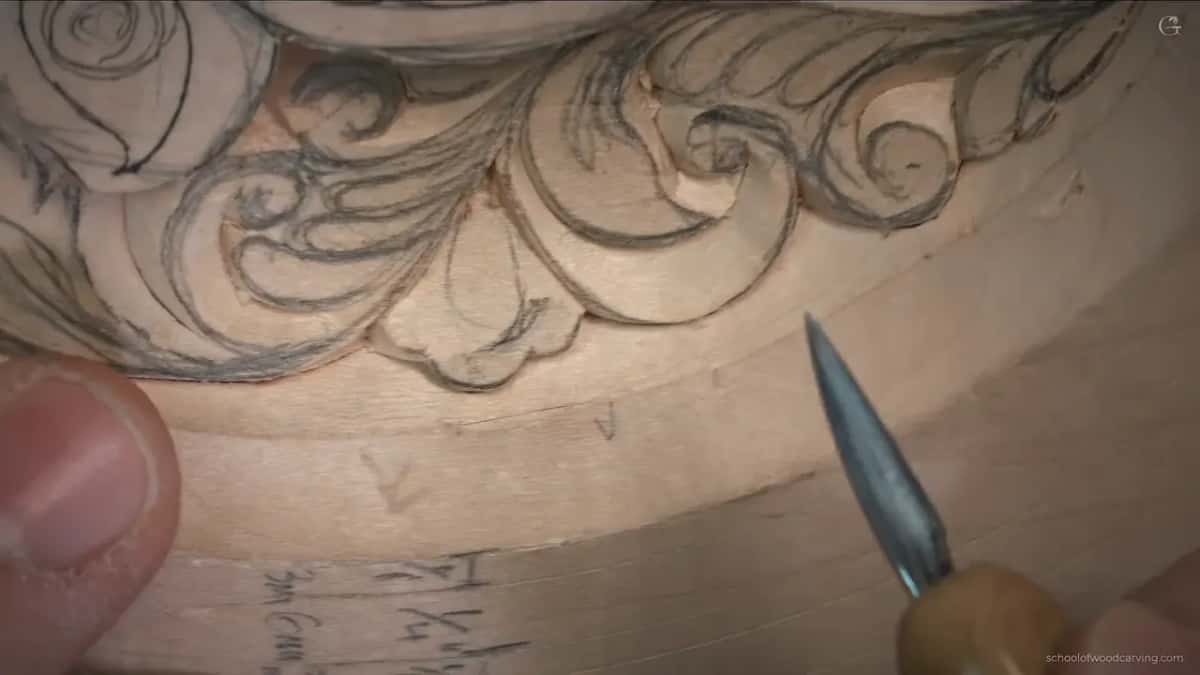
Do you have one knife? A scrap of soft wood? Then the first workshop is where that old knife work starts on your own bench, and Tuition opens the courses I named here, the Venice Room and the butterfly plate included.
How it's done
- Look at the old northern work. Go and see the really ancient buildings of Norway, Denmark and northern Russia, built from wood, and the movement carved all over them.
- Copy it. Copying is fine. In my words on a livestream, it is the only way to learn.
- Keep the drawing plain. Skip the golden ratio and the formulas. A curl only has to curl, so the visual is enough.
- Take one knife. One knife is sufficient to begin, and it will last you a long time.
- Hold a steady angle. Match the lean of the blade on both sides of every line, so the two slopes come out the same.
- Strop on leather. Rub some green paste into a piece of leather and pull the edge across it about twenty times. Leather alone will still work, with no paste at all.
Frequently asked questions
Did carving start with the Vikings?
Long before them, in my telling. I place the Viking era at the 8th to 10th century, and in this video I said carving is two, three, even four thousand years old, and that there were carvers before the flood too. That last part is my belief, said as mine.
Did Viking carvers use an axe?
For boats, mostly, and knives for the carving itself, as I told the camera during workshop 50 on the big Venice panel. I also said the exact count of their tools is unknown, and it depends on the country and the place.
Were the Vikings the only people carving this way?
German and Slavic carvers used the same technique, I said in the second workshop of First Cuts, and in this video I added Asian cultures found by archaeologists. On the Greek acroterion I said even the British, I think, carved that way too.
What to carve next