
Alexander Grabovetskiy, woodcarver, School of Woodcarving · Published 2021
Do you have to measure the golden ratio exactly when you carve?
Quick answer: Measuring the golden ratio is optional for me at the bench. I find the spot by eye at about six of ten, near 62 against 38, and reach for calipers only for proof. On a furniture panel and a Venice Room leaf, the check matched my eye.
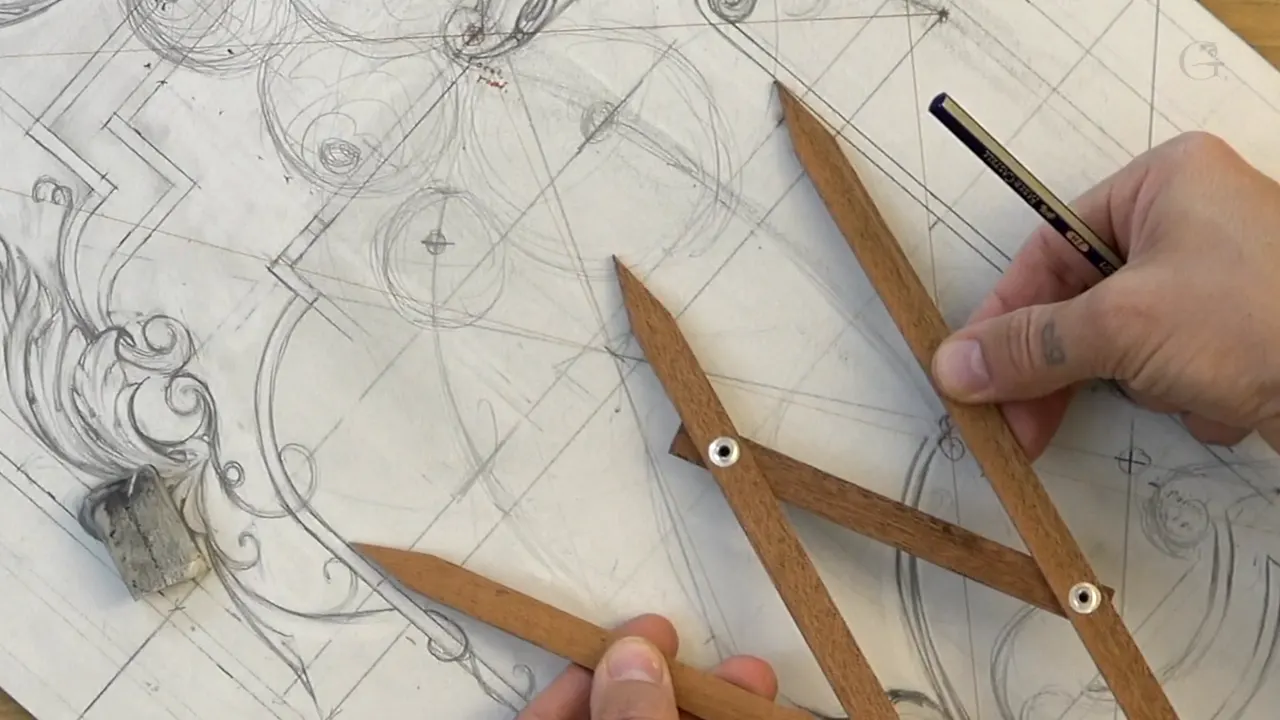
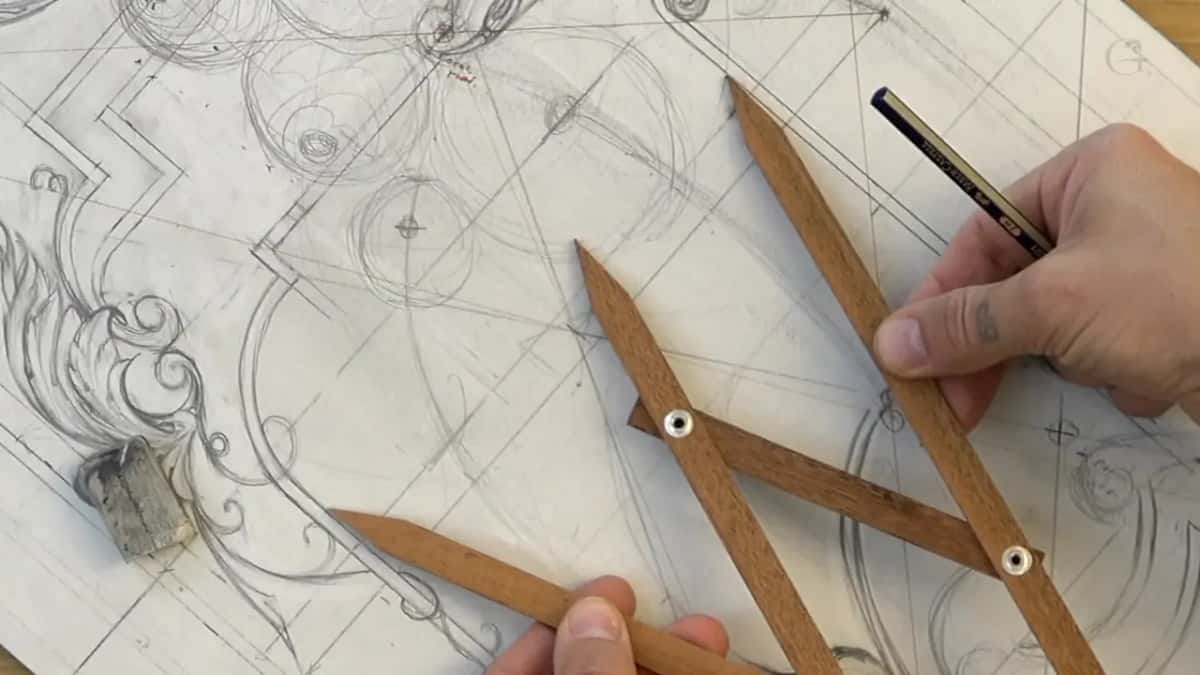
Measuring the golden ratio exactly is a check for me, not my first step at the bench. I put the mark down by eye at about 60 percent of a length, close to the 62/38 split, and if I want proof I check it with golden ratio calipers. On camera, on a furniture panel and on a Venice Room leaf, the check landed right where my eye had already put it.
Can you find the middle of a board by eye? Could you tell when a pencil mark sits a little past that middle? Then you can find this spot too.
This video belongs to lesson one of my Principles of Design in Wood Carving class, filmed at the chalkboard in a live class. By the end of this page you will put that mark down without a calculator, and you'll know when a check is worth the trouble.
Eyeball first, check second, in five lines
The exact number takes math, and in this video I won't take the class that deep.
Sixty against 40 is easy enough. Sixty-two against 38 is closer, if you're more complicated, as I put it.
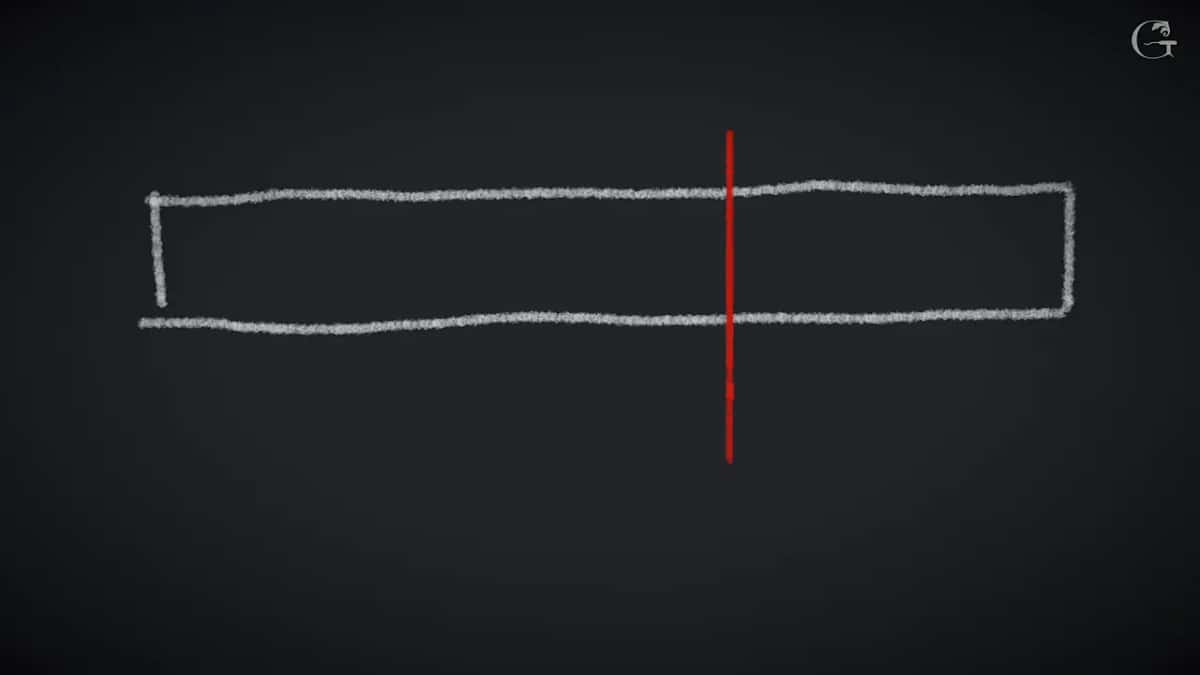
Halve the length, slide the mark toward one end, and eyeball it.
Calipers check the eye later.
Don't overcomplicate it.
How much math is hiding behind the golden ratio?
All of it, if you want it. In this video I ask out loud where the golden ratio is and how to calculate it, and then I answer my own question in three words. It's everything math.
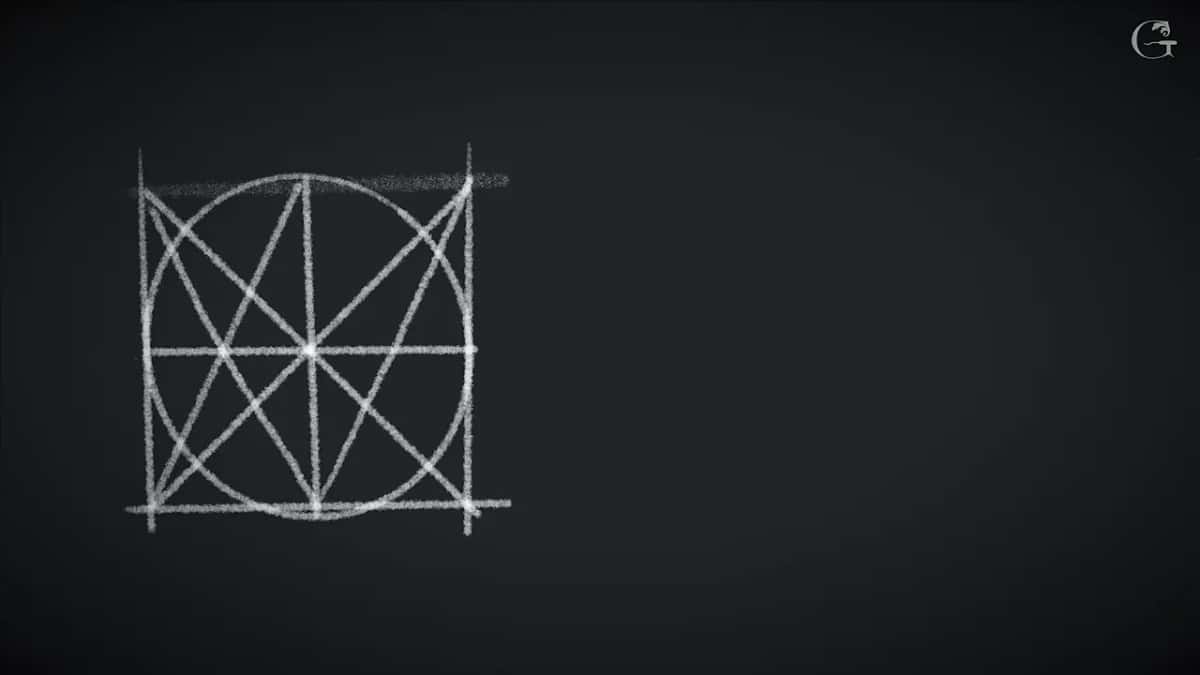
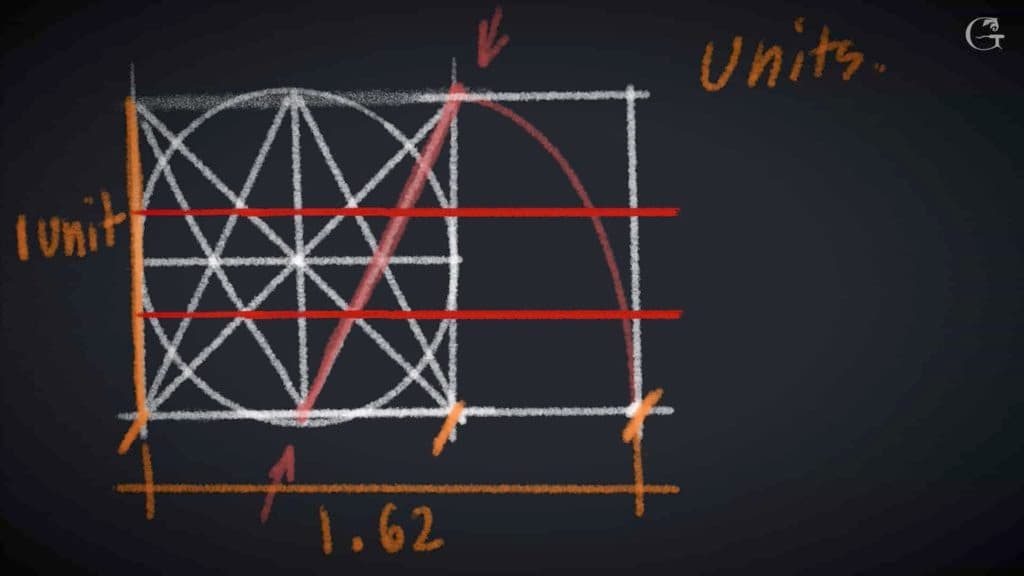
It comes from units, I tell the class. Call one length on the board one unit, and it doesn't matter which unit you use: one inch, one millimeter, one meter, whatever you have. The other length comes out at 1.62. Then call the whole line 100 percent and count along it. The spot falls at 62 percent of the line, or 61, and so on, with 38 left on the other side.
Look at that sentence again. Even with the theory up on the chalkboard, I said 62 or 61 in one breath and kept going.
Then I turned to the height of the same drawing and asked where that line is supposed to be. The same thing, about 62 percent right there. Easy. Once those lines are on the board they're easy to hit, and where they cross there is going to be a golden spot.
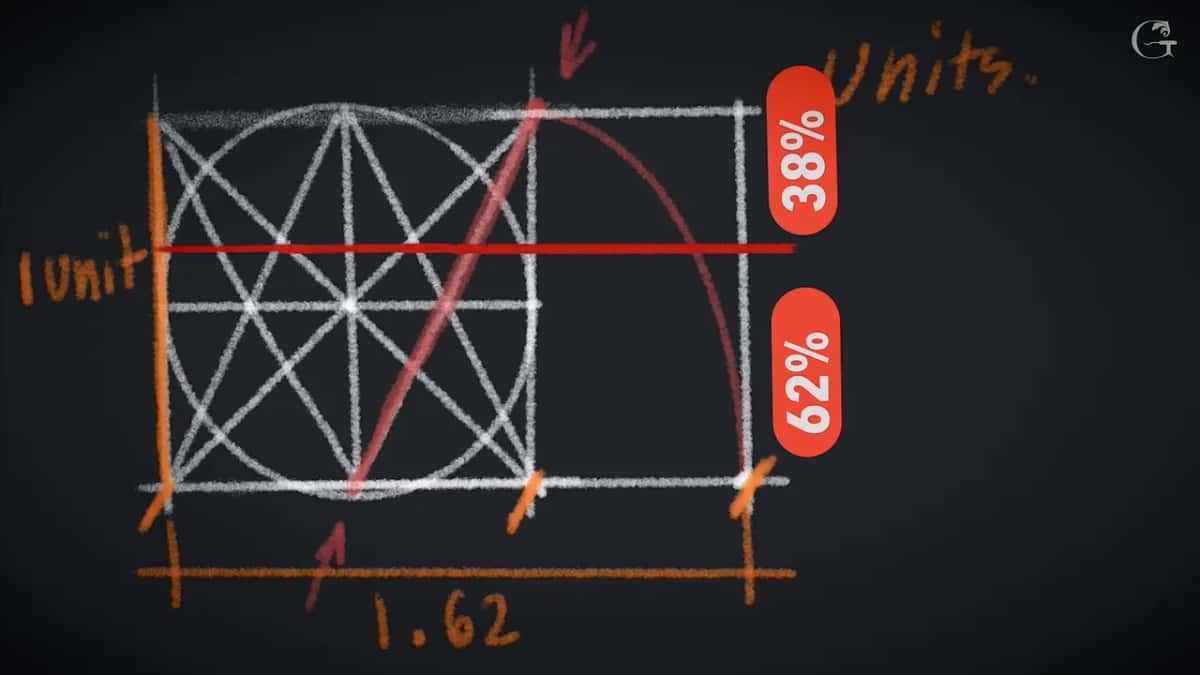
For the record, the golden ratio page on Wikipedia gives the number as about 1.618, and a golden rectangle is one whose long side is that many times its short side. A compass and a straightedge will draw one. I drew the compass version out on Designing Furniture Panel 7, so I won't repeat it here.
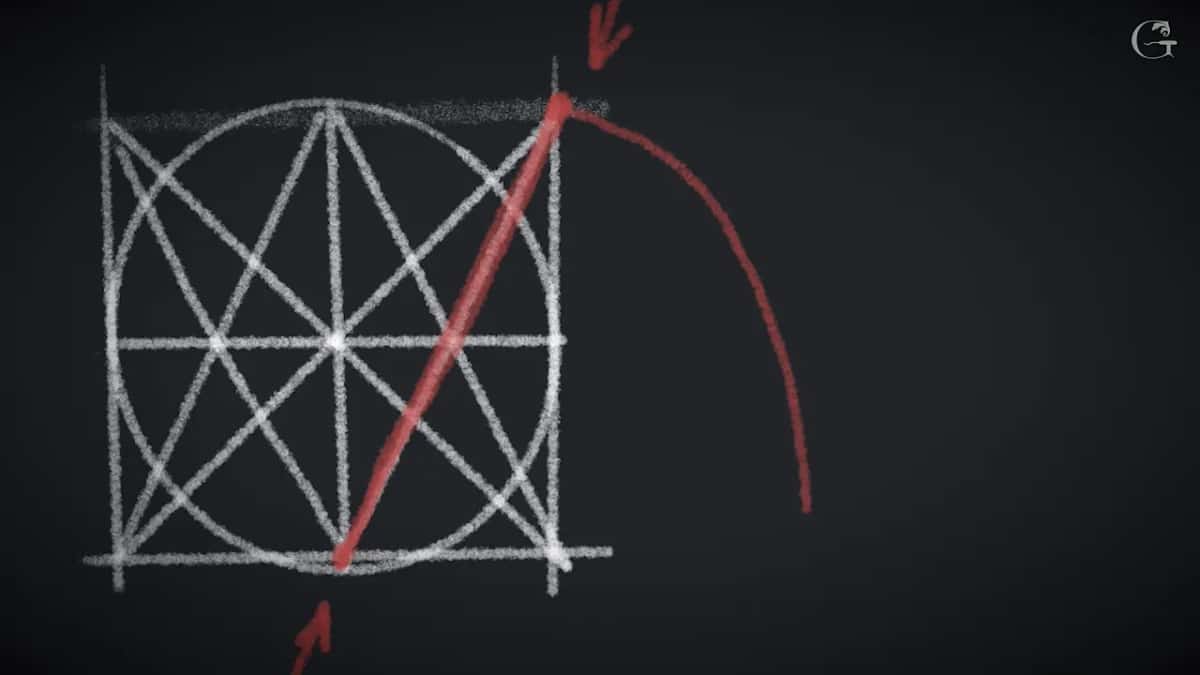
There was one class at Marc Adams, about four years before this video, where we did the whole design on math. Every line was a calculation. I'm not taking you down that road here, because there's an easier approach, and the easier approach is what I use myself.
Is six out of 10 close enough to 62 and 38?
Close enough for me. Remember 100 percent, 40 percent, 60 percent, I say on the board. Easy enough. Six parts out of 10, and that's a golden ratio, somewhere right there. Sixty percent of any space or any line lands on that line, I said, whatever the length of the piece in front of you.
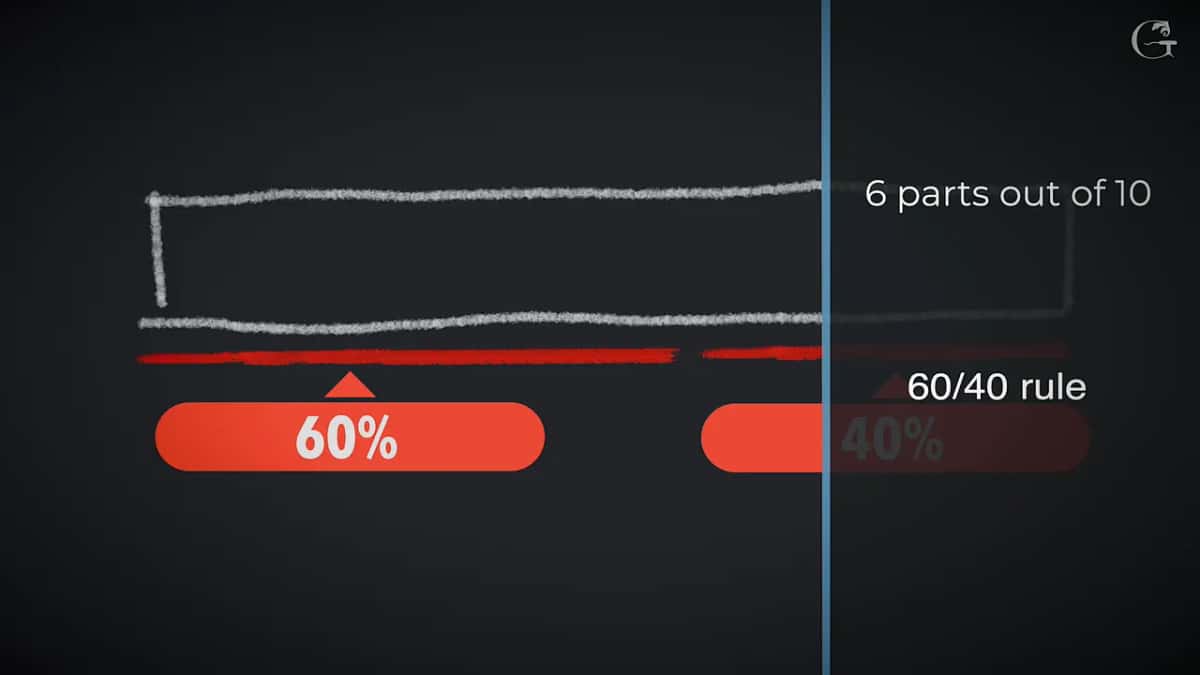
Sixty-two would be closer to the golden ratio, if you're more complicated. My words, on camera. But 60/40 is really easy to understand, so that is the pair I carry in my head.
Here is how far apart the two really are on wood. Take a board 10 inches (254 mm) long. The exact point sits about 6 3/16 inches (157 mm) from one end, and six tenths puts your pencil at 6 inches (152 mm). Under 3/16 of an inch apart. In a machine shop that kind of allowed wiggle has a name, engineering tolerance, and it gets written on the drawing.
On Venice Room 41 I wasn't happy with an eye in the carving and said it needed to come a little bigger, because that eye has to sit at six parts of 10 too, measured between two points. More goldish, rule-ish, I called it, if you wish to say it that way. After that came the number, three ways in one go: 1.62, or 62 parts of 100 however you count it, or the simplified way, six of ten.
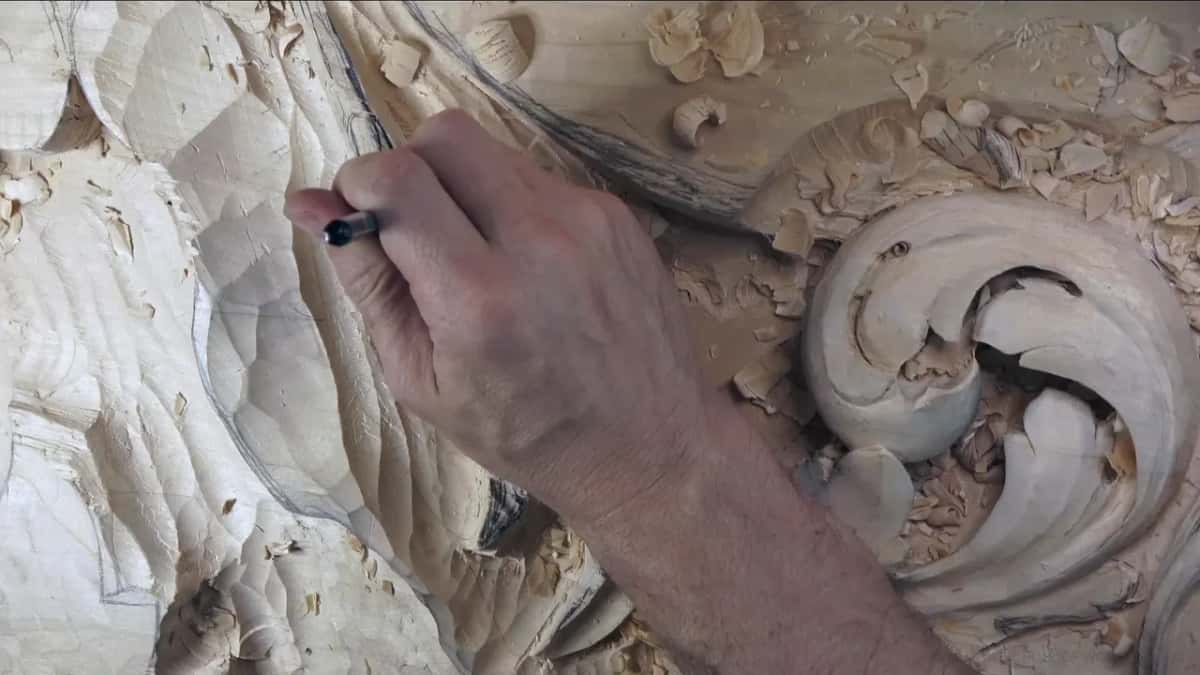
How do I find the spot without measuring?
I take the distance, find its middle, and shift that mark to the right or to the left. Which side depends on the brain structure, I said, and that question lives in the first lesson of the design class, the lesson this video belongs to.
Designing Furniture Panel 12 shows the same move on a flower. I was setting its center points, one for each movement. One part goes downhill, and I still wanted to cross that line and put its center point right there, off center on purpose. Same rule, I said. Divide this line in approximately 10 parts and the golden point sits at six tenths, somewhere right there. I'm just eyeballing it. It's not really critical, just approximately.
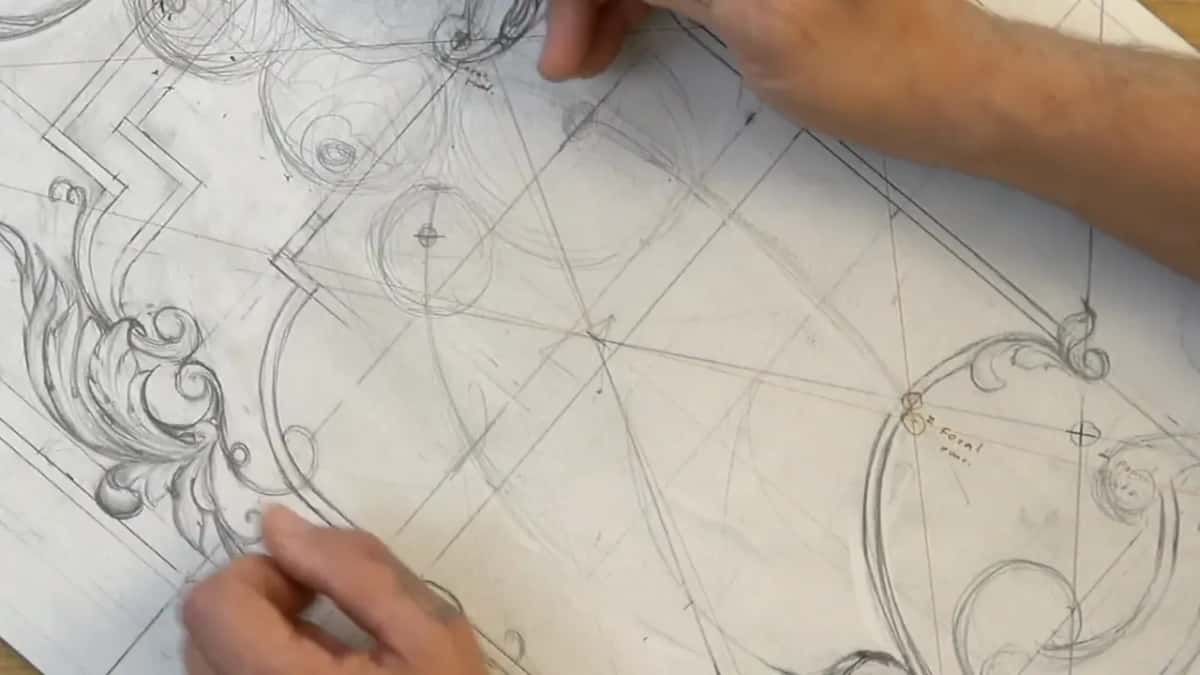
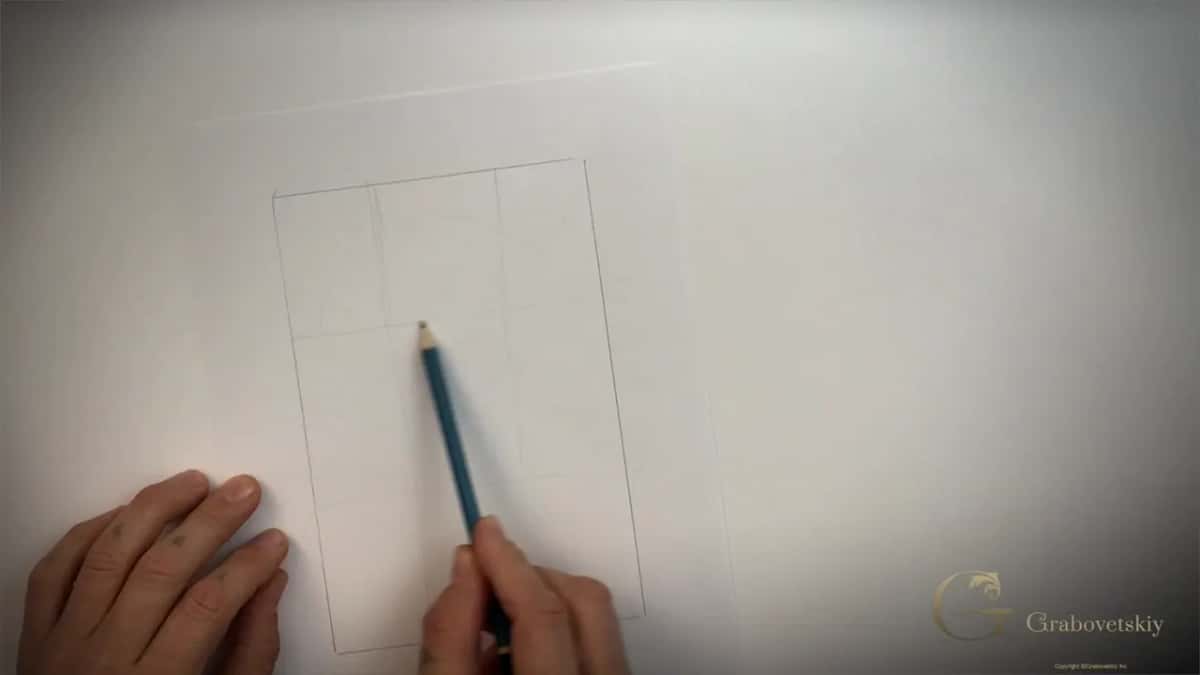
A Greek acanthus starts with something rougher still, a piece of paper split in three. On Carving Greek Acanthus Leaf 1 I divided it into three parts, one, two, and three, and used the lines for two main points, the first one where my eye will be looking. It's the real simplistic way, I told that class, although it's not true golden ratio. Even that grid is optional, I admitted. Right after, I said the main idea of a Greek acanthus is the swirl, the volute movement.
Painters and photographers know that grid as the rule of thirds, two lines each way, with the main things placed along the lines or where they cross. In the same Greek lesson I said the golden rule is just like a swirl. Mathematicians draw that swirl as the golden spiral, which gets wider by the golden ratio with every quarter turn.
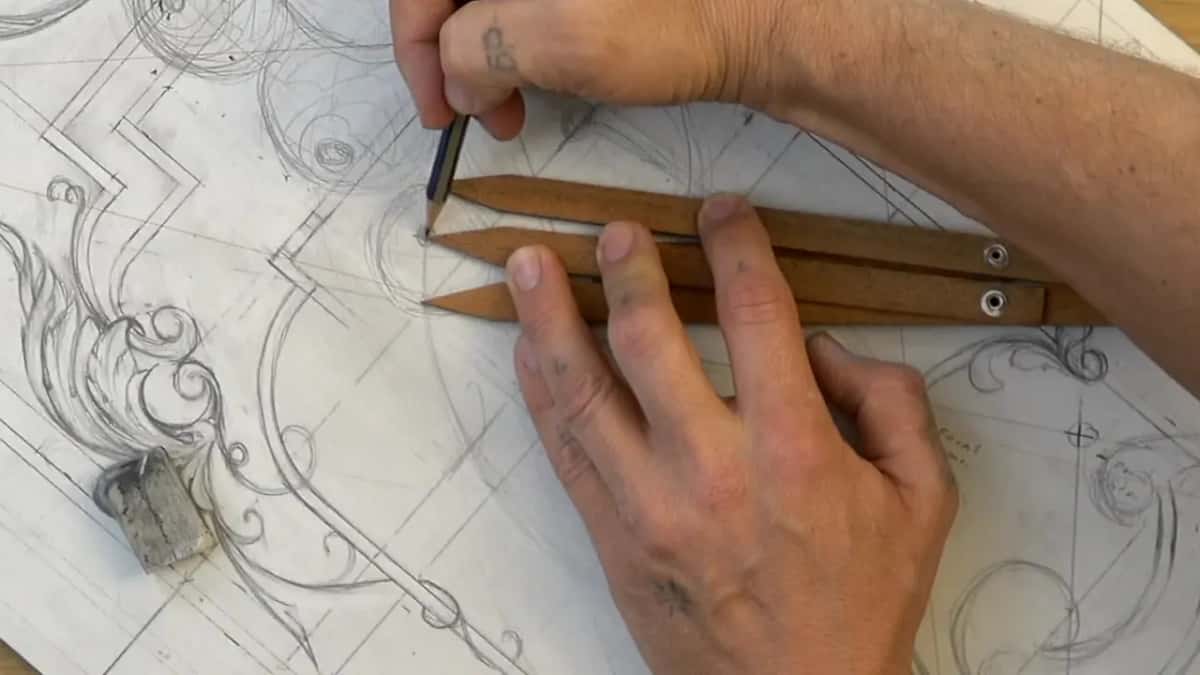
What do golden ratio calipers actually check?
They check your eye after the fact. On that same flower in panel 12, once the mark was down, I said let me double check, and I put my golden ratio tool on the line. It got to that point exactly. This tool divides 10 in six parts automatically, I explained, so I can always check, like a caliper, where my golden point is. A really handy tool to have.
The leaf on Venice Room 131 went the same way. Across that leaf I wanted a golden ratio again, about 60/40, or 62 out of 100. I drew the middle center line by eye with 62 on one side and 38 on the other, and then I asked the camera, am I accurate? I don't know. Let's figure this out.
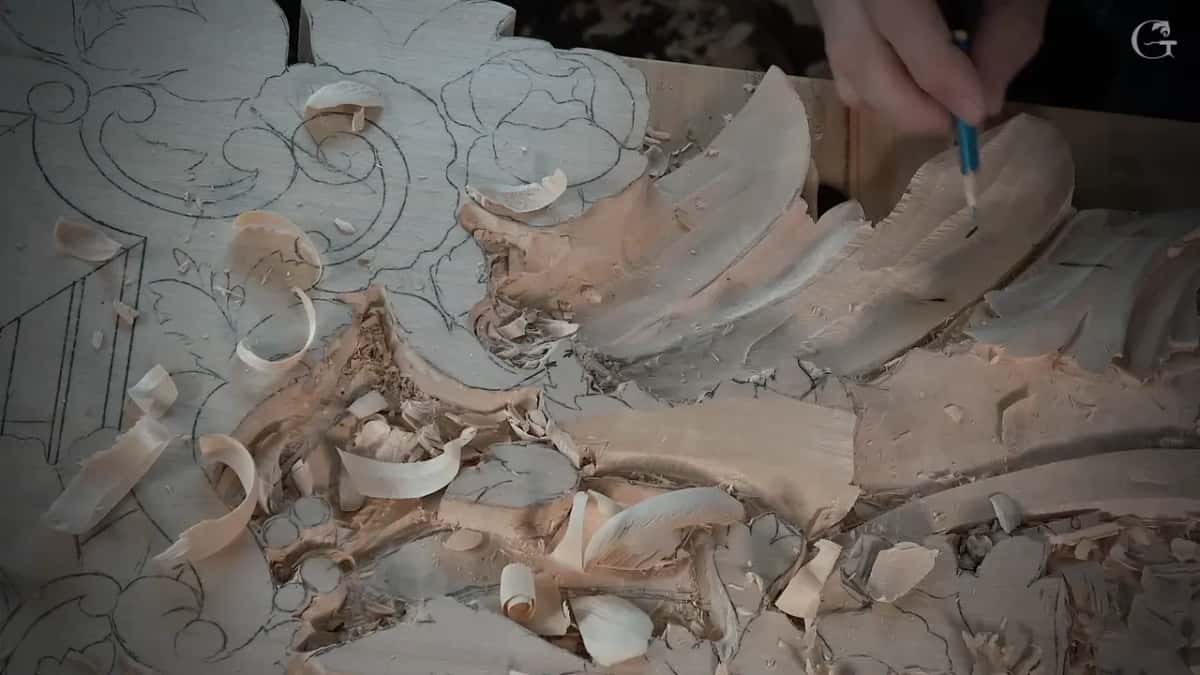
So out came the calipers, and I was right very much on the money. Maybe the video shows it and maybe it doesn't, I told everybody, but I just eyeball it. I don't really need to measure. I'm pretty close, I know.
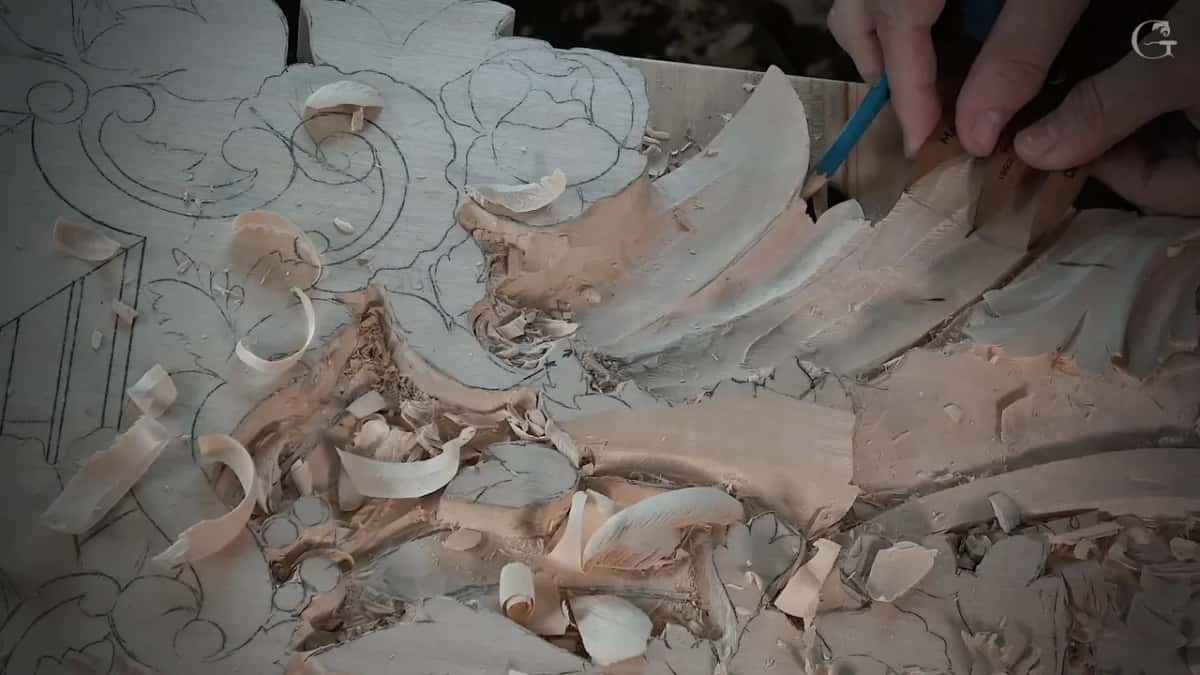
And then the check was over, and the carving went on. That center line runs all the way to the point of the leaf. Before the secondary concave I rode a big number 2 along that movement to hit the high spots, from both sides, so the movement stayed really gradual with no waviness. I need a really beautiful line, I said. That is what I'm after.
A pair of calipers, in the plain dictionary sense, measures length, width, thickness or diameter. The golden kind only shows you a split. The same check went onto a turned vase in the grape leaf vase course, and that story has its own page.
| Piece | Exactness | Split | Check |
|---|---|---|---|
| Furniture Panel 12 | I'm just eyeballing it, not really critical | six tenths | the tool agreed with me exactly |
| Venice workshop 131 | I eyeballed, then asked am I accurate | 62/38 split | calipers put me on the money |
| Venice workshop 41 | the eye has to sit at six | 1.62, simplified | I counted it three different ways |
| Furniture Panel 19 | an invisible molding line still fell there | about six | that makes me happy, I said |
| Greek acanthus 1 | three parts on paper, not true golden | rough thirds | two main points for the drawing |
Where does the split show up once the eye has it?
Inside the parts, again and again. A leaf on the furniture panel, in Carving Furniture Panel 19, was one place. I didn't want a concave running all the way up, so I reached for the golden ratio: divide it in 10, about six parts, and that's my high spot, moving downhill from there. We need at least some different movements, I said, not exactly the same thing twice on one leaf.

Somebody might ask if I worry about losing the edge. I really don't. I can always draw it again.
A few minutes later on that panel I looked along a molding line that will end up invisible. Measured between its two ends and divided in 10, it still falls at roughly six parts of the ten, which is by the golden ratio. And that makes me happy. You can find that golden ratio everywhere. Then I picked up a number 3, 6 millimeters, to start rounding that part down, little by little.
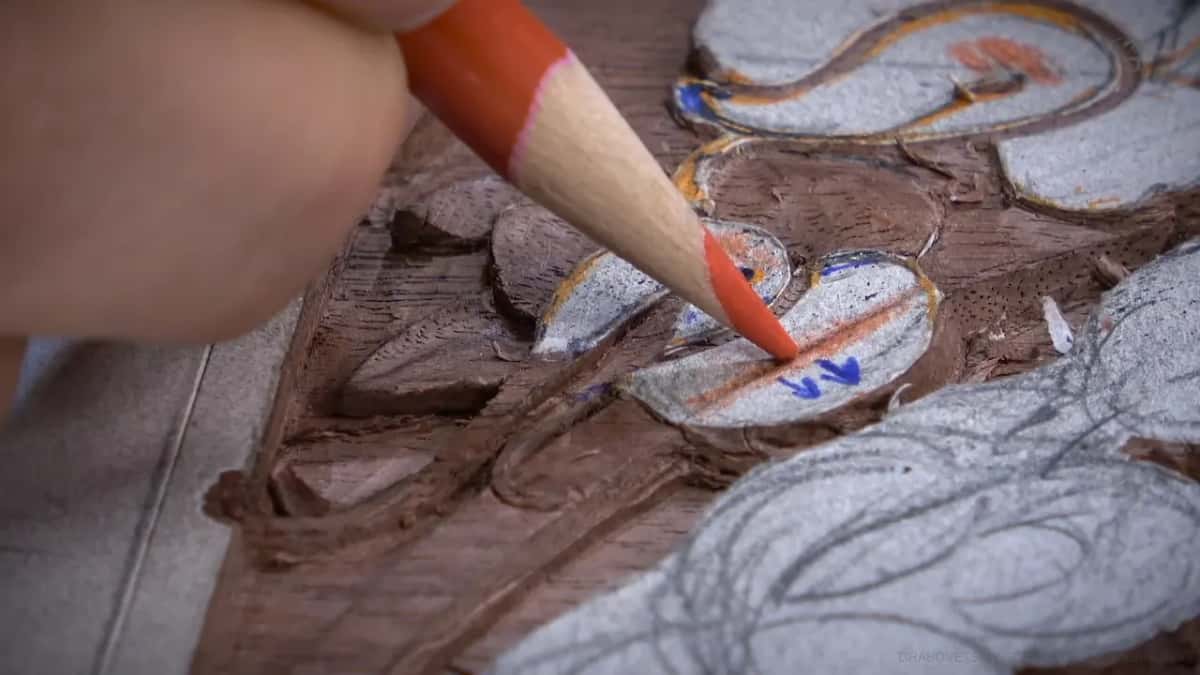
In The Tray of Blessing, lesson 3, the center line of a lobe sat kind of in the middle, with about the same space on each side. I could move that line a little closer and create 60 40. One edge I didn't want to touch, but the other I could change, so I planned the illusion of that part of the lobe going right underneath the next one. That way I can get my 60, I said. My question to the class was, see that 60 and 40, can you see that visually? Like golden ratio again.
Placing a butterfly on Carving Plate with Butterflies 2, I wanted one side a little bigger than the other. Somewhat golden ratio, I said, with 60 on this side, or 62 against 38. Then, in the same breath, it doesn't have to be that way. No, it doesn't.
When does the math get in the way?
When it scares you off the board. During that tray class I said it plainly: if you don't feel comfortable with the golden ratio, don't overcomplicate stuff. I mean, most of the people don't.
I'm guilty of it myself, and I said so. On Venice Room 93, talking about the design course I was planning, I said design has a lot of principles and laws, and the golden ratio counts as one of them. A lot of people make a big deal about the golden ratio and the Fibonacci sequence. But that's not the only rule.
Then came the confession. I still have that problem sometimes, I can overcomplicate stuff, especially the mathematics, because math really is a big deal in design. I'd rather not lose you in the mathematics. Online, I said, we can take it a lot farther, to the drawing, to train your hands, the mechanics of it and the logic of it. Earlier in that same video I had said I do have to be accurate with my drawing.
The next level after the principles, I said in that same workshop, is learning how to draw what you intend to carve. Drawing for carving is not the same as working in the 2D world on a canvas. It's absolutely different.
Outside the shop the big claims get even bigger. The Wikipedia article on mathematics and art notes persistent popular claims for the golden ratio in ancient art and architecture, made without reliable evidence. I believe the law is real. Decimals are another story.
So what matters more than the second decimal?
The spot itself. Whatever space you have to fill, the job does not change. Find the main idea, decide who the main guy in the picture will be, and put him on that mark. Everything else goes round him.
Psychologists call the smallest change a person can pick out the just-noticeable difference, the change spotted at least half the time. Hold that next to the 10 inch board above and ask yourself whether a stranger walking past your carving will ever catch the gap between 6 and 6 3/16.
Your next board is the test. Halve it with a pencil, slide toward the six-tenths mark, set the main idea there, and if you own a ratio tool or calipers, check your eye afterwards the way I did on panel 12. When you want to carve along with me, pick a plan.
How it's done
- Take the whole length. I take the whole distance I have to fill.
- Mark the halfway point. Before anything else I mark halfway along it, the same way I do on the chalkboard in this video.
- Slide it toward one end. I shift that mark to the right or to the left until it sits near six of the ten parts, or 62/38 if I want it closer.
- Trust the eye. The pencil mark is an eyeball mark. Approximately is fine with me, and it isn't critical at this point.
- Double check if you like. My tool or a pair of calipers goes on the same two points, and I look whether it gets to my mark.
- Put the main idea there. The main idea of the design sits on that spot, and everything else is surrounded round it.
Frequently asked questions
Do I need special calipers before I start?
You can start without them. My first mark is an eyeball mark, slid toward six tenths, and only afterwards do I reach for calipers or the tool. On panel 12 and on workshop 131 the check agreed with what my eye had done.
What if my mark lands at 61 instead of 62?
On my chalkboard I said 62 percent of the line or 61 in a single breath, and moved on. Even 60 is fine for me, since 60 against 40 is the easy one, as I put it on the board.
Should a beginner learn the math first?
Not for this. A class on the Tray of Blessing heard it from me: if you don't feel comfortable with the golden ratio, don't overcomplicate stuff, and most of the people don't. Six and four is really easy to understand, I said in this video.
What to carve next