
Alexander Grabovetskiy, woodcarver, School of Woodcarving · Published 2021
How do you keep one overall movement in a carving design?
Quick answer: Overall movement in a carving design is the single direction a whole piece travels from one starting point. Inside it, parts may turn back, oppose each other or answer each other. A curve facing the wrong side can throw that whole movement away.
A carving's overall movement is the single direction the whole piece travels, set from one starting point before any small detail goes on. Inside it, a part may turn back, push against its neighbor or answer it. A curve on the wrong side is another story.
Call it the movement principle of design, the way I teach it at the board, in a live class. Will your next carving begin somewhere on the board? Should a stranger's eye follow it from there? Then that spot gets picked first, and every curl is checked against it.
This page takes the few minutes of this video, then follows the same rule onto real pieces: an acanthus on the Venice Room job, small flowers on a lily box, and a shell set against an acanthus.
What I check before a single curl goes on
Where the trip starts, and which way it runs across the board.
A part can turn back.
Every S curve faces the way the outside movement goes.
Across from a concave, a convex.
One wrong line gets fixed before I change everything around it.
And a crowd of movements all heading one way, I found in workshop 30, is a problem of its own.
Where does the movement in design start?
At one point, on one side, and I choose it before anything else.
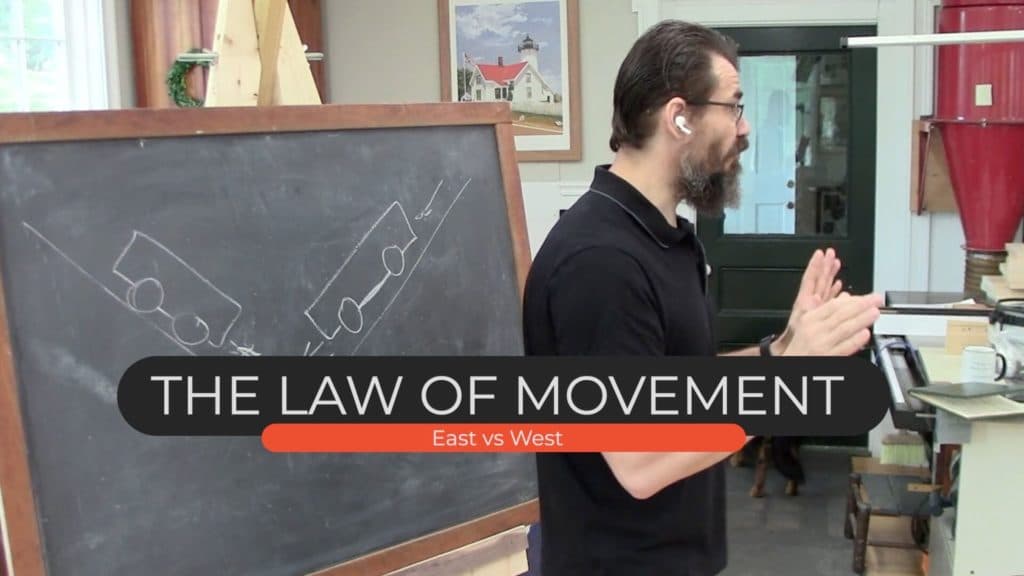
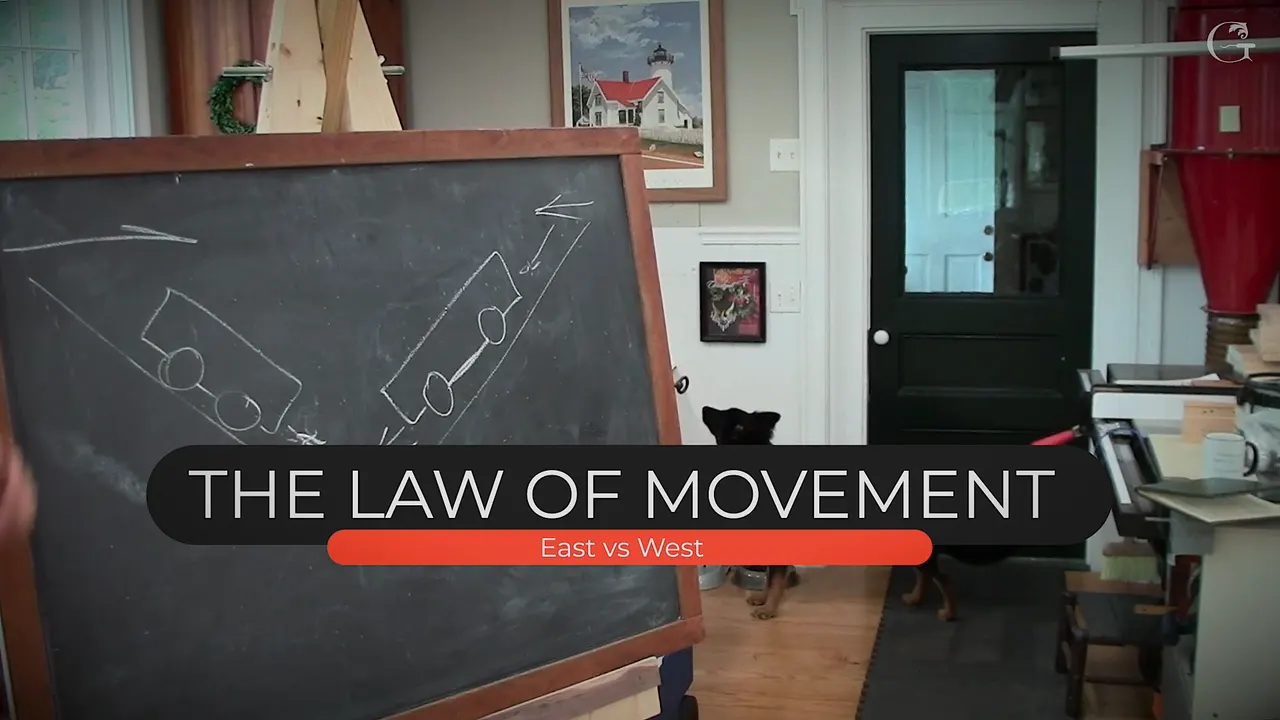
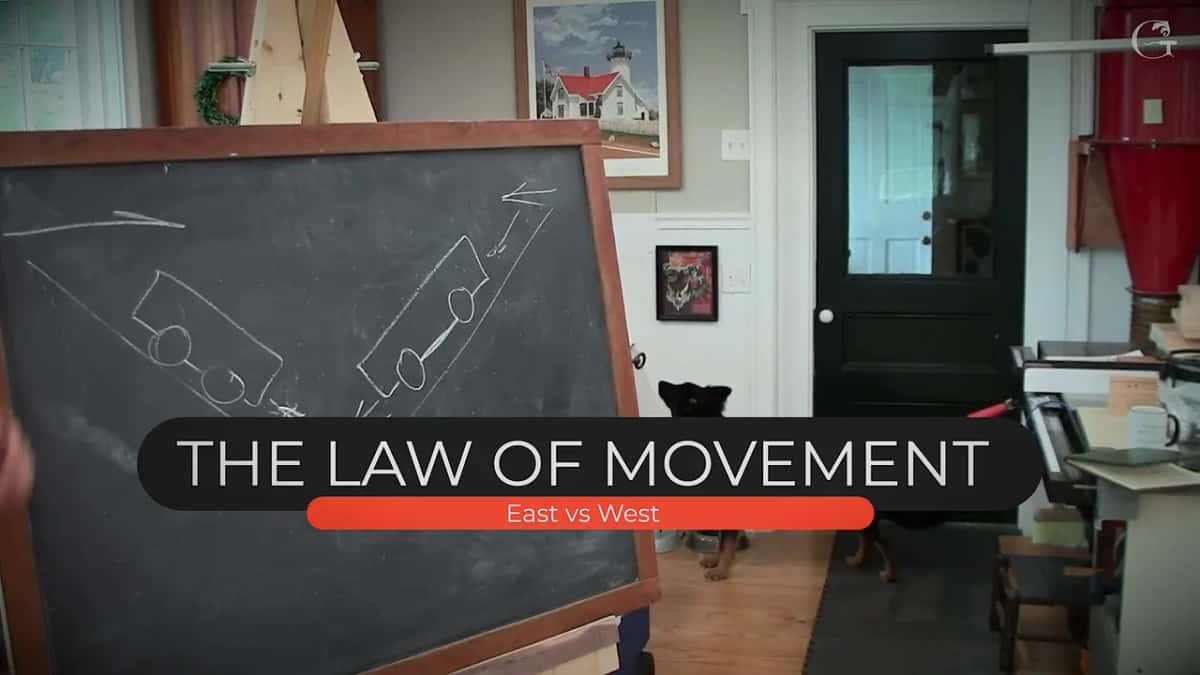
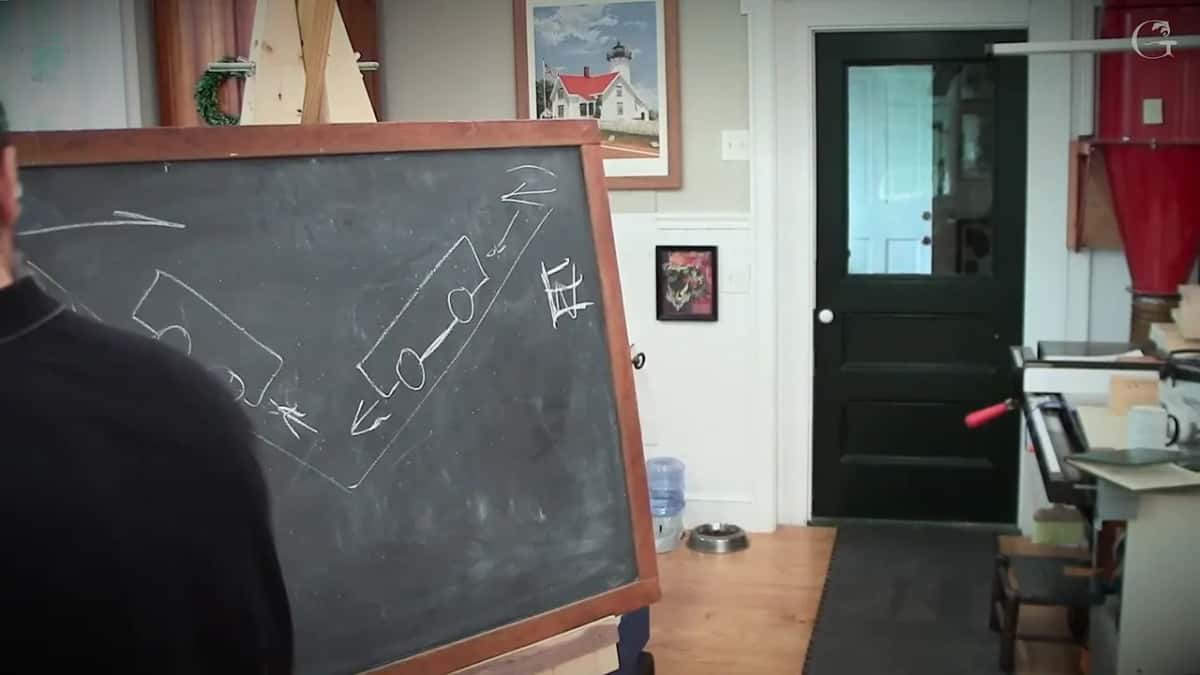
In this class I put a plain question to the room. How are we going to move? Are we going to do the design right to left, or left to right? I called it the law of movement, and it's my first question. People from different parts of the world look at things differently, even how they take in a picture. Say you design for somebody living over there, on that side. You start your movement right there.

I pointed out east and west for the class and got it backwards. Oh, I'm sorry, I said. That is east. One student in that room I couldn't call east just because of where he came from, since Israel is becoming more west than east, and even its language has a lot of words adapted from English, and lots from Russian.
He writes from the right, so he reads a picture another way. The whole story of reading direction, with a German husband and a Chinese wife under one roof, is in the lesson this video belongs to. It's easy enough, I said, but it's a secret, and people don't know.
Can one part turn back against the rest?
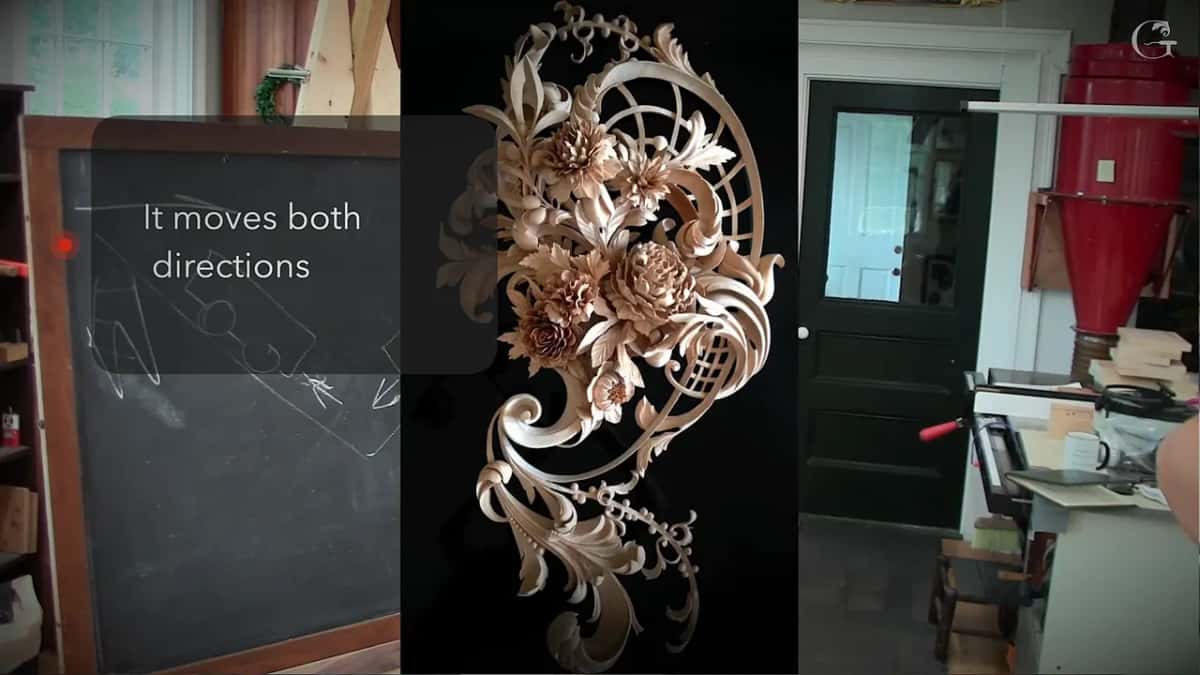
Inside one design it can, and my flower panel does.
I showed the class my flowers, because even in those flowers you can see the movement, and I asked which direction it moves. Both directions. The starting point is still on that one side, though, so the overall movement goes pretty much the English way, the American way. Then it turns back.
Even in complicated stuff like that, I always start with the movement. I said it twice in a row.
Leaves on one stem are a different case, each one going its own way, and workshop 77 of the Venice Room is where I carved that. Here the question is bigger, the whole board.
What does a curve on the wrong side do to the whole piece?
One S facing the wrong way can undo it.
On an acanthus for the Venice Room, in workshop 82, I wanted the movement going one way and said so first. The letter S curvature is common to acanthus movements, but you can always do it the wrong way. It's supposed to face out and move with whatever the outside movement is doing. In my case that was the left side.
Put the S the other way and it would just throw away overall movement. It just doesn't make any sense. If you don't understand, please ask me, and I'll try to explain again. Maybe. So the S has to follow the movement, and a number seven gouge made it.
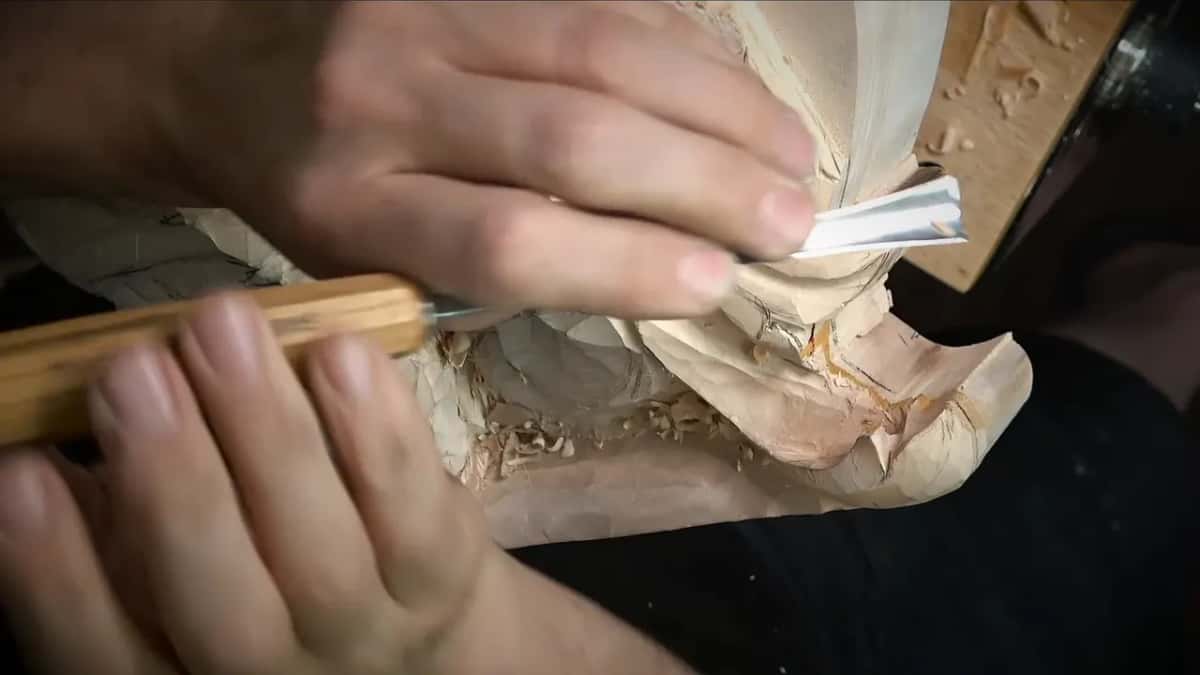
Right after that I held off on the inside of that spot. I didn't want to work on the small details without logic behind them, because I can overcomplicate myself, I said, even where people are not going to look as much.
Should a movement ever go the opposite way?
On one job it looked wrong, and on another I liked it.
Back in workshop 18 of the Venice Room, an acanthus movement was coming across one way. A movement going the opposite direction would not complement it, I said. It's going to look wrong. Maybe I should stop and work on another area until I'm ready for that one, I said, and I was still thinking it over.
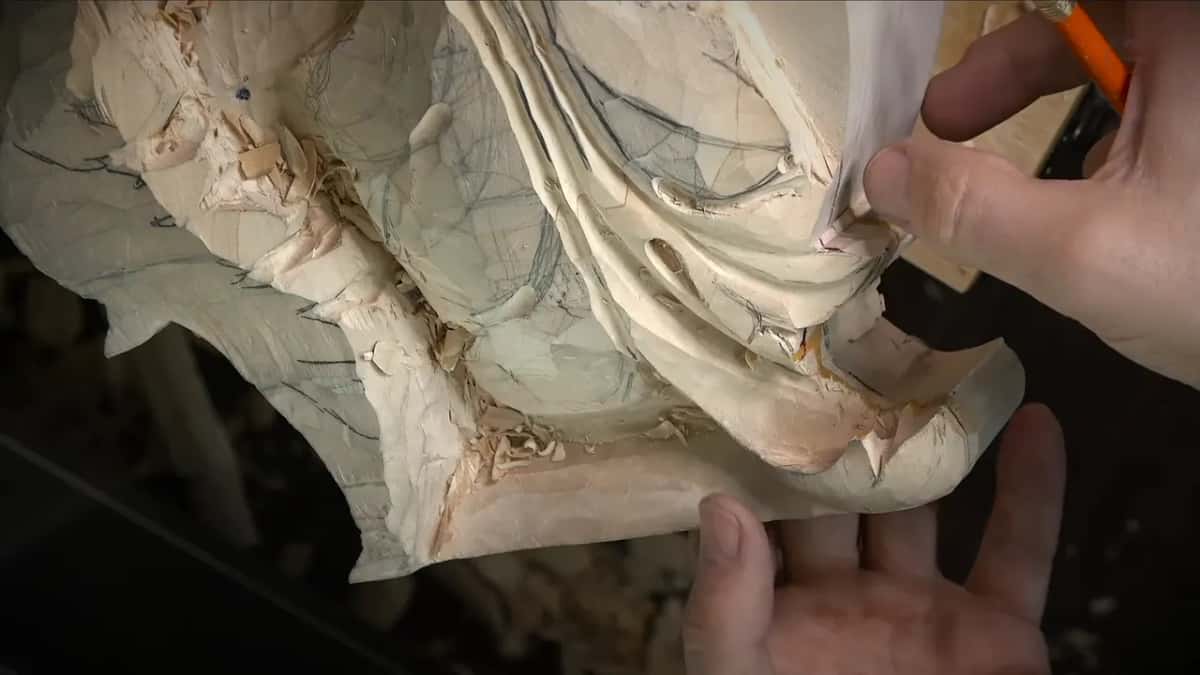
On my lily box I went the other way. In lesson 11 there was still too much going on underneath one flower, and I wasn't sure what to do. I kind of like opposite movement, I said. This goes this direction, and that one I can move that direction. So I left it like that and blended it with some roundness. A lesson later, on a small flower, I liked the overall movement, and the next part sat on the opposite side, so it had to get the opposite movement. I apologized in case you couldn't see that. Both answers are real.
Why would two opposite movements belong together?
They complement each other, the way I see it.
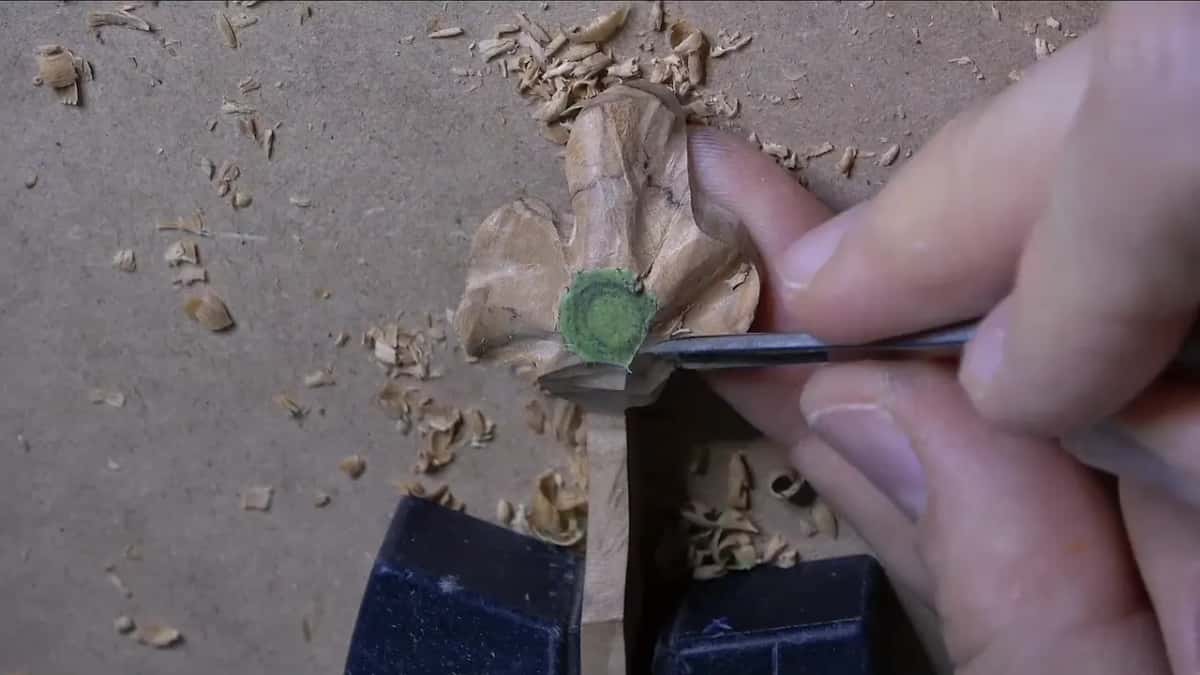
On one small flower in lesson 12 of the lily box, a petal had a concave right in the middle, and it went down. The one opposite got the reverse, a convex right in the middle with two concaves on the sides. That flower was so small one of my fingers covered it completely. I held it in place the whole time, really close to my fingers, because we are working with small details and I needed the support.
It's always a good idea to find opposite complementing movements, I told the camera. In life it's like that too. If you have a minus, you've got to find a plus. To me it isn't a negative opposition. It's a complementing opposition, like a man and a woman, the same but different, and that's how everything was created. Minor and major.
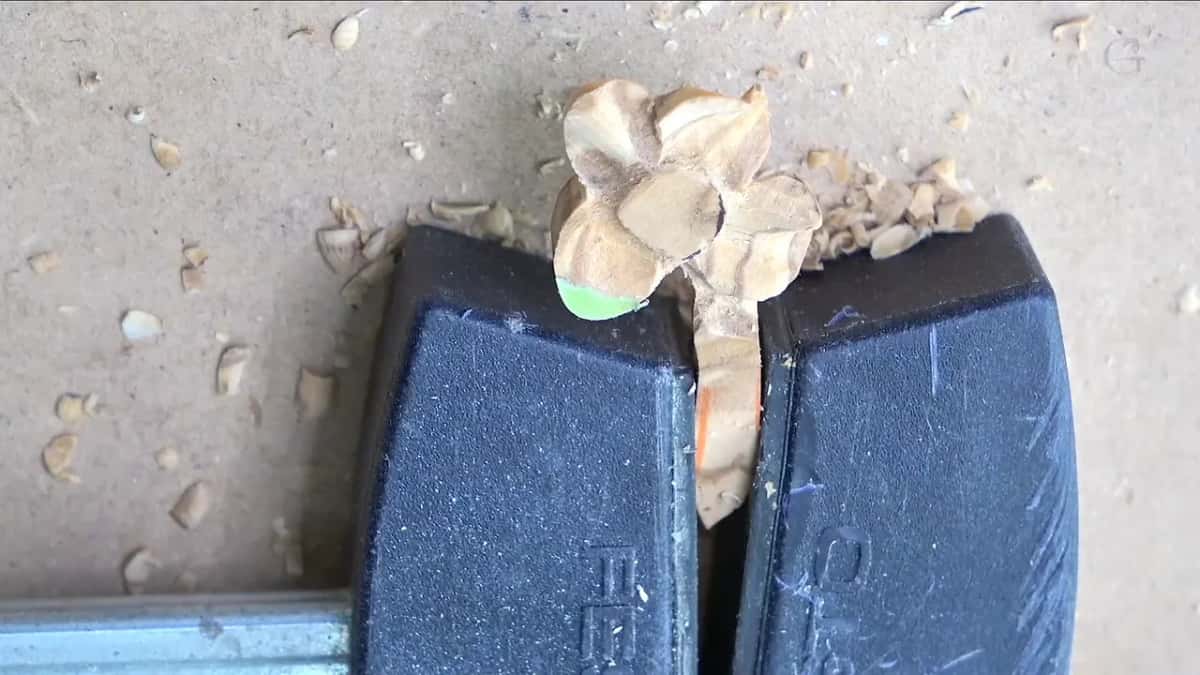
If I don't like it, I can always remove it, I said, and then I gave the other side a huge convex to answer a thick concave, with about three or four millimeters (1/8 to 5/32 in) still left. See the movement I gave? So it actually just complements that opposite side. I know it doesn't always show how it looks, but there is a really nice movement overall.
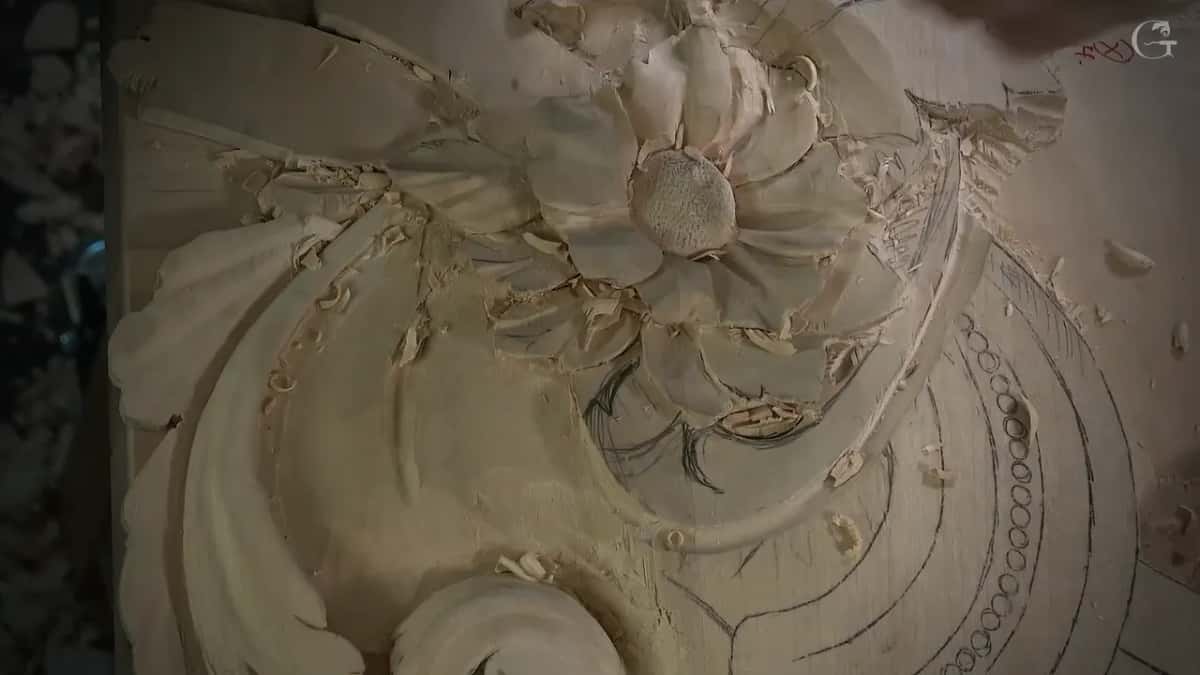
The same idea did double work in workshop 120 of the Venice Room. A spot I dug out repeated the movement I had just shown on the opposite side, a complementary movement, and it was also going to make a really dark shadow. A number seven took some excess off right away.
How many movements can run the same way?
My big lily took every one of them, to the center.
On the big lily in lesson 10 I was happy with the overall movement, but I wanted waviness, concaves and convexes on the sides. Logically, those concaves go to the same direction, to the center. All of the movement goes to the same direction there, and nothing deep, about one eighth of an inch (3 mm) with a number eight.

First I thought I could leave one spot for now and blend it with the rasp. Workshop 30 of the Venice Room is where I held back on purpose. I didn't want to move one part too much that direction, because it would be too many movements to the same direction, and I didn't think it would be good. I undercut with a number 11, four millimeters (5/32 in), instead.
I had a question in workshop 57. That piece would be seen from the bottom and from different points of view in the room, so should one movement tie to this section, or to the lower one? Moving it one way made a triangle, and that triangle gave the line an off look. I thought it would look a lot more organic if the movement went with its neighbor.

Then I caught myself out loud. It has to go everything to the same direction, I said, and the next breath, well, actually, I shouldn't say everything. All I needed to change was pretty much that one line. I hope you understand the reason behind it, I said. That's what I tried to answer.
I kept following that line and didn't give it too much curvature, because I did not want a hump there. And I still had doubts, I admitted. One spot didn't need any change, since there it doesn't really matter. One section worried me.
The spaces between the points bothered me too. They were almost equal everywhere, and it should not be that. The goal was to make them taper all the way, so the part feels like it goes from underneath. From your seat the view is different, too.
Is it fine for one part to push against the main movement?
On that molding it did, and the acanthus still dominated.
In my Acanthus over Moldings class a shell section runs in opposition to the acanthus movement. I reminded everyone of the idea of conflict in design. The acanthus is dominating in that case, and it just goes one direction. There's always multiple views, I said, just like in politics.
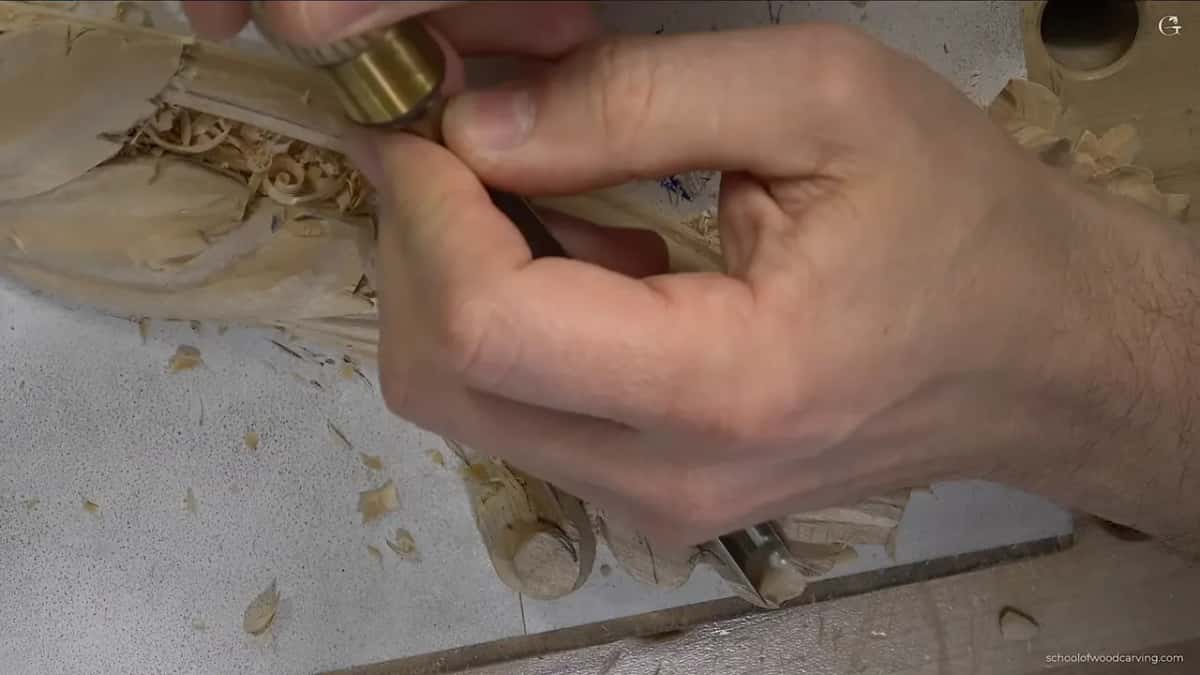
Before that, the marking was all done, so I knew approximately how it's supposed to go. The high spot was going to be convex and the wider place concave.
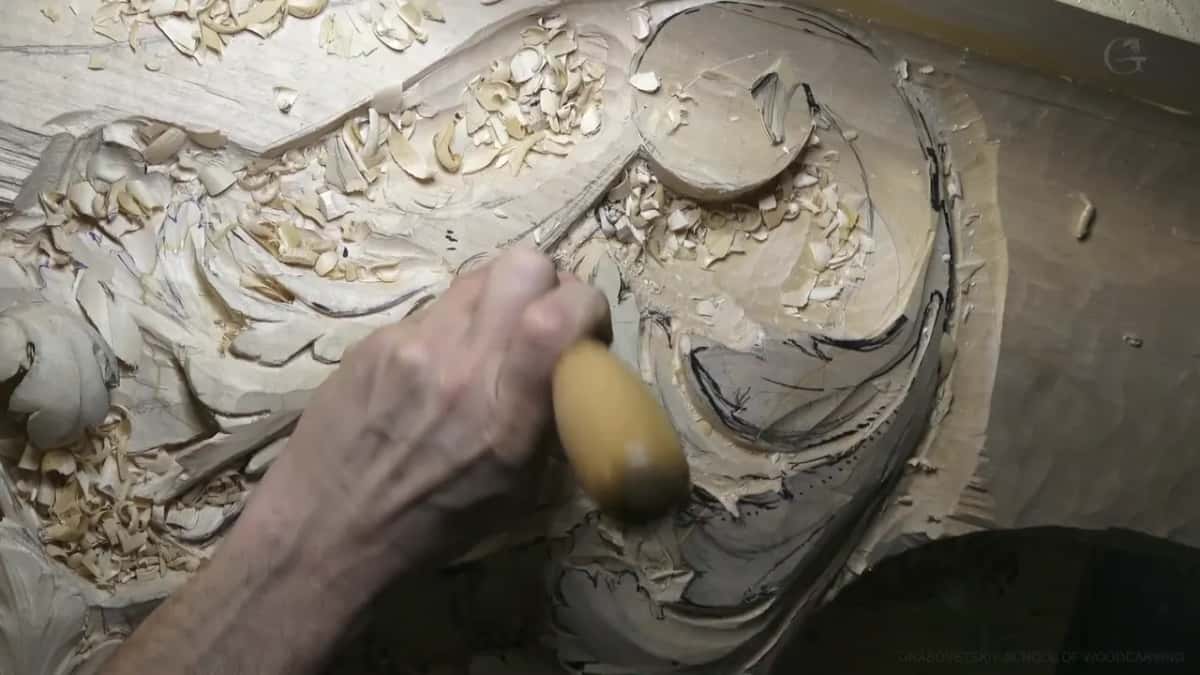
The opposition is shallow, too. From the surface, no more than 3 mm (1/8 in) at the lowest spots and about 5 mm (3/16 in) at the highest, so we're talking about only two millimeters of variation over the molding. A 3/8 inch number nine, 10 mm, made my first passes, and I had to come at it from the right position.
Which way did each movement go?
Six pieces, six calls, all on camera.
| Piece | What the movement did | Quote |
|---|---|---|
| Flower panel, this class | Went both ways, with its start held on one side the whole time | But it turns back. |
| Acanthus in workshop 82 | An S curve had to face out with the outside movement | It has to just follow the movement. |
| Venice Room, workshop 18 | An opposite movement would not have complemented the acanthus coming across | Maybe I just should stop at this point. |
| Small lily box flower | A convex middle answered a concave petal sitting right across from it | So everything should complement. |
| Undercut in workshop 30 | I kept one part from moving any further that direction | Too many movements to the same direction. |
| Shell over a molding | The shell section went in opposition to the acanthus beside it | There's always multiple views. |
Read the right column again. Two of those lines argue for keeping a part in line. The other four make room.
Why is the overall movement so hard to see?
Seeing takes more than a leaf's shape.
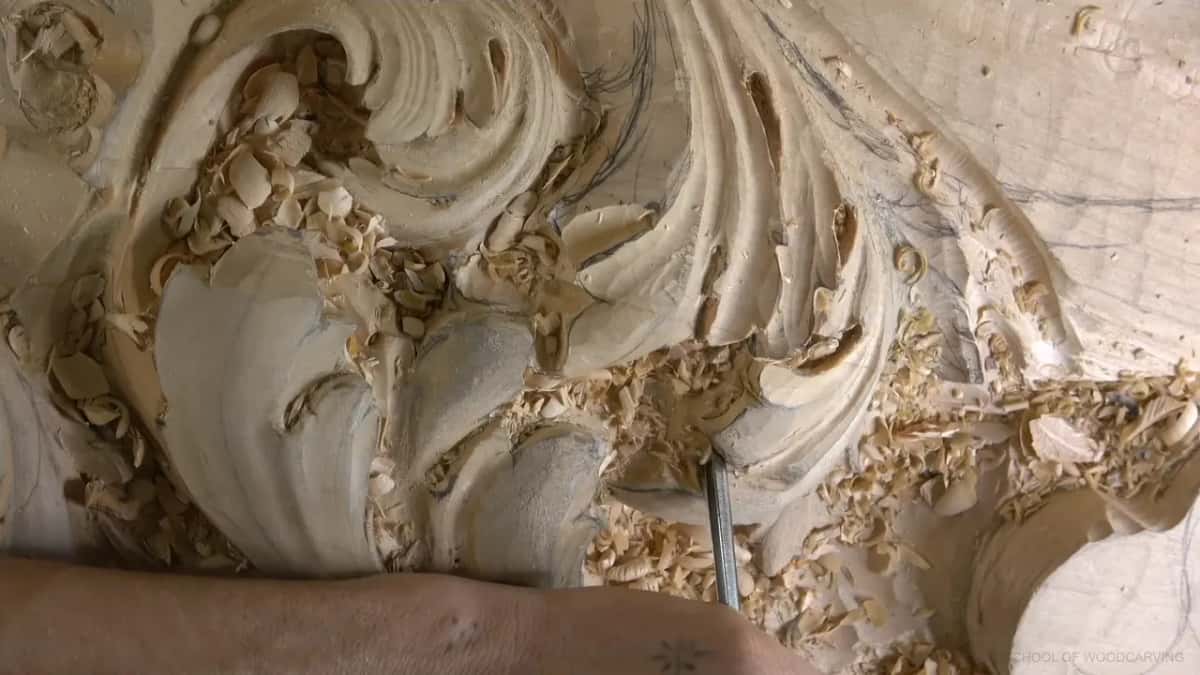
Halfway through an acanthus in workshop 57, I was not joking, and I said so twice. Nothing is complicated about those acanthus leaves when you understand the logic behind them. The hardest part is to see the movements. You really have to build the ability to see in three dimensions, past the basic form, and feel how the whole thing feels together.
Then a number 11 went back to the cleaning job, seven millimeters, about a quarter inch, a little bigger to be exact. I asked the room the same kind of thing about my flowers in this class, which direction they move.
In that same workshop 57 video I explained why my segments run about seven, eight, nine or ten minutes. Most people watch about eight or seven minutes, and a short segment is easier to find when you haven't watched it yet. Some people even told me they open one while they wait at a stoplight. I'm not suggesting you do that.
Where this video sits in the design class
This is the first video of lesson 1, and the golden ratio comes right after it. The baroque and sinister diagonals are in lesson 2, the law of space in lesson 3, and the arabesque, the way an ornament line swirls back, in lesson 4.
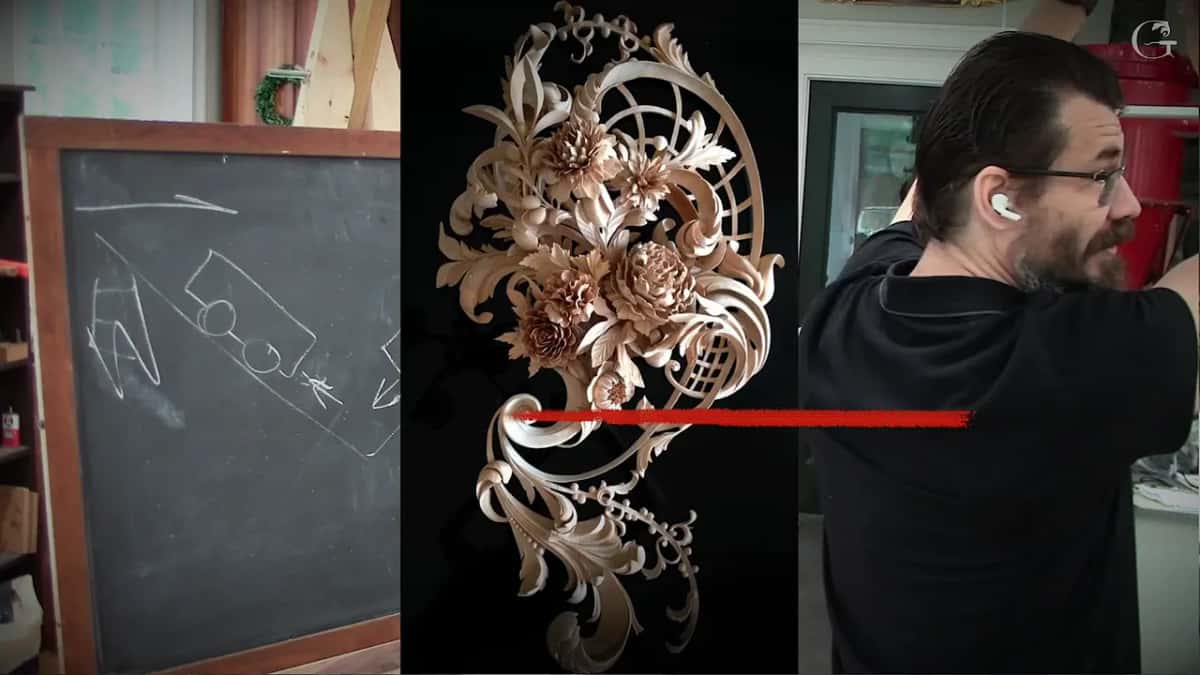
A lot of universities teach only a small portion of the process of design, I told this class. Design is the most complicated thing. Design connects to your brain. The whole course, four lessons of design for wood carving, starts here, and every lesson named on this page sits inside the school, the Venice Room and the lily box included.
Will your next board start on one side? Will the eye travel from there? Then pick that side first, before a single leaf goes on.
How it's done
- Settle which way it moves. Before any detail I ask how the piece is going to move, toward the left or toward the right. That question comes first in my design class.
- Hold the start on one side. My flower panel goes both directions, but its starting point stays on that side. So it reads the American way, then turns back.
- Face each S outward. On a Venice Room acanthus the letter S had to face out and follow the outside movement, on the left side in my case. My number seven gouge did it.
- Answer a hollow with a hump. One small lily box petal had a concave middle. Across from it I gave the next a convex middle with two concaves on its sides.
- Change one line first. I nearly turned every movement the same way in workshop 57. Then I saw pretty much one line was enough.
- Taper the spaces. Gaps between the points were almost equal everywhere. They had to taper instead.
Frequently asked questions
Do I plan the movement before the small details?
I do. On a Venice Room acanthus I would not work on the small details inside one spot with no logic behind it, because I can overcomplicate myself. And on the flower panel in this class, complicated as it is, I still started with the movement.
Is an opposite movement always a mistake?
Not always. Back in workshop 18 a movement going the opposite way would not have complemented the acanthus coming across, so I thought about working another area first. A lesson before the small flowers on my lily box, I said I kind of like opposite movement and left one going each way.
How deep is a shell that opposes an acanthus?
Shallow, on my molding. The lowest spots sat no more than 3 mm (1/8 in) under the surface and the highest about 5 mm (3/16 in), only two millimeters of variation. A 3/8 inch number nine, 10 mm, started the job.
What to carve next