
Alexander Grabovetskiy, woodcarver, School of Woodcarving · Published 2021
Why does nature follow the golden ratio?
Quick answer: The golden ratio is, in my belief, a law built into creation itself. I think nature follows it because everything is created according to the laws. Measured science says less. The ratio does turn up in some plant patterns, like leaf spirals, and plenty of famous examples fail once someone measures them.
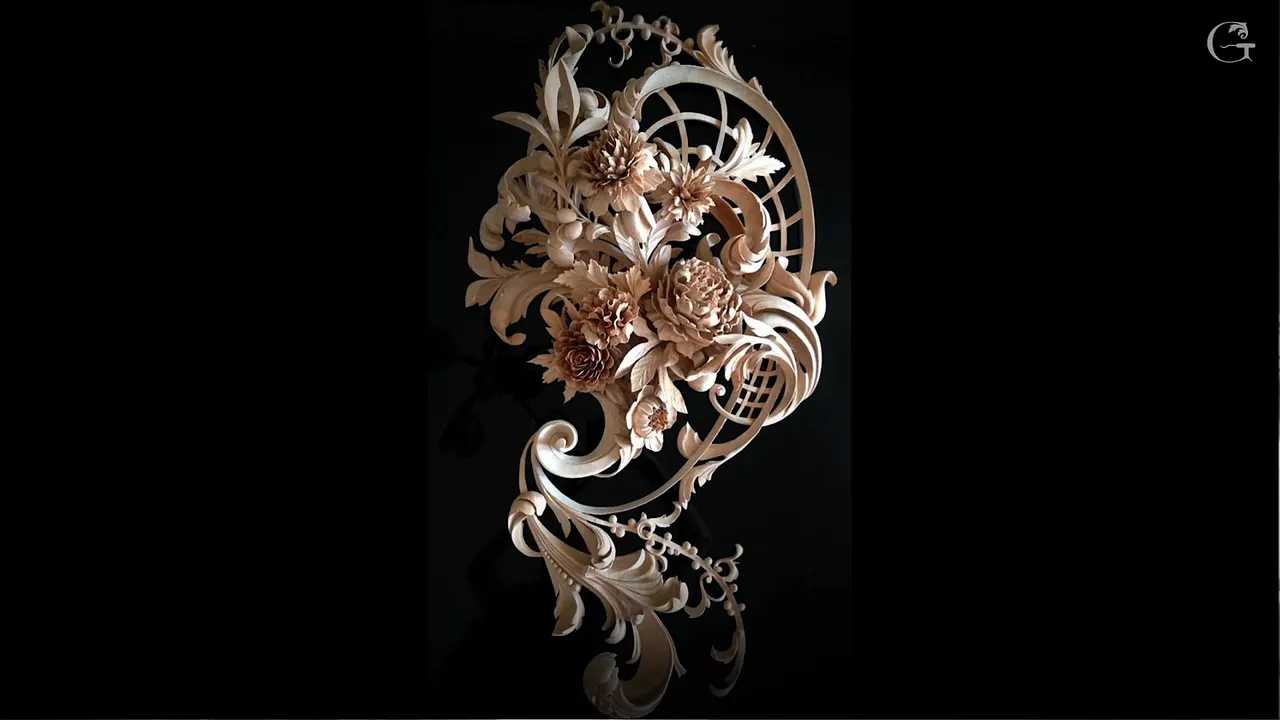

The golden ratio in nature is, for me, the law of creation. That's my faith, and I say it in class without dressing it up. Science says something smaller, and you'll get that too, with the sources, so you can tell my belief from the measurements.
Have you ever stood in front of a flower and felt it was right before you could say why? Did you ever notice that no real petal runs ruler straight? Then you've met it already.
Most people feel it long before anyone names it for them. You'll leave knowing what I mean by that name, where the written record agrees with me and where it doesn't, and what it changes when a gouge goes into a small flower.
What I believe, and what has been measured
I believe the golden ratio is a law built into creation. I tell the class that working outside of it is, in my point of view, rebelling against God.
The measured part is smaller. The ratio shows up in some patterns in nature, like the spiral of leaves around a stem.
Plenty of popular examples don't survive a ruler. Nautilus shells and finger bones are two of them.
My small carved flowers start at the center with one curved line, and the next line comes out about 60 percent of it.
Nature never makes a perfect shape, so my petal edges go a little wavy.
When my drawing and the real flower disagree, I go with the flower.

What do I mean when I call it a law?
In my belief, everything in creation sits on a golden ratio. So all of the design is supposed to be based on it, I told the room, if you want to do professional level, and I mean that down to earth.
I don't soften the next part either. Outside of that law is a rebellion against God, I said, and that's honestly what I'm saying to you. Then I went one step past it. If you don't understand the golden ratio, you really don't understand the act of creation.
I gave the short form of this belief, with a sunflower, on the lesson page for The Law of Movement.
In the last lesson of the course I came back to it, and said there is a Creator and everything is created according to the laws. When you walk against those laws, you're pretty much in a rebellion position. And when you design by the laws of creation, you actually express your position toward him. That deep.
What does science say about the golden ratio in nature?
Less than I do. On Wikipedia, the golden ratio article says the ratio appears in some patterns in nature, and it names the spiral arrangement of leaves and other parts of plants.
Botanists call that arrangement phyllotaxis, and the sunflower head is its most famous example. Even there, the seed spirals sit closer to a Fermat spiral than to a logarithmic one like the golden spiral, by that spiral's own article.
That first article also keeps a list of disputed sightings. Nautilus shells do grow in a logarithmic spiral, but measured shells don't support the golden one. Finger bones are on that list too, because real hands vary a lot and the measured proportion is often far from golden. Some writers argue that many apparent cases in nature, especially in the sizes of animals, are fictitious.
When I talk about fingers, elbow and face, I stop short. So I'm not going to show it to you, I tell the room. Don't get excited. Nobody's hand gets measured in this lesson.
The idea that it's a law of nature is old. In 1854 Adolf Zeising argued from those leaf patterns that the ratio was a universal law, a striving for beauty in nature and in art.
Where does the name divine proportion come from?
A book gave it that name. Luca Pacioli titled his mathematics book Divina proportione, the divine proportion, and Leonardo da Vinci drew its pictures. The first printed edition came out in Venice in 1509.
Pacioli saw religious meaning in the ratio and gave five reasons for the name, which the page on his book lists. Its definition calls for three lengths, and he tied them to the Holy Trinity. Its value never ends as a decimal, and he took that as a sign of God being beyond our understanding.
The MacTutor history of the golden ratio agrees. Divine proportion was Pacioli's own name for it.
His name doesn't come up anywhere in my lesson, and my own word in class is a plain one. Everything is based on the law, I said. It's actually law.
Did the Egyptians and the Greeks build on it?
I tell my students they did. It was pretty much what the Egyptians built, whatever they built, and the Greeks too, I told them, with all the distances and all the squares based on a golden ratio.
Here the written record doesn't back me, and you should know that. The same Wikipedia article reports that modern scholars agree the Great Pyramid's proportions aren't based on it. For the Parthenon it quotes Keith Devlin, who says the old story isn't supported by actual measurements.
There's a second thing I say about it in class. How the brain is structured, how it reads, we look at the thing and we don't know why, but it's actually beautiful.
Psychologists have tested that idea since Gustav Fechner around 1876. Fechner found people liked rectangles near the golden ratio. Later careful tests came out inconclusive at best, the same article says.
Which of my class lines have been measured?
Here are my own words from the class, next to what the outside sources report.
| Where people look | What I say about it in class | Measured verdict | What the outside source actually reports |
|---|---|---|---|
| Leaves on stems | Everything in nature is on the ratio | Partly true | Some leaf spirals show golden angles |
| A sunflower head | The sunflower too, and the empty space | Only approximate | Seed spirals sit nearer Fermat spirals |
| Your finger bones | Knuckles and elbow, but I won't show | Often disputed | Real hands vary far too much |
| Pyramids and temples | Egyptians and Greeks built everything on it | Mostly rejected | Scholars reject it for the pyramid |
| What looks beautiful | We don't know why, but it's beautiful | Still unproven | Preference tests stayed inconclusive at best |
How does working against the law look to me?
Right after the story of a white canvas that's supposed to be a cow, I said three words to the class. The Emperor's clothes. That's the tale by Hans Christian Andersen about a vain emperor shown up in front of his own people, the one that gave us the line about the emperor having no clothes.
Then I said it straight. In my point of view, it's a rebellion against God. It's to stay on the opposite side, on the side of the enemy, and create without understanding the creation point.
The way I see it, learning takes a master. To learn something, you have to find a master and be an apprentice, and then you'll be a professional. Professional musicians usually start in childhood, I told the class. I was sixteen when a fine art master in Russia took me as his only apprentice.
I said the same thing another way on Designing Furniture Panel 8. Nature gives you dots and curves, the divine part, and art adds the straight lines, the human part.
How does that law show up on a carved flower?
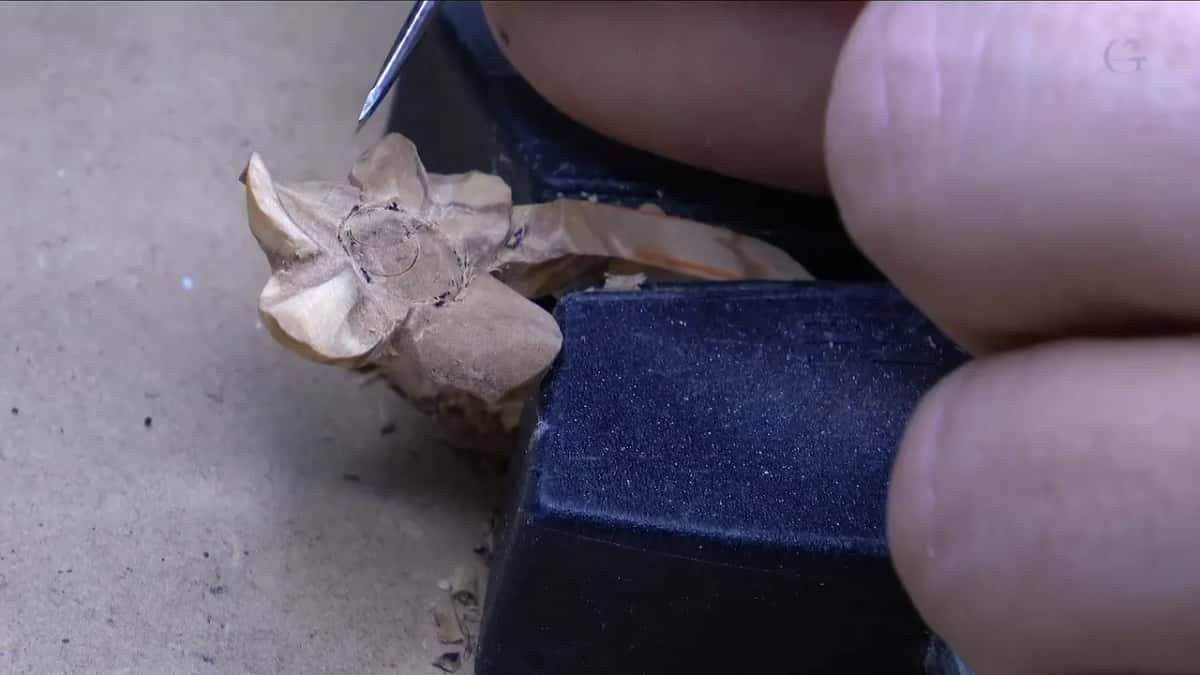
Small, at the very center. On the filler flowers of my Lily Box I had the main form almost done, and it was time for the detail on the inside.
A lot of people just make crossing lines in there. It's not really a mistake, I said, and I shouldn't call it one. You could do it. But in real life, in a real creation, you're never going to see anything like that. Never. Everything in real life will be like a golden ratio.
I'd carved that one with four petals. Four-petal flowers can be found, but rarely, and most of the time you'll find five, even on a flower that small. I wanted something different.
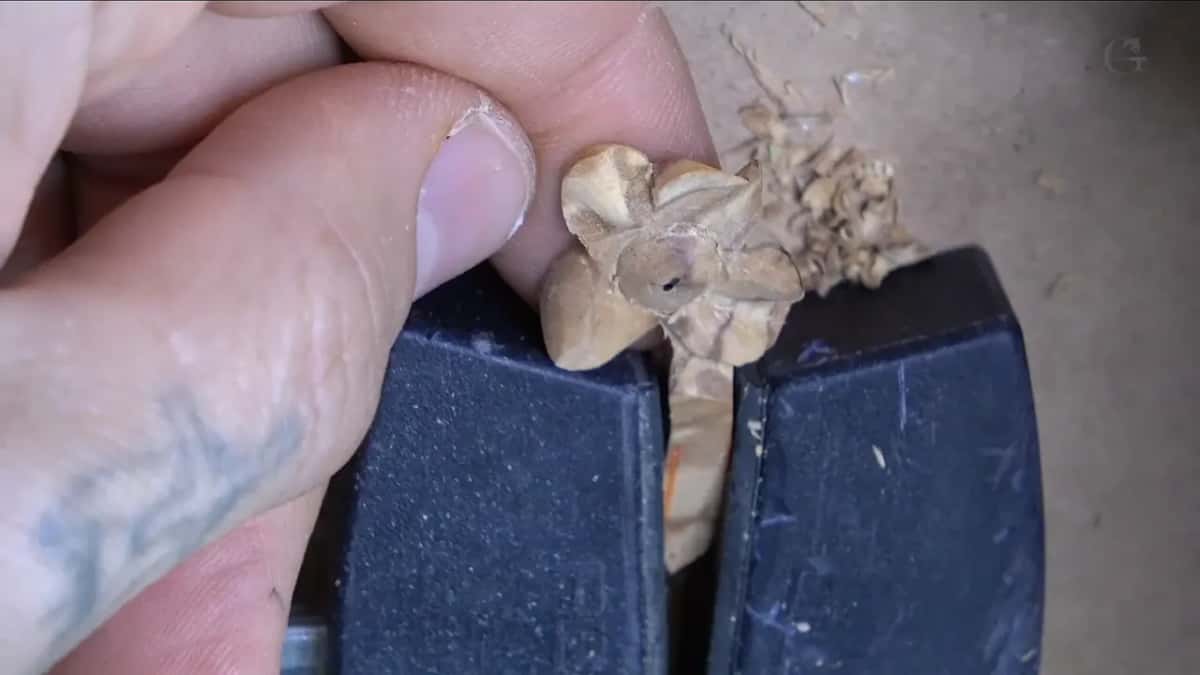
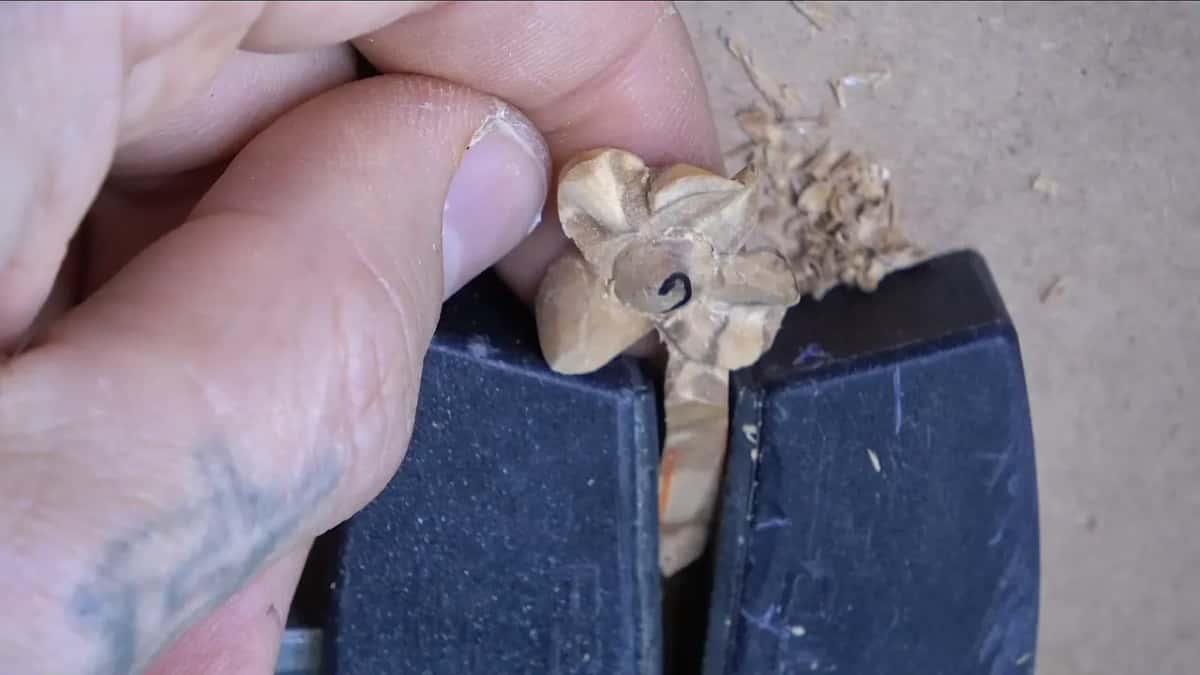
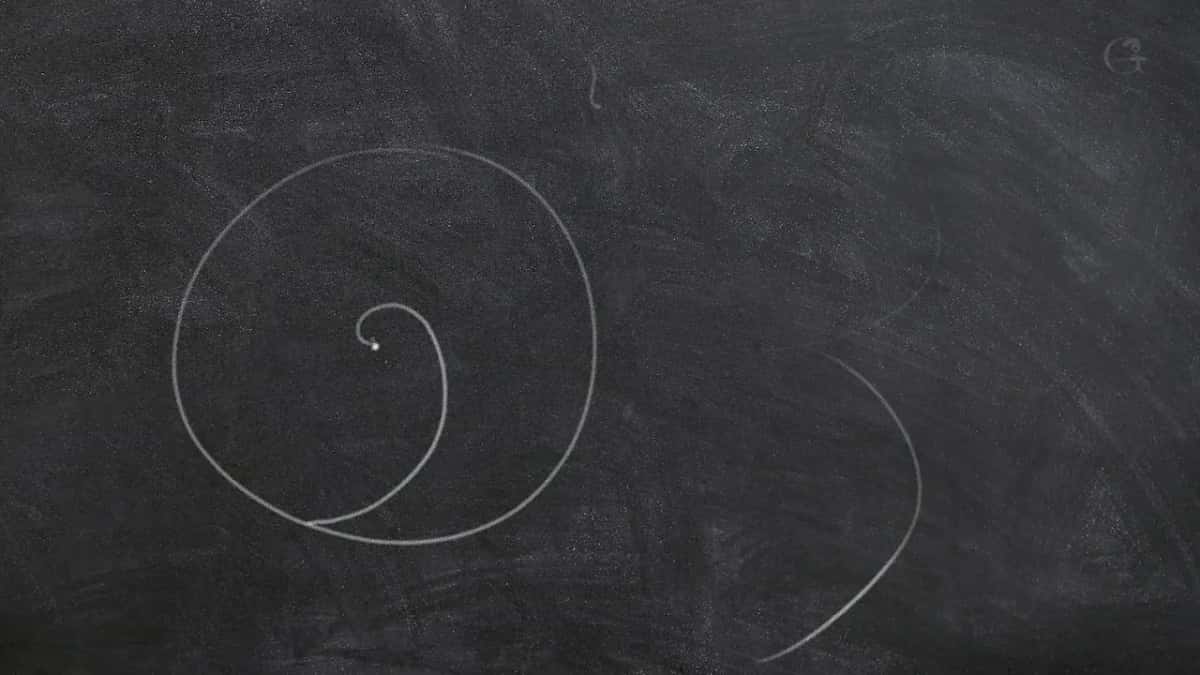
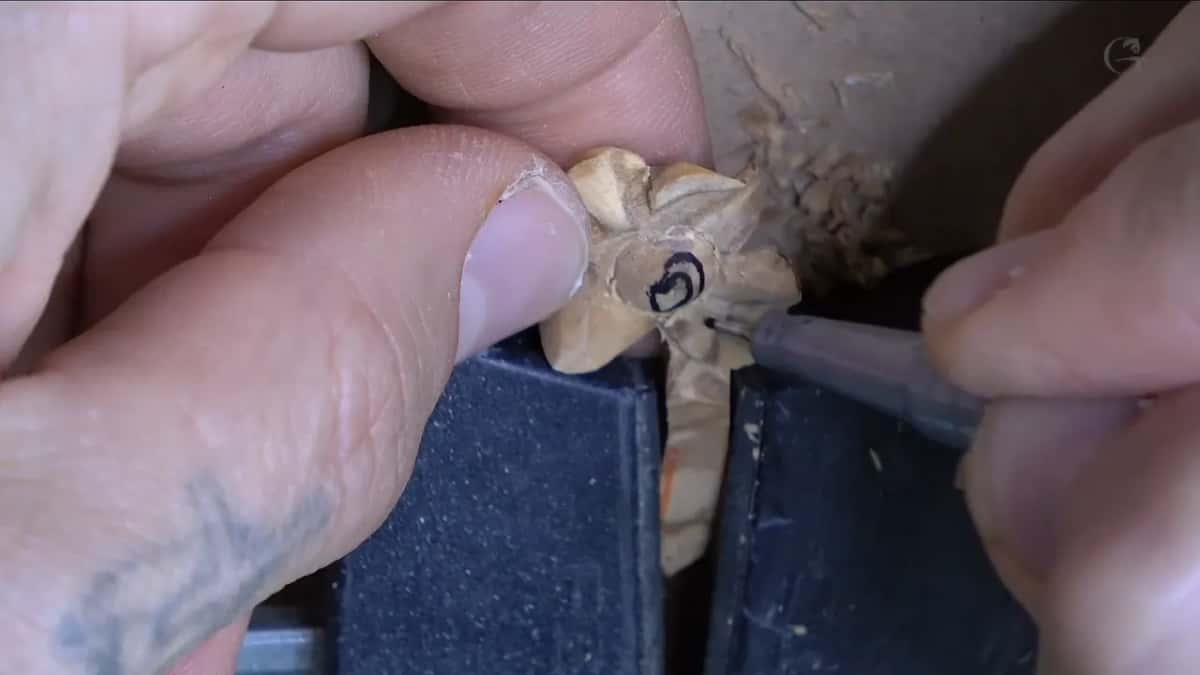
Every flower has a center. From mine, the first line runs like half of a heart, and that's the golden swirl. The second part of the heart comes out a little smaller, by the golden ratio. Call the first one a 100 percent line. The second is about a 60 percent line. It looks like a heart, but it's not really a heart.
The next ones go exactly the same way, spread apart about the same. Maybe too many for that spot. That's okay. It won't be too accurate either, and I said I'd probably need a number 11 for it.
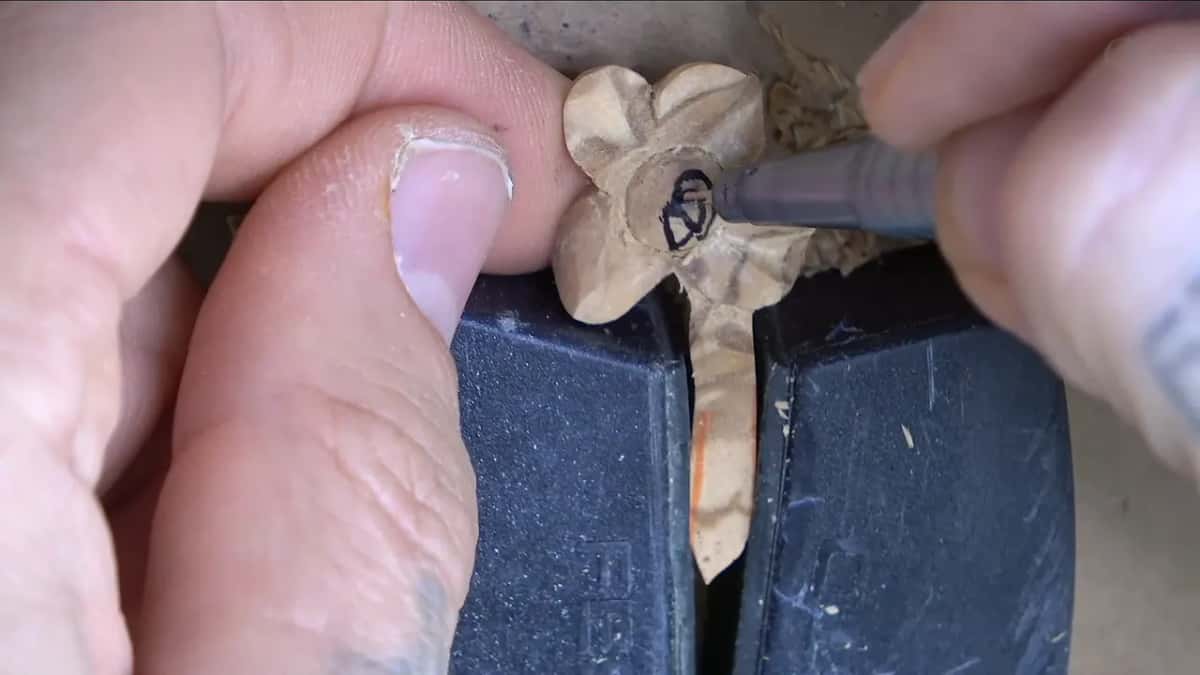
Why does the small scroll turn the other way?
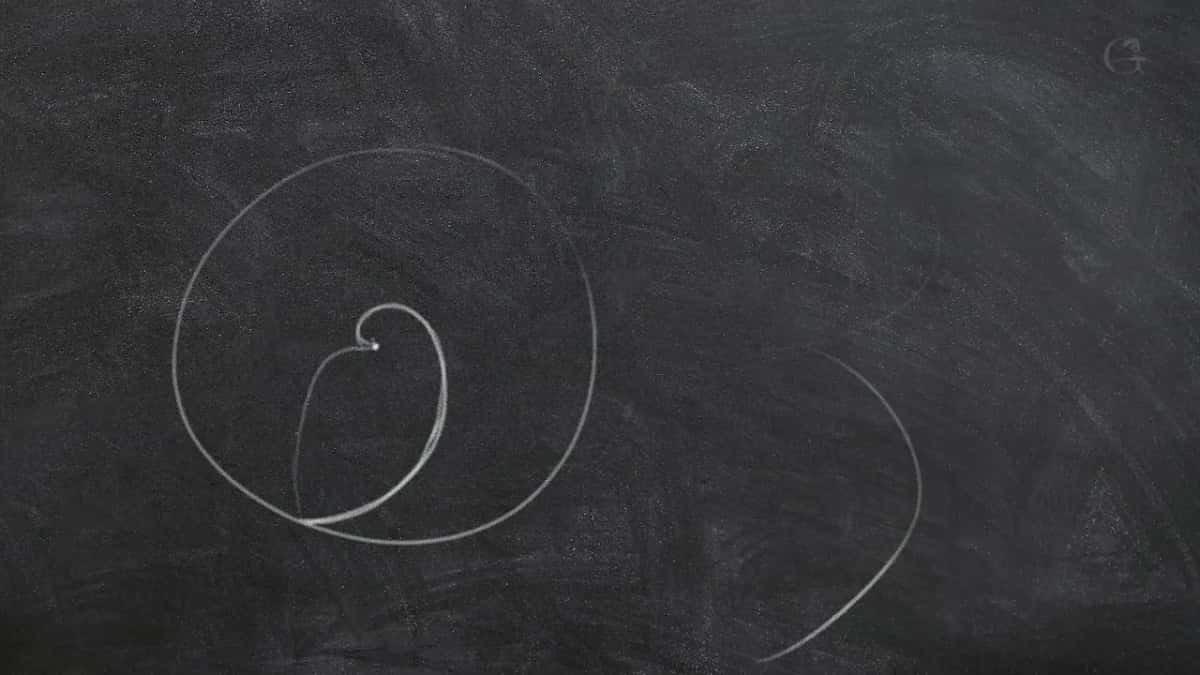
The area is really small to explain, so in a later video I jumped on a computer and drew it there. You find the middle point, and if you know the golden ratio, there's going to be a swirl, and that swirl goes in the opposite direction.
Like in life, I said, where you see plus and you always see minus. Minor and major, a woman and a man. So a major scroll needs a minor scroll turning the opposite way, and together they form something like a heart, with one side standing for male and the other for female.
Kepler had much the same thought. Wikipedia quotes Johannes Kepler saying the image of man and woman stems from the divine proportion.
Will anybody notice a detail that small?
Hardly anyone will notice it by name. A lot of people don't know how a flower is structured, I said while I made a second pass right beside my first one, almost invisible. But when they look at the flower, even if they don't know about the spiral and the golden ratio, it's going to look natural, and more appealing.
That's the micro level. For those of you who ever took lessons from me in person, I said a little later in the same video, you probably know I'm really big on golden ratio. Maybe I should create the whole course just about design, golden ratio and Fibonacci numbers. Principles of Design in Wood Carving covers exactly that. About the tiny detail itself, I said I believe it's so important. So important.

Is anything in nature a perfect shape?
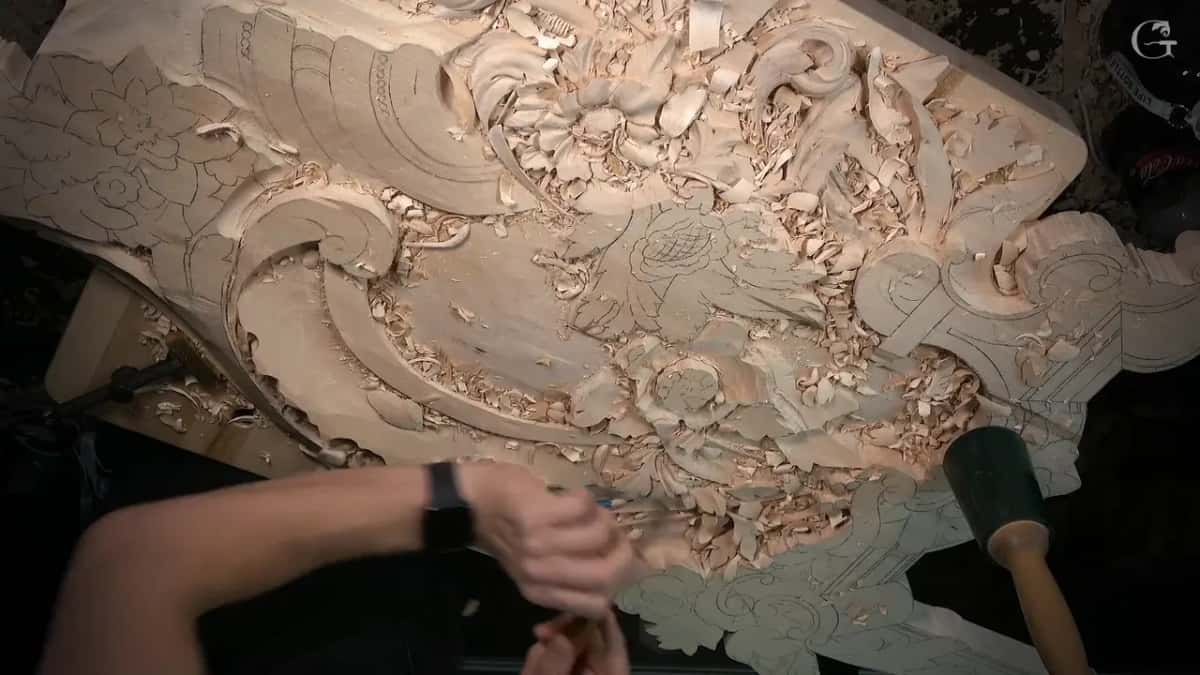
I say you'll never find one. On a Venetian flower in Venice Room 134 I kept the flower off true symmetry on purpose. It doesn't have to be completely symmetrical all around, I said, or it won't look nice.
I like the idea of being wavy when I'm carving flowers, because you're never going to find any perfect shape in nature, in creation. Later on the same flower I called waviness actually only a plus, and right after that I added this. Nothing is perfect in nature, although it is perfect. It depends what you mean. By the Fibonacci sequence, it's still going to be perfect.
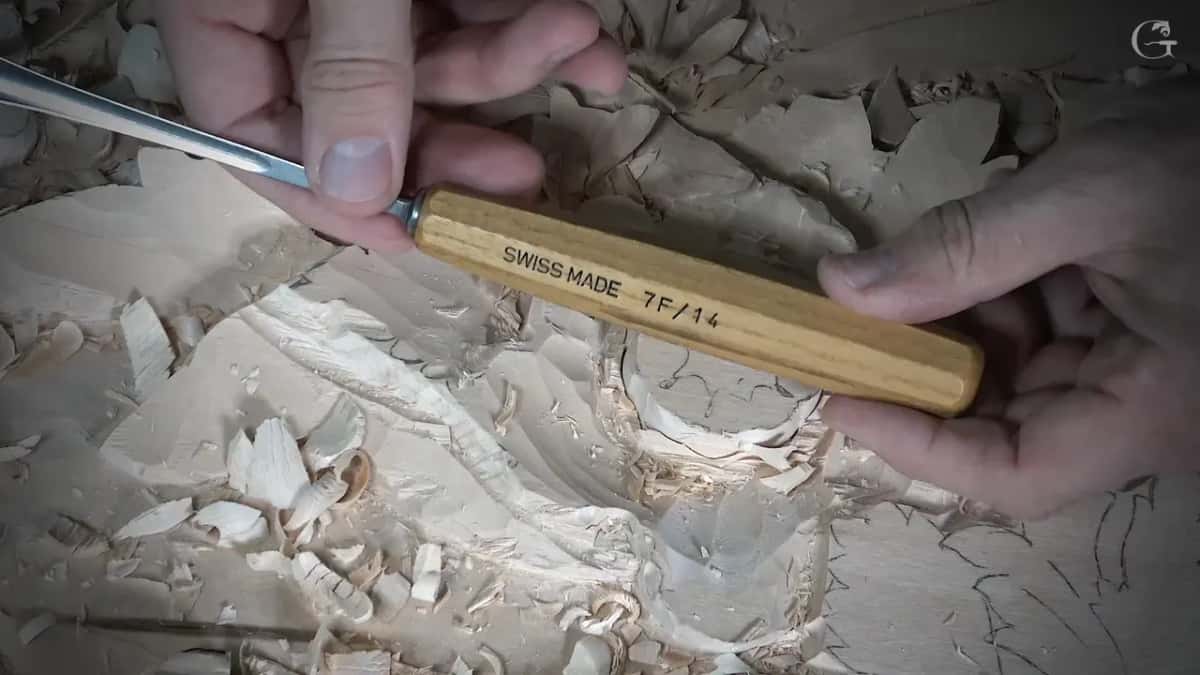
That flower took a number 7 at 14 mm (9/16 in), and the same tool cleaned it up. About half an inch (13 mm) from the upper part down below was enough for that type of flower. Some areas I could already point inward and undercut right away, so it feels like it's growing from inside, from the middle, just like the real flower. Later the undercut went quite deep, about five millimeters (3/16 in), I'd say. My granddaughter was visiting that day, and you can hear her in the background of the Venice Room part 12 video.
What if my drawing and the real flower disagree?
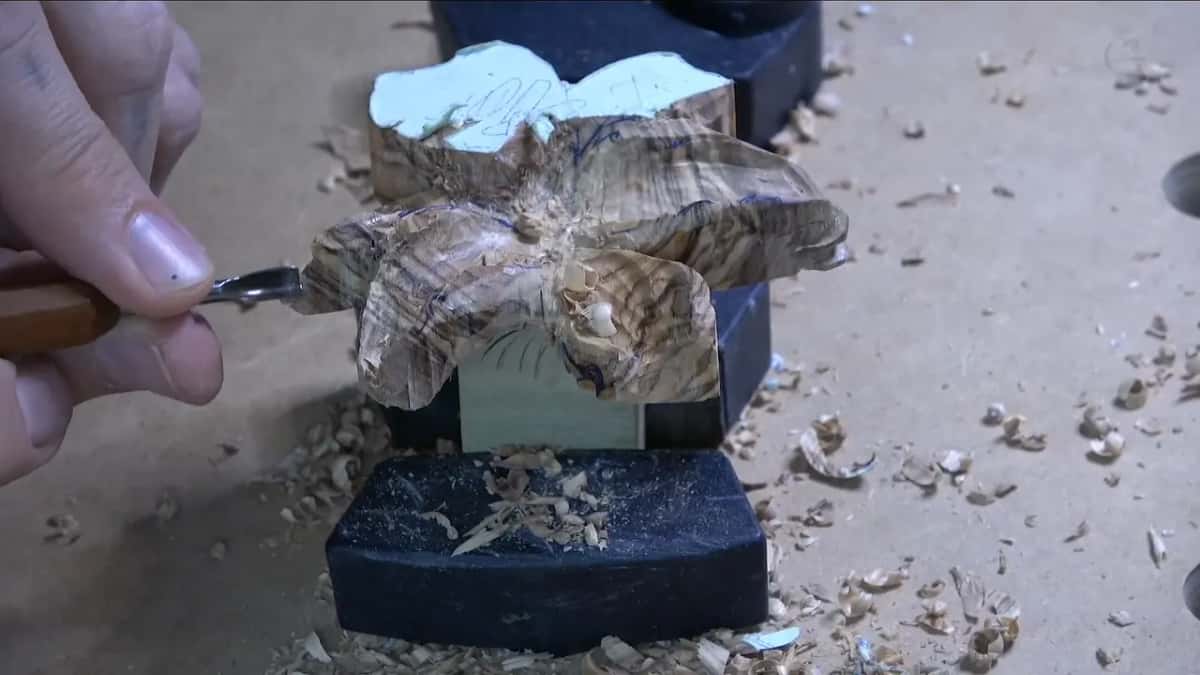
I go with the flower. On the lily of the same box, in Lily Box lesson 10, pushing that in toward the center would have left me maybe about three millimeters (1/8 in), maybe even less, I said. So I decided to curl it inward, and that would put me right on the money again.
A number 8 went in, then a smaller number 8. I could actually have left it like that, since it's not a big deal at all. But if you want to be accurate to nature, to the creation, it's a really complicated mess. So I curled it all the way. That meant chopping a little bit off my original design. That's okay. For me it's more important to be more accurate to nature.
Why say all of this out loud?
I'm not afraid to say it openly, and I was in jail for that once. During a livestream in April 2020 I told everybody watching that people who carve are like the Bible says, people of wisdom, of knowledge and understanding. I do believe in the Bible, I said, and I won't be political about it. I'm not afraid to say that I believe in a Creator, the Most High.
Venice Room 55 is where I named one of them. We call him Bezalel. God filled him with the spirit of knowledge, wisdom and understanding, and the ability to work with different materials and carve wood. He's one of the guys I really appreciate.
So, is there a small flower somewhere on your bench, or in your head? Does it have a center yet? Find it, and give it a swirl. You can sit in on the design class, or carve the small flowers with me in the Lily Box. Tuition runs monthly or yearly, and it renews automatically until you stop it.
How it's done
- Find the center. On my small flower I start from the center, because each flower has one.
- Run the first line like half a heart. From the center my first line curves like half of a heart. That is the golden swirl.
- Make the second line smaller. Using the golden ratio, I make the second part of the heart a little smaller. If the first is a 100 percent line, mine is about a 60 percent line.
- Turn the minor scroll the other way. A major scroll needs a minor scroll going the opposite direction, and the two of them make a heart shape.
- Spread the rest about evenly. The next lines go the same way, spread apart approximately the same, even if there are maybe too many for the spot.
- Pick up a number 11. For those lines I said I would probably need a number 11.
Frequently asked questions
Why do you call the golden ratio the law of creation?
Laws run through everything that was created, I believe, and my design class sits on this one. Without the golden ratio, I tell the class, you really can't understand the act of creation. Designing inside the law shows your position toward the Creator.
How do you put the golden ratio into a small carved flower?
Each flower I carve has a center. My four-petal filler flower in the Lily Box got a first line curving out of it, and the second came out about 60 percent of the first. Crossing lines in the middle aren't really a mistake, I said, but you'd never see them in a real creation.
Will people notice the golden ratio when they look at a carving?
Most of them don't know how a flower is structured. Even so, the spiral and the golden ratio make it look natural and more appealing to them. I said that while making a pass almost invisible, right beside my first one, down at the micro level.
What to carve next