
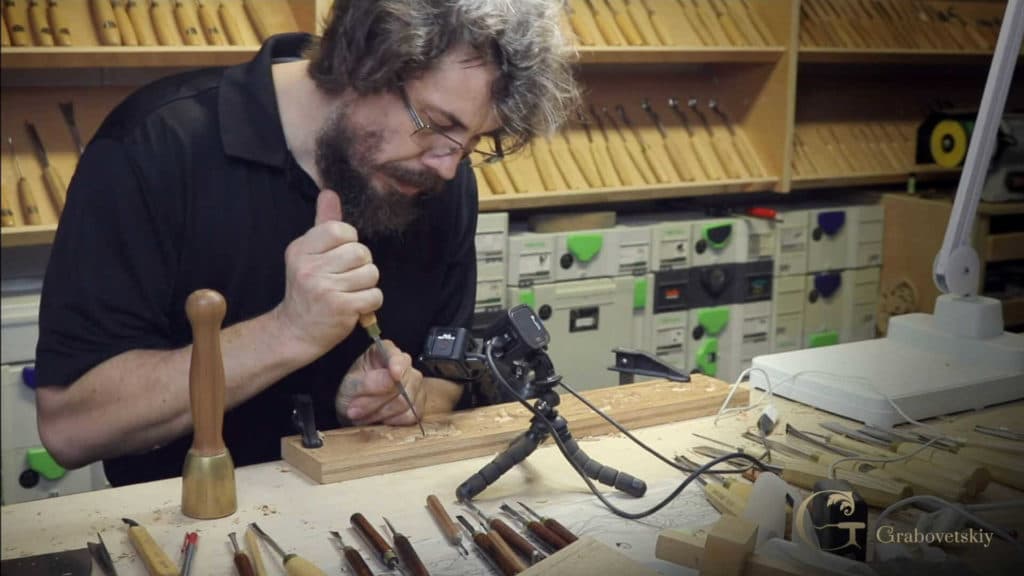
Alexander Grabovetskiy, woodcarver, School of Woodcarving · Published 2026
Should you use a carving knife or a small chisel for fine detail?
Quick answer: A carving knife or a small chisel for fine detail is a choice I make at each spot, and often either one gives me the same result. In workshop 12 of my oak table apron I never named a knife. A tiny number one chisel went in, then my flat chisel cleaned the edge.
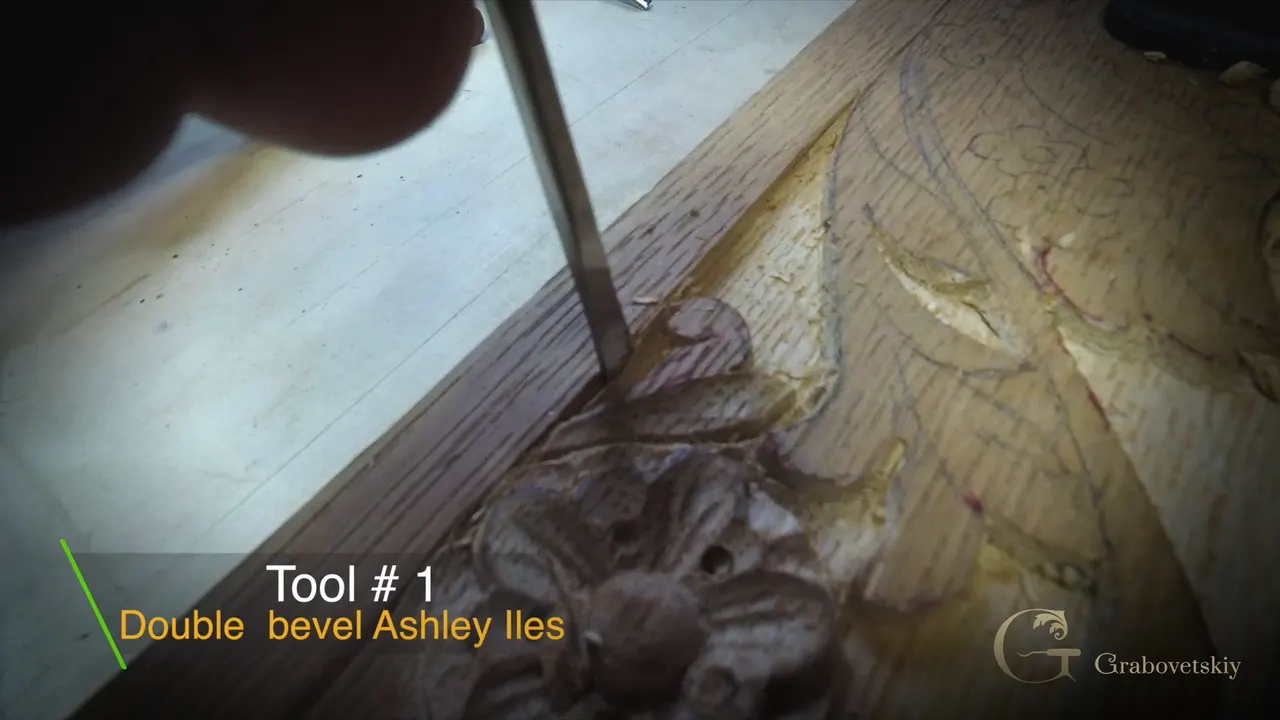
The carving knife vs chisel question on fine detail gets settled at each spot on my bench, one spot at a time. Either tool does the job just as well in a lot of places, and I have said so on camera. In my table apron course, workshop 12, I never named a knife at all. My tiny chisel went in first, and after it the flat chisel cleaned the edge on the oak.
You've got a knife in one hand, a flat chisel on the bench, and one small edge that still looks rough. Which one goes in? Below is what I picked at real spots on real pieces of wood carving, in the words I used that day. Some days it was the knife. More often a number one did it. And once I said it plainly, that it doesn't matter.

Knife or chisel in six short lines
- The oak apron's workshop 12 brought out a tiny chisel, then a flat one for the edge, and no knife was named.
- By my own words in a Roman acanthus lesson, a number one gets handled exactly as a knife does.
- Where a furniture panel spot was really shallow, I picked the number one as a little safer.
- Inside one panel corner, a tiny knife matched the number one's result.
- The knife slices easier, and I like it for that.
- For a beginner one knife is a fine first tool, and later it limits you.
What did I take on the apron in workshop 12?
The tools I named out loud in the first five minutes, in order, were a number five, a small number three, a small gouge, a tiny chisel and the flat chisel. Workshop 12 is short, a little over eight minutes, and most of it is my hands on the oak skirt. It opens with one part I wanted lower. I'm going to lower this one, I said, I need to get a little deeper. A number five came out a minute in, and my words were "little by little, just barely touching edge."
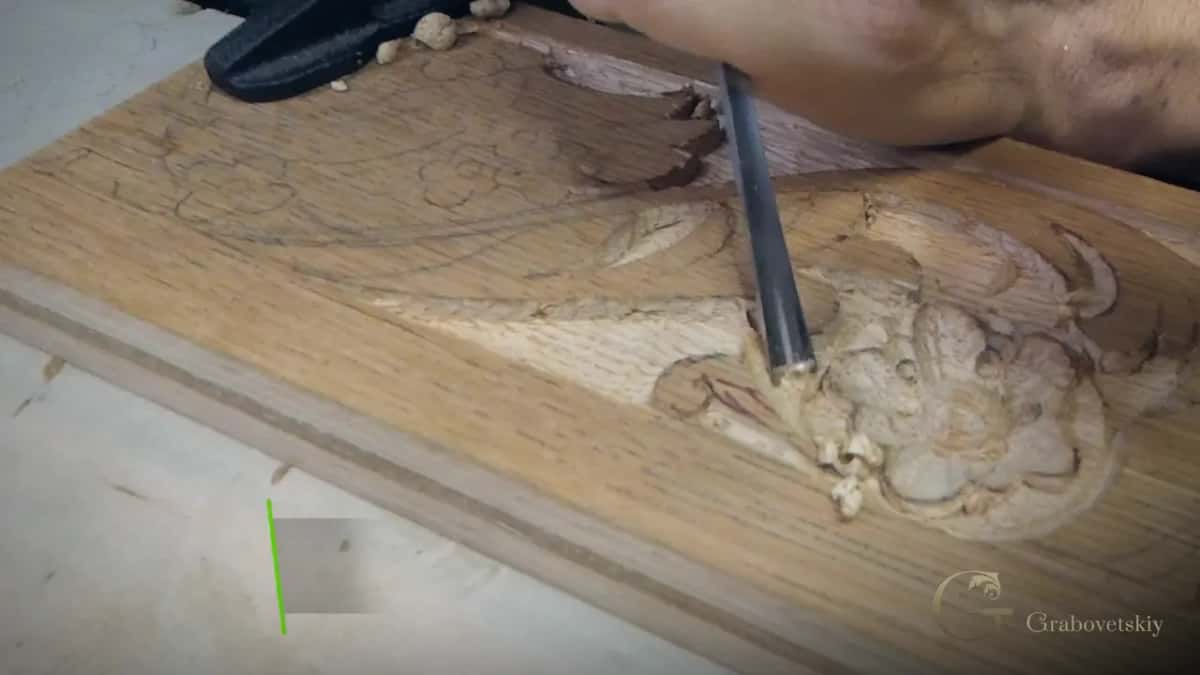
Then I saw a section that needed separating. Out came the small number three for one little detail, and the small gouge for the small areas. I had to be really careful there, I said, working with the grain.
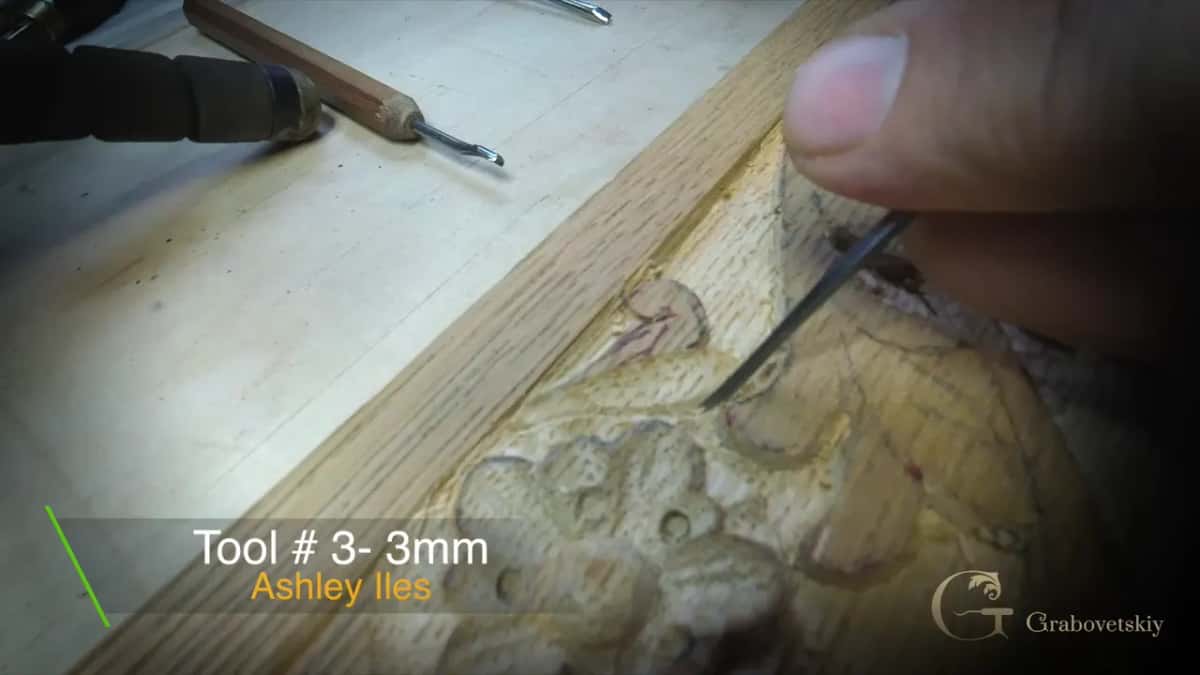
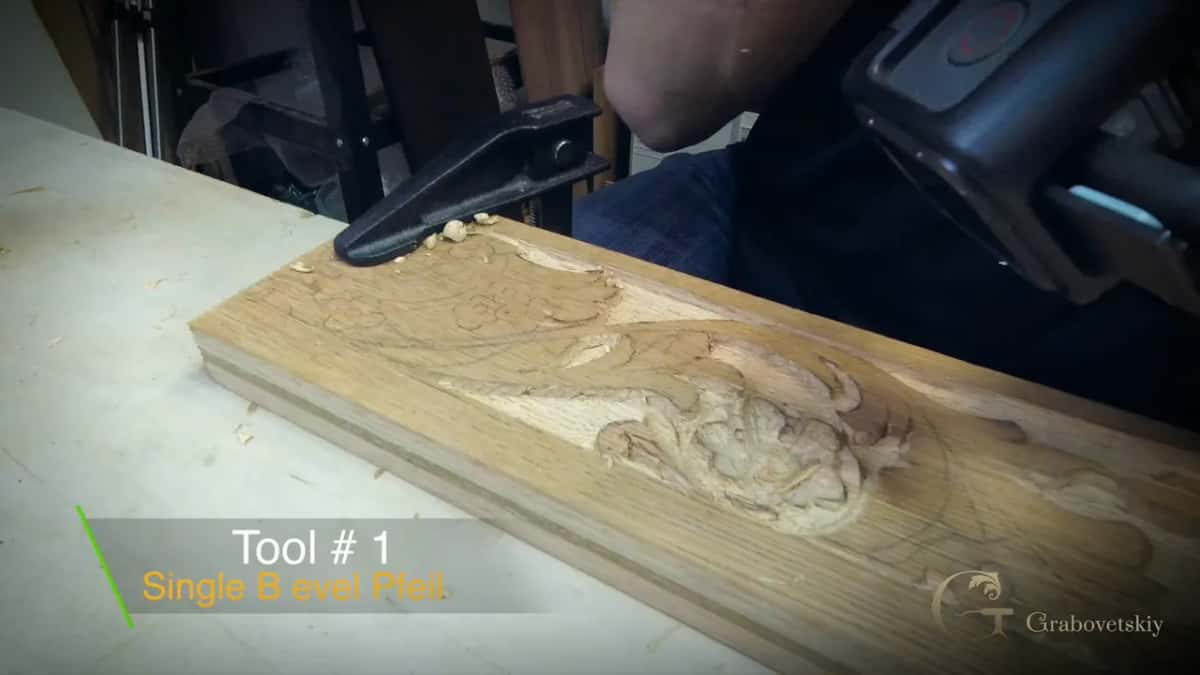
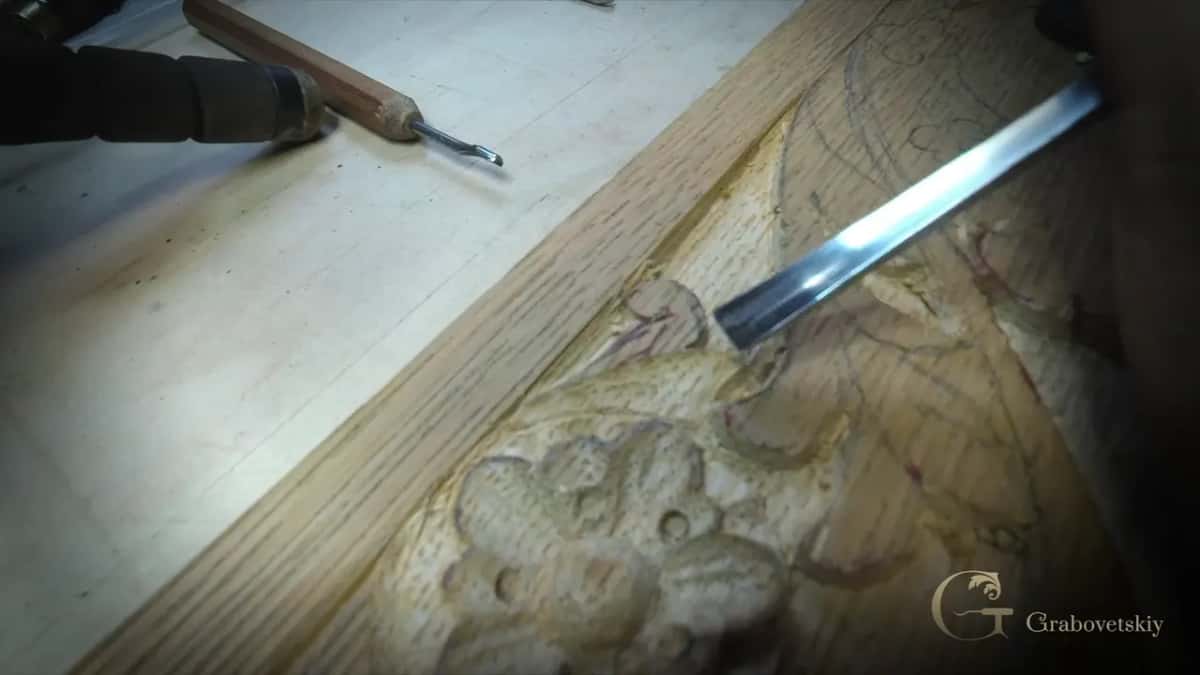
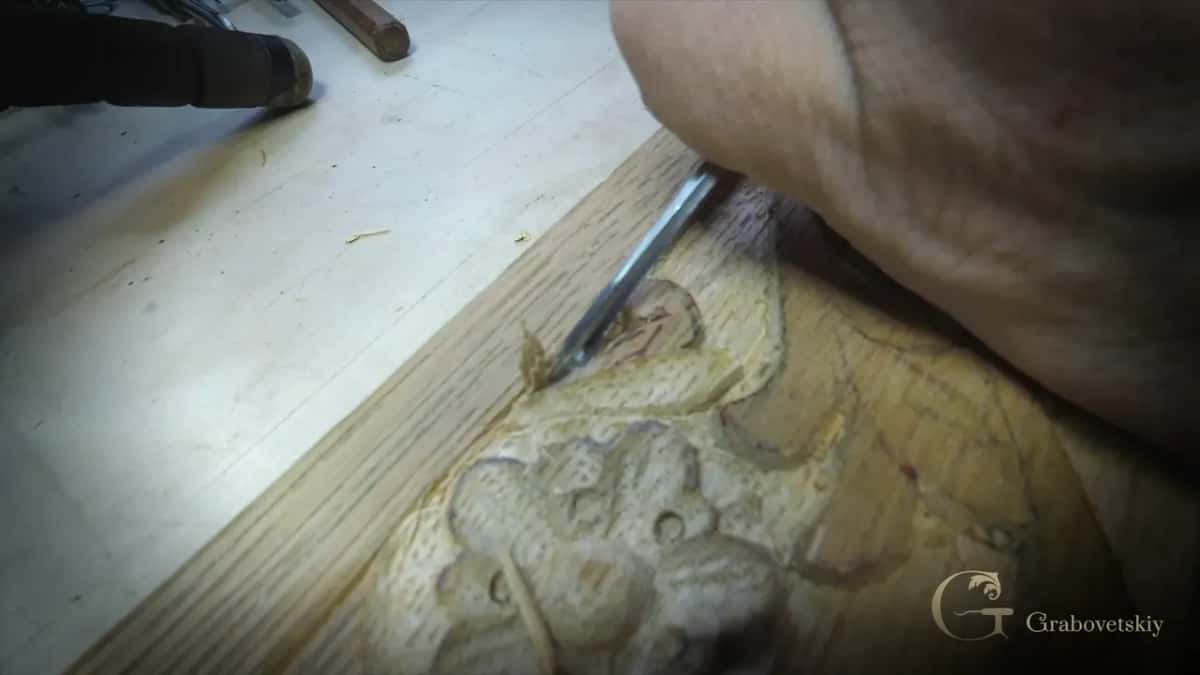
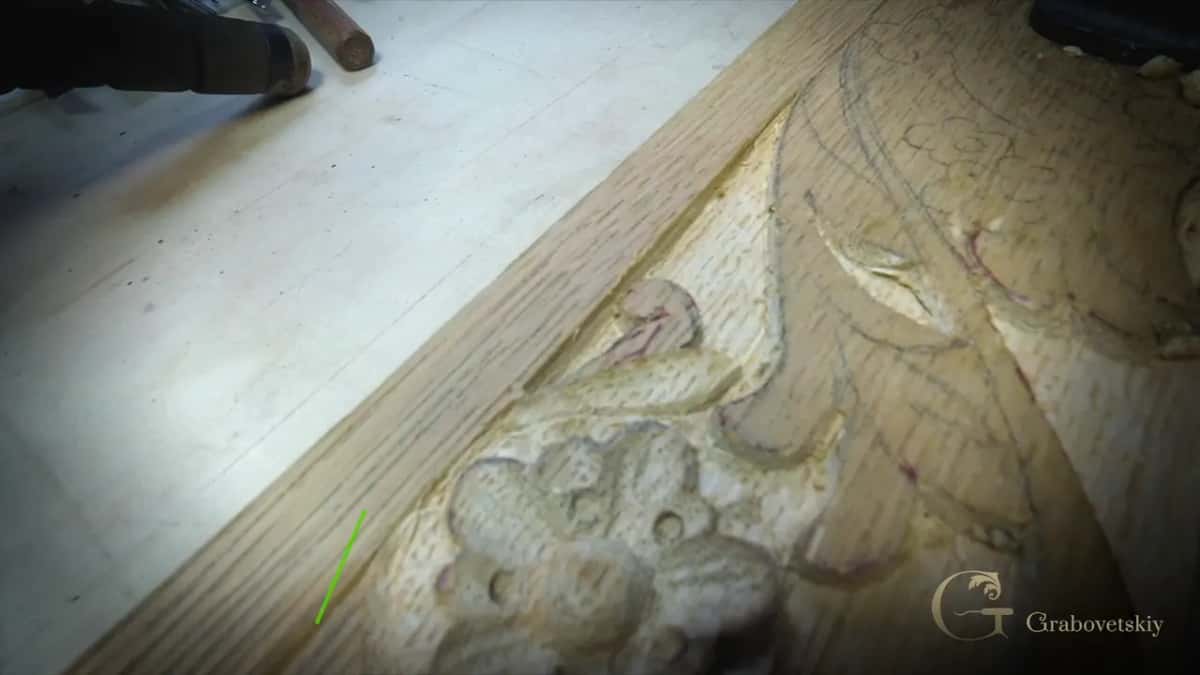
Next, the tool this page is about. Get a tiny chisel, I said, and that's all. The card on the video calls it a double bevel, number one. For about a minute after that I say nothing but okay, and the camera just watches my hands at the flower and the leaf tips. Then comes the line. Let me clean the edge, going to use my flat chisel. That flat one gets a card too, number one, single bevel.
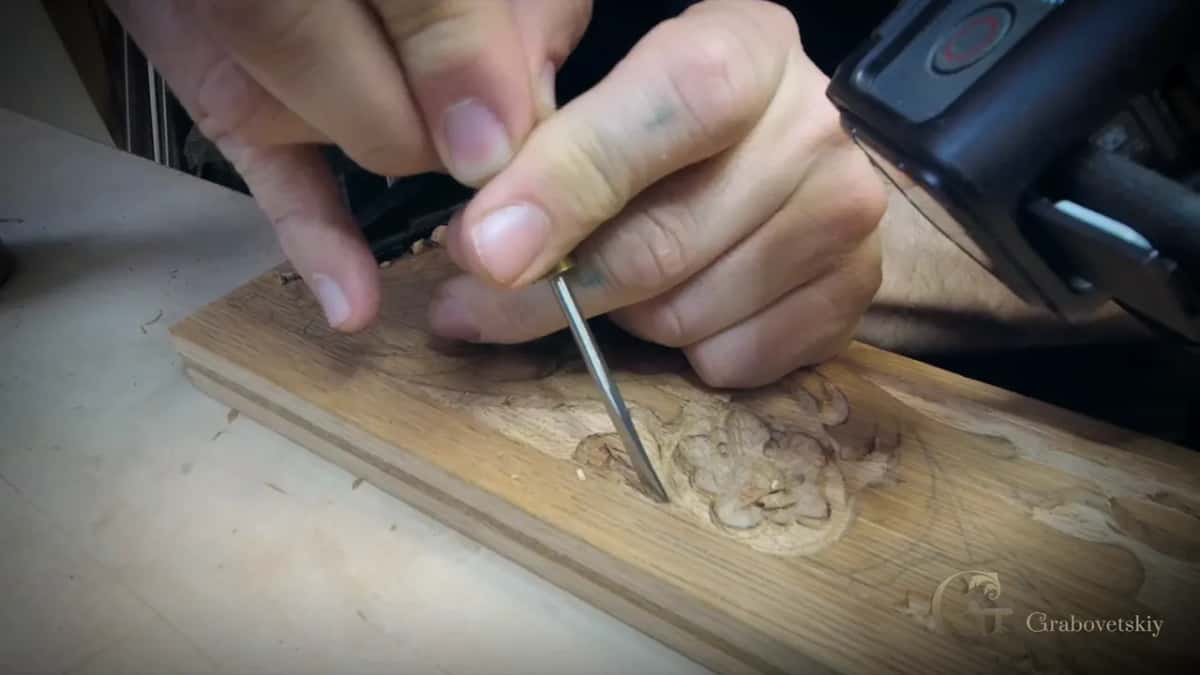
Not one knife among them. At the end of the video I said it does look like the original now. Why the chisel that day, over a knife? I didn't say, and I won't make up a reason for it now. What I did say about the same choice, on other carvings, fills the rest of this page, and some of it pulls the other way.
Does carving knife vs chisel even matter on fine detail?
Most of the time it doesn't, and that's close to my own words. On a ridge in the Venice Room's lesson 20, I said number one, or knife, doesn't matter. In the same breath I called the tool a skew knife, then caught myself. It's a skew chisel. That's how near the two sit in my hand.
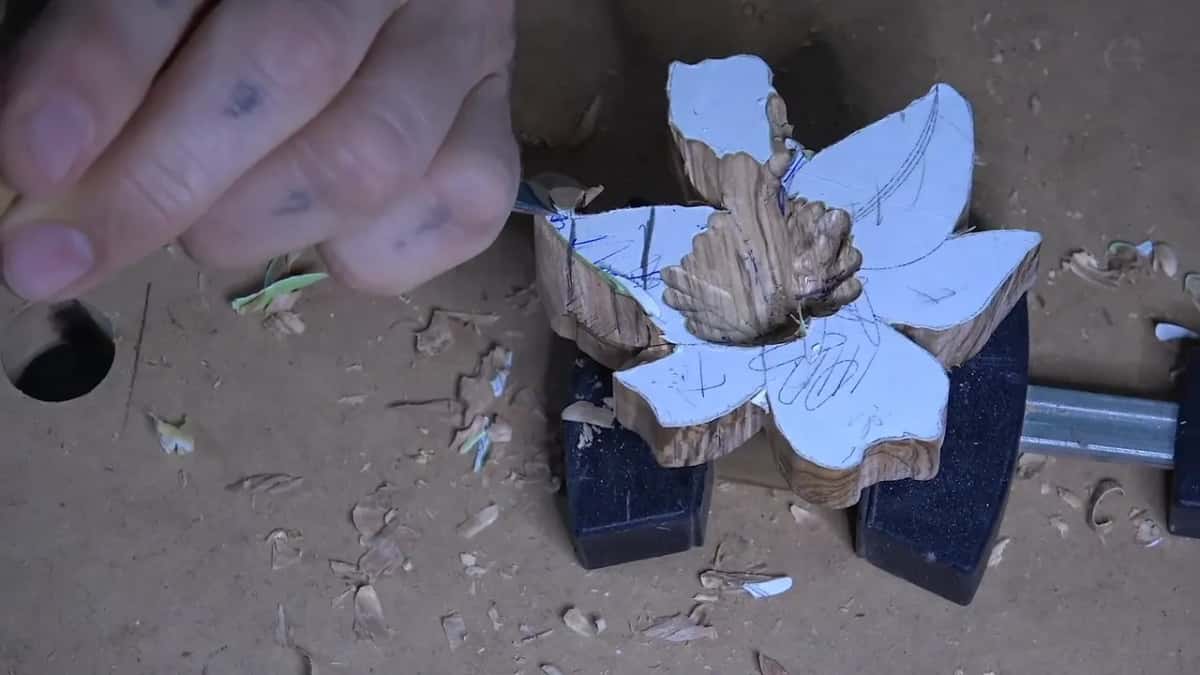
The Lily Box said the same. Part of a lily flower had to be chopped back so it would sit much lower than the part beside it, and I took a 10 millimeter (about 3/8 in) double bevel number one. It would work with a knife too, I said, and give me exactly the same result.
Over on a furniture panel bouquet, the words I used came out almost the same as on the lily. Either one will work the same way, I said, knife or number one. I took the number one, adding one thing. Make sure you slice it.
Venice Room 52 had me put a skew chisel to a spot and say a knife would give about the same result, and so would a flatter gouge. Two lessons earlier, in lesson 50, I talked about the north of Europe, where, as I put it, they had only one knife, pretty much, or one chisel, if you wish. I worked that way myself once, with one knife and one gouge, and it just takes much longer.
Even a small seam gets the same answer. Early in the Venice Room I had a marriage line, maybe 1/32 of an inch (0.8 mm), and said a number one would do it, or even a knife, if I need to. The chisel cleaned it right away, and that line was gone.
With a Hashemi flower I skipped the pencil and went straight to chisels and gouges. For this flower a knife would do, I said, or just the number one. If you'd rather have the knife, that's easy.
Is a number one a knife by another name?
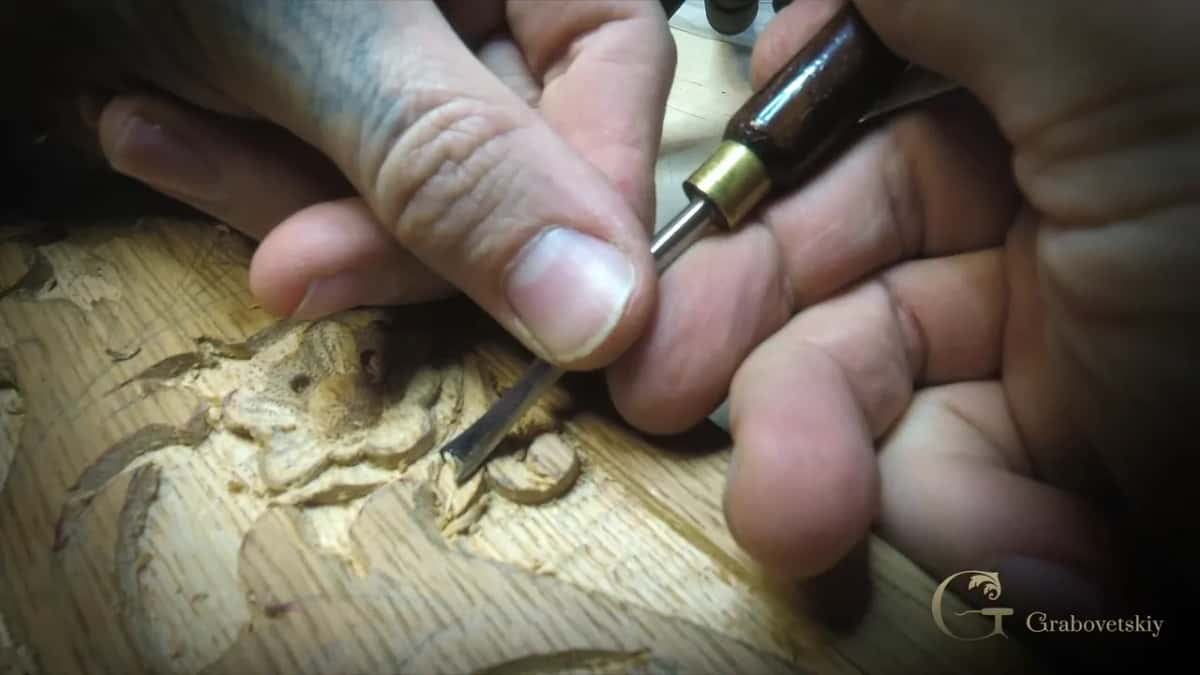
Close to it, in my hands. Partway through slicing a Roman acanthus leaf I stopped to say you don't have to use a knife there. If you have a number one, just a chisel, single or double bevel, that does the job, I said. Mine was a double bevel by Ashley Iles, more for the details, I said, but you work it exactly the way you'd work a knife.
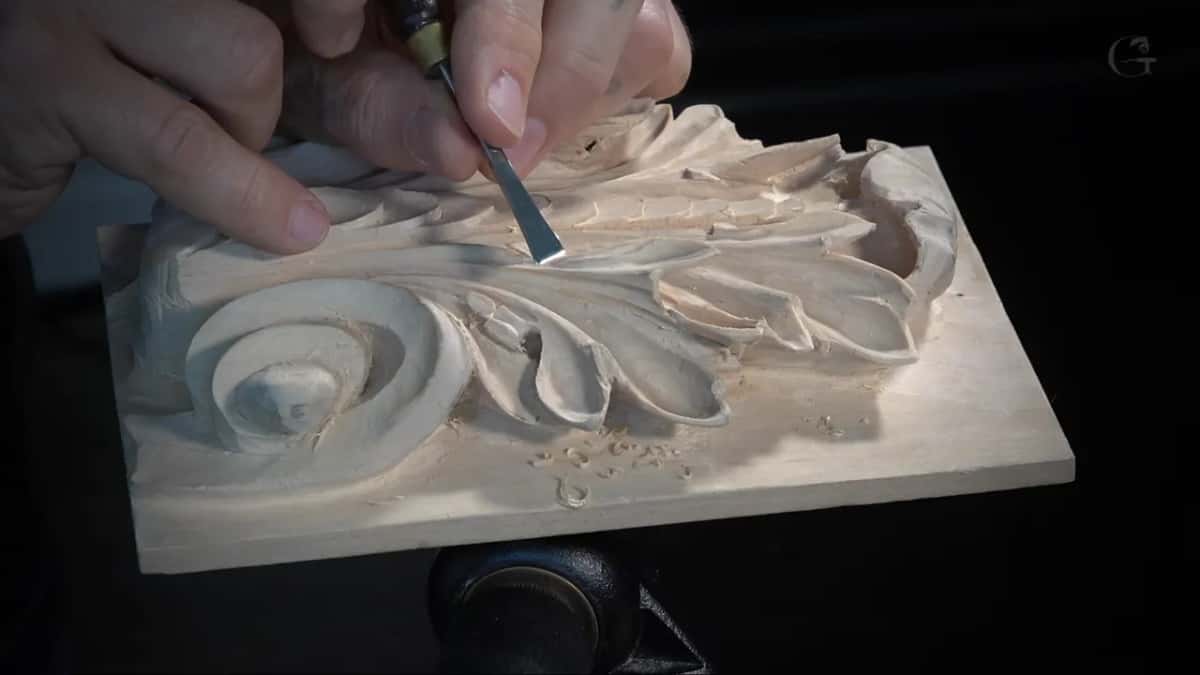
What makes it a chisel at all? Taking a side of a Greek acanthus leaf to its center line, I picked up an eight millimeter (5/16 in) number one, beveled on both sides, and spelled it out. Because it's straight, I said, it counts as a chisel, and neither a gouge nor a veiner. A knife was the other road I named for that same side.
Lesson 103 of the Venice Room has me holding a number one back bent and saying I really didn't need a back bent at all. I was using it pretty much in place of a carving knife. The grape onlay got a skew chisel number one for a little better movement, and I said it works pretty much like a knife.
Back in the tenth Venice Room lesson I said I wanted just a knife for some unevenness I saw from the side, and the tool in my hand was a skew chisel number one. It brought everything to the edge anyway. So in my hands a number one gets used the way a knife gets used.
When is a small chisel the safer pick?
When the spot is really shallow. A furniture panel flower in lesson 20 gave me a couple of ways to go, and I took a number one with a double bevel and went in carefully. A knife would work too, I said. But I think number one in this case would be a little safer, because it's really shallow.
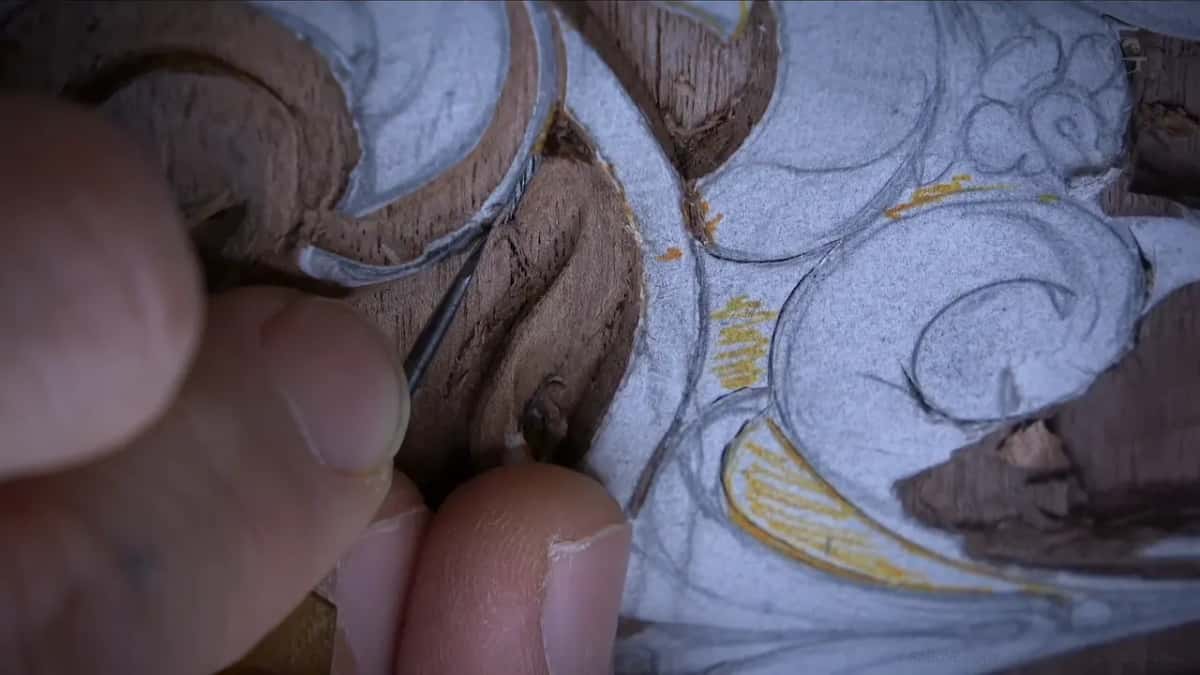
Then I spoke to whoever was watching on a phone. On a screen that spot looks huge, much bigger than in real life, and you'd ask why he is so careful right there. We're talking about tiny spots, I said, and not much of the material is left in that place.
Later in that same lesson I wanted an undercut under one edge. So the same number one went over on its side and did it the way a knife would. The floral panel with its molding went the same way. It could be done with the knife, I said, but I'd use a really, really small double bevel chisel, a number one, and I brought everything to the edge.
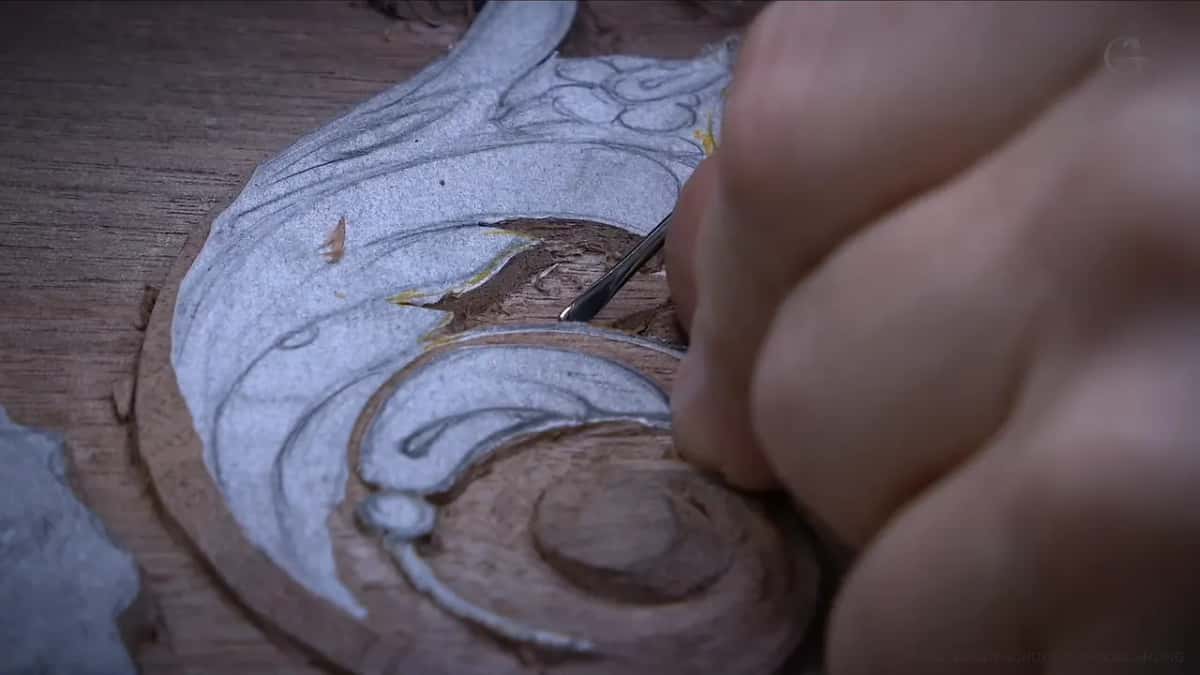
Room is the other thing. One spot of a furniture panel background had almost no space, and I still wanted a slight undercut. A half millimeter (0.02 in) tool wouldn't go in there, I said, so a small knife, or else a number one, not really deep, careful, using just one side of the tool.
Strength sits beside room. On the furniture panel acanthus I said you really don't want to make it too weak, because it's a furniture panel. Then the same choice came up, the knife against the number one, just to work the outside and see how the outer edge blends together.
When does the knife win?
When I want the slicing to come easier. Back on that Roman leaf, right after I said a number one works the same, I added that I like the knife, because it lets me slice easier.
Corners too. In one corner of furniture panel lesson 15 I said a small knife will do there, and so will a small chisel. I really like the tiny small knife, though, and inside that corner it matched the number one. Another panel lesson had me take just the knife into the corners to make them look really sharp. You can use only the point of a knife and go right inside the corner. Make sure you don't go too deep on the background.
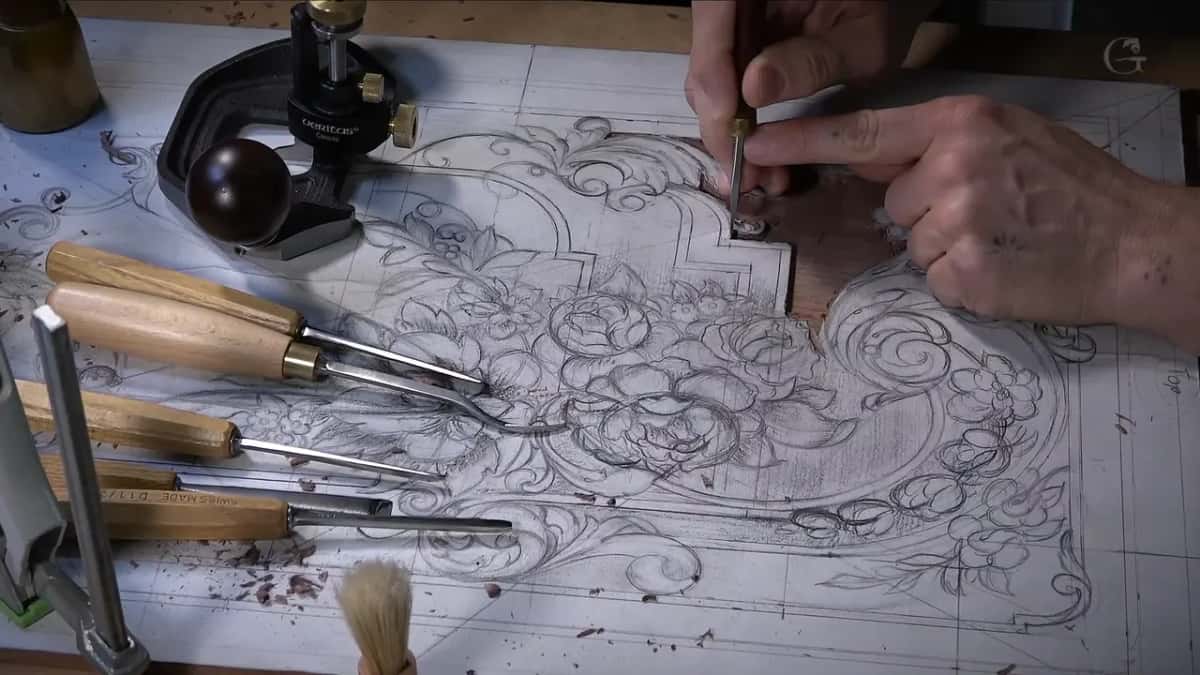
And rough edges after a deep undercut. Cleaning a leaf in the Greek acanthus course, I said it doesn't matter how good a carver you are, some rough edges are still going to show up, and there are a couple of ways to clean them. My preferred way was the same number 12 knife I used before, run down the edge to take off what isn't supposed to be there. Depending on the grain you can scrub with it too, carefully. Perfection isn't needed when you're cleaning, I said.
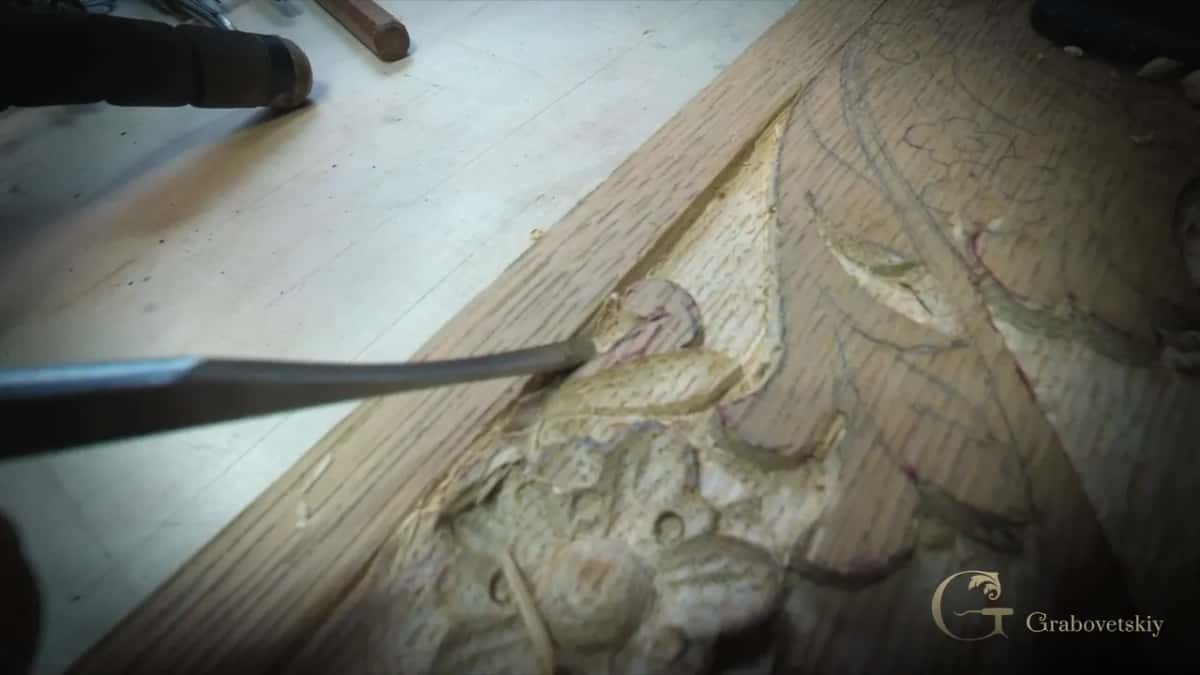
Chisel days leave room for the knife too. Blending one side of a Hashemi flower with a number one, I said in the same minute that I could use just a knife, and that it's a good idea too.
Sometimes the knife is simply the other half of a sentence. My Lily Box first layer has me saying I'd need the flat, like number one, or sometimes it's a good idea just to use a knife. An antique style rosette got the same pair of choices. Probably just a flat number one in that section, I said, or even a knife would do it, and my paper stayed right at the edge to keep that edge a high spot.
Which tool did I take at which spot?
One row per spot, in the words I said there.
| Spot | Tool | Words |
|---|---|---|
| Oak apron edge | a tiny number one chisel, then the flat one | Let me clean the edge. |
| Shallow panel flower | two bevels on a number one, taken in carefully | a little safer, really shallow |
| Lily flower flip | 10 millimeter (about 3/8 in) number one, chopped back really, really carefully | same result with a knife |
| Furniture panel corner | the tiny small knife, though a number one matched | a small chisel will do |
| Roman acanthus carving | an Ashley Iles number one, used like a knife | But I like the knife. |
| Greek leaf edge | the same number 12 knife, run along the edge | probably my preferred way there |
| Ridge, Venice Room | number one, skew chisel, or a knife, either one | doesn't matter, I said there |
Which way should the edge travel when you clean up?
Downhill, with the fibers in mind. A later furniture panel needed a wall, and I said a flat chisel would do and so would a knife, but I took a small, tiny chisel, just a number one, then went downhill. Before that I had made a first pass no more than one millimeter (0.04 in) deep.
Why make that first shallow pass at all? The logic of fibers, I said. I don't need to put a lot of stress in them, and since some of the wood is already gone, nothing gets smooshed down. It just flies out freely.
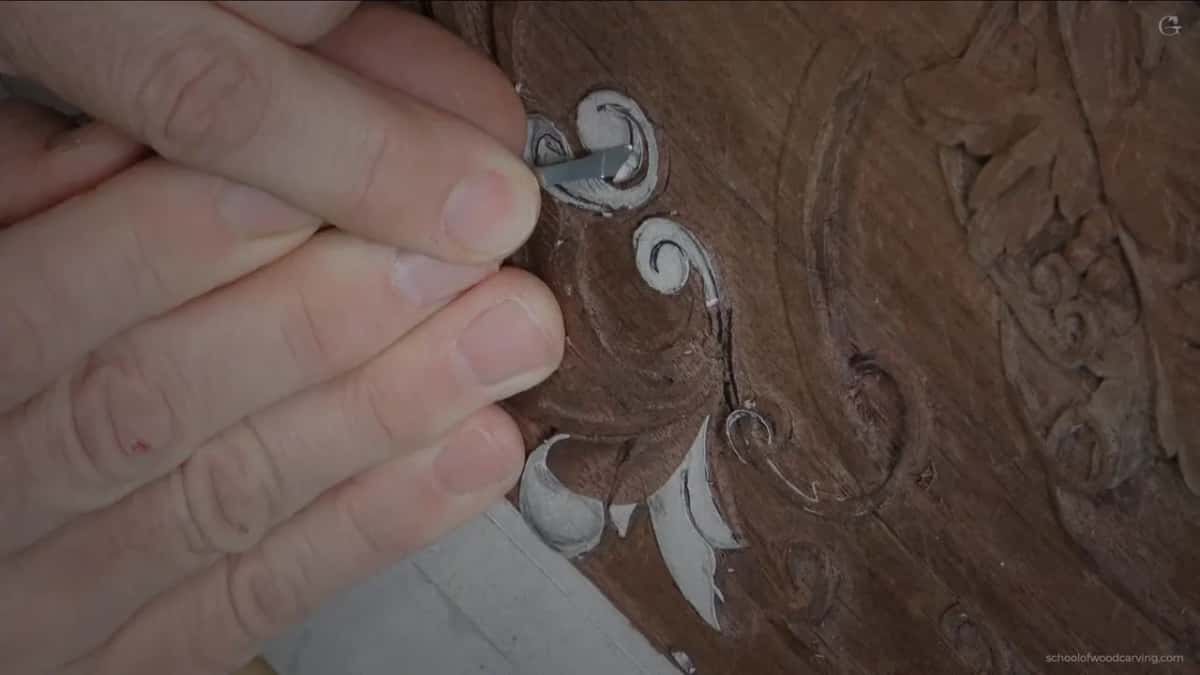
Pressure belongs here too. A few seconds before the number one came up on the Roman leaf, I said not to press anything at all, only slice, and leave the work to the tool. Out loud on the apron, it was the grain I named, and being careful with it.
Venice Room lesson 32 has me saying I hadn't touched a V tool once, because they didn't have it back then. You can do a lot of stuff with just the veiners and the gouges, I said, and a knife and a chisel. That's it.
Where can you watch both tools at work?
The lesson that holds every apron workshop lists all eighteen, workshop 12 with its tiny chisel among them. My knives and chisels are laid out in All About Tools for Wood Carving, and the furniture panel, the Roman leaf and the Venice Room each have their own course pages.
Got a knife on your bench? A flat chisel next to it? Then you already own both answers to this question, and what's left is the spots to try them on, eighteen workshops of shallow relief on an old furniture skirt. Tuition is on this page.
How it's done
- Look at how much wood is left. Where a spot is really shallow I take a number one, which I called a little safer there than a knife.
- Take either tool for an ordinary spot. Knife or number one works the same way on many spots. I said exactly that on a furniture panel bouquet, then took the number one.
- Slice instead of pressing. Slice it, and don't press anything. Leave the work to the tool, I said on a Roman leaf.
- Make a shallow first pass, then go downhill. Before a wall I went no more than one millimeter (0.04 in) deep, then took a little number one downhill, so nothing gets smooshed down and the wood flies out freely.
- Finish the edge. On the oak apron a flat chisel did the edge. A Greek leaf got my knife run along it, and I said you don't have to be perfect when you're cleaning.
Frequently asked questions
Do you really need a carving knife?
For someone just starting, I'd call the knife probably the number one tool, and it takes a lot of wood off really quickly. Later I still suggest good gouges, because with only a knife you're really limited on the harder projects.
Can a flat chisel do a carving knife's job on small details?
In my hands a number one often does. Slicing a Roman leaf, I said the idea is exactly the same as a knife, and you use it the same way. I still lean to the knife a bit, since it slices easier for me.
Why pick a number one over a knife on a shallow spot?
On one furniture panel flower I called the number one a little safer, since the spot was really shallow and very little wood was left there. A phone screen makes a place like that look huge. In real life those spots are tiny.
What to carve next