
Alexander Grabovetskiy, woodcarver, School of Woodcarving · Published 2026
How do you make sure you traced every line of a carving pattern?
Quick answer: Making sure you traced every line of a carving pattern is a matter of checking while the drawing is still taped to the wood. On my oak table apron I said to check once in a while, looked again at the end, found two missed spots and a forgotten center, and gave one faint spot more pressure.
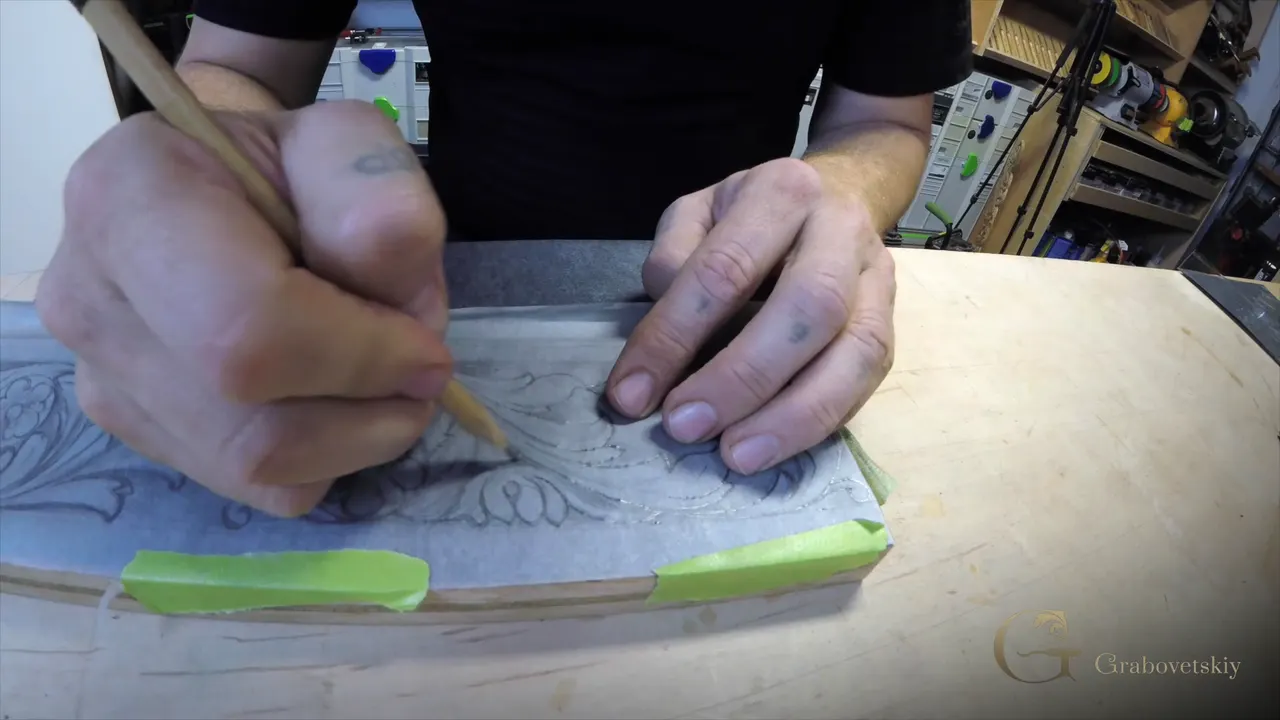
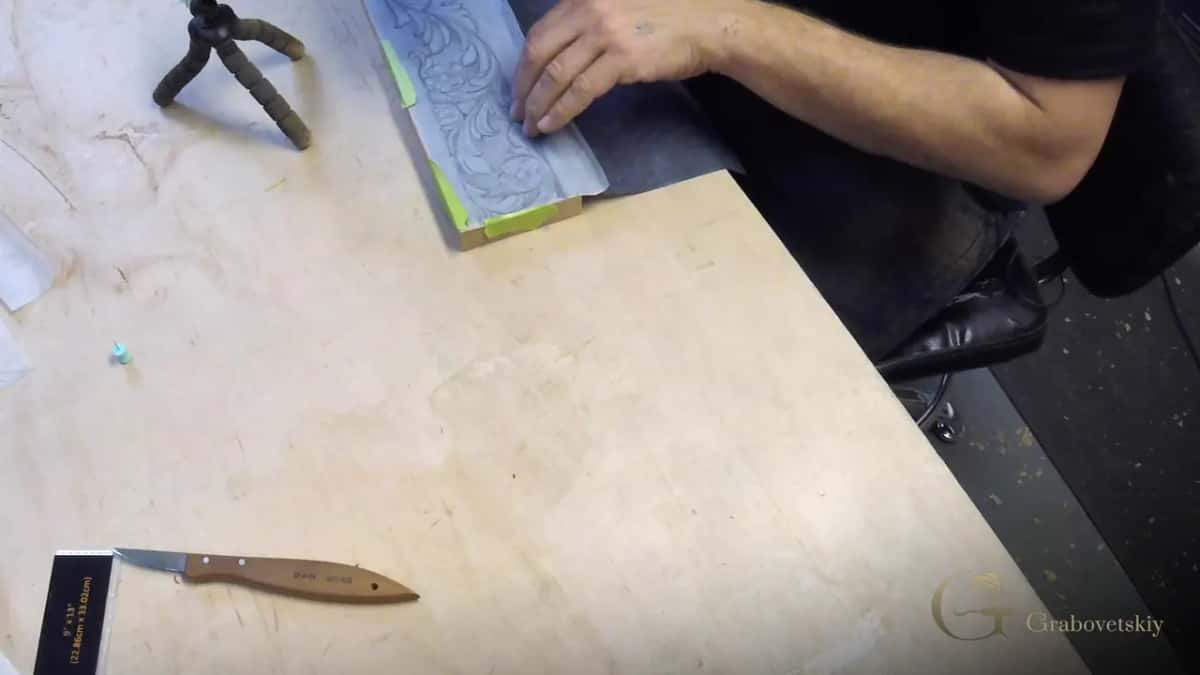
A tracing with no missed lines comes from checking before the drawing comes off the wood. The supplies are plain. Anyone asking how to trace a pattern onto wood needs only carbon paper for wood carving, black or blue, plus tape and the drawing. I traced a long section onto oak in workshop 5 of my dining table apron course, and I checked it. I still found two spots I had missed, and a center I forgot to do.
You've got a drawing you like, a clean board waiting on the bench, and carbon paper beside it. You want all of it on the wood, right? And you'd rather catch a gap now than halfway into the carving? Then look while the paper is still taped down. Below is what I did on the apron in that video, then the same check on a Venice Room corbel and a few other pieces from my other courses.
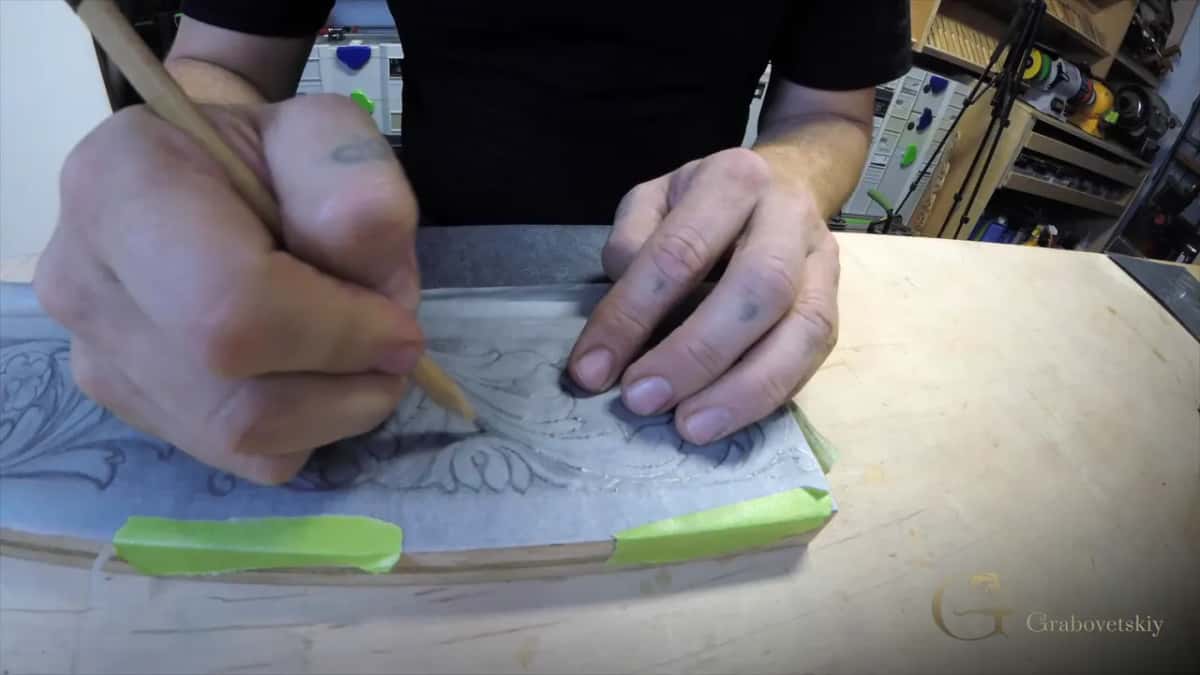
The tracing checks in five lines
- Tape the sheet on one side first, and add one more piece if it starts moving.
- Mark extra points on the edges.
- Go light, so the paper stays strong enough for the next piece and the one after that.
- Stop and look now and then.
- Before the drawing comes off, look for misses and press again where a line is faint.
How do you trace a pattern onto wood so the paper stays put?
Tape holds it. At first the apron board got tape on one side only, as I said, and then the sheet was moving a little bit, so I said it probably needed one more piece right there. Lift the free side later and the paper folds back over that taped edge, which you can see in the video.
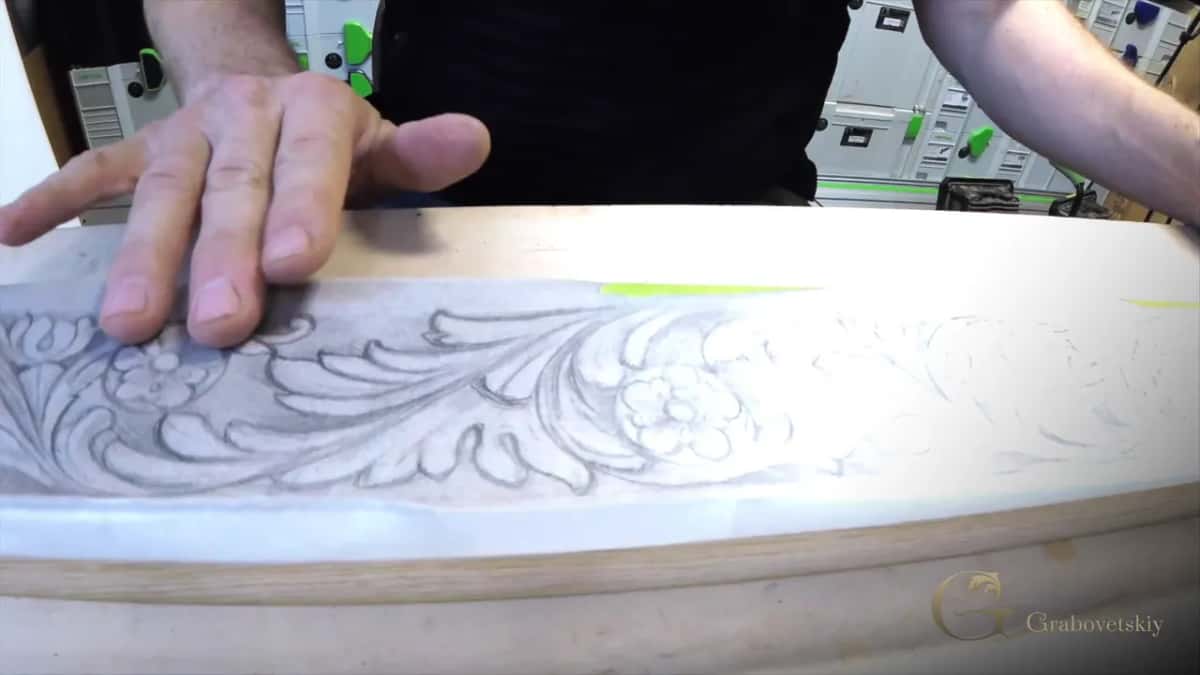
Before any tape, the tracing paper got trimmed to size. I first called it the bottom, then caught myself. I'm sorry, I said, it's the top, the upper part of the board, where the molding goes on later. I wanted the edges lining up, so more points got marked along them.
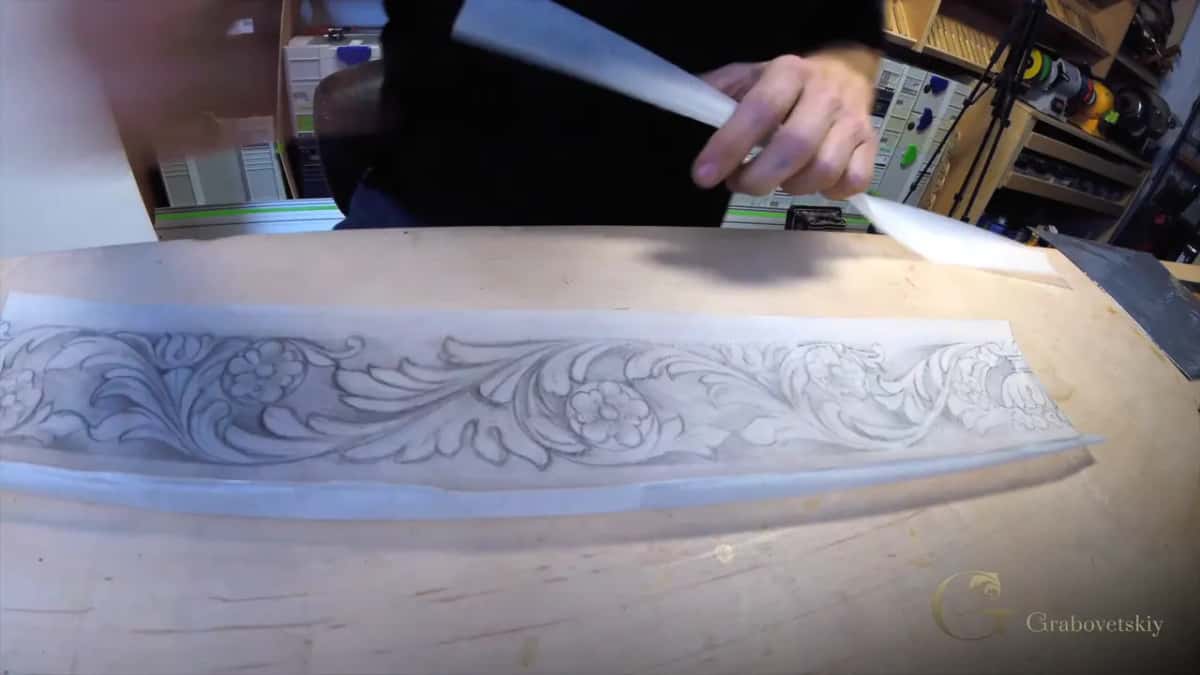
Why stop and check in the middle of a tracing?
A spot is easy to lose while you trace, and it's hard to find later on. Those were my words about seven minutes into the video, right after the extra points, and I called it really important to check the results once in a while. It's one sentence in a video that runs a little over 23 minutes.
Here's what later looks like. In workshop 150 of the Venice Room, after some carving, I had about three quarters of an inch (19 mm) left there. My drawing went back on it. A check of what was drawn before showed a couple of movements I forgot to place. At least I knew they'd go something like that, I said.
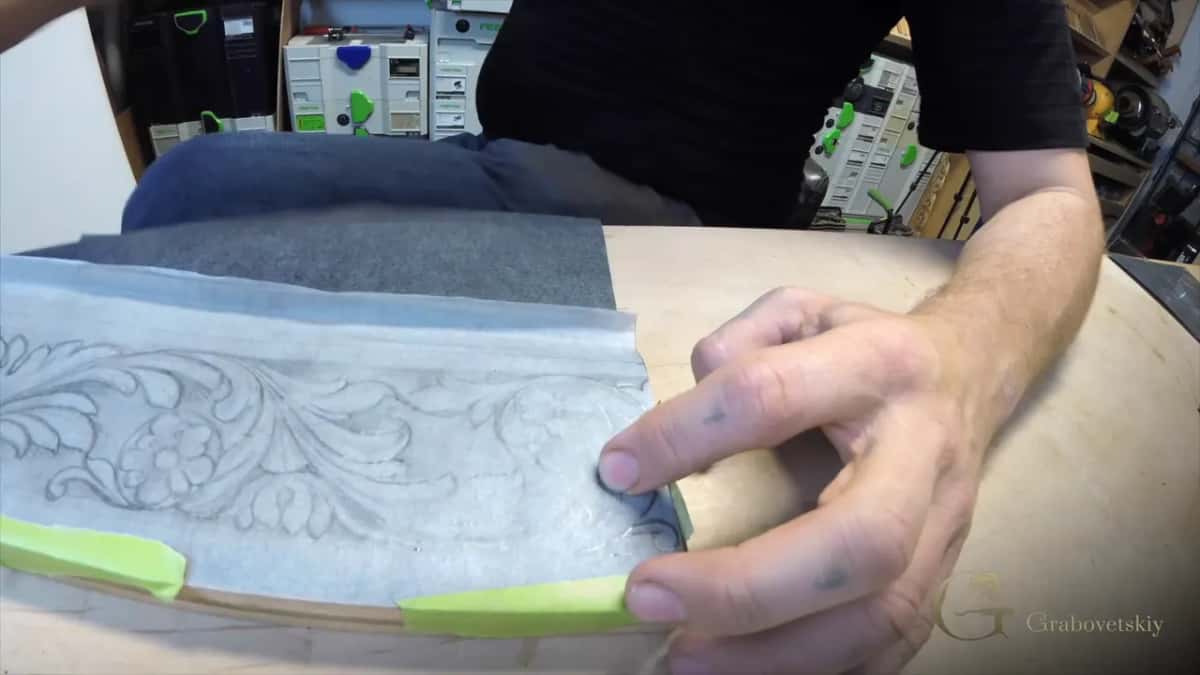
How hard should you press on carbon paper?
Lightly, most of the time. I usually try not to press too hard, I said on the apron, because the paper itself gets weaker, and I needed that same sheet for all four apron pieces I was making. One sheet, four apron pieces. That's the reason, in my own words. Carbon paper is kind of an old way too, and by then stores hardly carried it, I said.
But light has a price. Late in the tracing I found one spot that wanted more. I need to create more pressure right here, I said. I didn't press hard enough.
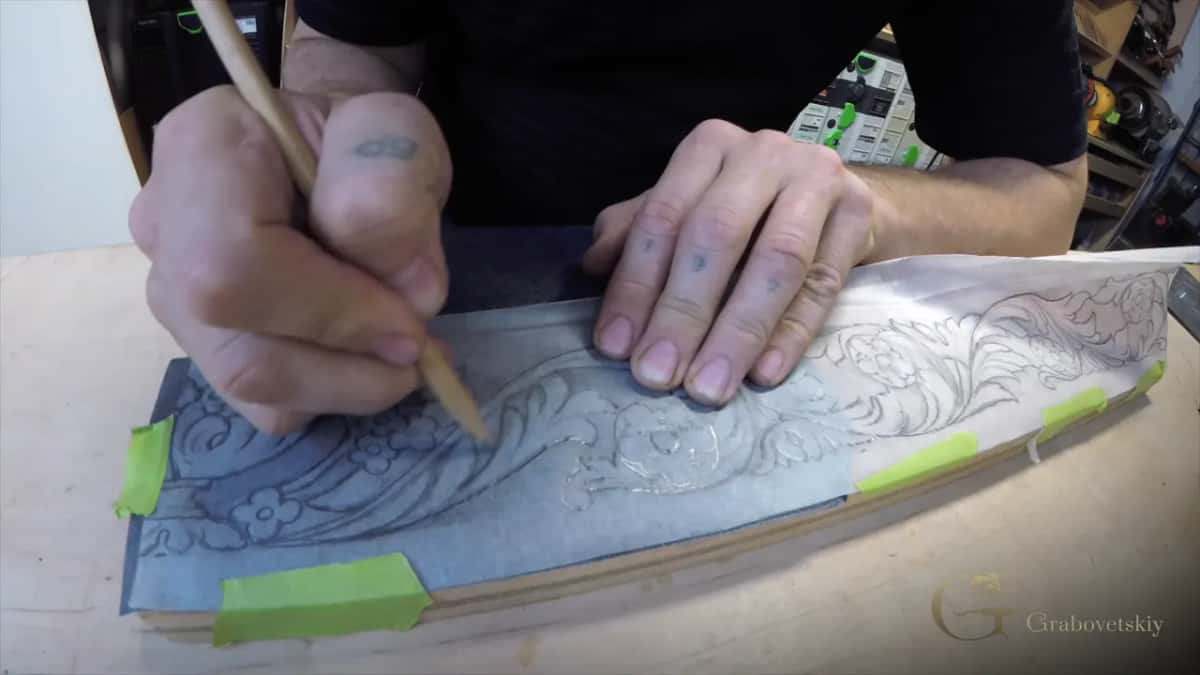
In the Venice Room's workshop 50 the first job was the right arrangement of the drawing. I moved it a little closer in one direction, then even closer. One push pin went in, then another to keep it in place. Only then came the carbon paper, and I traced with just an old ball pen.
What helps you keep track of the lines you already traced?
You keep a picture in your head of where you've been. The main idea, as I put it on the apron, is just to remember where you already traced, and where you still have to trace yet. A few seconds later it was, here's my flower. Right after it I talked about the carving itself. I call it shallow carving, only an eighth of an inch deep, usually three or four millimeters.
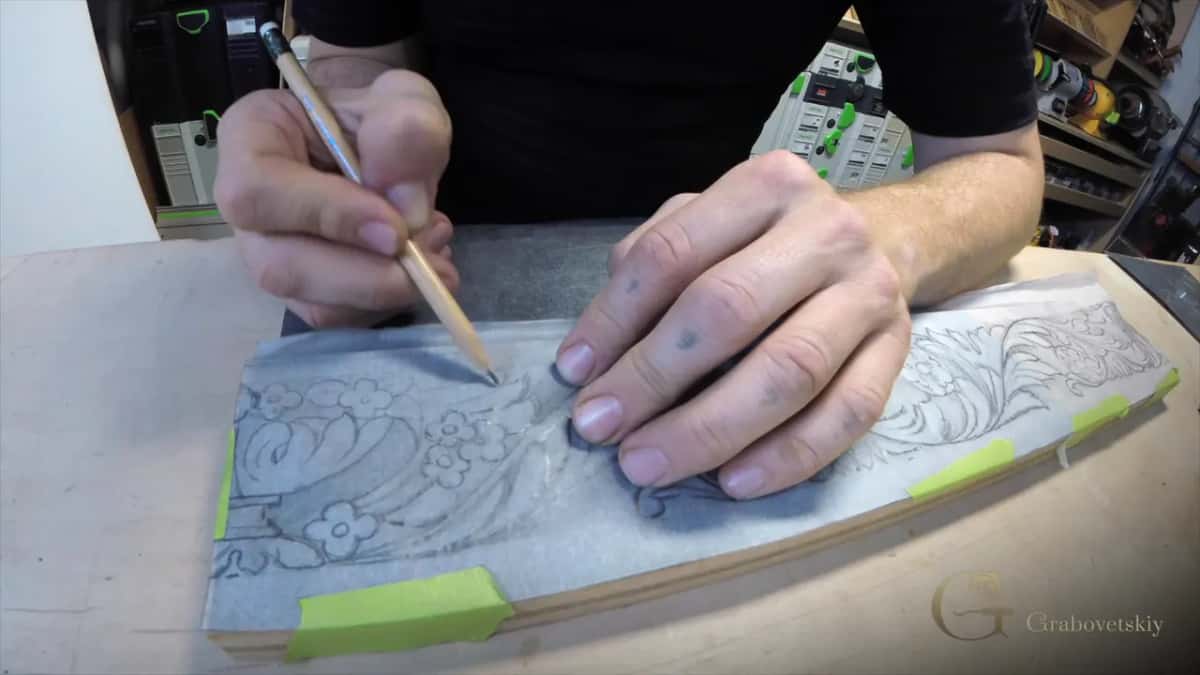
On a big corbel in Venice Room workshop 79 I said I'd start from one point. There was a cloth drop with some movements going one way, but the most important, I said, was my acanthus movement. Later on that corbel I started just one section first, then moved it a little bit.
What did the last check find on the apron?
Two missed spots and a center, after I thought I was done. Somewhere in the middle of the tracing I told the story of two veneered mahogany doors I once carved for a wine room. Near the end I called the piece almost done. I took that back. I shouldn't say almost done, I said, I still have to carve it. I hope my client will be really happy.

Let me check if I missed something, I said, and I definitely had. That check is really important before you take the pattern out, the drawings out, and I said so right then. I had missed one part. Seconds later I found a second miss, right there, a spot I thought I had already done.
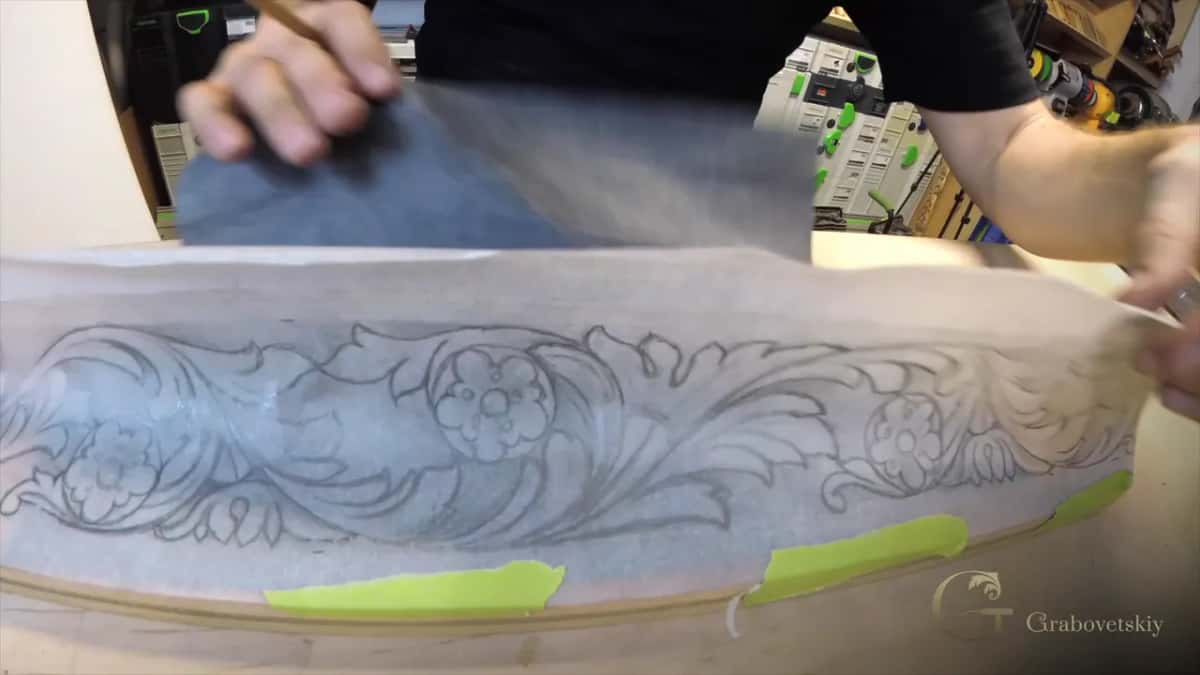
I checked one more place and said it looked good to me. Then I double-checked again. My flowers were in place, but I forgot the center. Beautiful, I said, once it was there.
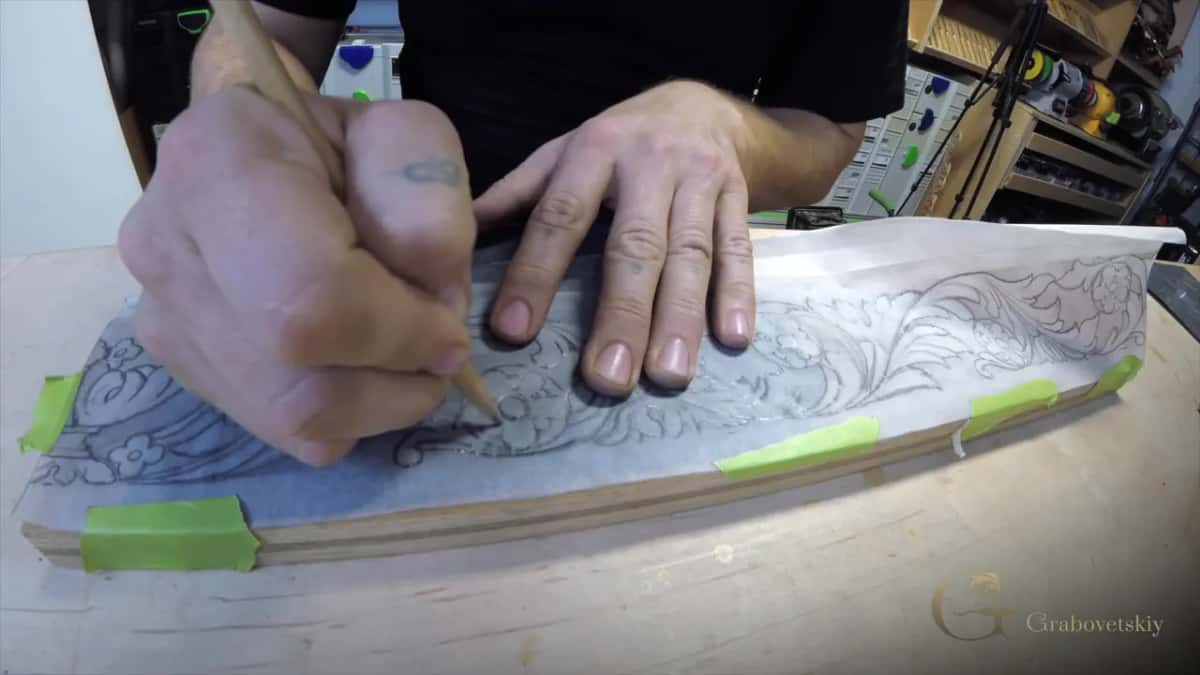
Here you go, here's our piece, I said after that. Refine it a little bit, I said next, and at the very end of the video I called the board somewhat ready for carving. Somewhat.
Here is every check from this page in one place, with the words I used when it came up.
| Where | What I found | Words |
|---|---|---|
| Oak apron, midway | a spot gets lost easily while tracing | hard to find later |
| Apron, final check | one missed part, then a second one | thought I did it |
| Apron flower centers | flowers in place, the center left undone | forgot to do center |
| Apron, faint line | one spot wanted a firmer press there | didn't press hard enough |
| Venice Room corbel | a small section missed, two lines aligned | yes, I did miss |
| Same corbel, later | one line forgotten, a really important one | don't want to lose |
| Lily box drawing | connecting lines left off my own drawing | Not on purpose, okay? |
Does a big carving get the same check?
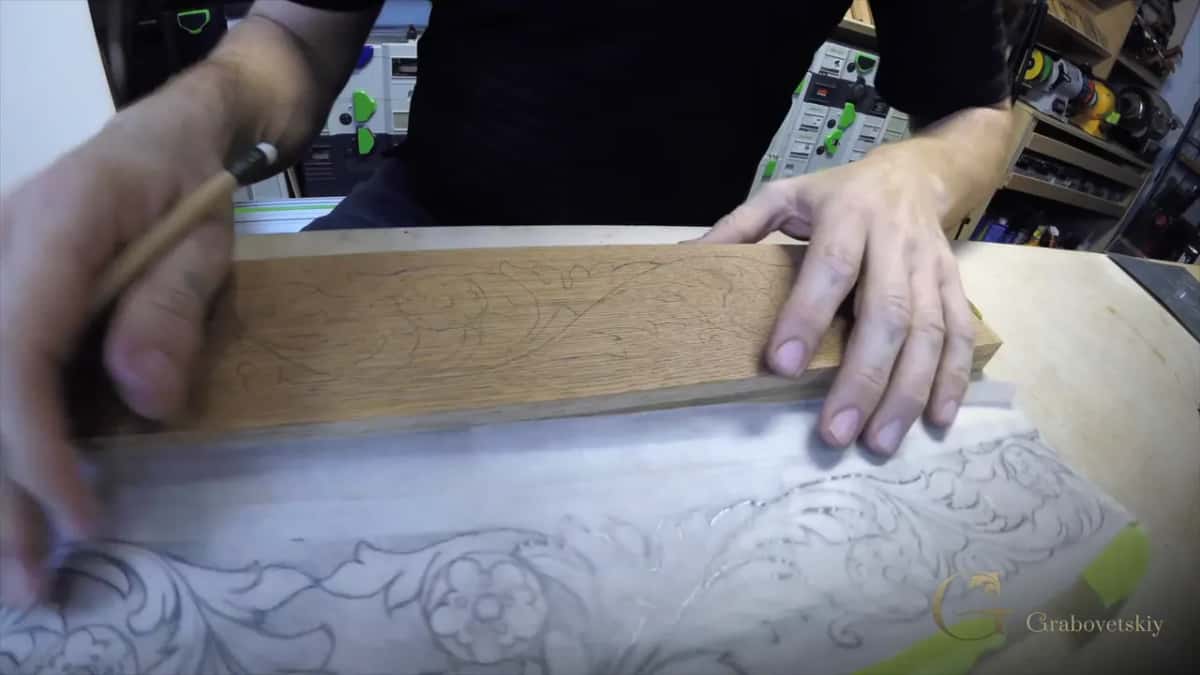
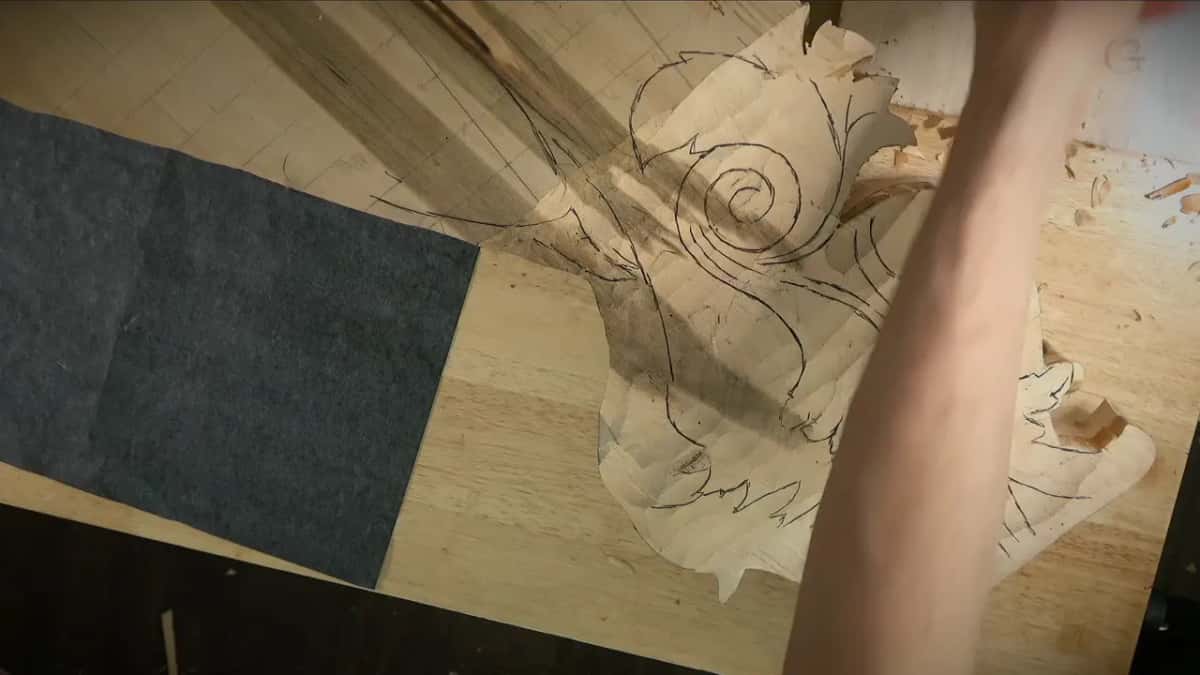
The corbel from Venice Room workshop 79 got the same check, and it caught two misses. That corbel carries a cloth drop and an acanthus, and I traced it from a full-scale drawing on plastic. I wished it would stay in place, so I needed push pins, three or four of them.
Why plastic? In a livestream in April 2020 someone asked me what I think of carbon paper. There are two ways to use it, I told them. You can draw on normal paper and transfer that. Or, on a big piece, you draw on plain garden plastic, because you can see it from both sides, and then you can flip it over and transfer the same detail the other way. At a Byzantine acanthus class I asked everyone not to tear that plastic, since it's kind of fragile. I use a little thicker one for just that reason.
On one stretch I said that since the corbel is 3D, the carbon paper tracing was not as accurate as I wished. Really close, though. The lamp made it kind of hard to see, too. Then a single spot had to be dead on, right in the position I designed, and for the drop I said I probably had to reposition it slightly.
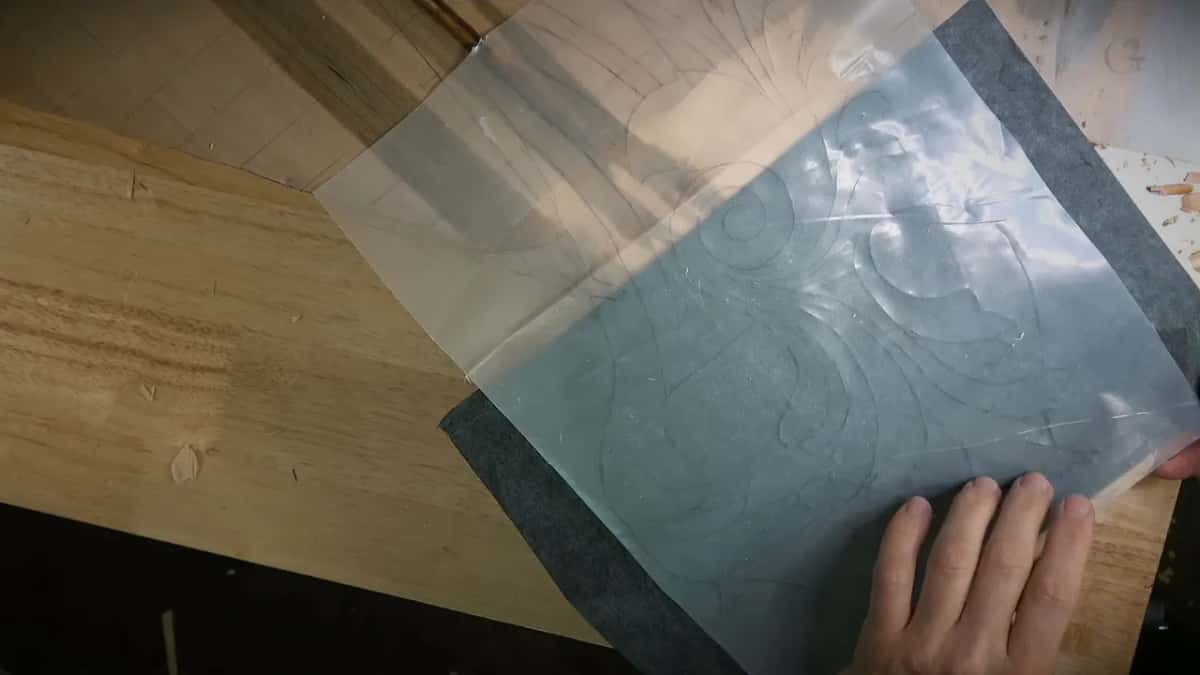
Then came the check. Let me see if I missed something, I said, and yes, I did miss a small section. I lined up those two lines. There were two corbels like that one, so the plastic would serve the second as well, and I called it a really, really good method. Double check, double check, I said. That's when I saw a line I'd left out. A really important line, I said, and that line I don't want to lose.
Should you check the drawing before you trace it?
I have, more than once. Back in lesson 3 of the Venice Room I said I didn't want to miss anything, looked, and it seemed I had missed nothing. Only then did I trace it with a pencil, a soft 8B. I like that one because it's soft and it gives me good results, though 2B or a harder or softer one works too.
After that I could clearly see my lines. Some details I would develop right at the moment of carving, I said, since the tracing was just preliminary. One spot I couldn't see well, and I said some light might help. That's better now, I said.
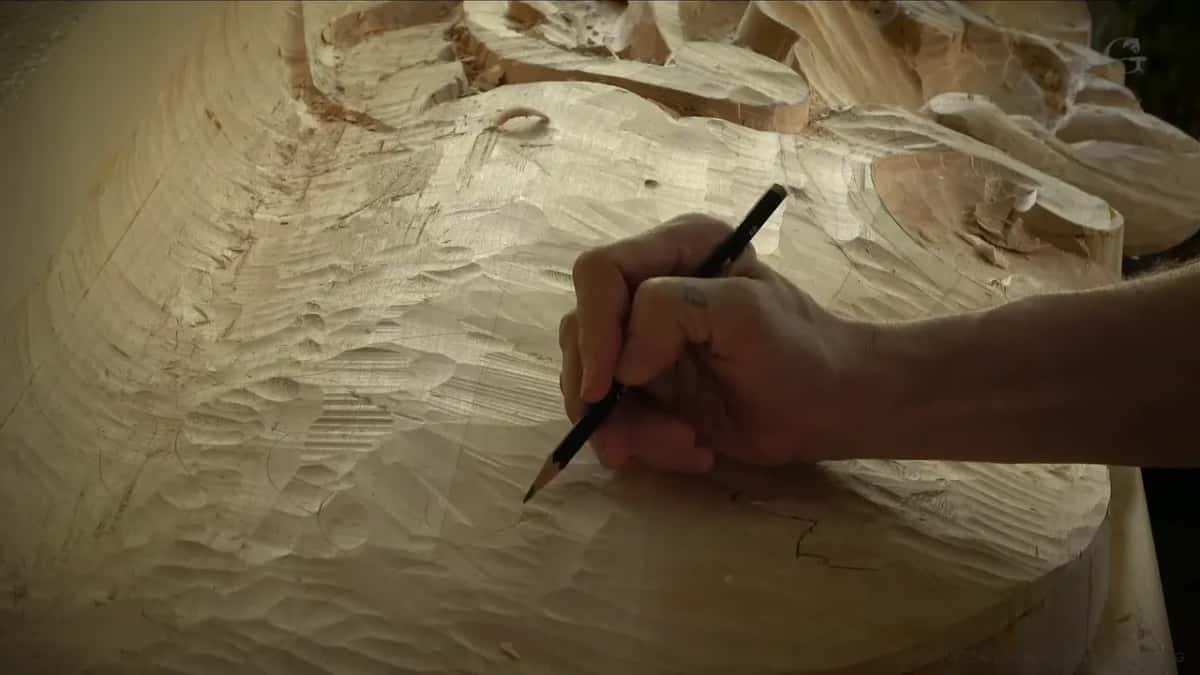
Workshop 92 of that same course had a drawing that came out a little bigger than I wanted, but it was okay. I got the lines correct and double-checked before any transfer. The transfer went on both sides. It didn't look as good yet, but at least I had the outline, and I double-checked once more. My iPad sat close by, so I could see what was going on and not drift far from my original design.
My own drawings miss lines too. In the lily box course I told you on camera that I forgot to place connecting lines on the drawing, the ones you need when you go to the scroll saw. I apologized for that, and said it wasn't on purpose. I just forgot.
Back in the lily box scroll saw lesson I marked the spots to remove and said there were a couple I wanted to make sure I wouldn't miss. Then I double-checked. I don't think I missed anything, I said. On that same drawing I also said that when I drew it, I missed a line, and I fixed it.
Does every traced line have to be exact?
Exact position isn't the goal. At a Grinling Gibbons class in Maine I told the class it's absolutely fine if the transfer isn't that accurate. Getting the line exactly in position isn't the point there, since the gouges can move it around later. Excavating the deep spots came first in that class, I said.
The misses I found on the apron and the corbel were a different thing. They were lines that never got onto the wood at all, a flower center and a really important line on the corbel.
For the Chamomile and Bow Rosette I had a cutout of just one quarter of the design, and I transferred it on both sides so I could reference my center. The most important thing, I said, was to stay on those two lines. Pretty close, see? Really close. And it looked like I didn't miss anything.
What happens to the carbon lines after you trace?
On the apron I refined them a little, right after the piece was traced. Later the carbon marks can get in the way. In workshop 82 of the Venice Room, partway into the carving, I said I should probably get rid of whatever carbon paper mark was left, and I'd just scrape at it. That way it would be a lot more visible to me. The mark wouldn't strike my eye, and I could see the movement. With the rosette, my only problem with carbon was how much black dirt it leaves, since it's just black carbon. I'd clean it a little later, I said.
What if you can't find carbon paper?
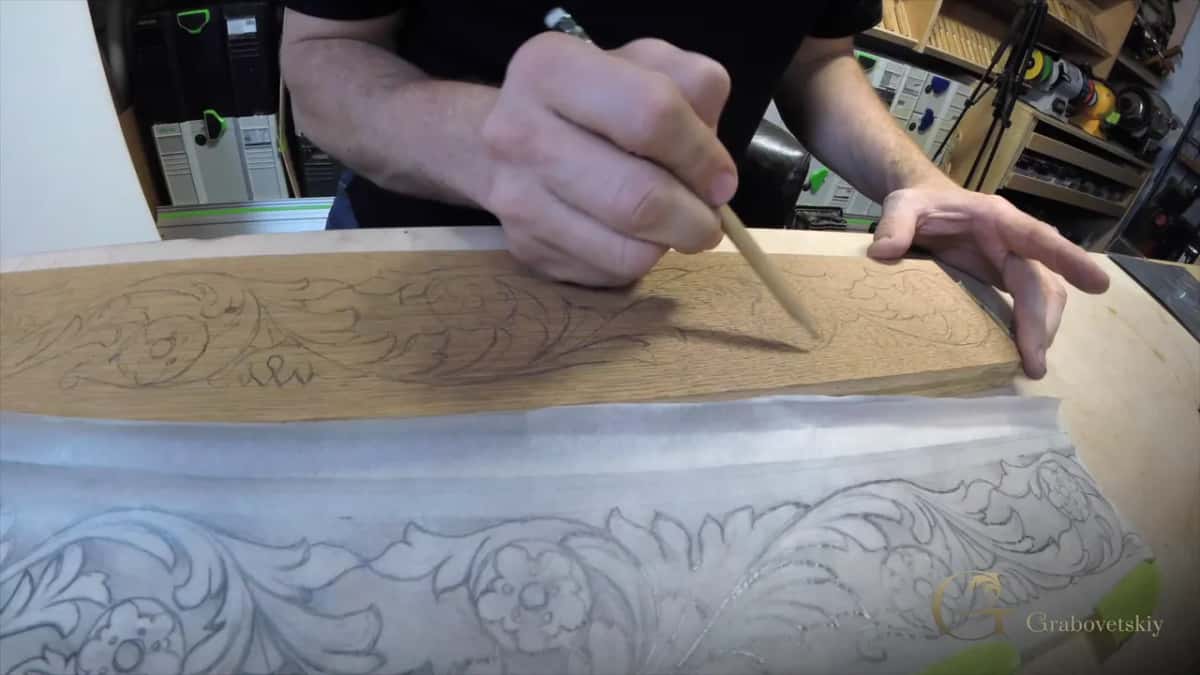
You can always use just a needle if carbon paper is hard for you to get, as I told you in the apron video. Poke along the pattern, and the line of holes shows up on the other side, really visible, especially once you put some pencil marks on it later.
That's what they used to transfer patterns in the 18th and 19th century, I said. Artists call that pricked kind of transfer pouncing. It's possible, but in my opinion it takes a little too long. I prefer carbon paper. For me it's the easiest way to get any pattern, any design, onto the wood itself, and for the apron I opened a new one. You used to buy it in a store. Now you buy it online, and when I filmed this, amazon.com still sold it in the United States. I was pretty sure Europe had it too.
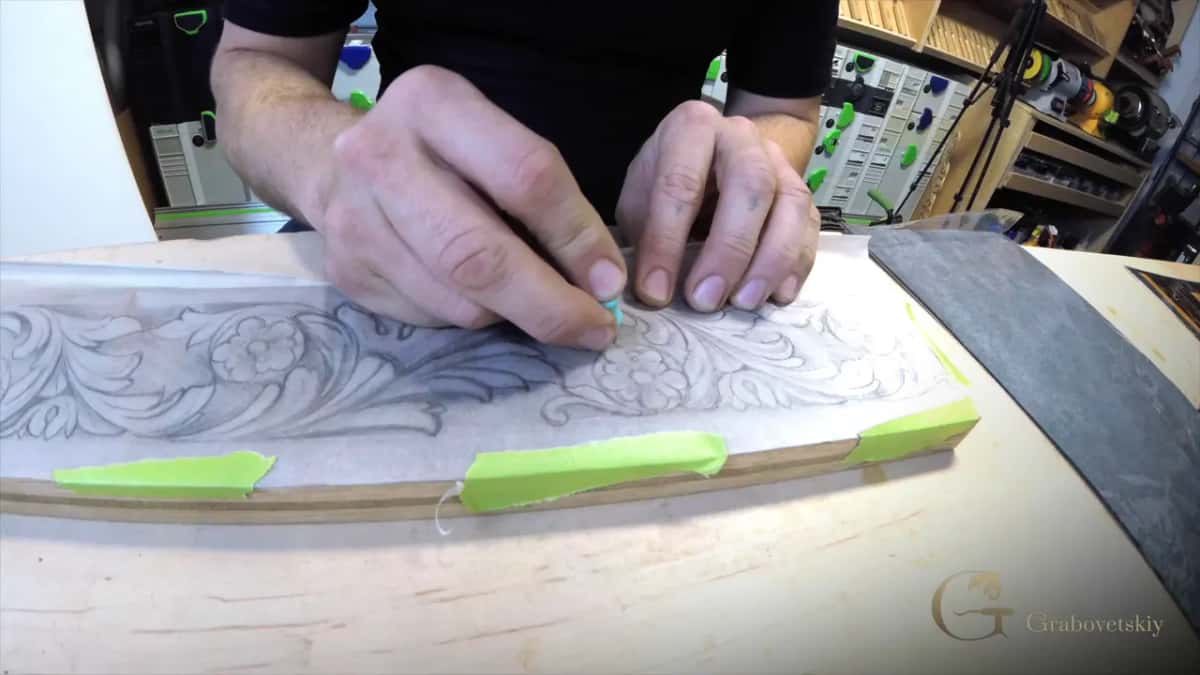
Got a drawing ready? A board and some carbon? Then the rest is slow tracing and looking twice, and the whole apron job, workshop by workshop, is in the lesson that holds every apron workshop. The final assessment is its own lesson. Tuition is on this page, if you want to carve along.
How it's done
- Trim the sheet and tape one edge. I trimmed my paper to size, top edge too, since the molding goes on there later, and taped down just one side.
- Line up the edges. More points marked along the edges kept the drawing lined up with the board.
- Go light. I try not to press too hard. Weakened paper won't last for the other three pieces.
- Look as you go. Every so often, as I said, check the results, and keep in mind what is traced and what isn't yet.
- Hunt for misses before lifting. With the drawing still taped, I found two places I had skipped and an empty center. One faint spot needed a harder press. The lines got a little refining last.
Frequently asked questions
Should you clean the board before tracing a pattern?
I do. My Rotex by Festool had sanded the apron board, much quicker than a scraper or a plane would. After that I wiped it really well until no sawdust was left. It still got a little dusty, and I said I should have used my vacuum.
What tape holds tracing paper on wood?
Green tape does that job for me. The apron got the same green tape again, the one I'd already used earlier on that job. I like it because it's sticky, and still I can peel it off easily, even from tracing paper.
Is graphite paper better than carbon paper?
Graphite paper is even better, I said in workshop 92 of the Venice Room, and it works very much like a pencil. I had carbon paper that day, so that's what I used. Any carbon paper will do, black or blue.
What to carve next