

Alexander Grabovetskiy, woodcarver, School of Woodcarving · Published 2026
How do you price a wood carving commission?
Quick answer: A price for a wood carving commission is, in my own answers, either time and material or a figure per square inch. On a dining table apron I said the customer covers my hours and my material. On an April 2020 live stream I said I estimate by the square inch, depth included, over a minimum.
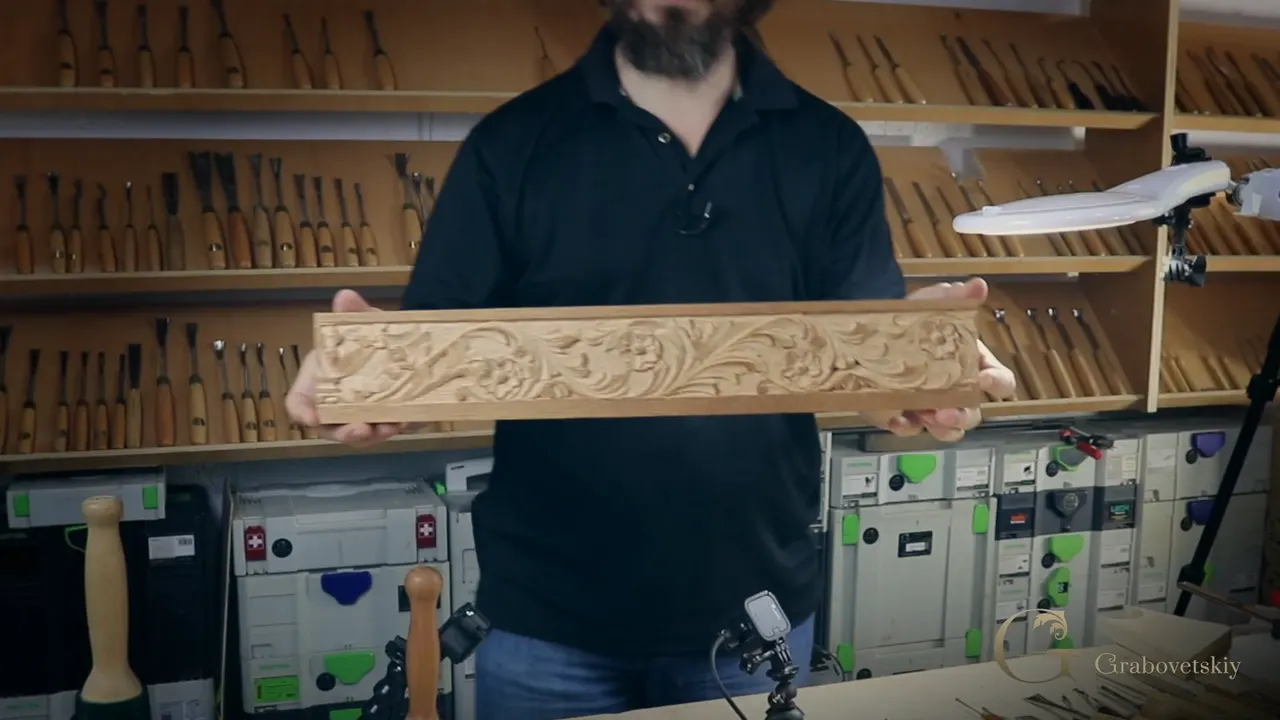
A wood carving price is the time I put in plus the material, and on camera I have put a number on that in more than one way. So if you came to learn how to price wood carvings, here they are, each with the place I said it. Workshop 16 of Carving Dining Table Apron gave time and material. A live stream in April 2020 gave the square inch, talked through with the depth counted and a minimum under it. My own wood carving prices are not on this page, and further down I say why.
Got a carving on your bench, or one in your head? Would you want a fair answer ready when somebody asks what it costs? Then take my method apart with me, piece by piece, in my words, from the jobs and streams where I said them.
What goes into my price, in six lines
- For the apron job it was hours and material, both paid by the customer.
- An inch (25 mm) can take a day, and a foot (30 cm) can take a day, so a price per foot rarely fits.
- Moldings are different, since their time is easy to know.
- In 2020 the square inch set my price, with the depth on top, and both faces count when the carving wraps.
- Material is billed apart, with a minimum of its own.
- My minimum holds on a small job too, and the hours spent drawing get paid as well, which they were not at first.
What did I say about charging while I carved the apron?
I said that in most cases I just talk to the customer about the time and the material. Whatever time I spend, they cover my time. Whatever I spend on material, they cover that too. It came in workshop 16 of the apron lesson, right after I took one flower slightly lower, because some people online had asked how I figure what to ask a client for.
That answer opened with a warning. Most of the time it is almost impossible to figure out up front exactly what a carving job involves. Then came the inch and the foot.
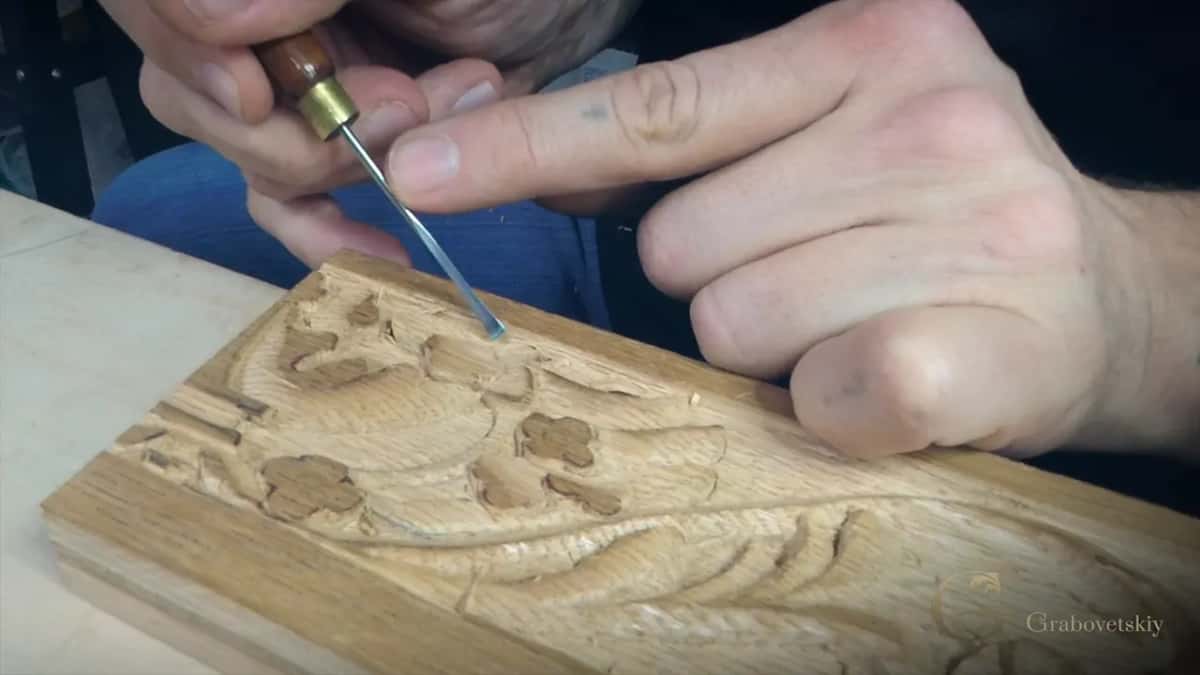
That job was new carving for a family's antique table apron, four pieces of white oak made to match one old section. How the finished pieces held up against the original is told in the final assessment lesson. This page stays with the money side of the same bench.
Why can't wood carving prices go by the foot?
Carving does not keep one steady speed, and on the apron I put it in plain numbers. In wood carving, I said on the apron, one day you can carve only one inch (2.5 cm), and another day you could finish one foot (about 30 cm), so you really can't go by foot and inch.
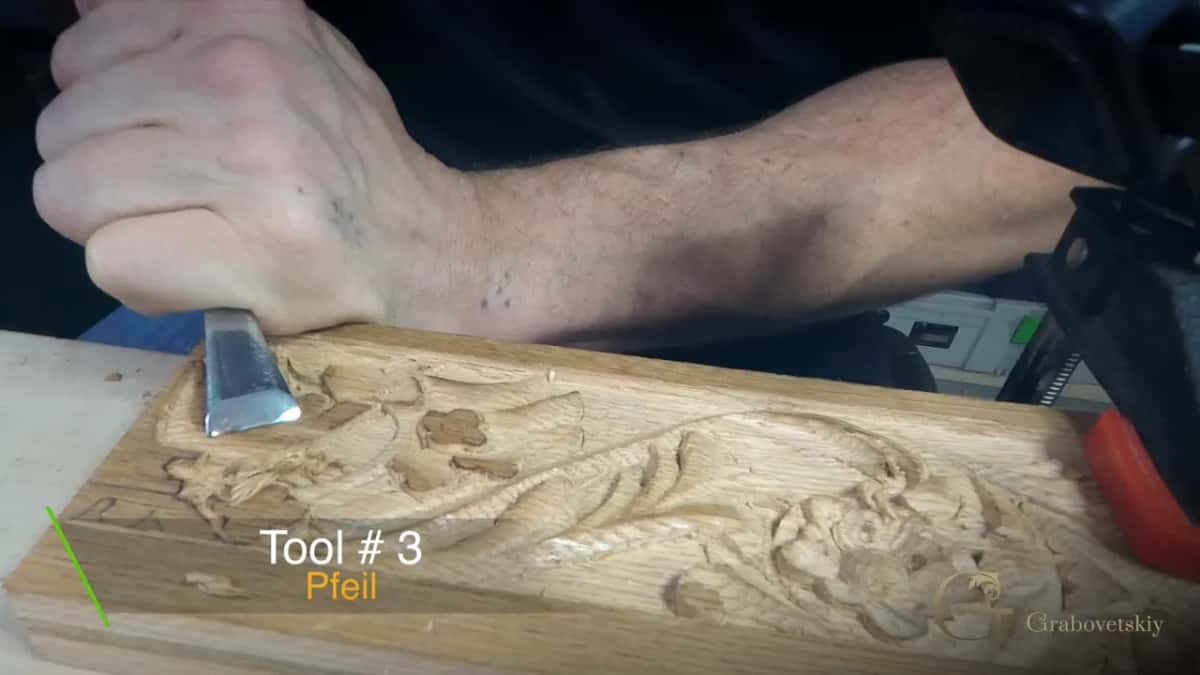
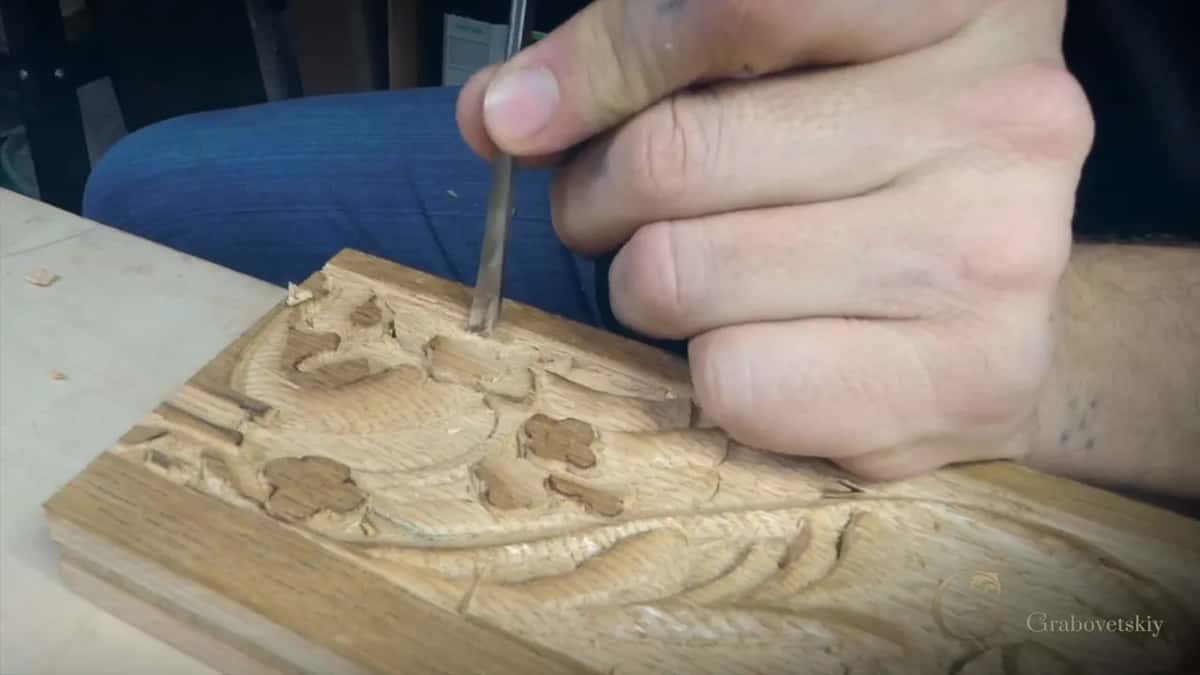
Workshop 16 itself has the slow kind of inch in it. A little piece of a flower snapped, and a flat chisel cleaned it up so it looked like I meant it. Then on one small section I worked a number 3 with slipping movements, not forcing, holding my hand back so it would not go too deep. I had to stay no deeper than the original carver went.
Next a small spot of background. Spots like that snap easy, I said, so I went little by little. Then a micro tool, for one tiny spot of ground. Later a leaf stood above its neighbor, and it had to come down just slightly.
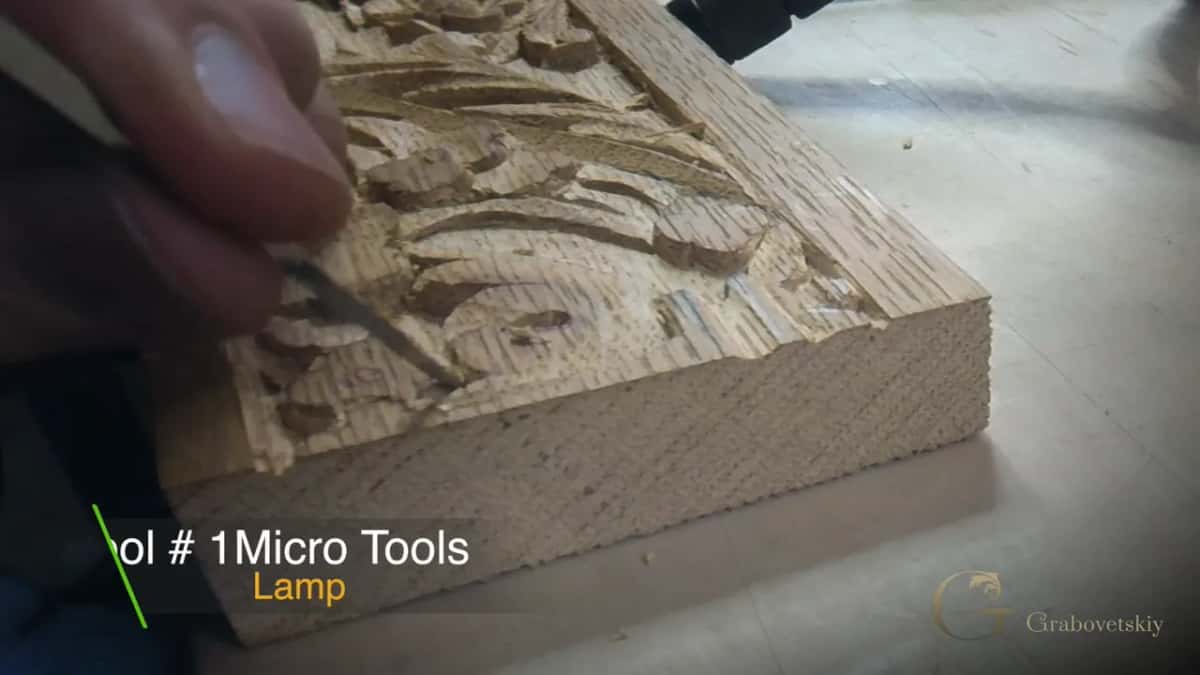
That April, live on camera, I put the same thing in hours. In one hour you can work on one small inch, and in another hour you can get the whole leaf done. That morning one leaf was going fast under my tools, and I said so.
Which carving can you price by the foot?
A molding, maybe. Egg and dart was the one I named on the apron. With some carving you probably could, like egg and darts on the moldings, because you know pretty much how long it takes, and you do that.
Most work is not like that. Every project is a little different, depth-wise and detail-wise, I said in 2020, and a sculpture like the carved lions I had shown takes absolutely different time.

How do you price wood carvings by the square inch?
You measure the carved surface in square inches and estimate from that, and during that stream I called it the way I love and use all the time. European customers get square centimeters instead.
Behind each square inch sit two things I already know. About how long a square inch takes me, and how much I need for my payments, the mortgage and a lot more than the mortgage. I want to keep something on the side as well. A few times a year I try to take my wife away, just the two of us, and that goes into the estimate too.
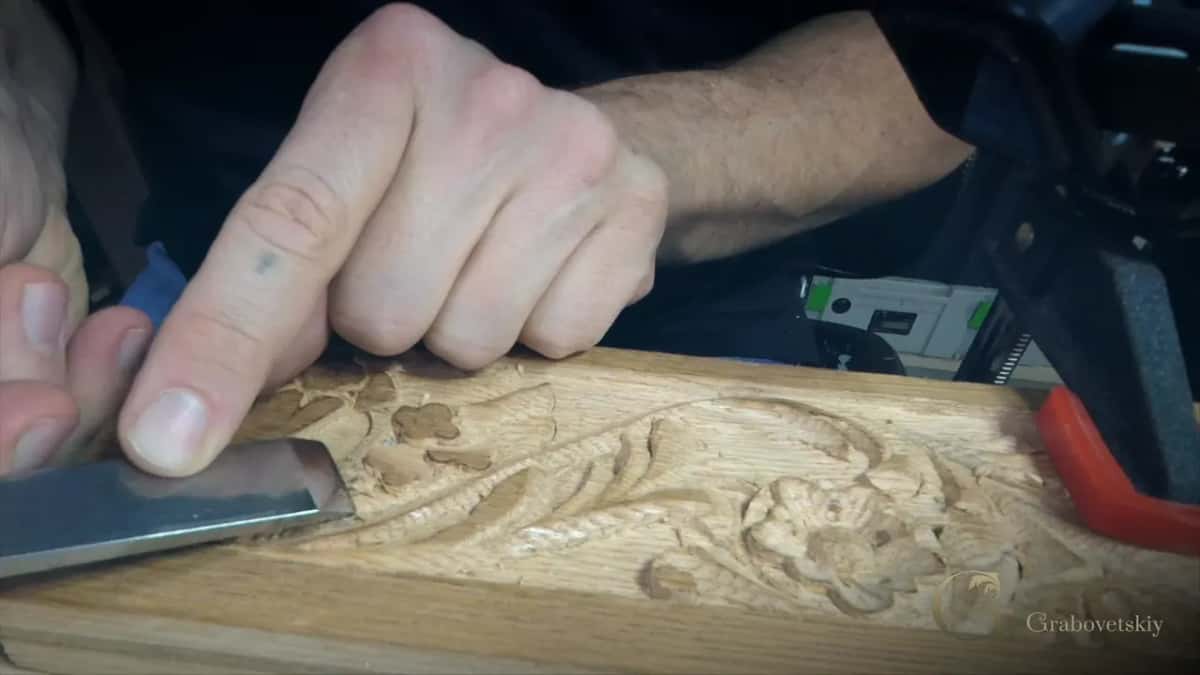
Then comes the depth. A square inch is only the surface, so I estimate how deep the carving goes as well. And if the work runs onto two faces, say a side and the top, each face gets its own square inches, and I take both into the price.
The whole stream is in the April 2020 live stream lesson, along with the other streams from that month.
Six ways I have put a number on carving
Side by side, each with the lesson or stream where I said it.
| Way | What I said | Where |
|---|---|---|
| Hours and material | the customer covers my time and covers my materials | the oak apron, workshop 16 |
| By square inch | surface and depth, a square centimeter for European customers | a live stream, April 2020 |
| Hours times rate | my time multiplied by the money I want hourly | Corinthian acanthus leaf, lesson 5 |
| Time plus margin | estimate the time and add about 10 to 15% | Roman acanthus leaf, lesson 9 |
| A minimum charge | two weeks' work, approximately, even for a day's job | same stream, about small rosettes |
| Paid drawing time | drawing time is charged, though not in the beginning | eighteen minutes into that stream |
Should material be billed separately from carving time?
Yes, on the apron and on the stream alike. On the apron the customer covered my material on top of my time. Someone in the chat on that stream asked if material plus time at an hourly rate, plus tax, was right. That all depends, I said. I charge for material separately, and material has a minimum of its own, because I have to buy a minimum of lumber from the lumberyard.
A smaller job that needs one specific wood carries that minimum too. I don't want to pay out of my own pocket and then sit on that wood.
Tax I left to each person's law. Different countries have different laws, so be really careful, I said. Tax on material, yes, and you pay those taxes to the government, which is normal and good practice. Whatever you charge for the hour depends on where you live, too: different countries, different states, and even inside the United States a different cost of living.
Why charge a minimum on a small carving?
Even a tiny job eats my time. If I take a project, I have to invest my time. A member of my school once asked how I could make money on one small rosette, like the rosettes I teach online. It was multiple rosettes, in fact. My answer was a minimum, not a minimum for the project, a minimum, period.
I count it as about two weeks of work, even if the job takes me one day. It works for me, and it works for my clients, I said, and I never had a client jump back from it.

It also keeps away the flood of small repairs. Someone sends an antique mirror and says it will take me only a couple of hours. Maybe so, but I still have to set everything up and get the wood. If they pay my minimum, I repair it. No problem.
Should a carver charge for the drawing?
I do, though I didn't at the beginning. Every job starts with the drawing, and that is a big dance between a client and me. I used to think drawing was just a step included in the carving project. Then I found it depends on the client, because some of them dance so much and so long.
One client of mine, a high-end woodworker himself, charged for his own drawing time. I asked him how much, and it was so much I thought maybe I should just draw and stop there. I love drawing. I enjoy carving a lot more.

Drawing is also where an hourly rate breaks down. How can you estimate the drawing process in hours, I asked on the stream, with all the back and forth, approval, disapproval and red marking? Some architects who never held a gouge think they know what they are asking for. My design course is Principles of Design in Wood Carving.
Is it wrong for a carver to charge by the hour?
No. If you want to charge by the hour, that is okay, I said on camera that morning, and then I asked how you estimate a huge project, a whole room, in hours. For me it doesn't work, because I really don't know exactly how many hours a job will take.
Other times I talked about it in hours myself. Lesson 16 of Carving Roman Acanthus Leaf has me calling it one of the approaches I use, estimating the time a piece will take and what I'd like per hour invested. Back in lesson 9 of the same course I said I estimate about how long a piece will take and add about 10 or 15% of time for cases you never know.
My Corinthian acanthus, lesson 5, put it as my time multiplied by the money I want per hour, and it's not much at all, I said. The same lesson has the machine side. A CNC machine can run longer than 20 hours on a piece, and by hand the same piece would take probably at least a month, and look a lot better. So you can't expect to pay a full-time carver the same money you would pay for the machine.
Your level counts as well. I told someone in that chat I didn't know their level, or what kind of projects they did, and both matter. A professional, a master in the craft, has to look at himself a little differently. How much would you love to pay yourself? That is how you name it.
What do you say when the budget is too small?
The real price, and then it's the client's call. On that 2020 stream I told about an architect who had emailed me not long before, with a photo of a 17th-century English mantel, one of the best chimney pieces I ever saw, asking what carving it would cost. Their budget was already set, he wrote, at $2,000, and I told him to go ahead and carve it himself. Honestly, that one was about half a year of work.
In the United States that money won't cover even one month of mortgage in most states, I said on the stream, never mind half a year. I gave him my real price for that much work, and up to that stream I had not heard back.
Then there is the question that hurts. Can you make it less detailed? That is the worst thing a carver can hear, I said, and it is really offensive. I won't take detail out because someone doesn't want to pay. You can always find somebody cheaper, and then expect what you are going to get.
Usually I don't negotiate either. There is nothing wrong with it, but a carving is not a product made cheaply in advance with room to come down. I give the price, and if they don't agree, I walk away. Once a client wanted a complicated custom design on a smaller budget. I told him I could cut him a couple inches, and when he asked for the same price anyway, that I have to pay my bills.
And no, you won't find my own figures here. Out of respect for my clients, I said on another stream that same April, I'm not going to tell you how much I'm charging.
Can one carving pay for a piece of land?
It did for me, once, and I said so on camera that April, one knife in my hand. That's not bragging. This one tool bought me two lots of land, three acres, in one month. It was a one-knife project, I charged enough, and I made it in one month. What a carver can earn over years is a wider question, and the blog post How to make money from wood carving, and how much takes that one on.
Can you measure a carved surface with a ruler? And could you jot down the hours a piece took? Then you can price the way I do, and the carving side is filmed at my bench in the eighteen apron workshops. Want to learn it beside me? Here is the school. If you have never held a gouge, start with First Cuts for Beginners, and when the tools question comes, All About Tools for Wood Carving.
How it's done
- Start with the drawing. Every job I take starts with a drawing, and I charge for that time.
- Count the square inches. I measure the carving's surface in square inches, or square centimeters for a European customer, on each face that gets carving.
- Add the depth. Surface alone is not the whole job. I estimate how deep it goes as well.
- Bill the material apart. Material goes separately, with a minimum, since I have to buy a minimum from the lumberyard.
- Keep a minimum. A one-day job still carries my minimum, which I count as two weeks, approximately.
- Give the price and hold it. Once I name the price, I hold it, and a client who won't pay it is not my client.
Frequently asked questions
Do you charge for drawing a carving design?
I do, though not in the beginning, when I thought drawing was simply part of the carving project and did not charge for it. Then I found it depends on the client, since some go back and forth for a long time. I said so on an April 2020 stream.
What is a minimum charge for wood carving?
A minimum is the least I take for any job, whatever its size. On an April 2020 stream I put mine at about two weeks of work, even if the carving takes me one day. It also keeps away a flood of small repair jobs.
Does a price per foot work for carving?
Most carving, no. You might carve an inch (25 mm) one day and a foot (30 cm) the next, as I put it in workshop 16 on the apron. Moldings are different. Egg and dart was the example I gave, since you know pretty much how long it takes.
What to carve next