
Alexander Grabovetskiy, woodcarver, School of Woodcarving · Published 2026
Were wood carvers well paid in the past?
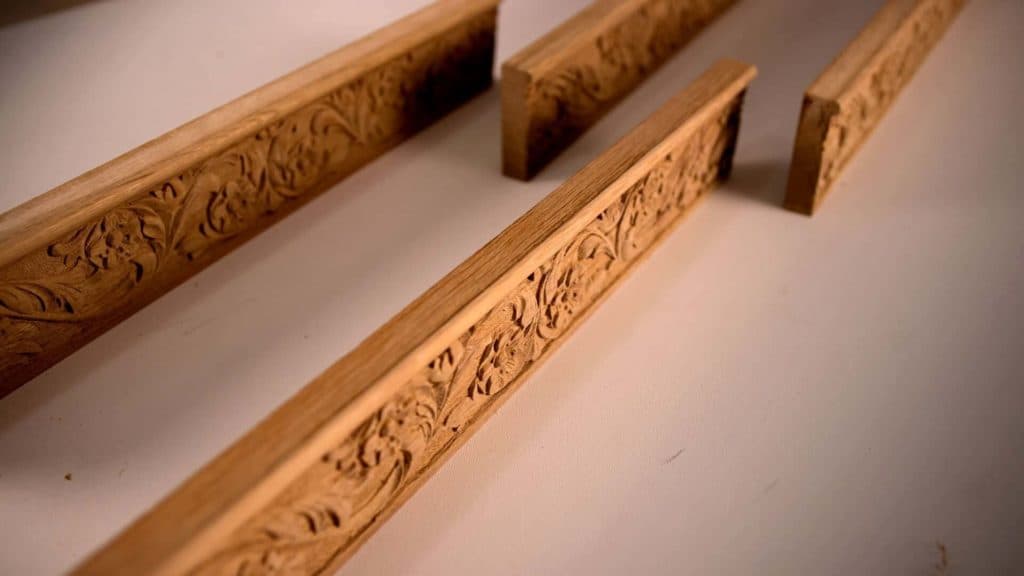
Quick answer: Pay for old wood carvers is a mixed story, and I told it while I cleaned four oak pieces of a table apron. In England, I read, a carver could earn 30 or 40 times what a man in the fields earned. Not every carver got that. Some of them never made a fortune.
The history of wood carving is a story of carvers who were paid really well and of carvers who never made a fortune, and I said both on camera. At the time I was cleaning four oak pieces for a dining table apron, in workshop 17 of Carving Dining Table Apron. The books on English carving mention how much those men were paid, I told you. And one carver in Germany lived like some royalty.
You love this work, or you would not be reading a page about old carvers and their money. So sooner or later the money question comes up. Did anybody ever live well from a gouge and a mallet? By the end you will know which carvers got rich in my telling, which ones waited for their money, and who pays for carving today.
Old carvers and their pay, the short version
- English books on carving, as I read them, put a carver at thirty or forty times a field worker's pay.
- Germany had fifty good years for carvers, by my count on camera.
- Riemenschneider grew wealthy from carving alone.
- Chippendale, as I told it, was not paid enough by the rich, so not every carver did well.
- A guild apprentice, as I described it, worked seven years before he started carving.
- Today the clients who want carving are mostly richer people who buy antiques and want pieces to match.
Were wood carvers well paid, by the books I read?
Some were, and I say it carefully, because I am passing on what I read. When you read books about wood carving, especially carving in England, they mention how much those people were paid. I called it a really royal trade on camera. A wood carver could actually make a fortune, I said, in England and in Germany too.
Next came the comparison. Take a man working the fields out on the countryside. A wood carver, I said, would be paid 30, 40 times more than him. A minute later I said it again, this time about wages.
I told nearly the same story in the first workshop of the antique style rosette. There I put the good years in the 15th century and in the 17th, and I said 40 times more than people who used to work on the fields. Not always, of course. There was a time, I said, when that wasn't the case.
Who was Tilman Riemenschneider in the history of wood carving?
A German carver I really admire. Grinling Gibbons is another, I said while carving flowers on a furniture panel. On the apron I named Riemenschneider as one of the famous German carvers. He became famous, I said. He was also making really good money with just wood carving, and he was able to live like some royalty.
Germany's good years were short. More specific, I said, it was only 50 years of German wood carving, from 1475 to 1525. Right before the Reformation, a glorious time for German wood carvers.
Wikipedia on Riemenschneider says he was active in Würzburg from 1483, a master in limewood and stone, and a member of the town council. The German Peasants War ran from 1524 to 1525, the last years of the span I gave.
On a live stream in April 2020 the big question was whether you can make money with your craft at all. Could one project pay off your house? Is there such a thing? To answer it I jumped to history, and I came back to him. We know him because he left a lot of beautiful carving in the churches, and he carved for churches most of the time. He is also known as a really wealthy man, I said. He made his fortune just by carving wood.
Workshop 18 of the Venice Room is where I set Germany beside Italy. Germany at that time had no skilled stone carvers, I said, but a lot of skilled wood carvers, and they carved a lot for the churches before the Reformation, before Martin Luther. They used a lot of lime wood, the same wood we use today.
I hedged it once, in Venice Room workshop 65. Back then a carver had to go and live where the project was, sometimes for years in one place. As far as I know, I said, Riemenschneider was paid really well. Nobody can check with him now.
Did every old wood carver get rich?
Far from it, and I said so in the same breath. Right after I said England was the same, I added that not all of them did well, of course, and some of them never got rich. But some were paid really good.
The rosette workshop also tells what changed in England. Royalty, the main customers of those carvers, decided not to pay right away. The price stayed the same. They just didn't pay. One carver I know, I said, did not get paid for two years for his commission. And sometimes today's customers seem to copy what happened in England back then.
Thomas Chippendale is the other side of it. In the Tray of Blessing, lesson 8, somebody called it cheap carving. Nothing is cheap about carving, I said, and I brought up Chippendale. He always struggled to pay his guys, because those rich guys didn't pay him enough. The April 2020 live stream told the same story. He did beautiful work, and he never was paid well enough.
Gibbons came out better. He got a royal title because of wood carving, he was paid well, and lots of guys worked in his big shop. Some clients gave him trouble with payments too. Still, I could not say he was not successful. If he hadn't made money carving, he could not have paid the people in his shop, and I mean wood carvers, besides the apprentices who swept the floor.
That stream also covered how a big shop like his worked, a wood carving guild, to be exact, with different levels of carvers under one roof. Level one were the rough carvers, chopping big chunks of wood off really quickly. Level two did more or less the outlining, the best shape around. Level three was the detail, the master himself, Gibbons, with a knife or a gouge, whatever he thought was best for the job, and he cleaned everything.
Otherwise he could not have produced so many projects. It's impossible. But he had to pay his workers, and those of you in business know employees can cost you.
Wikipedia's page on Gibbons lists his work at Windsor Castle, Hampton Court Palace and St Paul's Cathedral.
Gibbons is a whole course of mine, the Grinling Gibbons class in Maine, so here he gets this one paragraph.
Here are the names side by side, the way I gave them across my lessons.
| Carver | Money | Lesson |
|---|---|---|
| Tilman Riemenschneider, Germany | made really good money with just wood carving | apron workshop 17 talk |
| Nicholas Stone, England | charged a lot, owned five houses, no mortgage | rosette course, workshop 1 |
| Grinling Gibbons, England | royal title, paid well, ran a big shop | Tray of Blessing 8 |
| Thomas Chippendale, England | did beautiful work, but the rich underpaid him | tray, plus April livestream |
| English wood carvers | 30, 40 times what field workers were paid | books I read, apron |
| A late payment | a carver waited two years for his commission | rosette workshop, same story |
What could a carver in England own?
Five houses, in one story I told. In my rosette course I named Nicholas Stone, from the end of the 16th century and the beginning of the 17th. He was a wood carver and a stone carver, a master mason, and he charged a lot for his carving. He owned five houses.
And all of them paid for, I said, because the banking system wasn't set up like today. He couldn't take a mortgage, so it was five houses for cash, just from carving wood. He wasn't that old, either. Back then, in England at least, they didn't live too long, and men usually in their 40s already had the houses.
Wikipedia on Nicholas Stone calls him an English sculptor and architect, made master-mason to James I in 1619 and to Charles I in 1626.

Was Master Wood Carver a real title?
In England it was, I said. There used to be a title, Master Carpenter, and a Master Carpenter could build things from wood, and most of them knew how to carve as well. Master Wood Carver was a separate title, also somewhat royal. If you were a carpenter, you would have some ability to carve, and that was expected.
People write to me about it. On another live stream that April, I said you have to actually earn that title, like a royalty in the woodworking world. Some emails asked whether a two week course would do it, or one.
I also read, in a book about English traditions, that almost every carpenter at least knew how to use a carpenter's chisel for carving. You can do a lot with one flat chisel, a number 1. Of course, you are limited. I like a lot of tools. You don't have to buy all the tools I have, but the more you have, the more you could do.
Which of the four old carving trades was closest to the eye?
Furniture. In the European tradition, British included, I named four kinds of wood carvers. Ship carvers worked rough for big ships, heads and mythical creatures, and they did not pay much attention to detail. Coach carvers, the men who carved for buggies and the coaches of their day, carved nicer. But the road meant dirt and some abuse, and they knew it.
A carved figurehead on the bow of a ship is one example of the first trade's work.
House carvers, what we call architectural carvers today, were really detailed men. Picture frames, egg and dart, rosettes. Still, a lot of their work sat up high, like crown molding, where people don't look close, so they could leave some spots rough.
Furniture carvers were the fourth, really detail oriented men. Furniture is really close to your eyes. Somebody can kneel down and look at a table apron, and if it's a leg, it's noticeable all the time. Furniture carving was somewhat more royal, I said. Today there are really just two major kinds left, I said earlier in the same video.
How did an apprentice learn the trade back then?
By watching, for years. On a questions and answers live stream I described a guild, one main man and a lot of apprentices, working for seven years before they actually start carving. An apprenticeship like that was not lectures. They were in the shop daily, watching the process and how the masters did the work.

I said it on the Lily Box, part 6 too. A place where wood carvers worked in the 17th, 18th or 19th century, a guild or something, and apprentices who would just watch what the master does. When someone is working in front of you, you get a much better idea how it's done, how it's built.
One book I read even says wood carving is not a craft and not an art. It's a trade. I passed that on, on the apron, as something interesting to know.
Who pays for carving now?
Mostly the richer ones, and I was honest about that on camera. I started to say more and more people are looking for that kind of furniture. Then I stopped myself. Not necessarily true. It depends on the level of your clients.
Common people, in a good way, around 90 percent of people alive, don't really care about carving inside their houses. I have some clients I can't name, it's private, millionaires and billionaires, and they love wood carving. They are more traditional than modern. They buy a lot of antique furniture, and they would love to match more pieces in their houses.
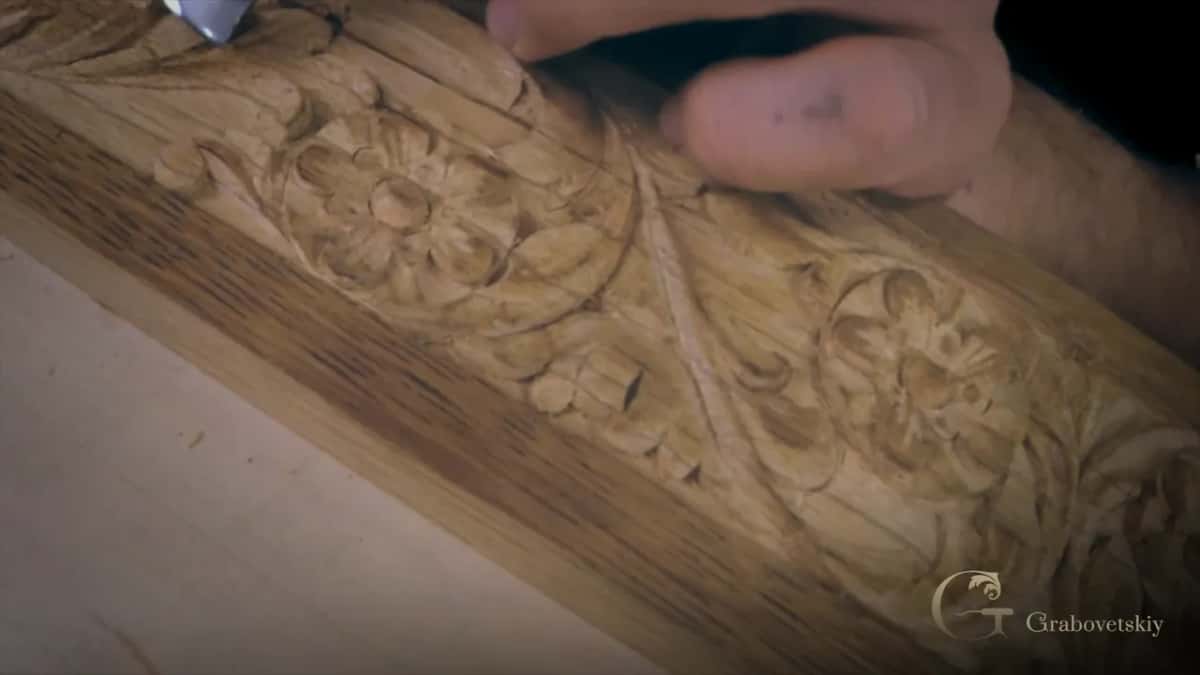
A client has a say, too. On this apron I first said I had finished all four pieces. Two minutes later I corrected myself. I finished five. After the first one I spoke with my client, and we decided to change the design a little. The main idea is the same, I said.
So it's a good skill to learn, I said. Once you learn it, you'd be surprised how many more clients God will send your way. Good for business, too.

What carving pays today has its own page, how much money you can make from wood carving. The apron course itself ends with its final assessment.
Would you like your hands to know what those old furniture carvers knew? And from a man who still carves for clients? Then the apron lesson is a good place to start, every workshop of it, and tuition to the school is here when you are ready.
How it's done
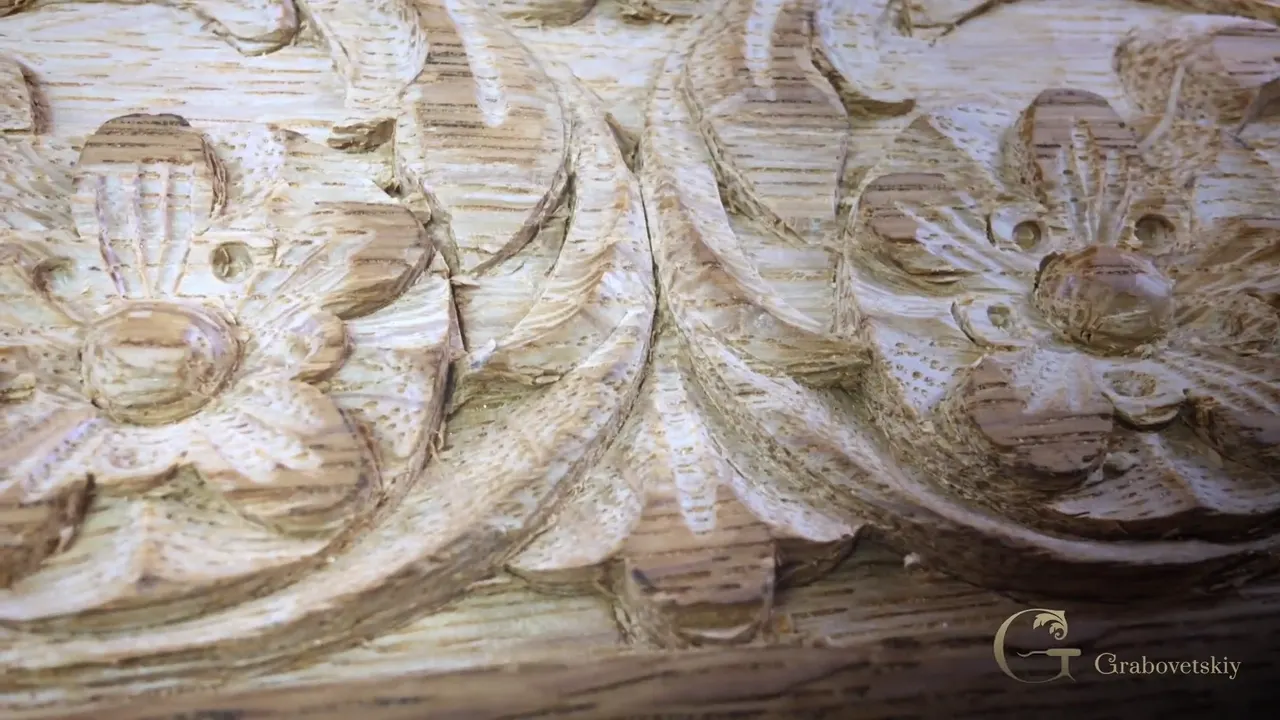
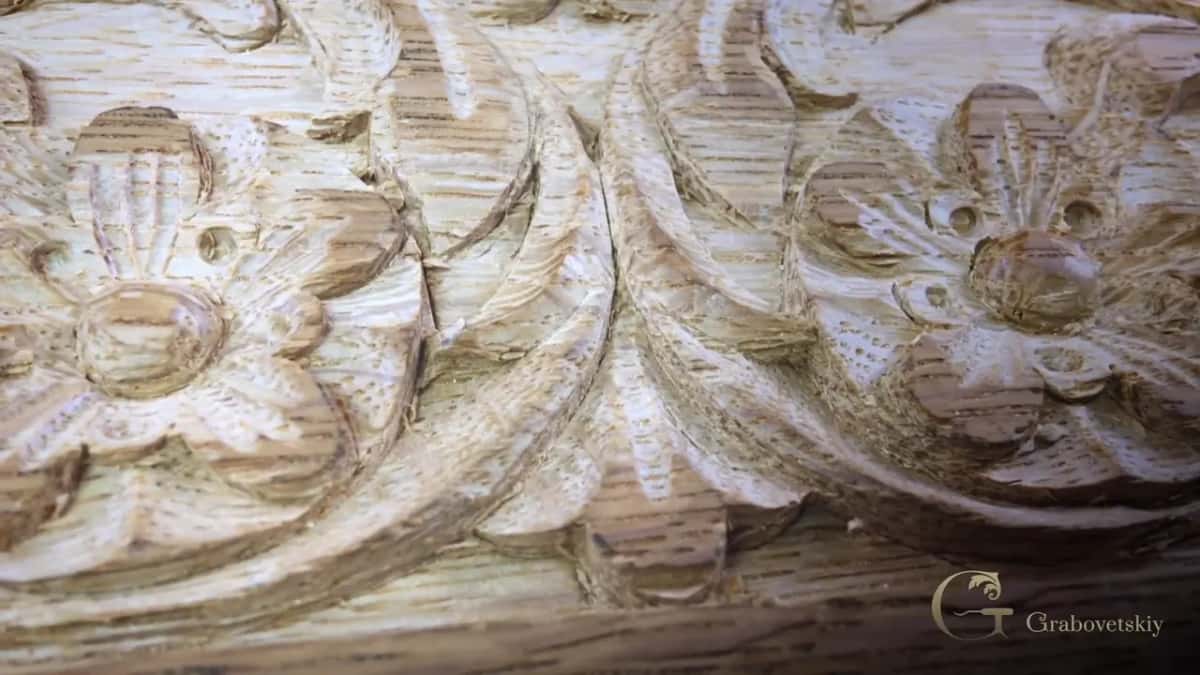
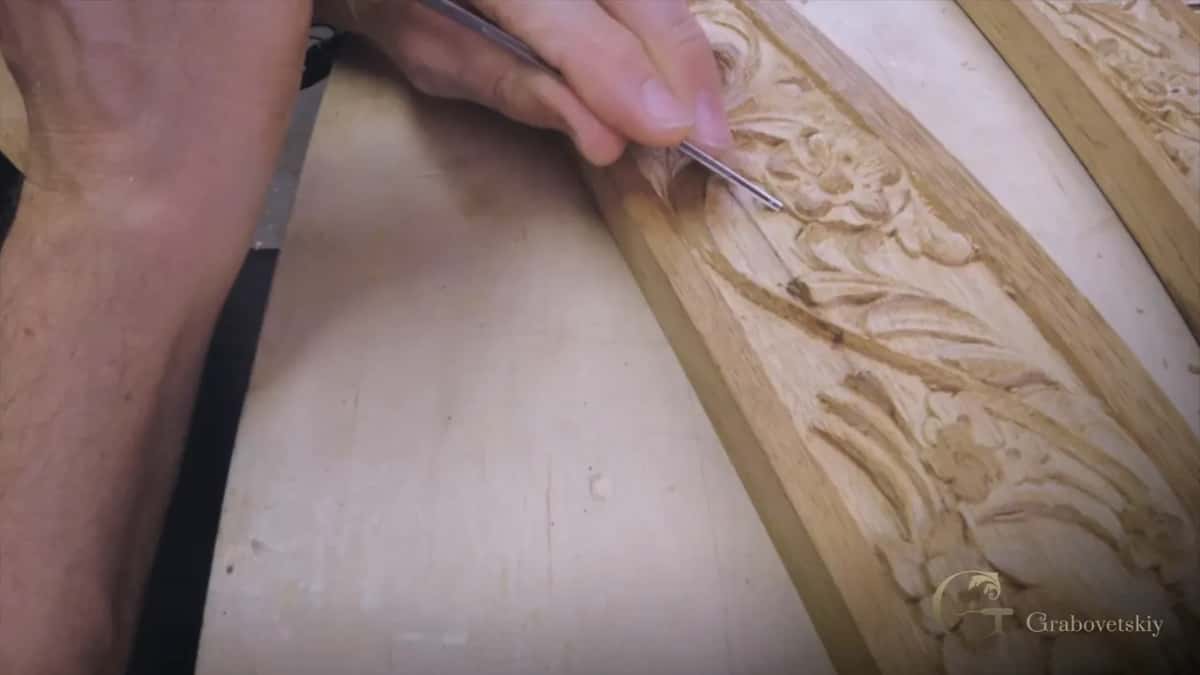
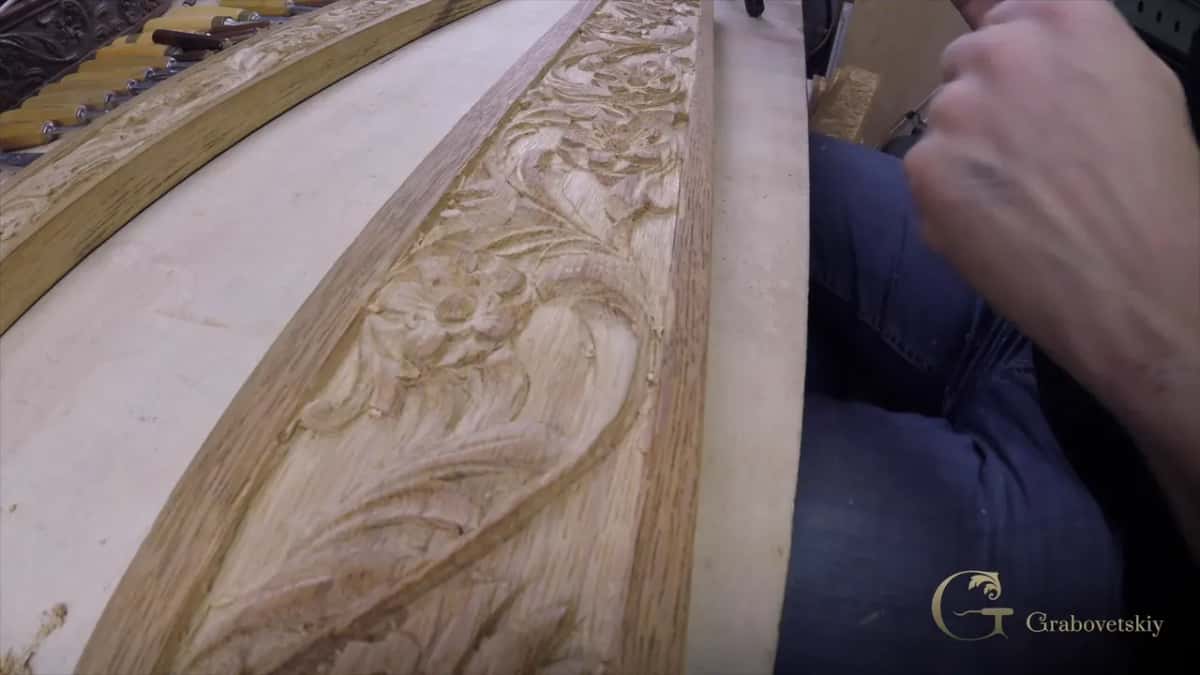
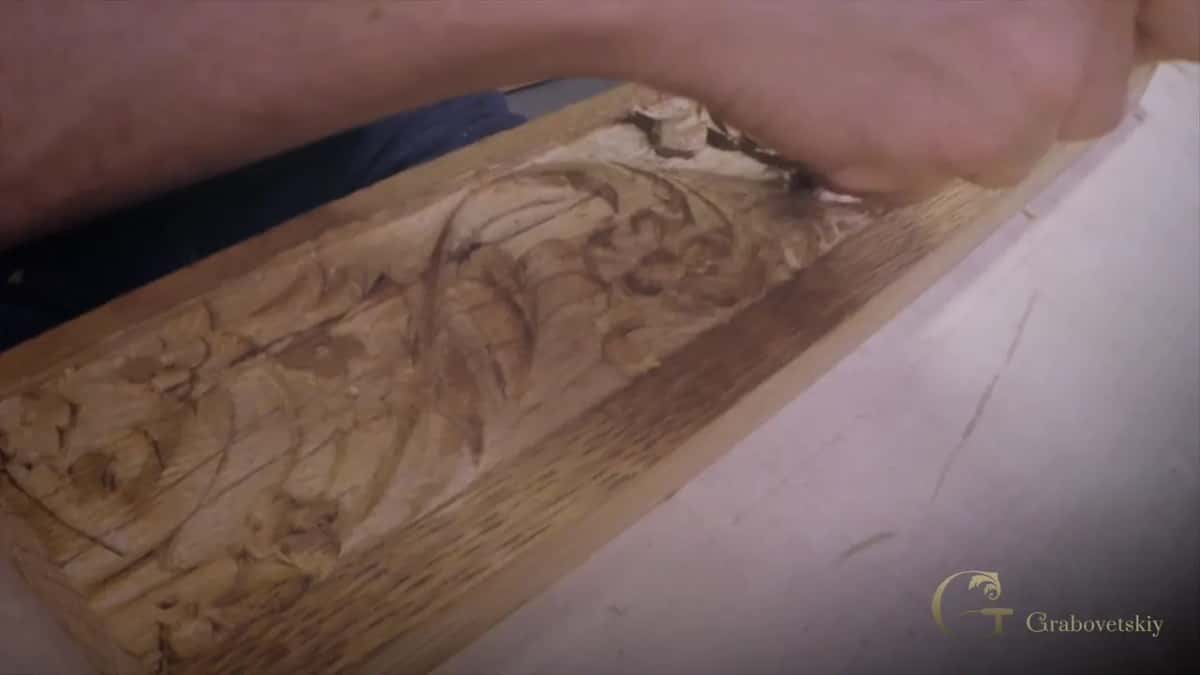
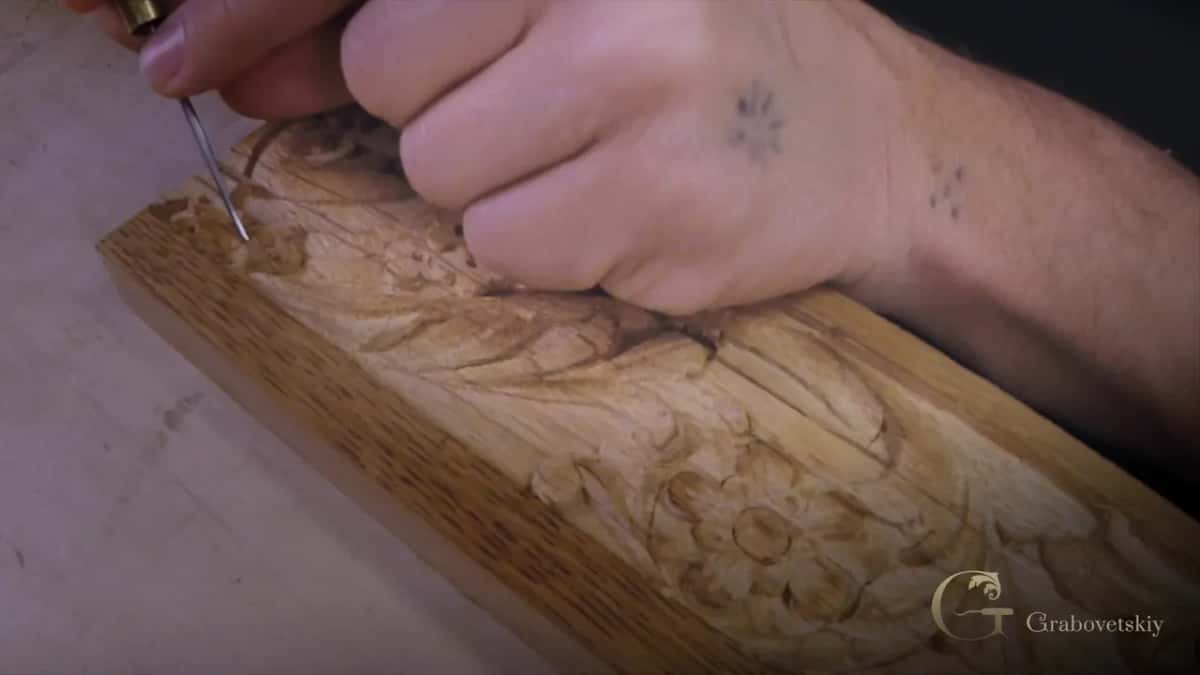
- Finish the carving before cleaning. While I carved the pieces I didn't clean them, so the leftovers from roughing out stayed in until all the carving was done.
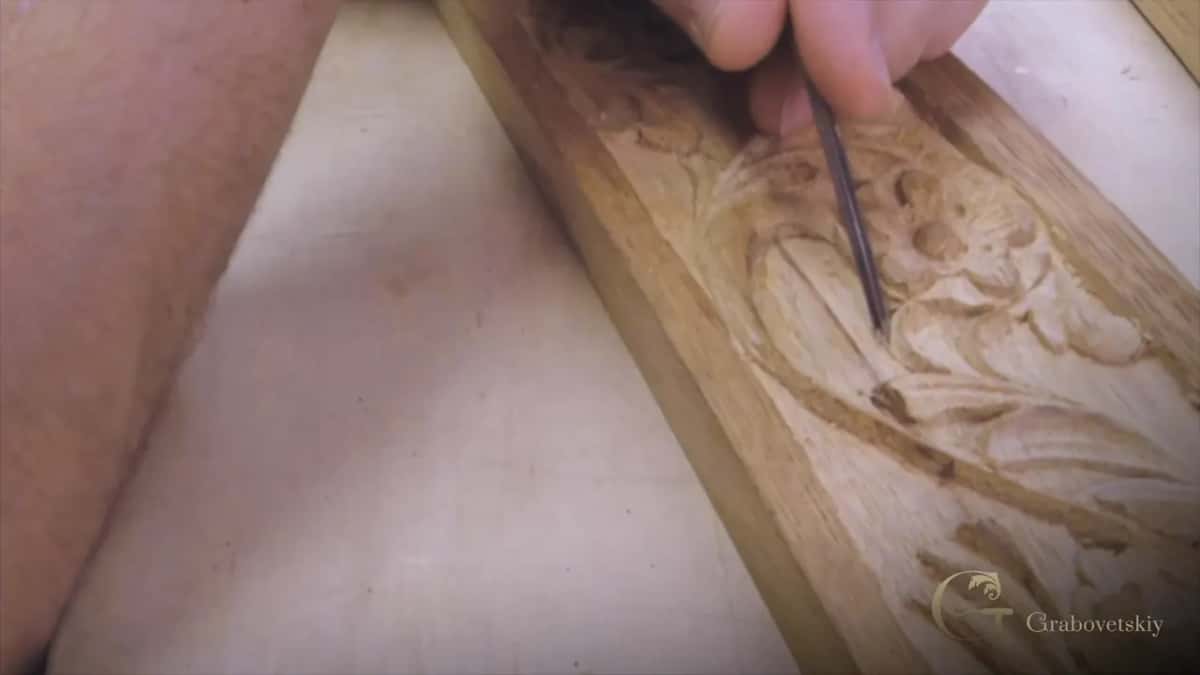
- Look close for chips. I looked close inside the carving and found small chips still sitting in some areas.
- Clean before the background. Cleaning comes first, before I work on the background.
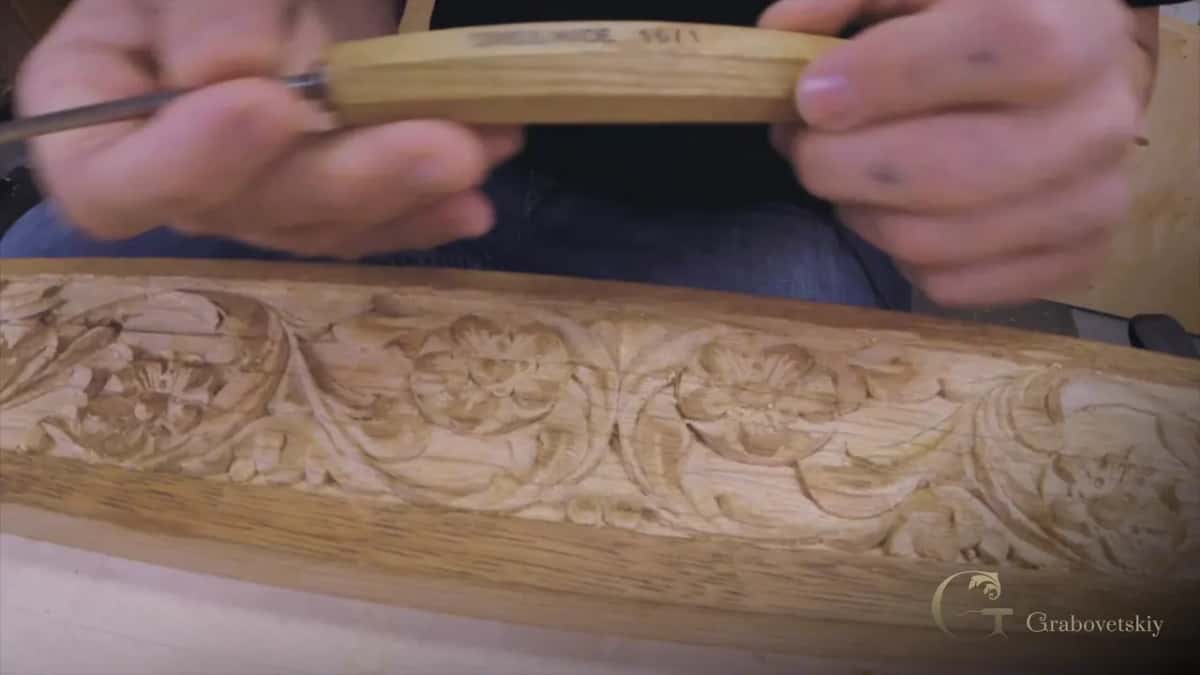
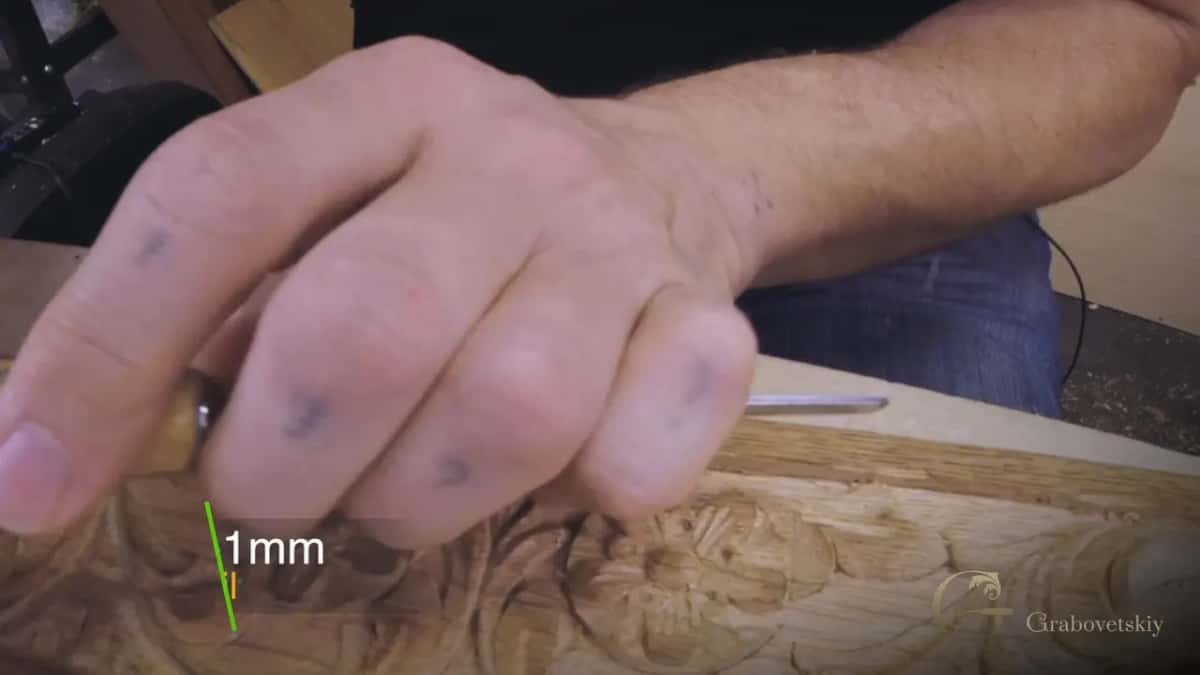
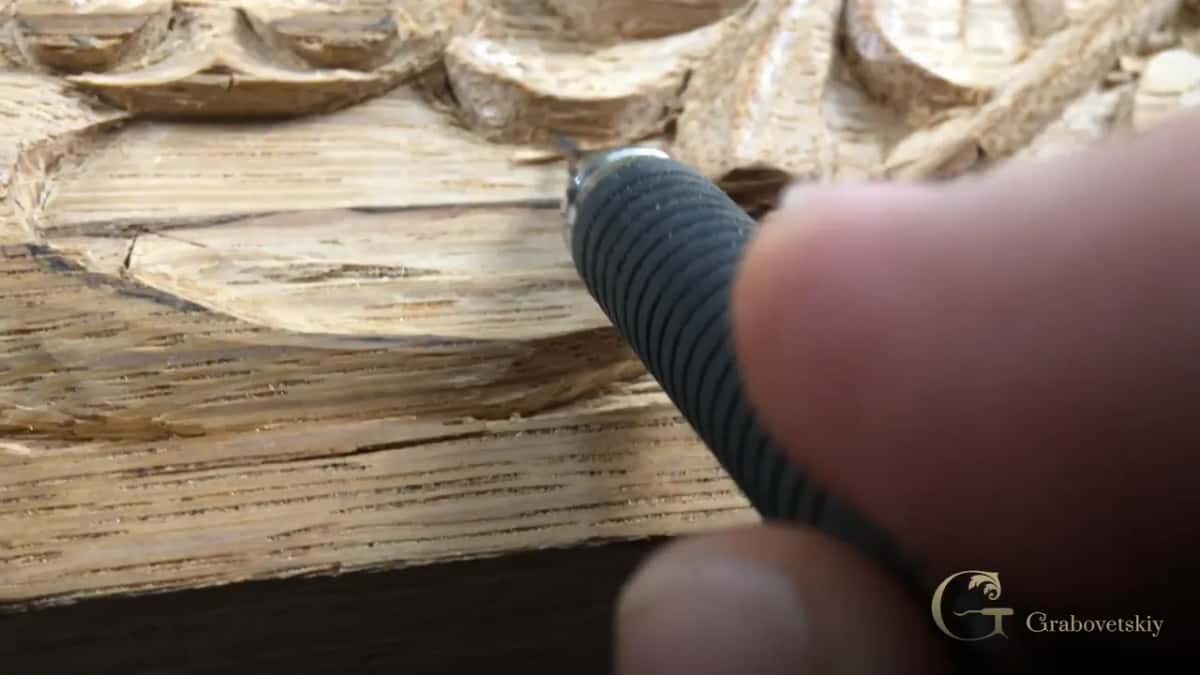
- Go around with a tiny V tool. My V tool here is a number 16, only one millimeter (0.04 in). Really close, working my way around. Somewhat like undercutting, but it's not, just cleaning out the carving.
- Leave it looking hand-done. I didn't get too crazy about it, because the work still has to look hand-done. A few small chips left behind are not a big deal, and the original carver left some spots too.
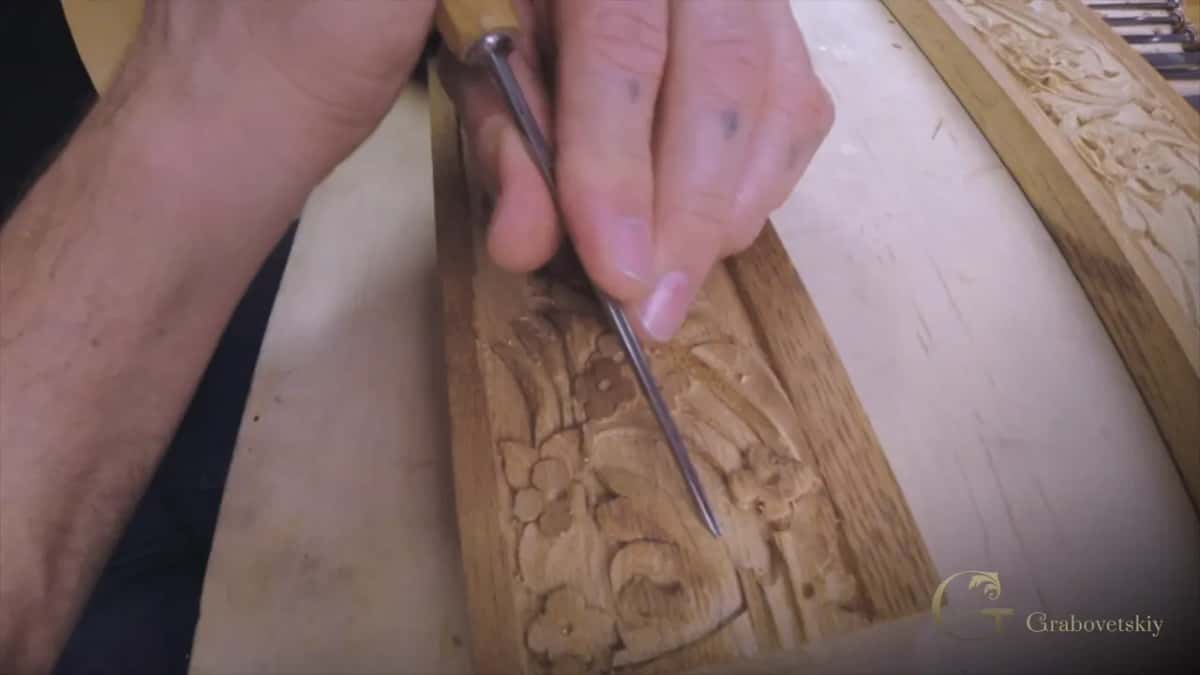
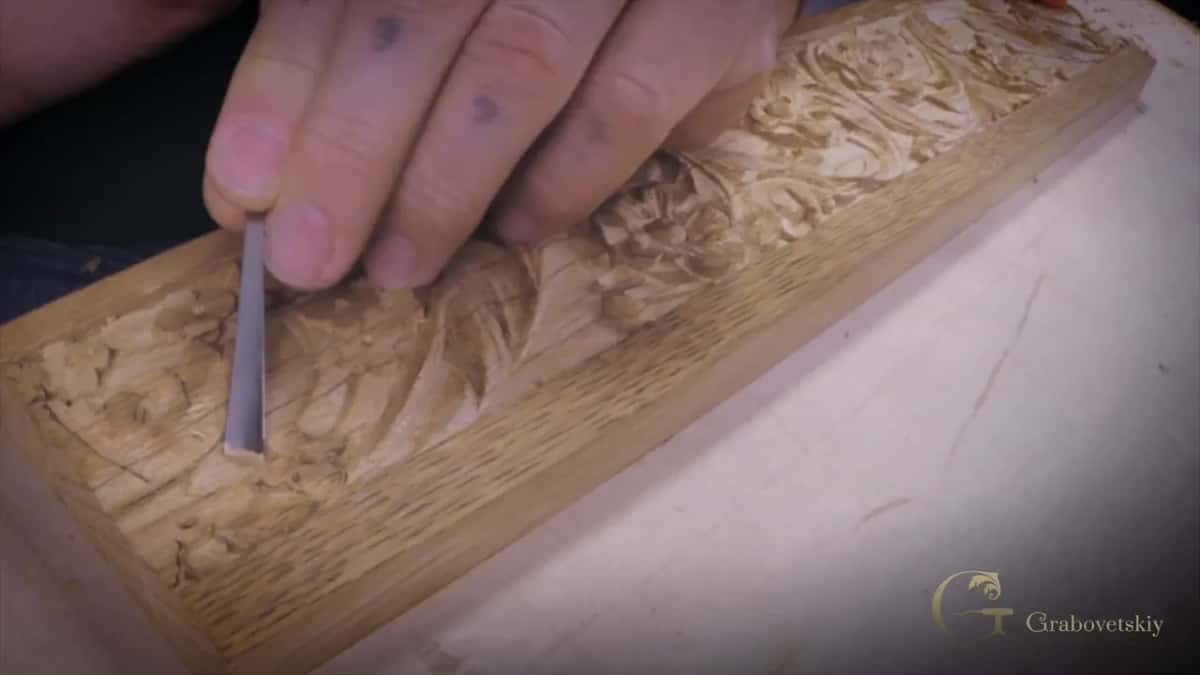
- Touch up with a number 3. For some areas I picked up a number 3 gouge and cleaned up a little bit more.
Frequently asked questions
How much more did a wood carver earn than a farm worker?
Thirty or forty times more, going by the books on English carving I read. My comparison was a man working the fields. In a rosette workshop I gave the same idea as forty times.
Why do carvers still talk about Tilman Riemenschneider?
Riemenschneider left a lot of beautiful carving in the churches, and that is how we know the name, as I put it on a live stream. A really wealthy man, I said, with a fortune made just by carving wood. The apron video counts that name among the famous German carvers.
Did old wood carvers always get paid on time?
Royalty, their main customers in England, at some point decided not to pay right away, though the price did not change. One carver I know went unpaid for two years on a commission. Chippendale, as I told it, always struggled to pay the guys in that shop, since rich clients did not pay enough.
What to carve next