September 6, 2024 · Updated August 25, 2026
By Alexander Grabovetskiy — Master Woodcarver · Founder, School of Wood Carving · 20 min read
What are the best types of wood in Australia for beginners to practice carving?
The best types of wood in Australia are the local boards that behave well under a sharp gouge, and I say that because my students in Australia cannot buy basswood. They go to European stores and ship the wood in. Everything after that is about the boards already near you.
You went hunting for basswood because every carving video says basswood, and back came a shipping quote from the far side of the world. Somebody asked me about wood on a livestream in April 2020. I am in Florida, and in Florida you really cannot find any basswood either. Besides, I am picky about basswood.
Now the part where I can help. Over forty years of carving for a living taught me how a wood answers an edge, and I buy basswood by the truckload from a lumberyard in Orlando. But no Australian species has ever turned up in a lesson of mine. Not one. So every Australian timber below arrives with its source named in the same sentence.
Basswood first, and the four names it wears. Then jelutong, which I mentioned once and barely know. After that a sourced table of Australian timbers, five checks for a board you have never met, and why a denser board changes the drawing.
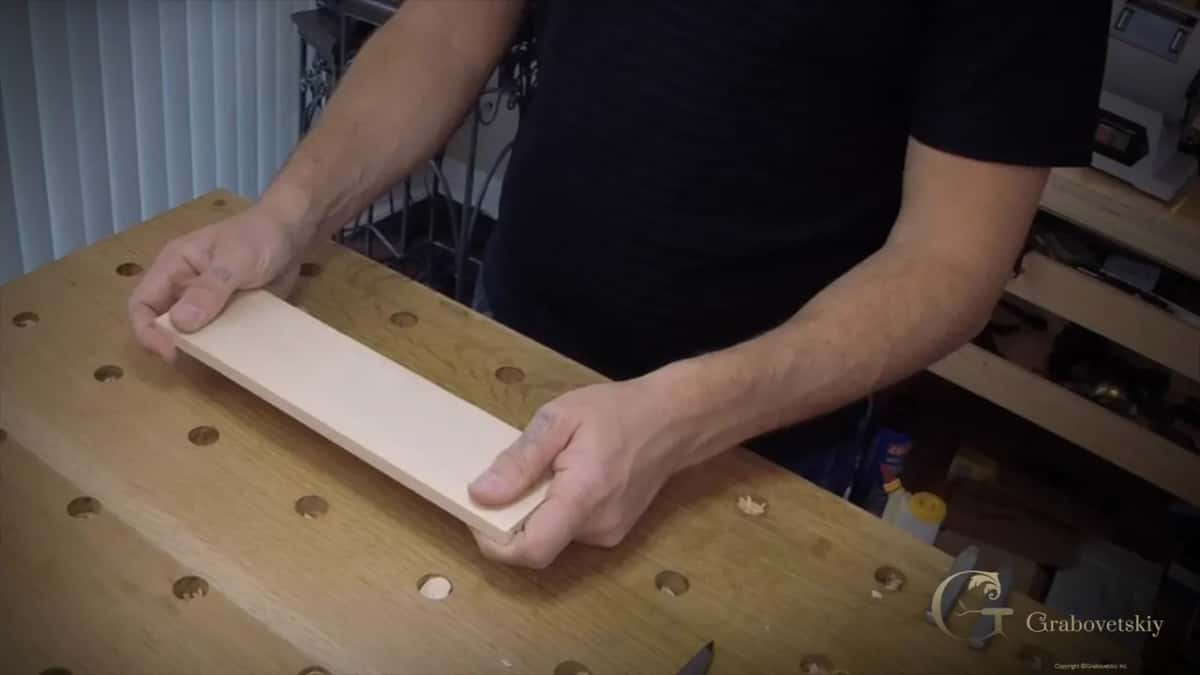
A narrow pale plank going down on the bench.
- Basswood, limewood, linden and lipa are one wood wearing four names.
- Nobody I teach down there can buy it, so they pay freight from Europe.
- Jelutong is the only other wood I named that day, and I said nothing else about it.
- A denser board does not mean a harder day. It means a different drawing.
- Before a plank of anything local comes home with you, carve a scrap and watch whether it splits.
Why can you not buy basswood in Australia?
My students in Australia and New Zealand cannot get basswood, so they order from European stores and pay to bring it over. True of the members I had down there in April 2020.
The wood itself goes by four names. Basswood, limewood, linden wood, lipa. Pretty much the same wood under all four labels. I have given that list four different ways on four different days, sometimes handing lime to America and linden to Europe, sometimes the reverse, so I will not pretend the country labels are tidy. One wood, several names, and the wood I hand a beginner.
Latin sorts out what common names cannot. Tilia is the Latin word for basswood, and it is what you land on looking up American basswood. But it is a little different, by the way. Even in the States, eastern basswood against western basswood carves differently, with different properties and sometimes different colors. The Tilia genus page on Wikipedia shows how many species hide there.
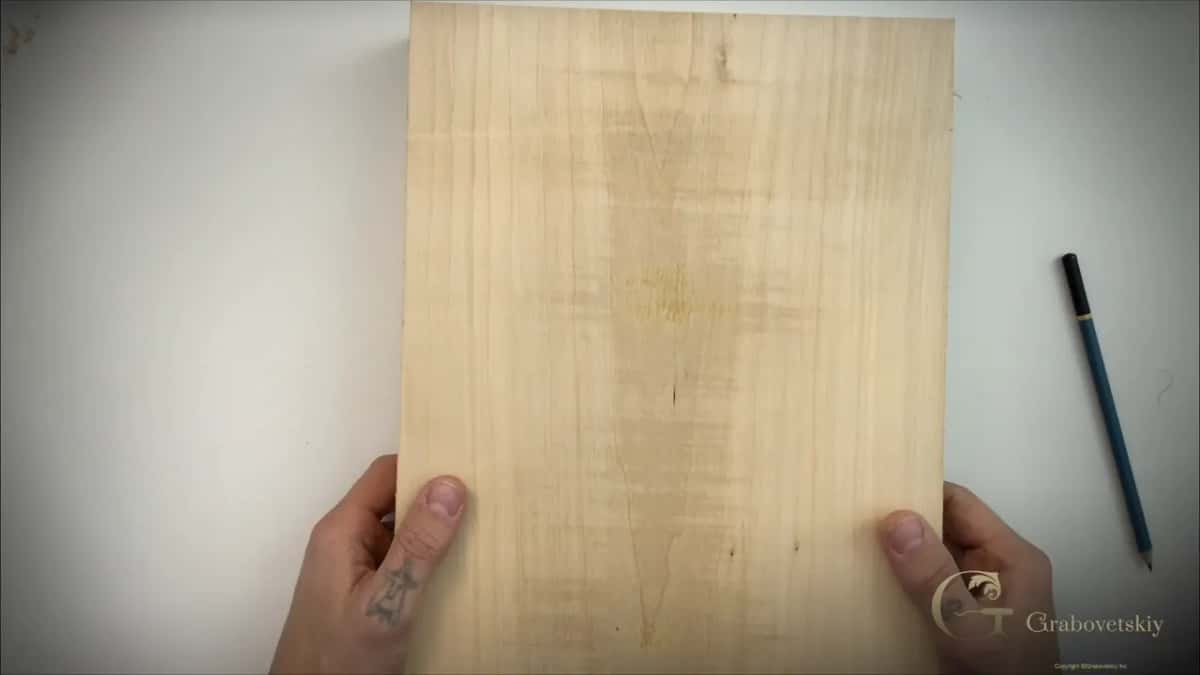
Basswood held up against the wall, pale and quiet.
Here an outside source earns its place. Look up the Wood Database entry for basswood and you get Tilia americana at 410 lbf on the Janka scale, plus a line calling it perhaps one of the most suitable wood species for hand carving. Their European lime page repeats that sentence and gives 700 lbf. Two woods I call one wood, and the number nearly doubles.
Read the gap the way I read it. A label is a rough guide and the board in your hand is the fact. Their lime page adds one more line worth taping to a wall. Sharp cutters must be used, or the surface comes up fuzzy.
Softness is not what makes basswood good. Kind of soft, sure, though other woods are soft too. There is grain in it, but the grain is invisible, and invisible grain lets you carve any curvature you like without the wood arguing back. Some people call it a queen of the woods.
David Esterly wrote a whole book about carving limewood, The Lost Carving, and he put this better than I could.
But limewood is a patrician medium that, treated correctly, really will be an obedient servant.
An obedient servant. Freight buys exactly that, and I understand it.
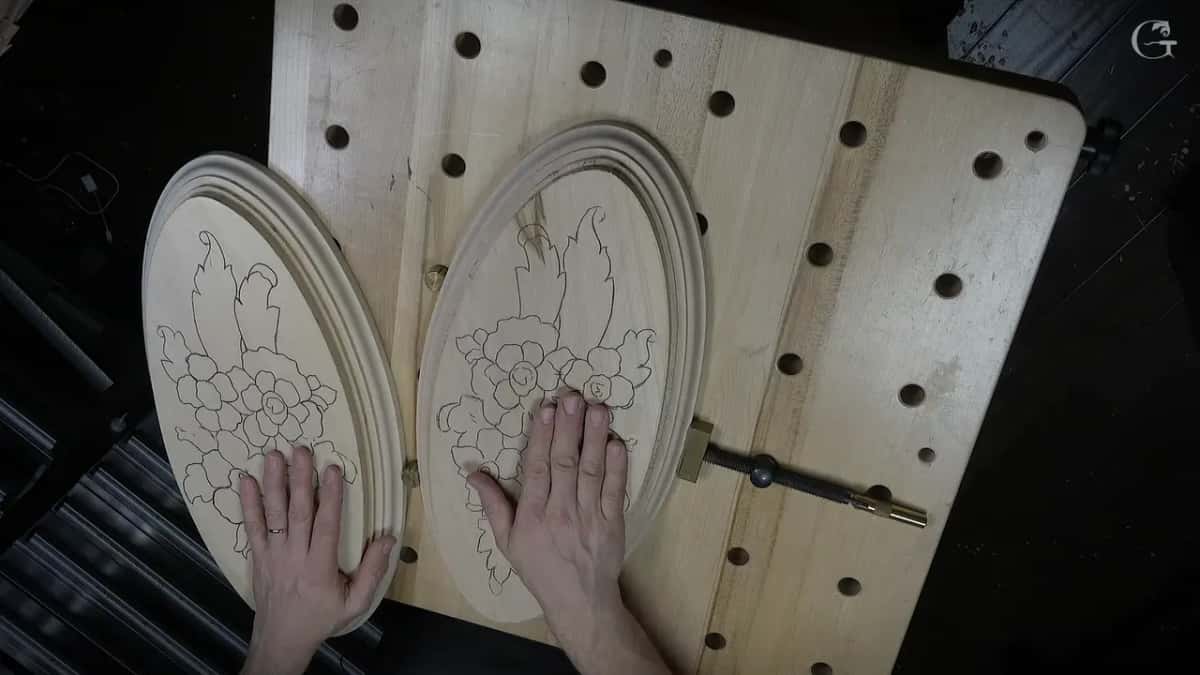
The same flower traced on two pale blanks.
A short video of mine is called What is the best wood for Wood Carving project. Eighty six seconds, about picking a species, and it says nothing about Australia.
My long species answer lives in what kind of wood to use for hand carving. Our own library has a basswood page, and Britain gets the best woods in the UK for a beginner.
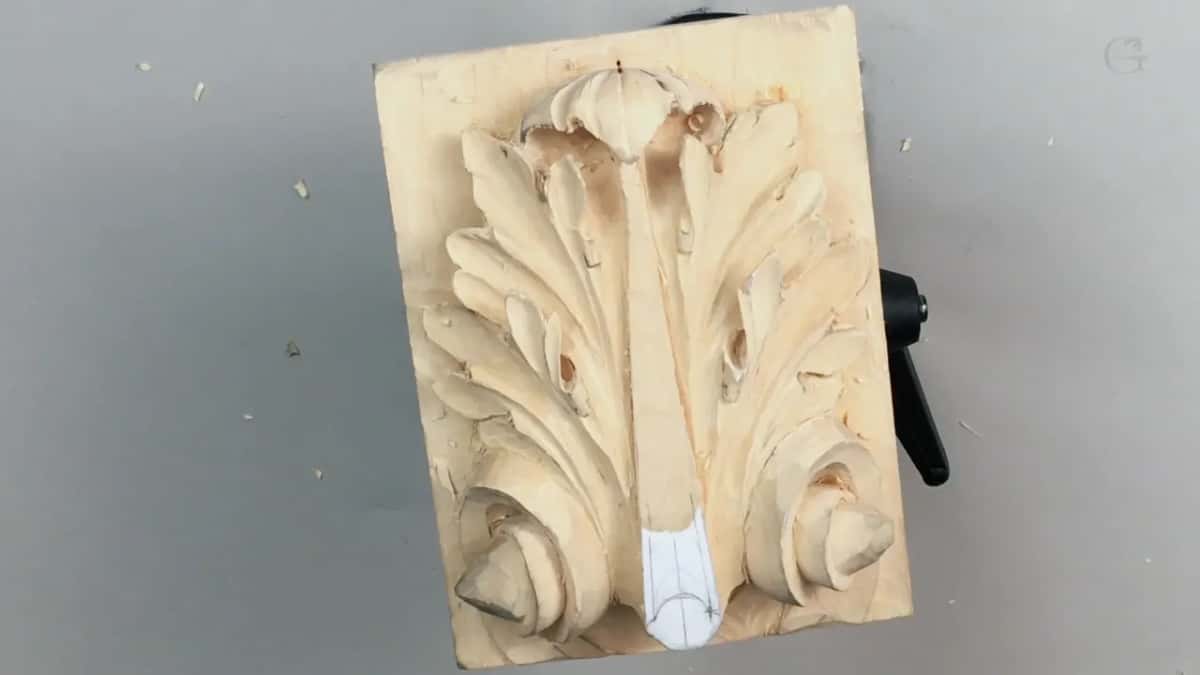
One acanthus leaf in a small pale board.
What did I actually say about jelutong?
One sentence, on one livestream, and I hedged my own pronunciation inside it. It came up right after the basswood answer. Jelutong, I think I am pronouncing that correctly, is another wood for wood carving. Then I moved on.
That is the whole of what I have ever said about it. I will not tell you how it feels, what it costs, how it holds an edge, or whether you will like it, because I do not know and I carve for a living. Talking about wood I have never had under a gouge is how bad advice gets started.
Pointing at somebody who measured it, though, I can do. Over at the Wood Database jelutong page the wood is Dyera costulata, ranging through Malaysia, Borneo and other parts of southeast Asia. Janka 390 lbf. Very easy to work, they say, though gum builds up on the tools and the wood carries a sour smell while it is being worked.
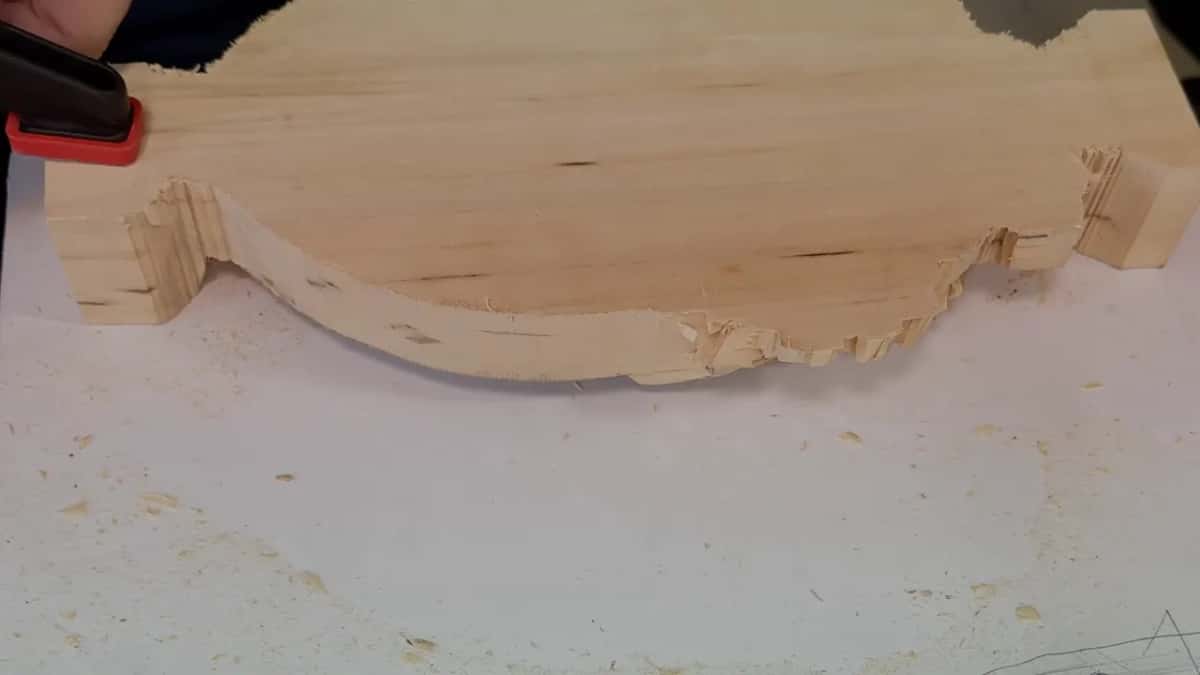
A blank sawn to its outline and clamped down.
Two things fall out of that page and both land on you. Jelutong is not an Australian tree, so buying it in Melbourne is buying an import, same as buying limewood. And 390 lbf sits under the 410 lbf of basswood on the same scale.
Take that as a pointer, not as a recommendation from me. Anybody who has carved jelutong knows more about it than I do.
Pale block, dark board behind it.
How do I test a board I have never carved before?
Sharpen first, take one small stroke, and watch whether the wood splits or holds together. Watching whether it splits is what I did with acacia and olive on the Lily Box course, and it stays the only honest method for a species nobody I know has touched.
Step 1, sharpen before you judge the wood
A dull edge blames the board for its own trouble. My edge gets checked for a wire constantly, and when I find one I strop it, buff it, or resharpen, and that happens multiple times daily. With sharp tools you can go against the grain or along it, and you will not split the wood. I have said that, and I have also stopped in a lesson to admit I am carving the wrong way and it is not really good. Both halves are mine, so watch the grain even when the edge is fresh.
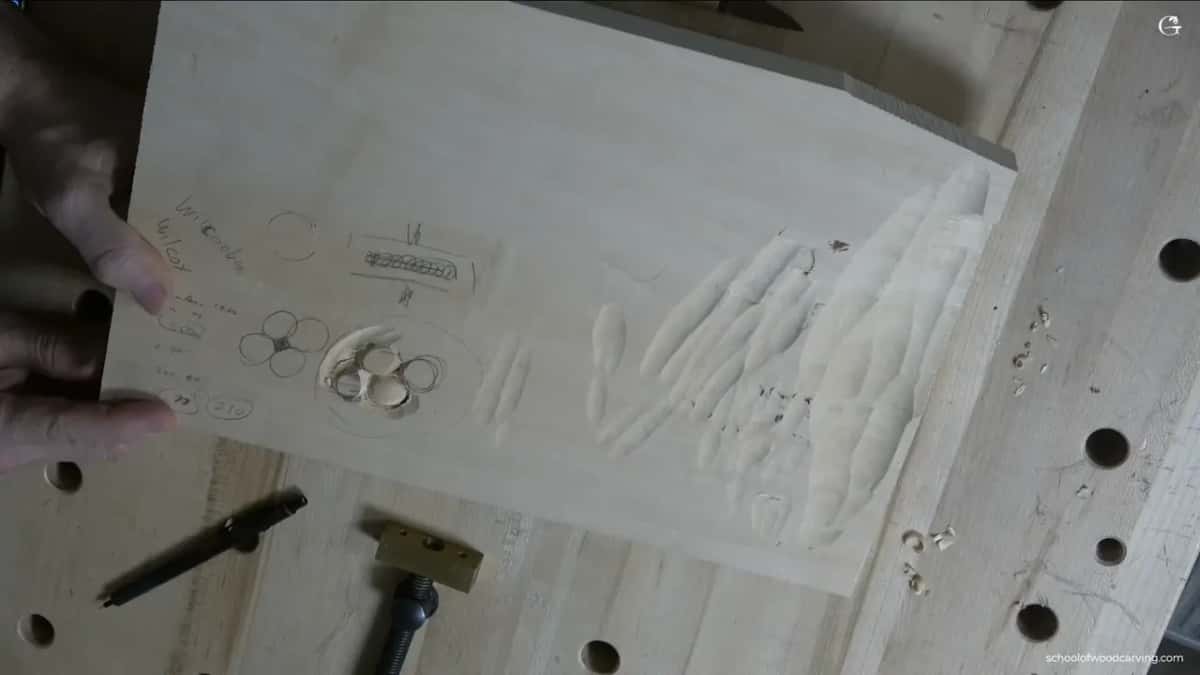
Trial marks on one half, pencil notes on the other.
Step 2, one stroke tells you if it splits
Keep an eye on how the grain reacts and behaves toward the way you carve it. Different type of wood, and you never know whether it will split, or quite the opposite. One stroke answers that. Not a plan, not a chart, one stroke into a scrap you do not love.
Step 3, if it does not split, break the rules
Where a wood refuses to split at all, you can break every rule. That happened to me with the acacia I call gopher, a Mediterranean acacia. It carved really nicely with no problem, so worrying about direction stopped and the work went on.
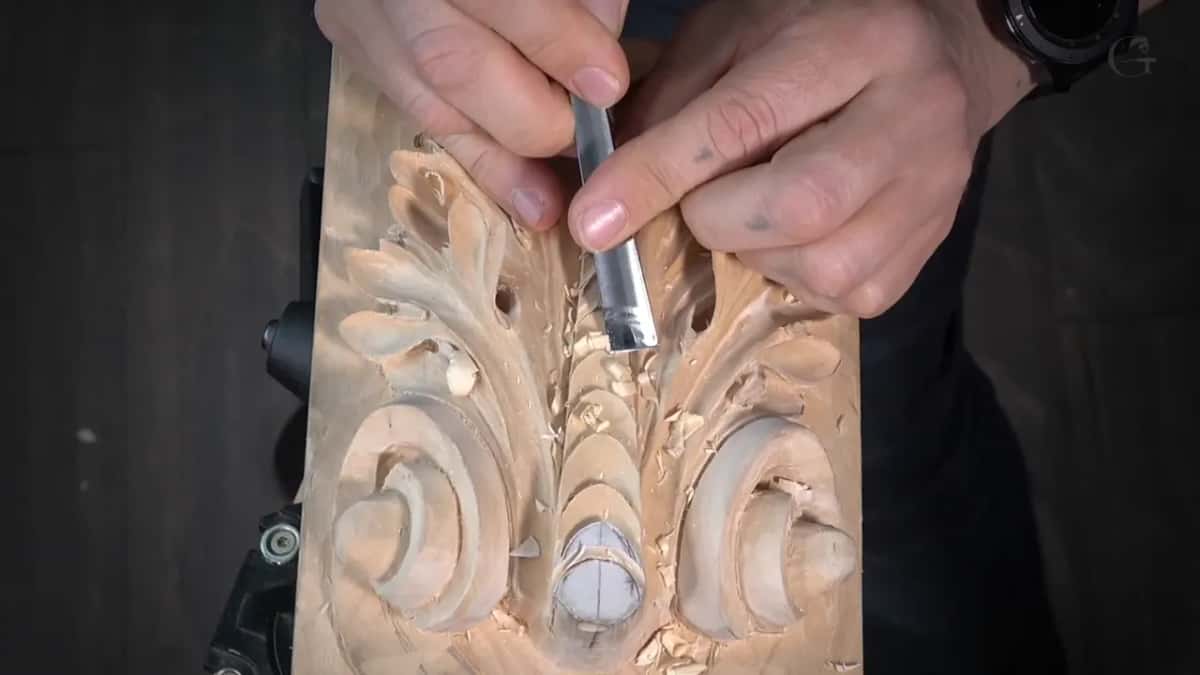
A flat chisel going down a part carved leaf panel.
Step 4, count how much grain shows before you draw
Butternut is beautiful wood and I love it, and the grain is the one thing I do not like. Big movements show too many stripes, and butternut carries a pronounced grain, so it will not look too nice. Pine is worse. All of the grain is really visible and it distracts. But a loud face is not a bad board. My complaint only lands on the big sweeping work, never on a design with a lot of detail in it. Give butternut that kind of job and it is a really great wood.
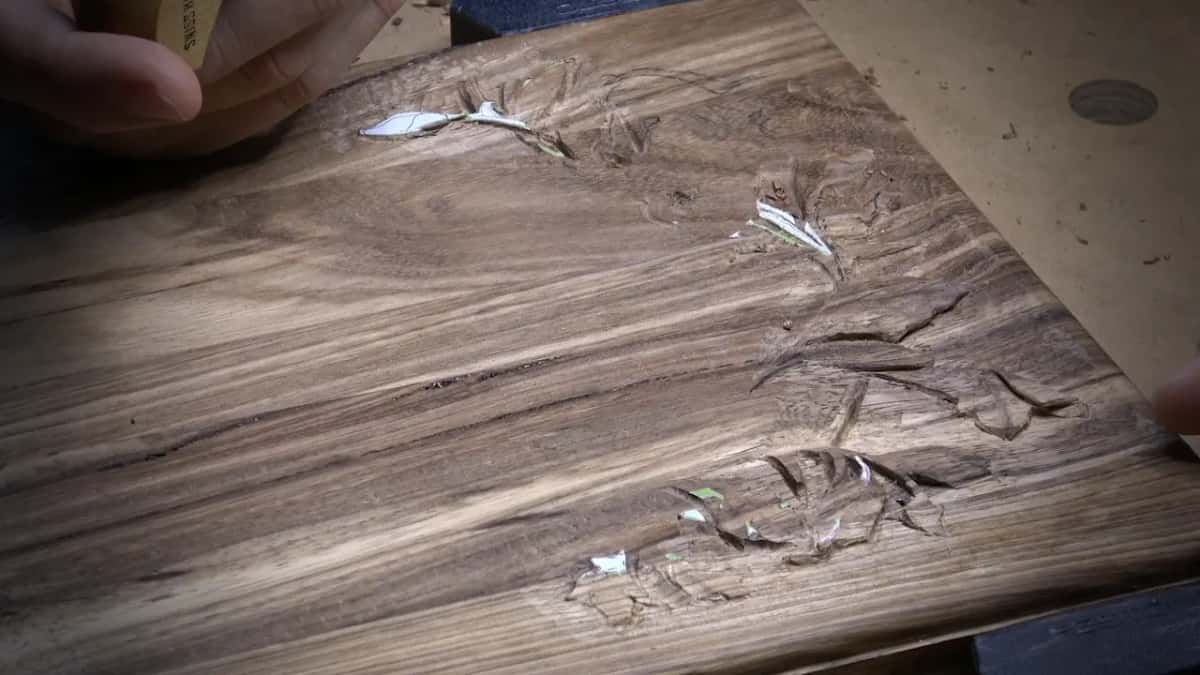
Wild streaked grain with leaves roughed over it.
Step 5, change the design to suit what you found
Brian once asked whether I change my designs depending on the type of wood, and I told him yes, absolutely I do. The property of the wood I am carving has to be understood first. Limewood is not the same to work as harder woods like oak, walnut, mahogany, or even birch. Birch is not that hard, and still a little different.
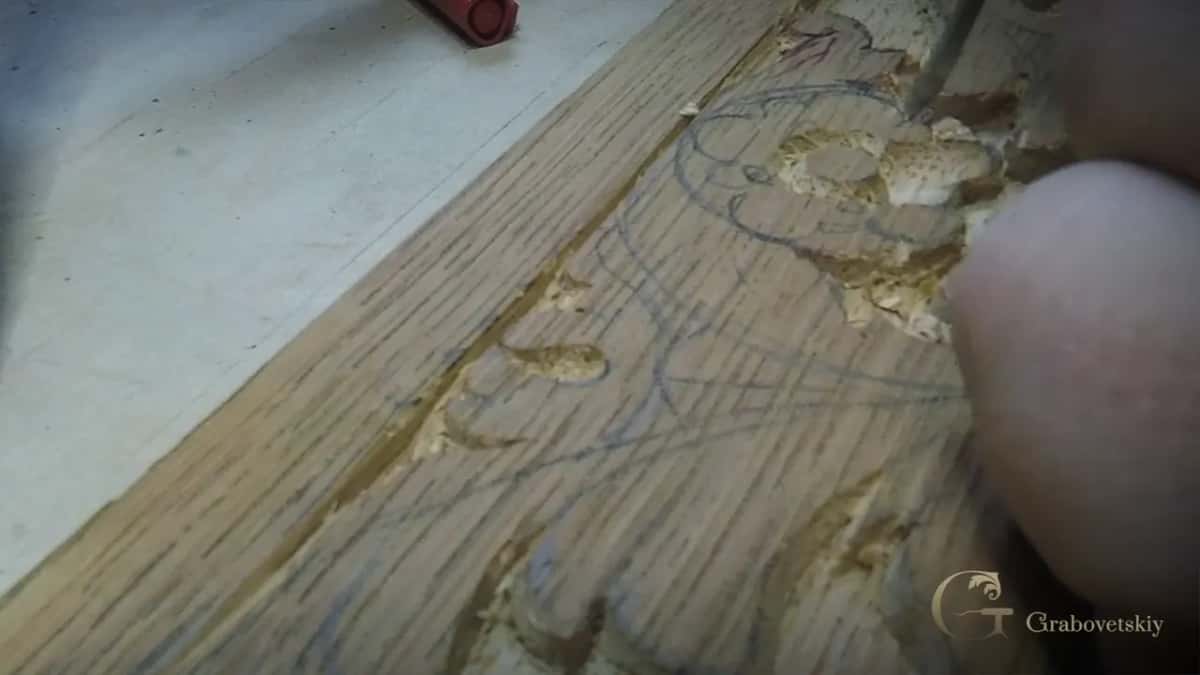
Pale flakes lifting along a pencil scroll instead of parting clean.
Those five checks, for a board of any species, sit in how you know if wood suits carving and how to prepare raw wood for carving. Grain direction gets why it matters to carve in the direction of the grain.
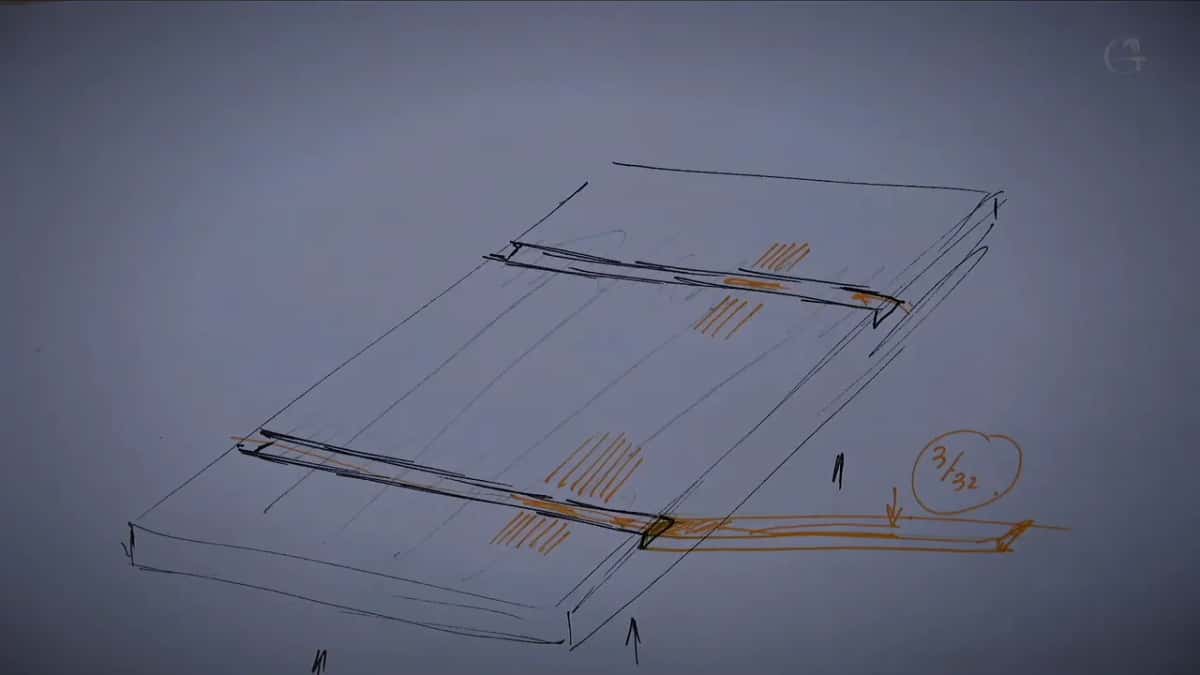
A whiteboard plank with grain lines and orange arrows.
Which Australian timbers do the local authorities describe?
Queensland's own timber pages and WoodSolutions carry the Australian half of this table, and the Wood Database supplies the numbers. Not one of these appears anywhere in the courses I have recorded.
| Timber and its source | What that source says |
|---|---|
| Hoop pine, on the Queensland Government hoop pine page | Carving sits among the listed uses, and hardness is rated soft, 5 on their 6 class hand tool scale |
| Queensland maple, on the Queensland Government maple page | Carving listed too, rated firm at 4, grain partly interlocked and often wavy or curly |
| Jelutong, on its Wood Database page | Janka 390 lbf, very easy on hand tools, gum buildup, a sour smell |
| Huon pine, on the Wood Database huon pine listing | Janka 920 lbf, generally easy to work, supplies limited because the trees breed late |
| Northern silky oak, on the silky oak numbers | Janka 840 lbf, fairly easy, medium to high blunting effect on cutting edges |
| Australian blackwood, on the WoodSolutions blackwood entry | Filed under hardwood, while the blackwood numbers give Janka 1,160 lbf and warn that figured pieces tear |
| Jarrah, on the WoodSolutions jarrah entry | A hardwood, and the jarrah numbers read 1,860 lbf, hard to machine, interlocked grain, blunts an edge |
| Spotted gum, on the Queensland Government spotted gum page | Rated very hard, 1 on that same 6 class scale, and named the main Australian species for tool handles that take high impact, such as axe handles |
Two blocks on a chip covered bench, one pink, one white.
That Queensland hardness scale is the most useful Australian thing on this page. Six classes, 1 for very hard and 5 for soft, judged by how a timber takes an indent under hand tools. The Queensland Government pages put hoop pine at 5, Queensland maple at 4 and spotted gum at 1. The WoodSolutions timber wiki is the other place to start reading, and the Wood Database explainer on Janka hardness says what a pound figure misses.
Gouges in a row beside a tan board part carved.
Three Australian trees have plain English pages in our own library, an Australian blackwood page, a red bloodwood page, and a brigalow entry, another acacia. The set lives at our wood database.
Does a denser board mean a harder day?
A denser board means a different drawing, which is a separate thing from a harder day. People keep hearing that as encouragement, so let me be blunter than usual.
Carving olive wood is nothing like carving basswood. Absolutely different. Not like walnut either, or even cherry, or even oak. I am not saying it is harder or easier. It is absolutely a different feel, especially on a curly wood, on a curly grain.
A flower going in by pencil inside a hollowed round blank.
Here it stops being philosophy. On the olive wood box I left a spot one sixteenth of an inch thick and expected it to hold, because olive is a harder wood. Limewood would never get that from me. Much thicker there, always.
Flip it around and you have your answer for a dense Australian hardwood. Denser stock lets you leave a thinner leaf tip, a finer detail that would snap clean off in something soft. On that one point a dense board gives you something basswood cannot.
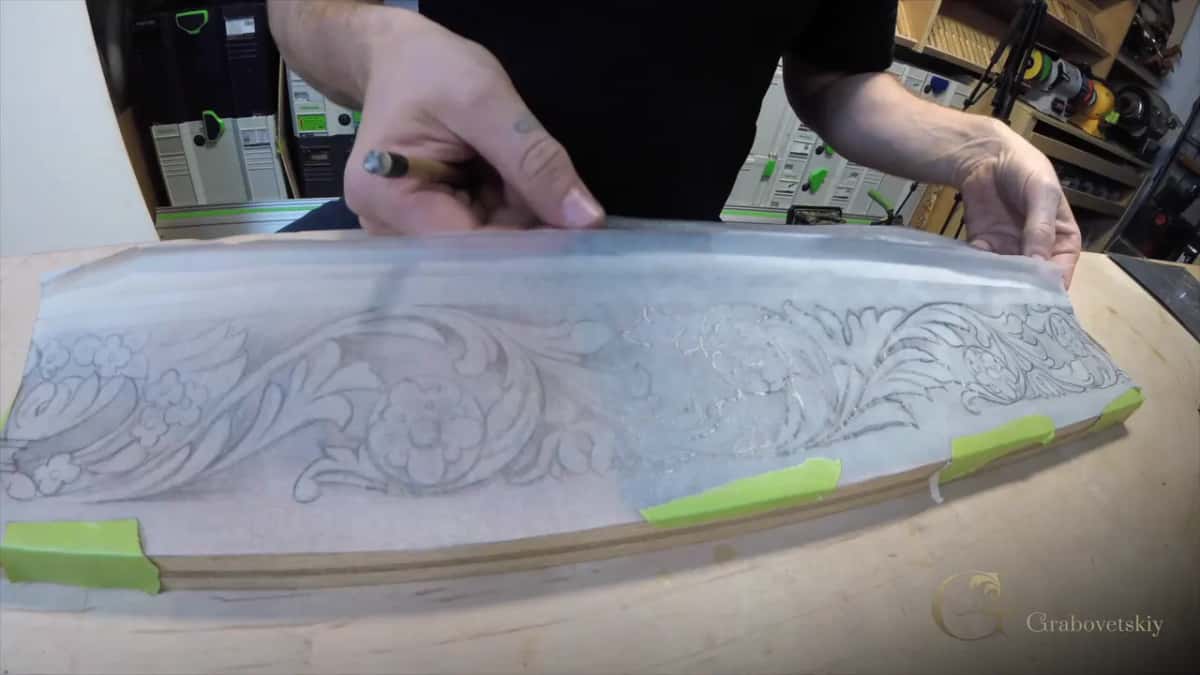
Tracing paper coming off a pale curved board.
Figured wood makes the point harder. Curly cherry taught me this on a set of furniture legs for a client. Grain went in all directions, so the proper approach was impossible and every rule had to break.
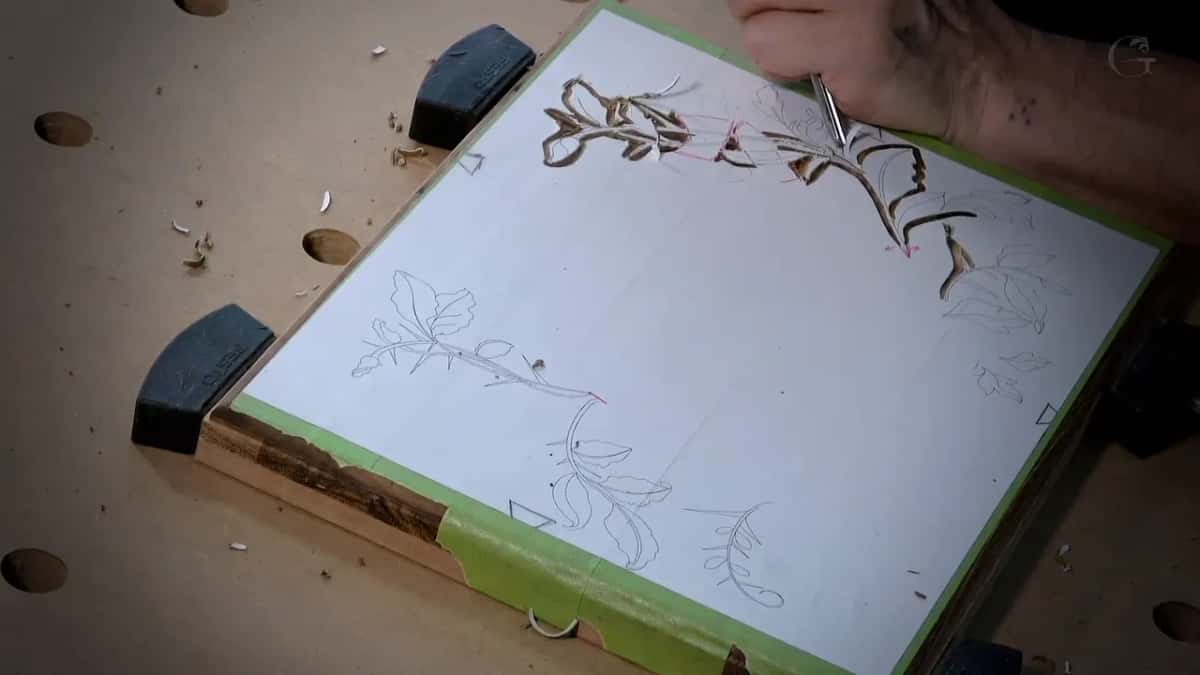
A paper pattern clamped over a dark board.
Which woods do I tell people to leave alone?
Poplar and maple, offered as my opinion rather than a law of nature. Some people think poplar is fine if the piece will be painted.
I highly suggest not to use poplar. Okay wood, but a little harder to carve, and it does not feel good when you carve that. Much better to use cherry, or even oak. Even oak are better than poplar, and oak is a lot harder wood. Maple gets the same warning. Both are carvable. Almost any wood is carvable, and difficult.
Butternut is good, and I started to hedge that once on a livestream before cutting myself off to say actually, really excellent. Walnut is good, and somewhat forgiving, so sometimes you can go against the grain and nothing bad happens. You still have to keep an eye on what the grain of the wood does. Cherry and walnut hold detail really nicely. Mahogany carves really nice too, not bad at all.
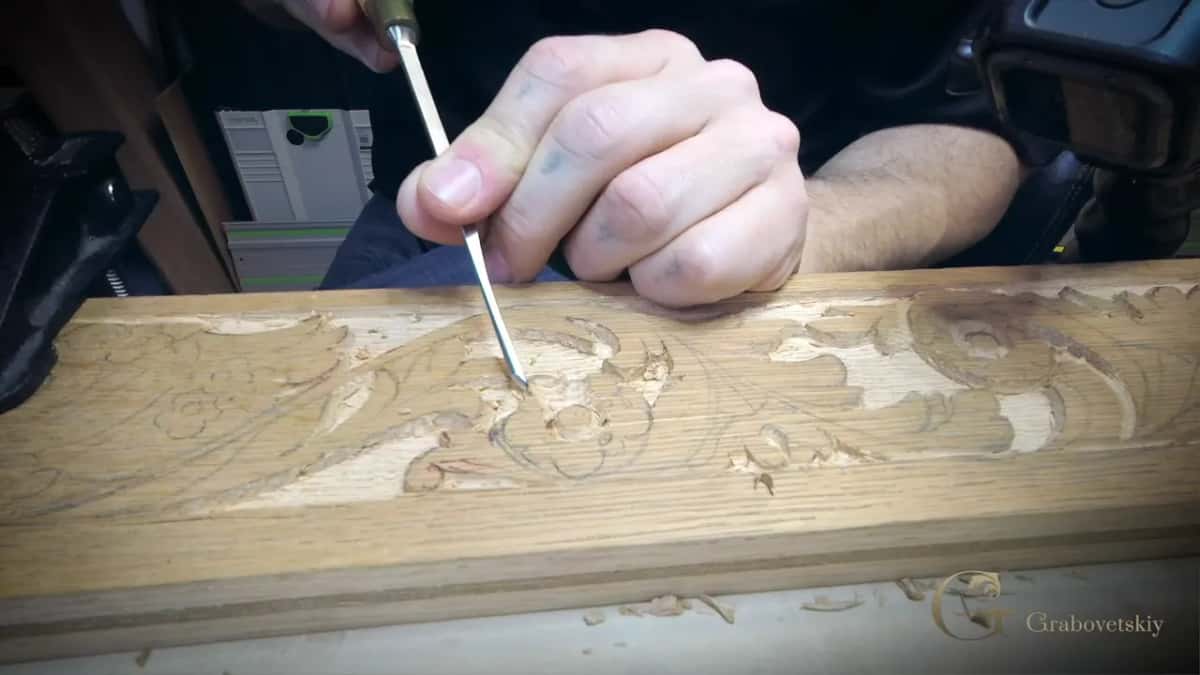
A small gouge going into a tan moulding strip, its pores wide open.
Radiata pine is grown almost exclusively on plantations, most notably in Chile, Australia and New Zealand, says the Wood Database radiata page, and that page also calls it a Californian native that works well with hand tools. The WoodSolutions radiata entry files it under softwood. Fine. Pine in general is the softwood I complain about, and I have never had a radiata board on my bench. My complaint was never that it fights a tool. Its grain is loud and it distracts.
Oak splits my own opinion in half, and I will not tidy that up for you. Oak is a lot harder wood and a little harder on tools, and white oak I do not like. English brown oak just carves beautifully, probably one of my most favorite oaks. Brown oak runs softer than a white American oak, and red oak is really hard. Which oak matters more than the word oak.
Woods that fight back get which woods are hard to carve, and walnut is answered in can walnut wood be used for carving. Softwoods have the best softwoods for a beginner to practice on.
Will a hard Australian timber wreck my tools?
A hard board wants a short bevel and a heavy mallet, and the strange part is that my tools go dull faster on basswood. Both halves are true.
Start with the bevel, because a hard local species bites there first. Grind a really long bevel and the metal becomes really weak at the point. On the hard woods, oak for example, cherry for example, a long weak bevel gets kind of dangerous. So hardwoods get a short bevel.
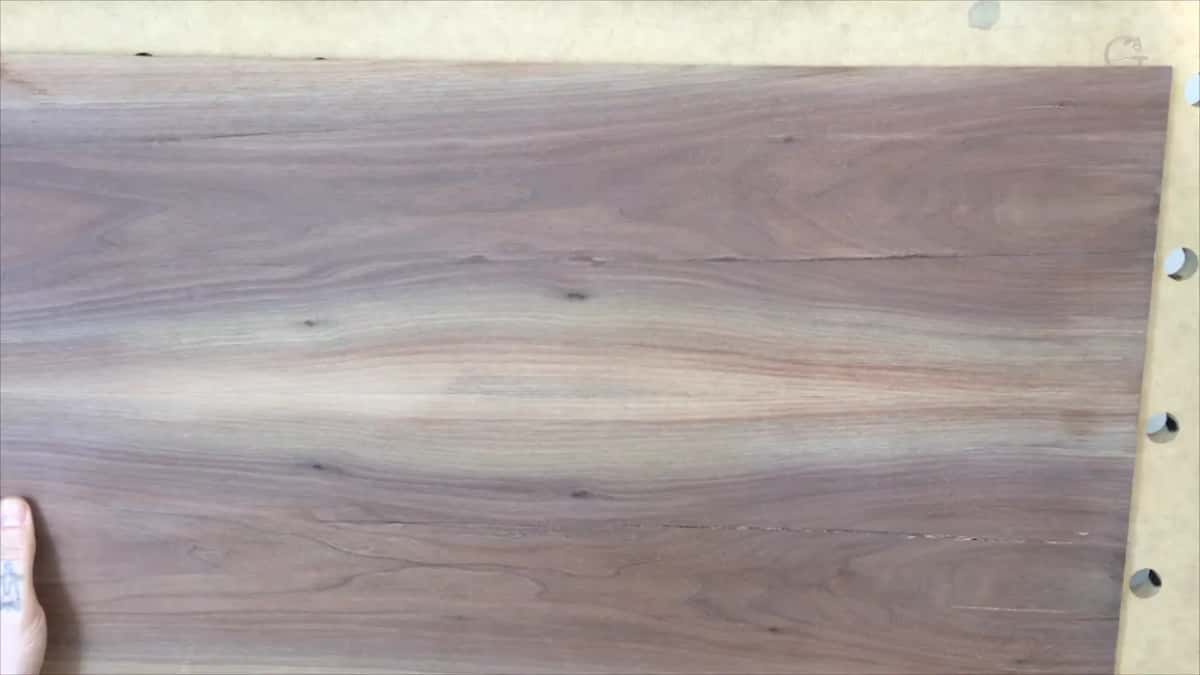
A wide walnut board, figure running in long waves.
Measuring is not how I do it. My hand goes under the handle, I grab it, and the knuckle should almost touch the wood as the edge starts to grab material. Best bevel there is, for me. About 18 to 22 degrees if you want to be technical, and I am still not measuring. Carving oak means a mallet, and mine is heavy, 32 ounces.
Now the paradox. My sharpening station sees me less often on oak than on basswood. Basswood is much softer, and for some reason the tools go dull a lot quicker on it than on oak. My teacher tried to explain it to me. I still did not get it. Some woods are abrasive inside the fibers, and basswood is not.
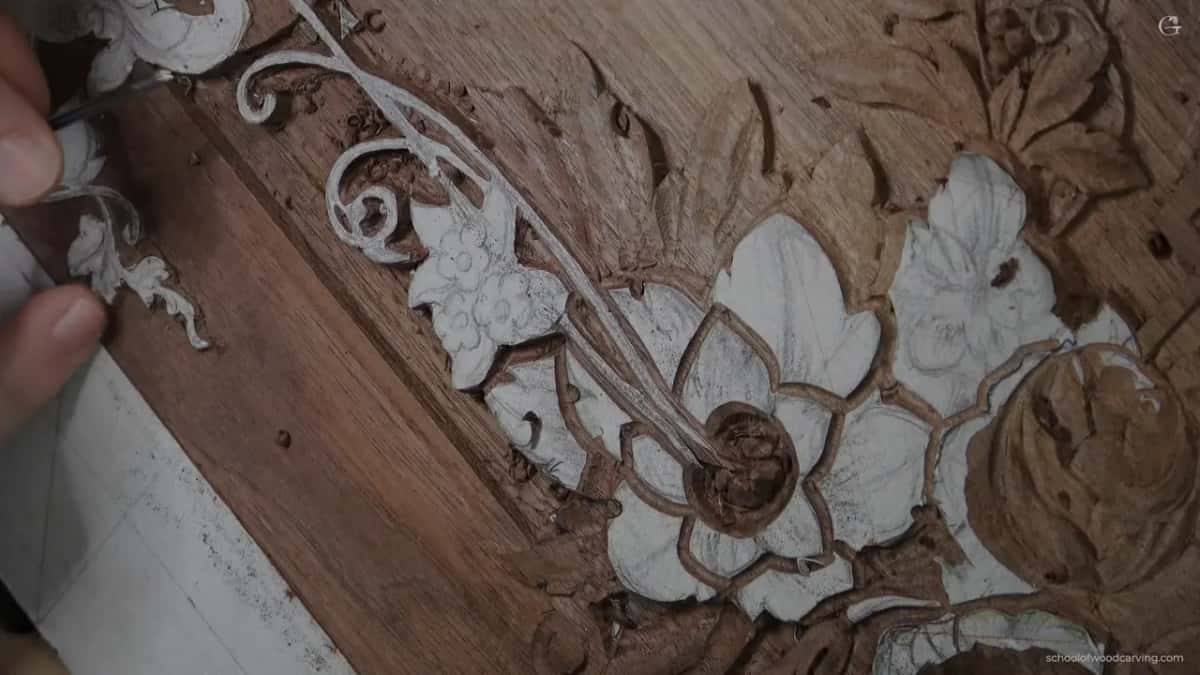
Carved flowers primed white on a dark board.
Two of those species pages warn about this directly. Northern silky oak carries a medium to high blunting effect on cutting edges in the Wood Database file, and the jarrah file there says moderate. There is your strop schedule, written by somebody who measured. Mine stays simple. Check the edge for a wire and fix it, several times a day.
Hardness numbers have their own page in what Janka hardness means for a hand carver, and the mallet question is settled in do you need a mallet for wood carving.
Is it worth shipping limewood in from Europe?
My students already do it, and I will not pretend to know what the freight costs them. What I can tell you is that my own sourcing advice was built for a country you do not live in.
Inside the United States I send people to a craft store called Michaels, or to Woodcraft, or to Amazon for a plank of basswood. If you are in a different part of the world, I am pretty sure you can find some suppliers who would supply you. That sentence is the honest limit of what I know, and saying so beats inventing a shop in Perth.
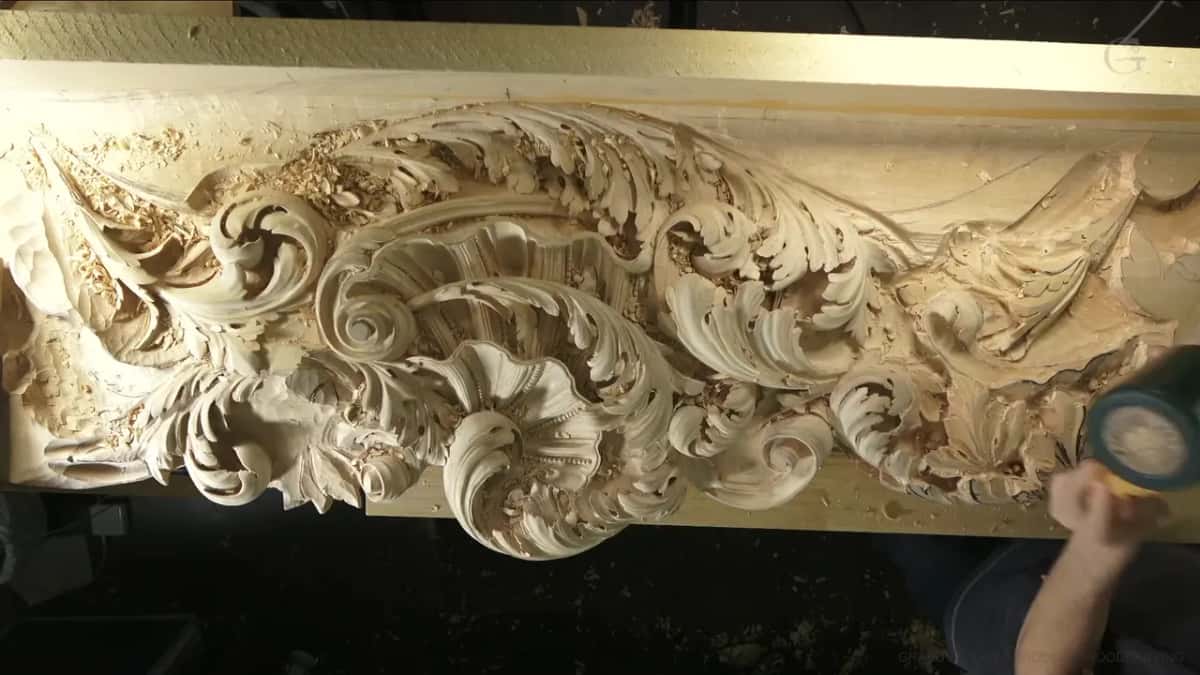
A long pale frieze in deep leaf scrolls.
One piece of my advice does travel. Check in your location where the furniture makers are shopping, and get in with them. My own basswood comes by special order from a hardwood lumberyard in Orlando, by the truckload, thousands of dollars a load. You have to be commercial to walk through that door. Last I knew the minimum sat around 500 dollars, and it used to be 300.
Two more buying notes. Small pieces cost more per piece, so you spend less money and pay more for the wood. Thick stock is not really necessary either.
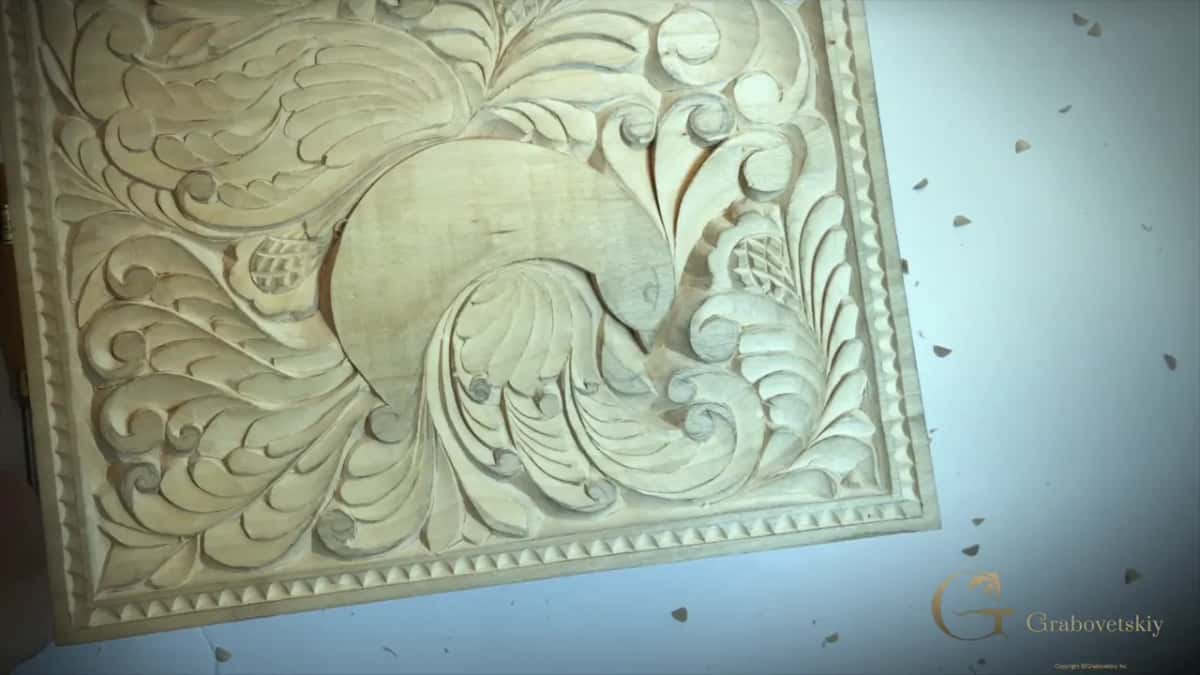
A finished pale panel inside a beaded border.
If money is your biggest problem, be honest about that first. My teacher put a knife in my hand before any gouge, and I once carved furniture in prison with a 10mm knife and a gouge made from a nail.
Beginners down there ask about classes too, and those pages are honest about how few exist. Try wood carving classes near Sydney and wood carving classes near Melbourne. Tools sit in the best materials for a beginner.
How do I stop an Australian board from moving in my shop?
Buy it long before the project and let it sit, which is the only drying method I properly trust. Wood gets dry two ways and they hand you different boards.
Kiln drying is what manufacturers and lumber yards use. They own a big stove, to be simple, and they fry those boards. Water out, sells fast. Air drying takes time and happens naturally, and that was always my preferred method. Cut a tree and the fibers are still alive, sucking water. The longer since harvest, the less they take.
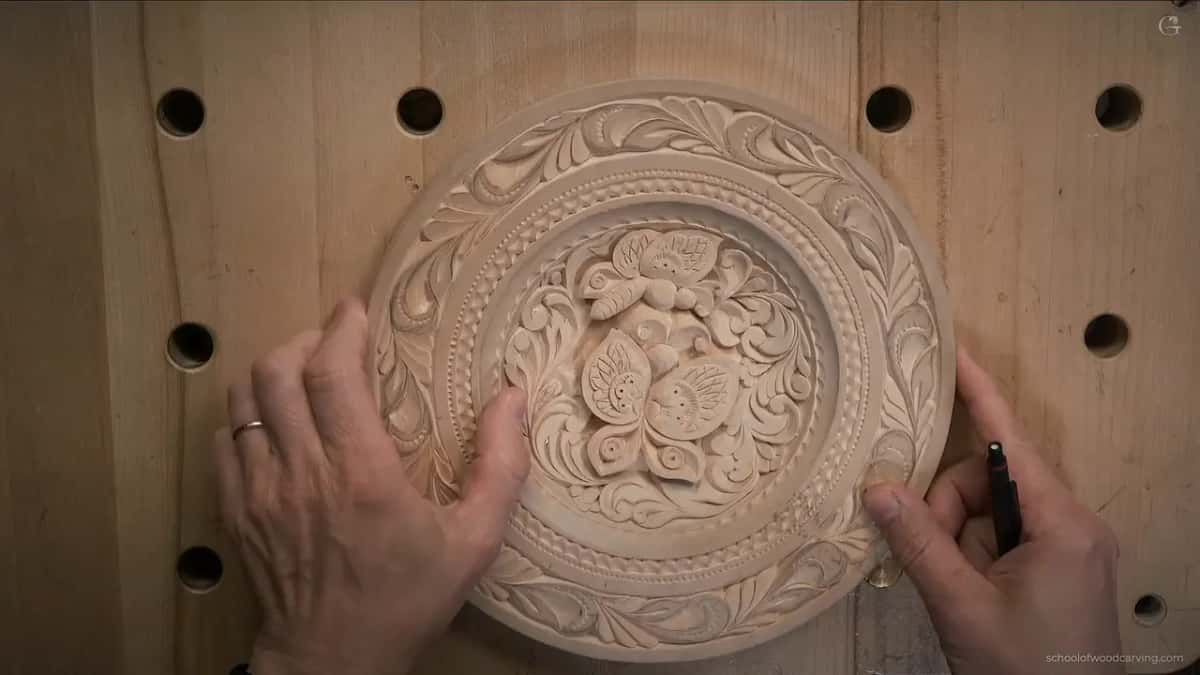
A finished round plate carved with butterflies.
Some of my boards have sat in the shop untouched for over 10 years, and a few are 20, or 24, 25 years old. Storage, not a schedule. Nobody has ever heard a number of months out of me, because I do not know one, and it depends on your air, not mine.
Lamination is the other trick. Say the grain runs one way in a board. Alter it. Glue the pieces with the grain pointing different directions and the blank will move less, and it will not warp. This is my opinion, and I am not claiming to understand everything 100 percent. I use logic, the way my teacher taught me.
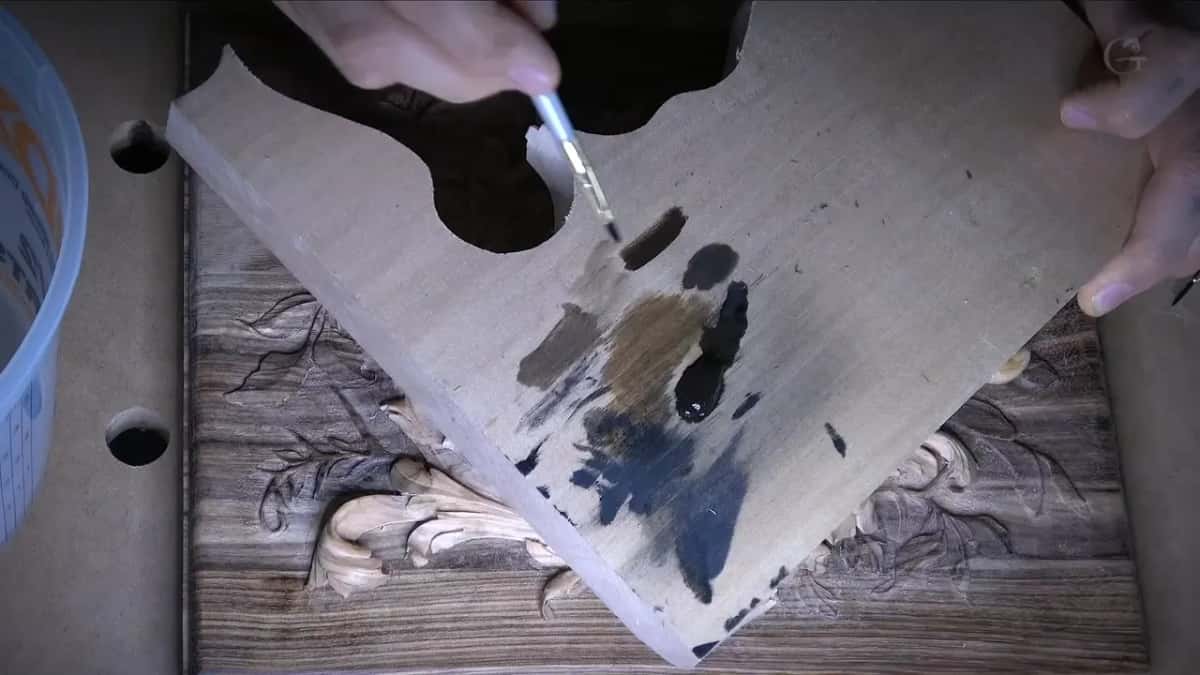
Stain swatches on a pale offcut.
Other sources get more precise than I do, and you should read them. The Queensland Government hoop pine page says framing sizes should be dried at high temperature to avoid distortion, while boards may be air dried or kiln dried. Chapter 13 of the USDA Wood Handbook covers drying and dimensional change, and the Wood Database page on wood and moisture is the shorter read.
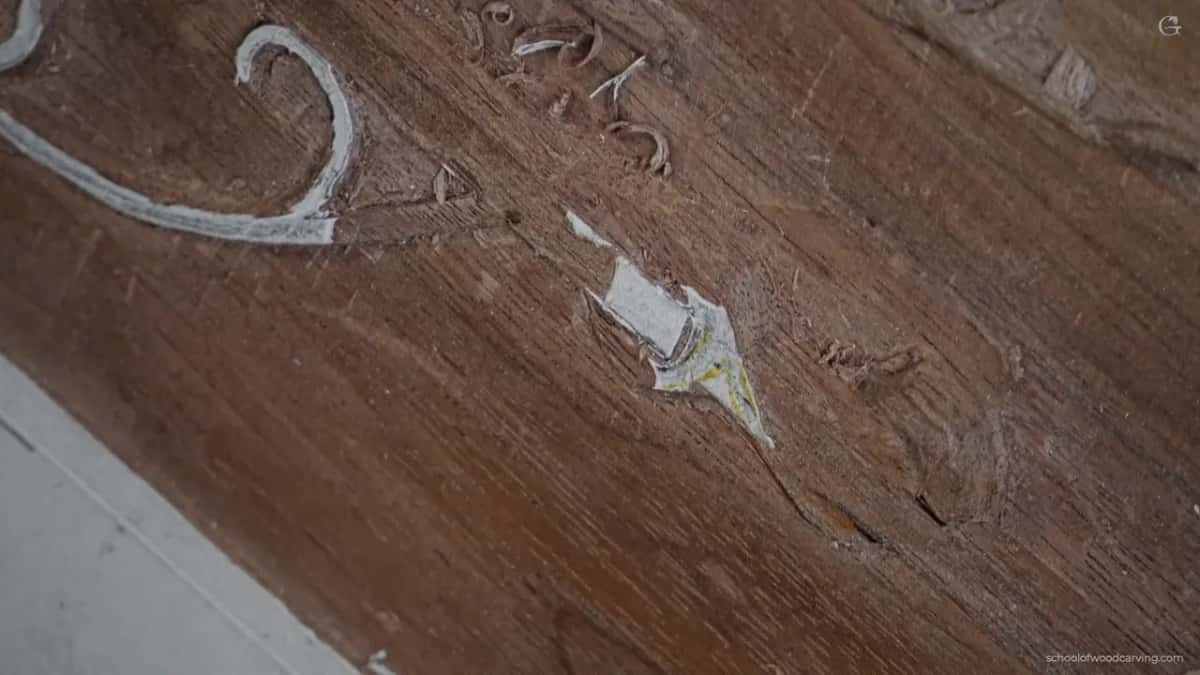
A dark board with hard straight grain, shallow carving started.
Drying has two pages here, how long wood takes to dry for carving and do I have to dry wood before carving. Thickness is argued out in is thicker wood better for carving.
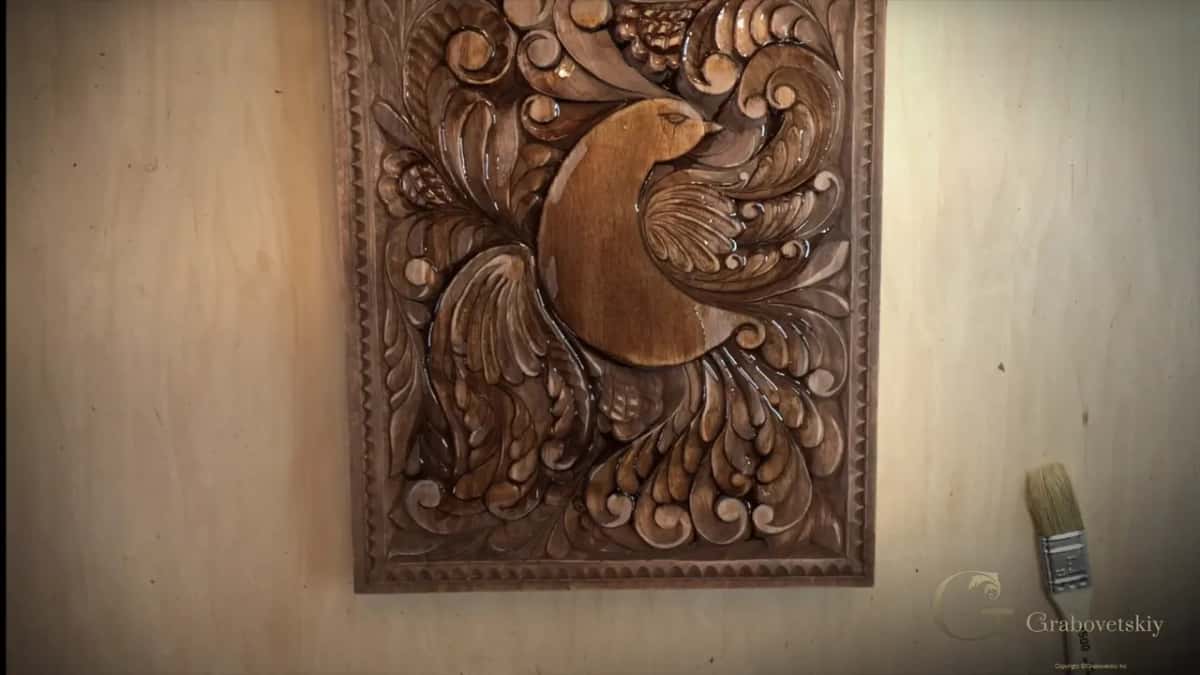
A carved bird panel stained dark brown on a pale bench.
Do you want the wood question settled so your evenings go on carving instead of reading timber tables? My beginner course opens with its own wood lesson, inside Wood Carving: First Cuts for Beginners, and the questions students bring me at the bench sit in Techniques, Tips and Tricks. Shall we carve?
Frequently asked questions
Can I learn on hoop pine instead of basswood?
Queensland's own timber page lists carving among its uses and rates the hardness soft, a 5 on their six class scale. No board of it has come through a class of mine. Still, a government timber page naming carving beats a forum argument. Buy one board and see.
Is jelutong actually an Australian tree?
Dyera costulata grows in Malaysia, Borneo and other parts of southeast Asia, going by the range in the Wood Database entry for jelutong. Anybody buying it in Brisbane is buying an import, exactly like limewood. My one mention was a pointer, and it has never shown up in anything I teach.
Will jarrah ruin a beginner?
Jarrah reads 1,860 lbf against 410 for basswood on the Wood Database jarrah figures, and that page calls it hard to machine and warns it blunts an edge. Learn the first strokes in something quiet. Bring the dense board out once your sharpening is dependable.
Do I really need Tilia at all?
My own answer has not moved. The best wood always is a basswood, in my opinion, because it is easy to manipulate and its grain does not distract your eyes. Where you cannot buy it, look for a pale board with a quiet face and test it one stroke at a time. A substitute is not the same thing, and I stay picky about basswood.
Should I practice on huon pine?
Works easily at 920 lbf, going by the Wood Database huon pine page, which also warns that the trees do not reproduce until they are several hundred years old, with supply falling. Wrong timber for practice. Save it for a piece you can already carve.
How can I tell a local board is worth buying?
Take one small stroke and watch, which is exactly what I do with a species I have not met. A long curl says keep going. A split says change your approach, or change the board. Two wasted strokes cost far less than a plank.
Filed under
- Australian cedar for carving beginners
- Australian hardwoods for novice carvers
- Australian sheOak carving techniques
- Australian wood carving classes for beginners
- Australian woods and their carving properties
- beginner-friendly woods for carving
- best wood types for beginners in Australia
- carving techniques for Australian cedar
- carving tools for Australian woods
- carving with Australian pine tips
- easy-to-carve Australian woods
- experience carving Australian woods
- how to carve Australian sandalwood
- how to choose wood for carving
- local wood species for carving projects
- popular wood species for carving
- pros and cons of Australian beech
- recommendations for wood carving beginners
- softwoods vs hardwoods in carving
- tips for carving Australian blackwood
- Understanding Wood for Carving