September 8, 2024 · Updated August 25, 2026
By Alexander Grabovetskiy — Master Woodcarver · Founder, School of Wood Carving · 19 min read
What are the best types of wood in UK for beginners to practice carving?
The best types of wood in UK for a beginner are lime first, then English oak when you want a board with more fight in it. Given the chance I carve most of my projects in lime. Forestry England says its pale wood resists splitting, which makes it ideal for turning and carving.
You asked which British wood to carve, and you got the same nine species in the same order on page after page. The part you still need is how to read the end grain of a board before you hand over money for it.
Here is my side, said once and said plain. Britain is not where I carve. Sycamore I will not judge for you, and I will not pretend otherwise. Lime, oak, walnut and cherry I have carved for a living, and I teach students all over the world. The board and the tool I can teach you. Your local sawmill I cannot.
That splits this page into two halves doing different jobs. Every British fact below carries the name of the body that published it, with the link sitting on that name. Judging a board is the part that is mine, and it behaves the same in a Surrey yard as in my Florida shop.

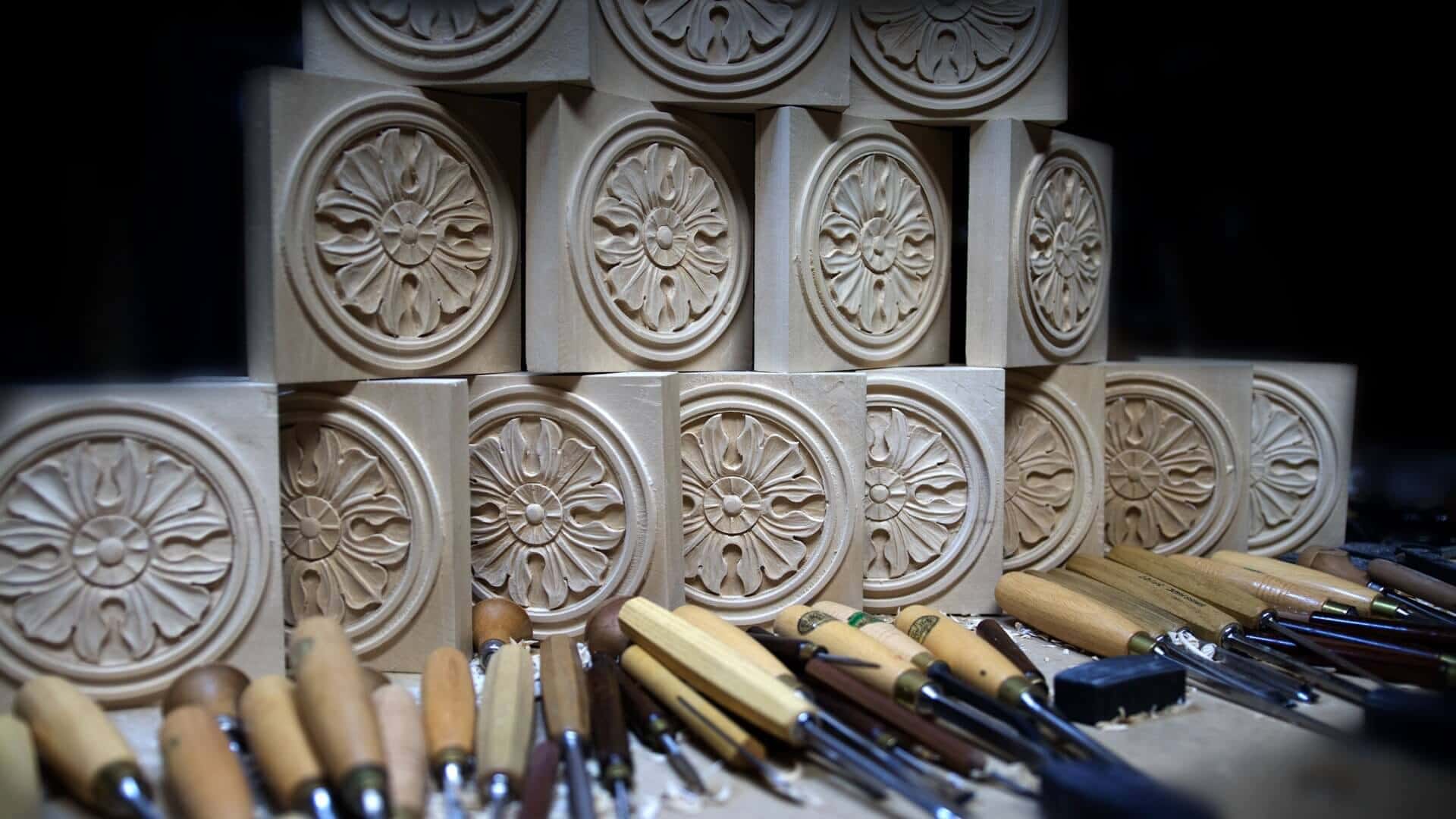
A beginner-sized blank, paper pattern, first tool.
- Lime is the answer in Britain, and a yard may sell you the same thing as lime timber.
- One tree, four names: lime, basswood, linden, lipa.
- Brown oak came first, and I believe Gibbons is the man who brought the limewood idea over from Holland.
- Sycamore, beech and ash I am not going to judge for you, so British foresters speak for those three here instead of me.
- Your gouge decides more about that first cut than the species ever will.
Which wood should you buy first if you carve in Britain?
Buy lime. In the first lesson of my beginners' course I tell the class to get a plank of basswood, then I say what the same plank is called where they live. Then comes the line this page exists for: if you're in England, it would be called lime timber.
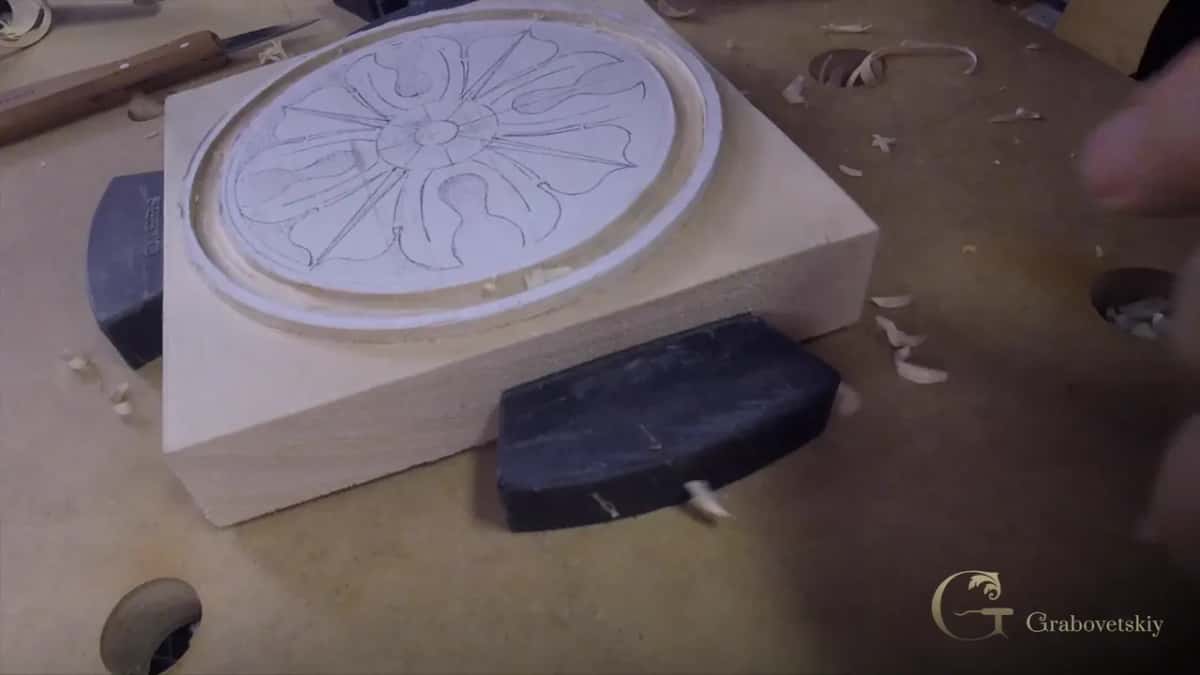
One thick pale block, the ring sunk.
So why do I keep sending people to it? Two promises live in one sentence I say in that lesson: there is no grain in it, almost no grain visible. Of course, there is a grain, but no visible grain. It is soft enough, and it still holds the detail, which is the other half of the bargain and the harder half to find. I said all of that on camera in 2017, in lesson 1.3 of First Cuts for Beginners, and my mind has not moved since.
The Forestry England page on small-leaved lime arrives at that second promise through a different door. It calls the pale cream coloured wood resistant to splitting, and says that is what makes it ideal for turning and carving. The same page names Gibbons as a carver who reached for lime again and again.
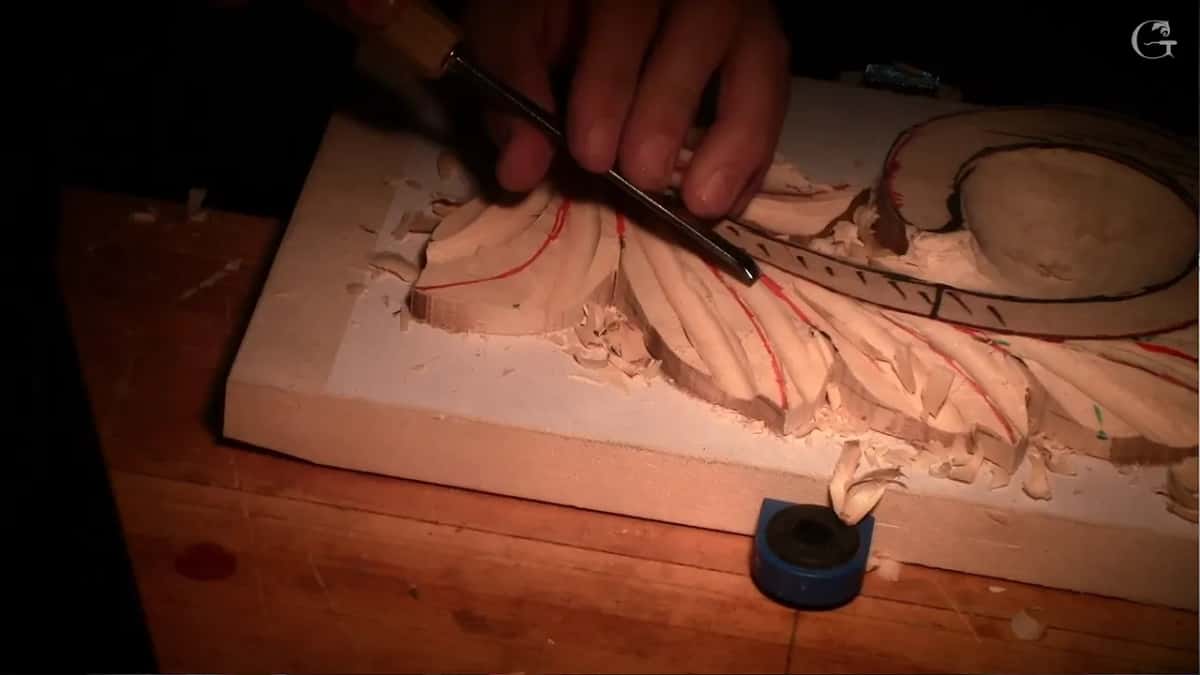
The curl stood up on the tape.
I believe the first person who introduced limewood to England, it was Grinling Gibbons. The V&A collection hub for Gibbons is where to go and look. Start with the limewood cravat. A man carved lace out of a tree.
Why does one wood carry four different names?
Trade names travel with the border and not with the tree, and this one has picked up four of them. In European culture, it's called lime wood or linden wood. Basswood is the American name. I'm from Russia, and we call that wood lipa. Some cultures call it a tea tree, because linden flowers brew beautiful tea.

My own openwork, carved in the Gibbons manner.
At the counter that matters more than it does in a book. Walk into a British yard asking for basswood and you may get a blank look. Ask for lime and boards appear. Wikipedia's Tilia page covers the genus the whole family sits inside, and both British natives belong to it.
Britain grows more than one lime, which is worth knowing before you order anything. The Woodland Trust entries cover small-leaved lime, its rarer cousin large-leaved lime, and common lime, the hybrid you see planted most often. Forest Research keeps a database entry for it as a British forestry species.
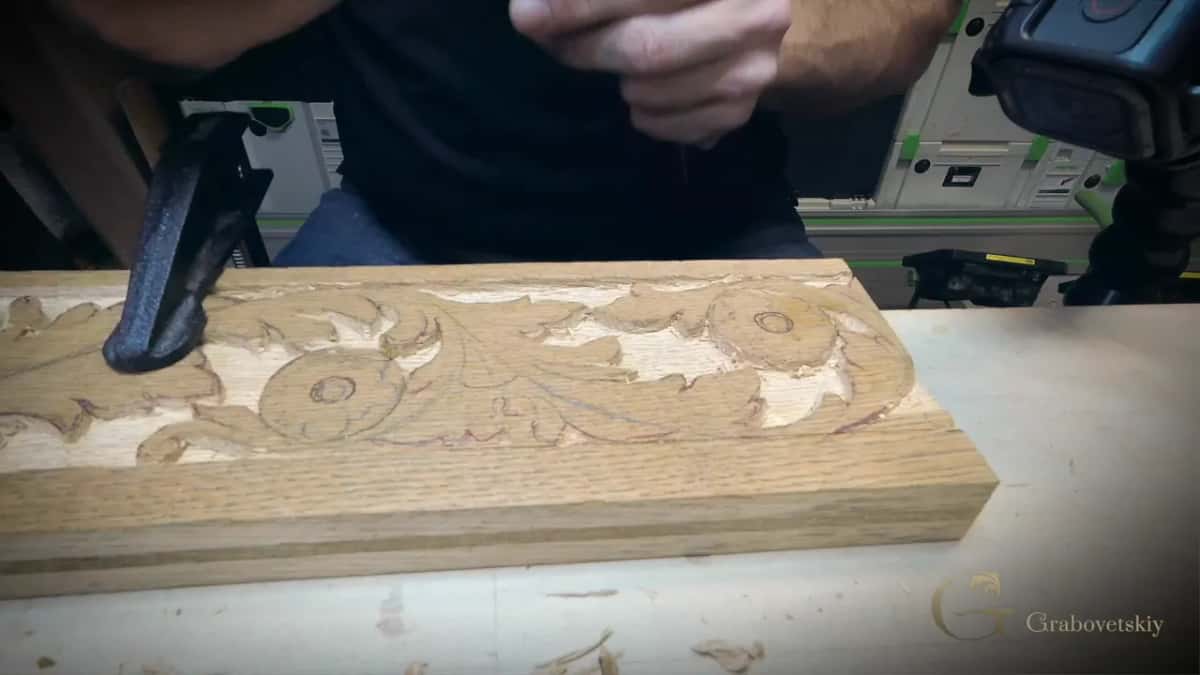
Strong straight grain bands, tan board.
Carvers have loved this timber for centuries and they reach for big words about it. Grinling Gibbons called this wood a queen of all woods. The carver David Esterly wrote this in his own book, The Lost Carving:
But limewood is a patrician medium that, treated correctly, really will be an obedient servant.
He puts it better than I do. So lime wood is actually one of the oldest known woods for the carving, and it is still the first board I hand a beginner.
Is lime a soft wood or a hard wood?
I have called it both, and I will not tidy that up for you. At the sharpening bench I call it soft wood, like a basswood or a lime wood, without thinking twice. Another day, in a different lesson, I say the opposite: they call it soft wood, but it's not really soft.
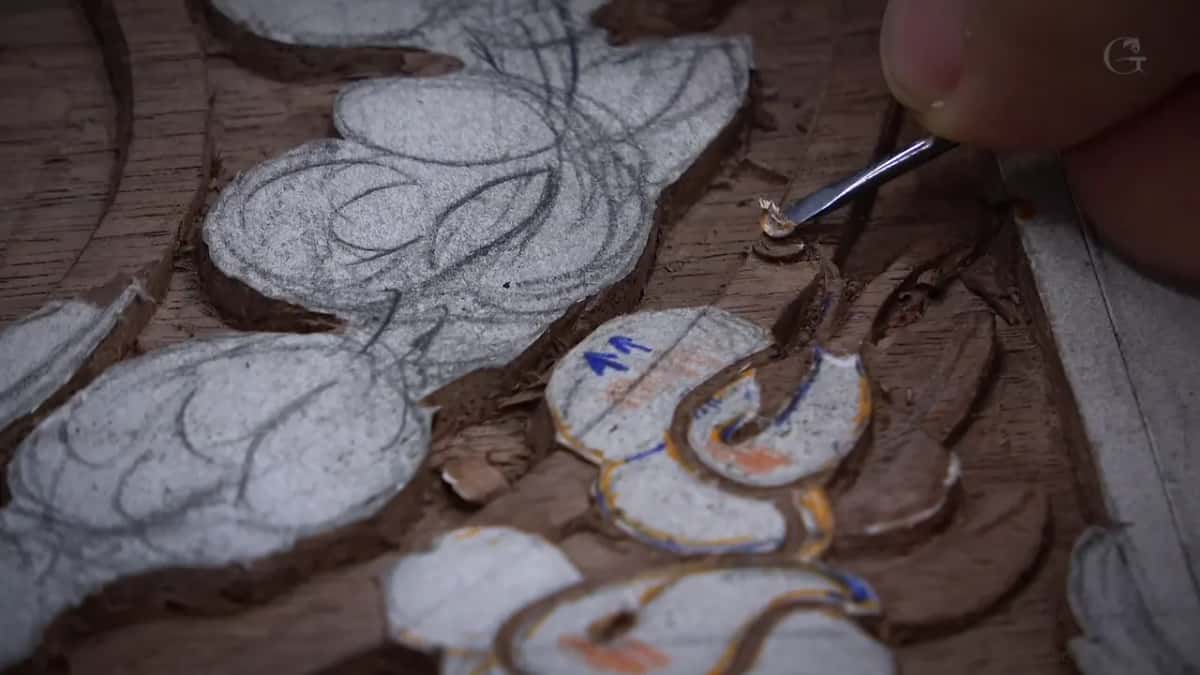
A brown board gives chips, not shavings.
A third answer exists, and it is the historical one. At least in old European culture, it wasn't considered as a soft wood. It's considered as a hardwood. And a soft wood would be like a pine. What a carving cost in old England said the same thing, and I come back to that below.
Botany draws its line somewhere else again. Wikipedia's hardwood entry puts every broadleaf tree in the hardwood group, balsa included, so that label tells you nothing about how a board behaves under a gouge. The Wood Database sheet for European lime files it as a hardwood and carries the working notes.
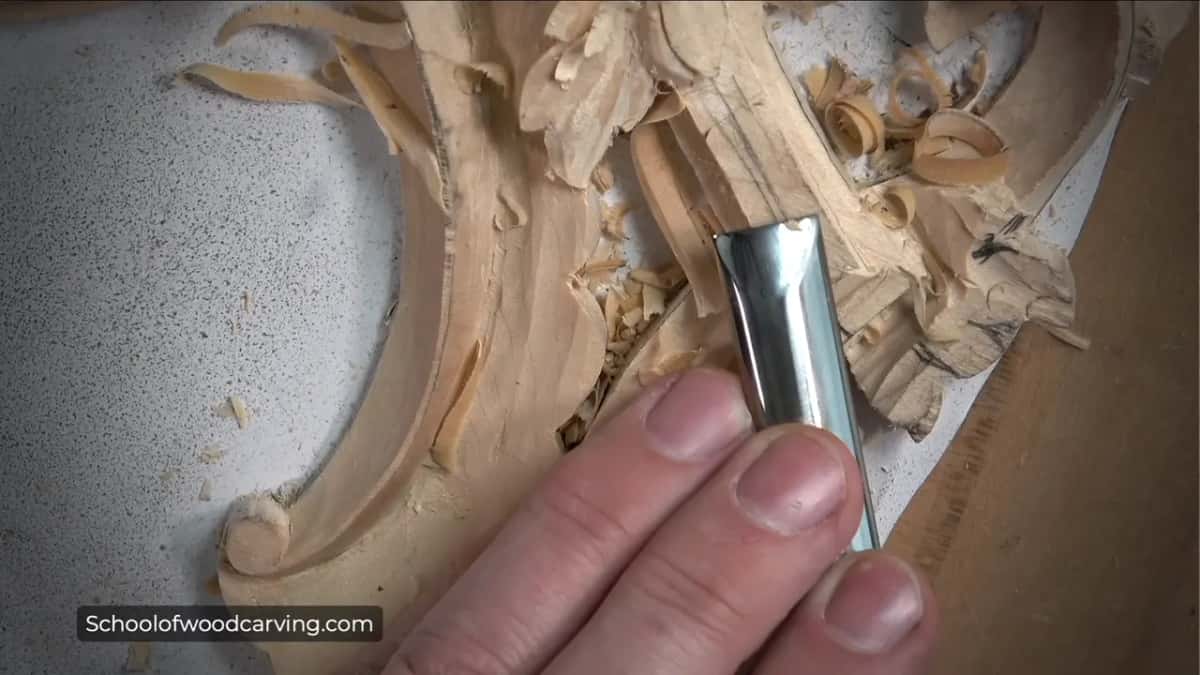
Loose curls around a chrome gouge.
My own phrase for it is the one I keep returning to in class. Soft enough to carve without a mallet. Hard enough that the detail you just made survives being looked at.
One warning, because plenty of beginners get sold the reverse of this. Some people saying the best wood is a soft wood and your tools shouldn't get dull, that's not necessarily truth. It is soft wood, but your tools, for some reason, still get dull, and really quickly sometimes. For that argument in full, read my ranking of the softwoods for beginners and then what a Janka hardness number hides from a hand carver.
Was English oak the wood Britain carved before lime?
It was, and the true brown oak is probably one of my most favorite oaks. It used to be a tradition in England before introduction of limewood. Carpenters, wood carvers in England, they used to carve just English brown oak, which is also beautiful material. I love English oak.

One pattern, pale above and stained below.
Go and see it yourself: if you go to old churches, old ones, so you can find the beautiful carvings, but all done just in oak. Then money split the trade three ways. In Europe, at least in England, the cheaper carvings would be done in pine. And the more expensive carvings would be done in oak at the beginning, and after 17th century, it would be limewood. So pretty much Grinling Gibbons brought that idea to England from old Europe, from Holland, to be exact.
Oak asks more of you than lime does, in two ways I can name exactly. Oak is more crunchy, and it has a lot of grain. Of course, oak is a little harder on tools. I grind a short bevel for the harder woods like that one.
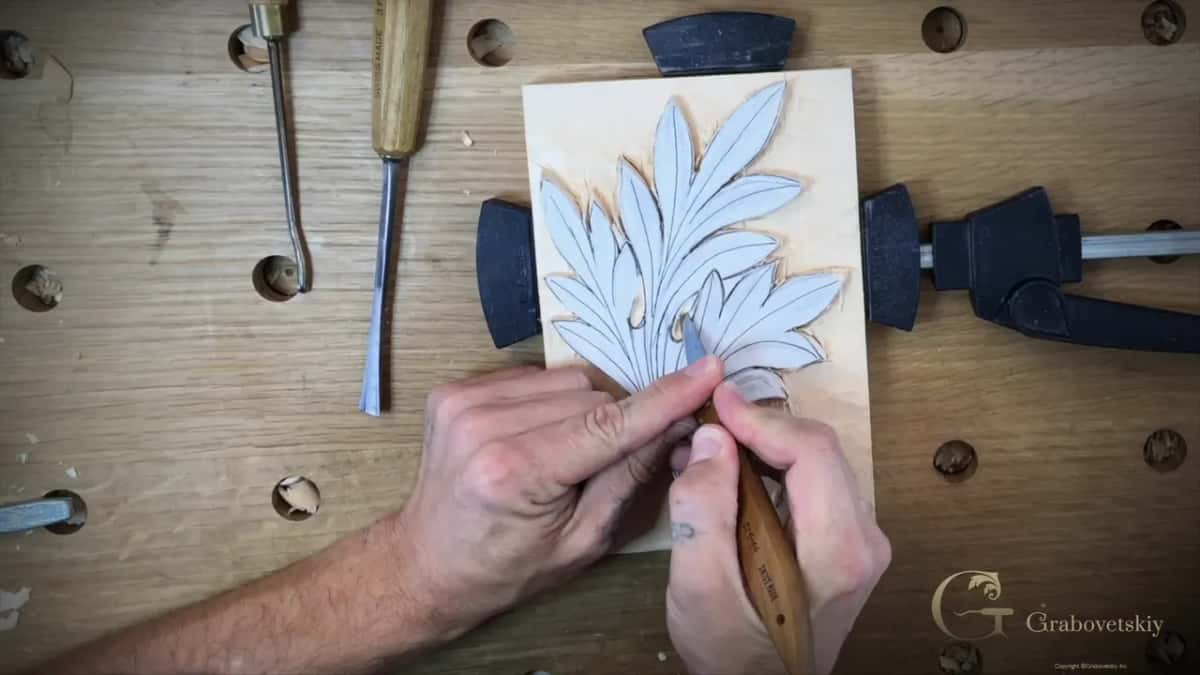
Both hands on the knife, two clamps.
Do not read any of that as blanket love for the whole species, because oak splits in half for me. If it's a white oak, I don't like it, too. But if it's an English brown oak, it just carves beautifully. It's really nice. White oak has still gone under my gouges on my own projects, so take this as a preference rather than a rule.
British sources will tell you how much of it there is. the timber species of the nation's forests include English oak, according to Forestry England, and the Woodland Trust calls it Britain's most abundant broadleaf. The wood I reach for after lime is walnut, not a British native, and I wrote it up in whether walnut can be used for carving.
Can a beginner carve sycamore, beech or ash?
Experience cannot answer that for me here, and guessing is worse than silence. That is a verdict I am not willing to invent for you. A page that hands you a confident verdict on all nine British species was written by somebody with no gouge in their hand, and you can usually tell.
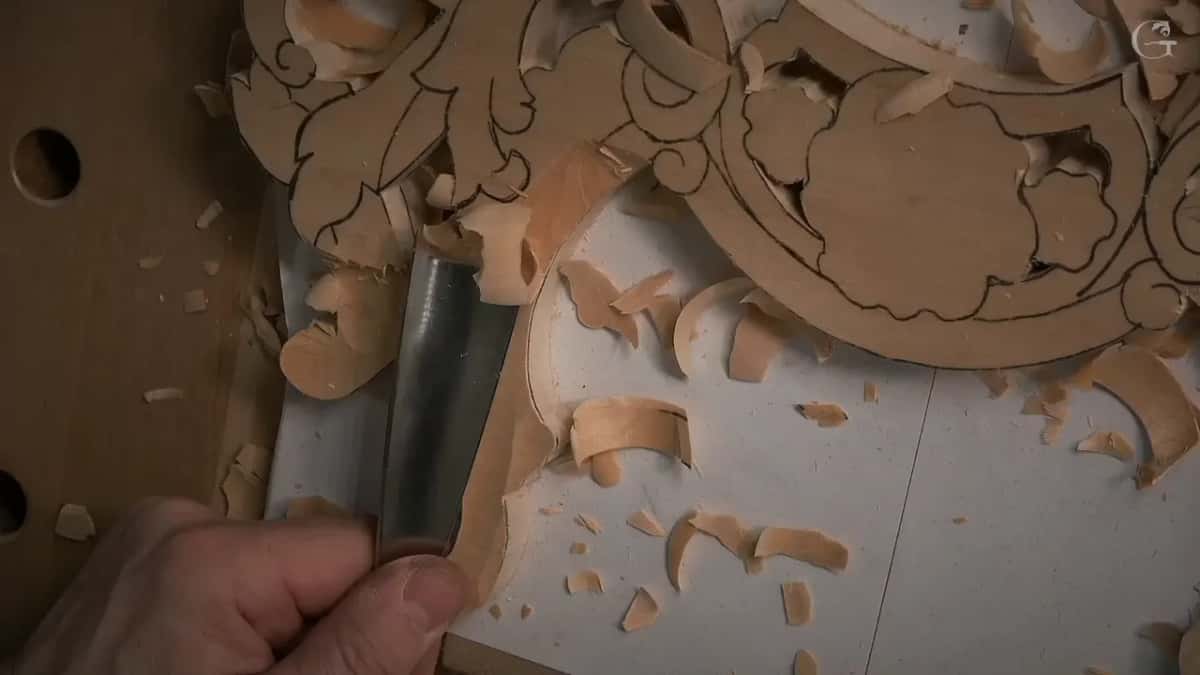
A wide gouge rounding a sawn edge.
British foresters do have things to say, and their names go on those things. Forestry England grows sycamore in the public forests as one of the broadleaves, and the Woodland Trust calls it a naturalised UK timber tree. The Forestry England beech page covers a widely grown English broadleaf, and the Wood Database sheet for European beech carries its working notes.
Ash I am leaving alone entirely. Sourcing it honestly would mean quoting an American species page at you, and a British ash board grew on a different tree.

Two gouge sweeps sketched in pencil.
Do the thing that works whatever the label on the rack says. Treat any board you have not carved before as an unknown, the way to choose a carving board, and buy one piece instead of a stack. Australia and New Zealand taught me this: my students there could not get basswood at all, so they had to go to European stores and just ship.
The same problem lands differently in other places. Other countries got their own version of this page: one for carvers in South Africa, another for anybody carving in Cameroon, a third for Iceland, and older ones covering Australia and Ireland.
How do you test a board in the yard before you pay for it?
Six checks, and every one of them works in any timber yard on earth. None needs a meter or a chart. Eyes, a thumbnail and a sharp knife in your pocket will do the whole job.
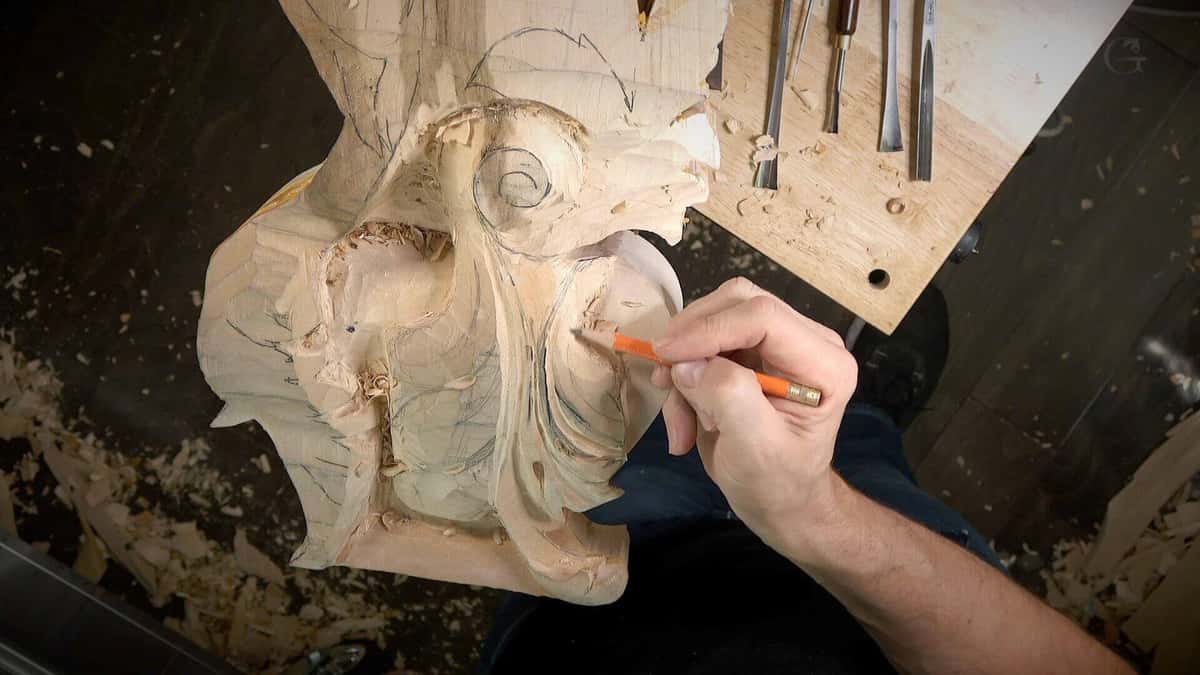
An orange pencil, five gouges laid out.
Step 1, read the end grain before you read the face
When I buy wood, I look at the edge. My preference when I look at the cut, I look for a quarter sawn or rift cut. If it's a straight cut, you're going to see rings like this, and it's also dangerous. I try not to buy it because it's going to move a lot. Rift cut and quarter sawn sometimes look almost the same, and both of those boards I would definitely buy.
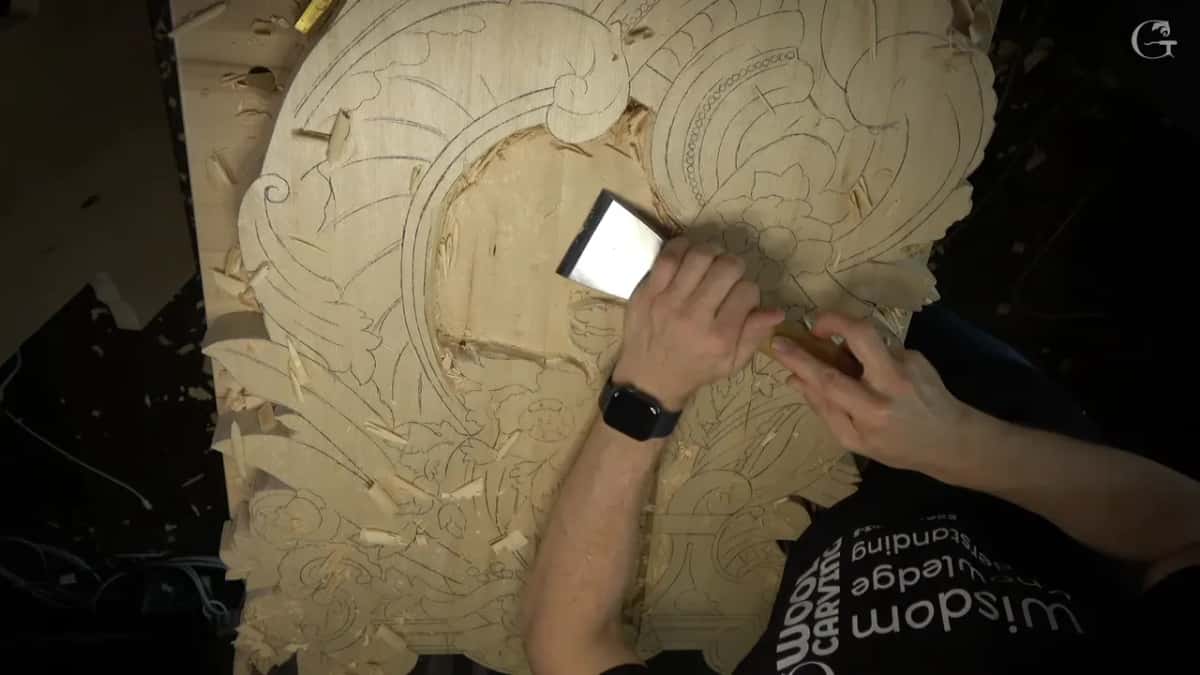
A flat chisel across a big panel.
Step 2, count how much grain you can see on the flat side
Lay it flat and stare. On lime you will see almost nothing, and that is the point. I don't like to carve on a pine, because all of the grain really visible, and it distracts. A loud grain competes with your design for the viewer's eye, and a beginner does not need a second opponent.
Step 3, ask whether the board was air dried or kiln dried
Usually when you get that from a lumberyard, usually it's a kiln-dry, so they use that big stove and they just cook that out. But I found that it moves a lot more. When it's air-dried, so you eliminate that movement. Air-dried stock is really kind of hard to find nowadays, so ask anyway, and be pleased when the answer comes back right.
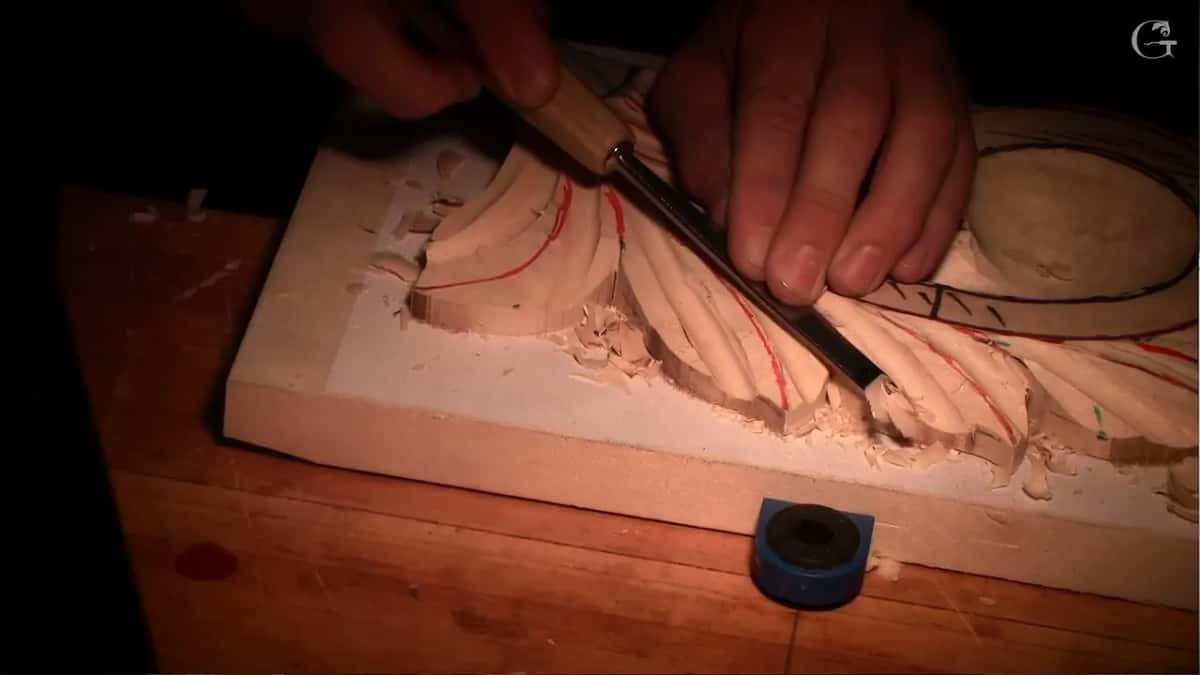
Red layout lines still showing underneath.
Step 4, take one shaving off a corner with a sharp blade
Ask permission, then cut. If you're experiencing, if it's fighting you, so always take it back and take a smaller chunk. A board that fights a really sharp blade on one corner will fight you across a whole panel. Feel that now, in the shop, while the board still belongs to them.
Step 5, listen to the sound the blade makes
Sound tells me things my eyes miss completely, and listening costs nothing at all. The sound of when you're carving oak versus limewood is absolutely different. Oak is more crunchy. Once you have heard clean lime under a gouge, a hard gritty board announces itself by ear and you put it down.
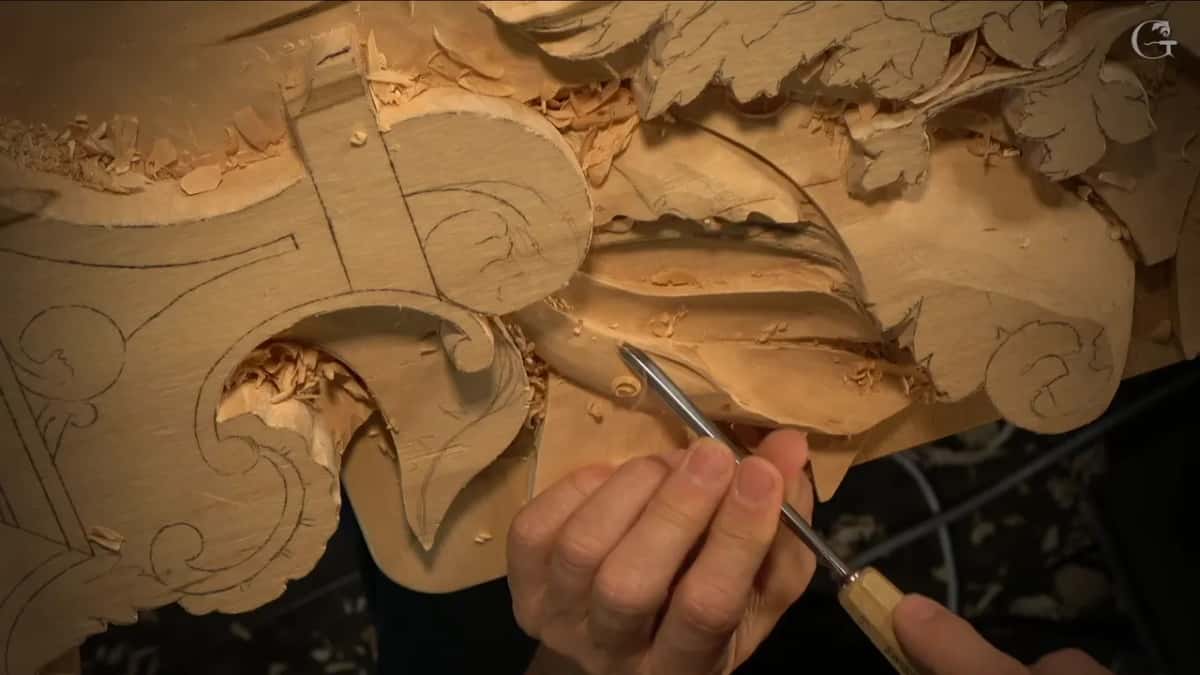
The dark gap carved under one leaf.
Step 6, buy the smallest board that will do, and keep every offcut
Please make sure keep all offcut pieces. There's absolutely not going to be any waste. My goal is to show you that you don't really have to buy thick stock, because you can save material and utilize every inch of it. One small board you ruin will teach you more than a stack you are frightened of.
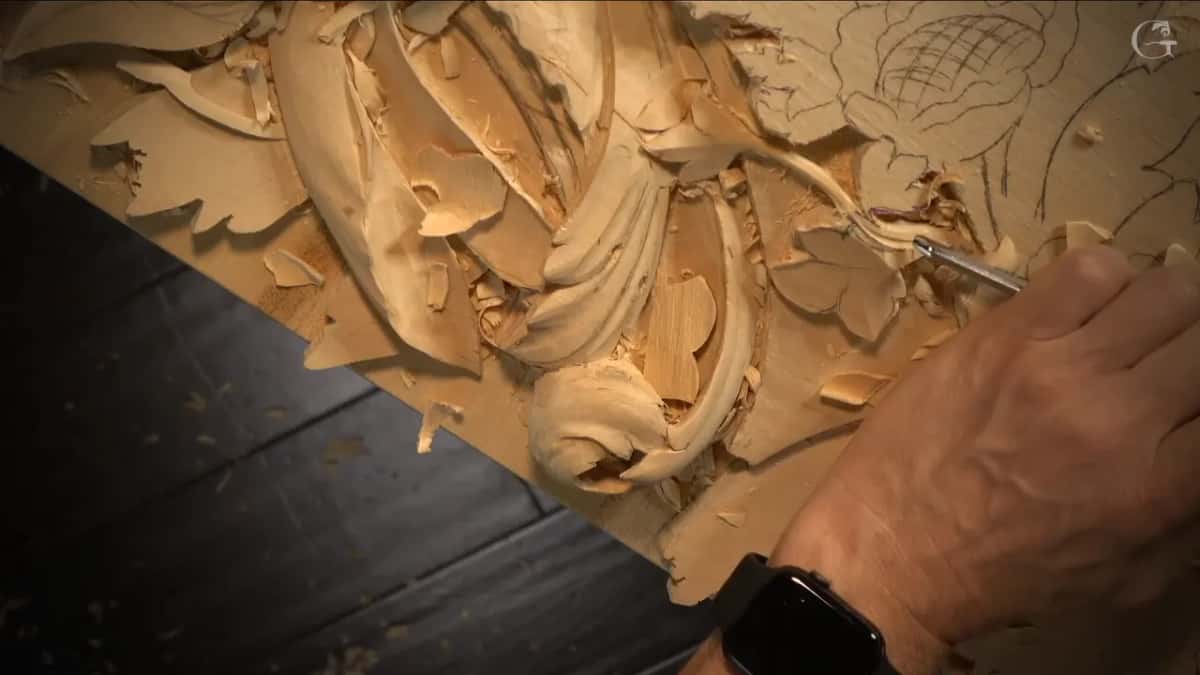
A deep leaf under its own curls.
There is more room on judging whether a piece of wood is good for carving.
How do the common British carving woods compare?
Side by side, with my verdict and its source in the same row. The last column names who did the talking.
| Wood | Ask for it as | What I can tell you | Who says so |
|---|---|---|---|
| Lime | lime, lime timber | Soft enough and it still holds the detail, with almost no grain showing | me, plus Forestry England |
| English oak | brown oak | Beautiful, crunchy, and tougher on an edge than lime | me |
| Walnut | walnut | My number two after lime, and the grain is not too pronounced on American black walnut | me |
| Cherry | cherry | Cherry and walnut, they hold the detail really nicely | me |
| Sycamore | sycamore | No verdict from me here, though it grows in England's public forests | Forestry England, Woodland Trust |
| Beech | beech | Foresters speak for beech too, and it is a widely grown English broadleaf | Forestry England |
| Pine | pine, softwood | Carvable, and I do not enjoy it, because the grain shows and pulls the eye off your carving | me |

Carved deep left, blue pencil right.
The table gives you no hardness numbers on purpose, because a chart cannot say how the board in your hands will cut. I argued that out in which woods are hard to carve.
Where do you buy carving wood in Britain?
Find the yard that sells to furniture makers, and walk past the builders' merchant. Someone on Instagram once asked me for a good supplier of basswood blanks, and my first words back were a question of my own.
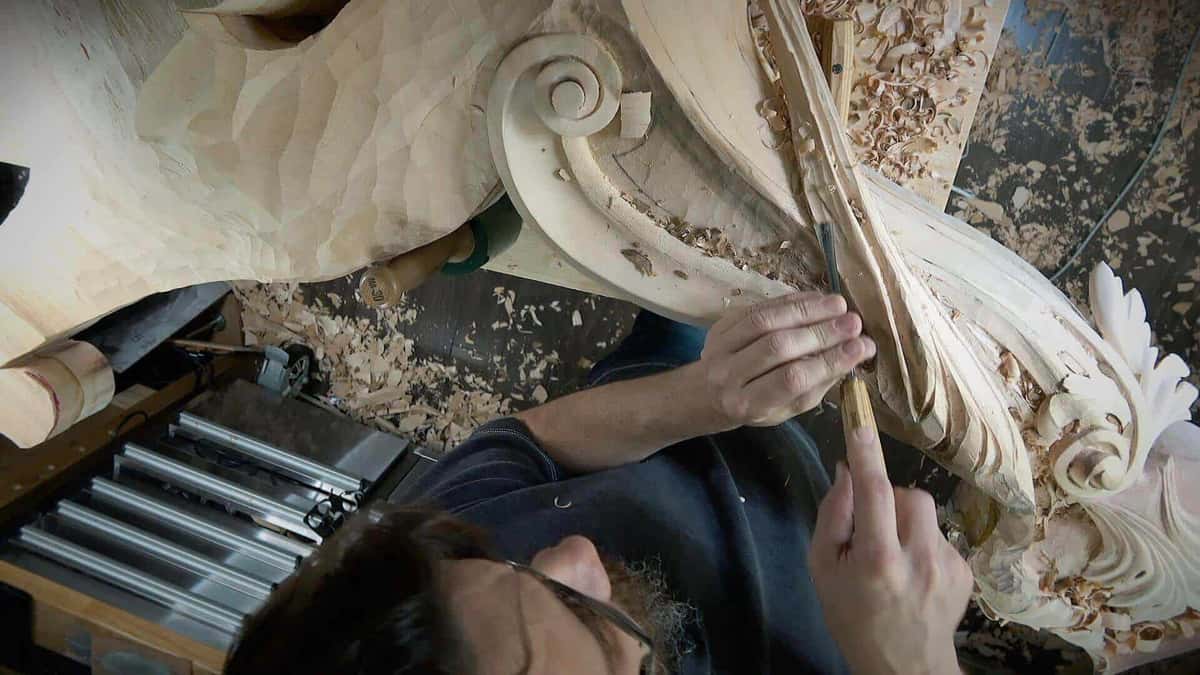
Both hands driving one gouge, shavings falling.
My answer began with a question back at him: yes, absolutely I do, and it all depends where you're located. Your yard I cannot name. The kind of yard I can. You have to go to the lumberyard who's actually selling to the furniture makers. A construction yard usually will not have it. So you Google hardwood lumberyard, because it's usually specialized in the hardwoods.
British merchants cut home-grown lime for carvers, and here are four with the wood on the page. W.L. West and Sons list English lime carving blanks as straight-grained, fine-textured and easy to hand carve. Classic Hand Tools source their lime blanks from a British sawmill. Fallen and Felled in London saw home-grown lime into boards, and Surrey Timbers stock lime blanks for carving and turning.
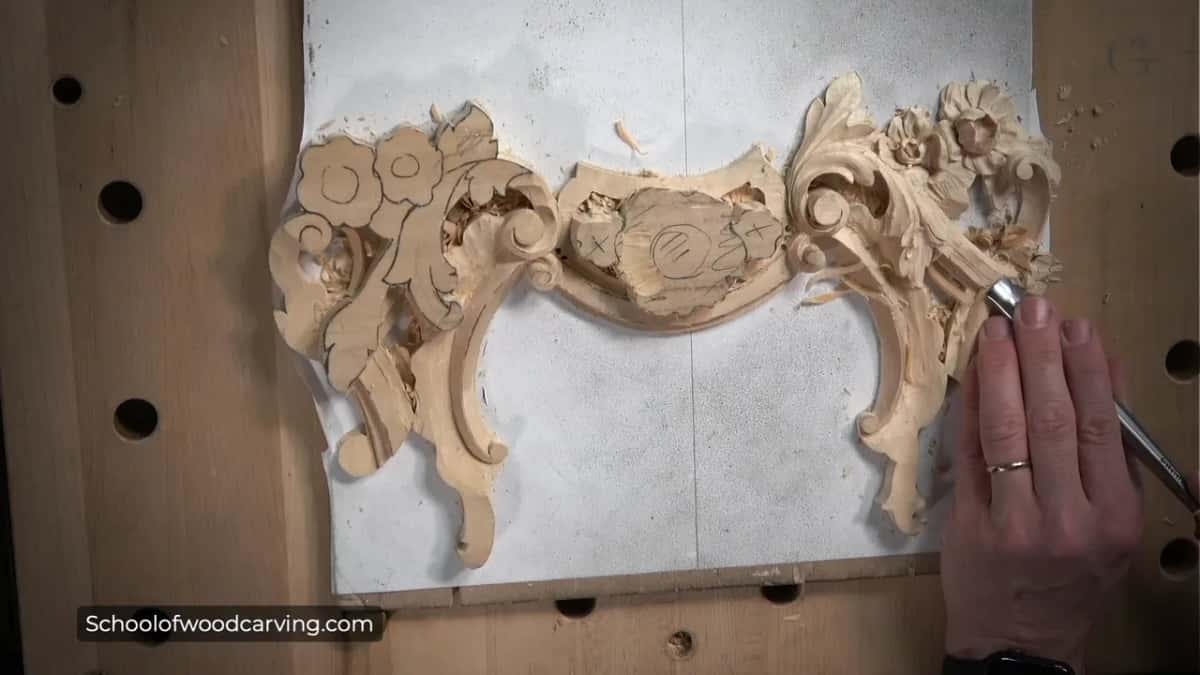
Holes carved right through the pale flower ornament, seen from above.
One more idea, and hardly anybody uses it. Say you spot somebody selling planks on a marketplace. Then you can find out who is actually the guy who's selling, and you can contact them directly. Ask for a discount on a direct sale. And most of the time, they are just people, they just business people, and they're really open to it.
Carvers are the other route, and Britain has plenty of them organised. The Master Carvers Association and The Woodcarvers Association both deserve an email, and the Heritage Crafts register entry for wood carving shows how the craft is faring at home.
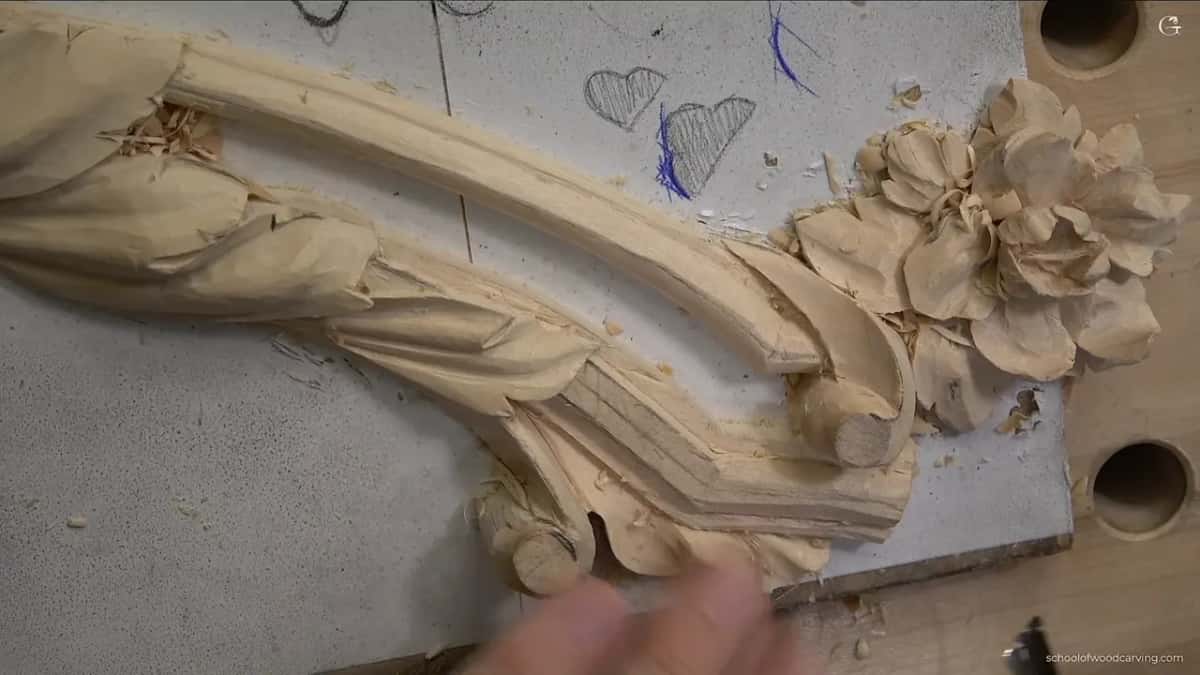
A scroll running into open flowers.
What if lime is simply not there? You can use almost any wood pretty much, but it's going to be difficult. Australia and New Zealand hit that wall. But jelutong, I think I'm pronouncing that correctly, it's another wood for wood carving. Britain has it easier, with wild cherry among the natives as well.
Does dryness matter more than the species?
A wet board will beat you whichever tree it fell from. When I buy wood, I actually place it to my shop and don't touch it. Some of the wood I did not touch for over 10 years. Some of that, actually, I still have some of 20 years still in my shop I did not touch.

Bent into a pale oval of daffodils.
None of that is patience for its own sake. There is a big difference between kiln-dry and air-dried, natural dryness, and the gap shows up as movement long after your carving is finished. Most of the time when you buying wood, that would be kiln dry, and all of the movements and the puffiness of the wood is also creating the problem.
Numbers exist here if you want them, and they come from people who measure timber for a living. Wagner Meters publishes acceptable moisture levels by industry, the Forest Products Laboratory Wood Handbook gives chapter 13 to drying and moisture control, and the Wood Database explains dimensional shrinkage.
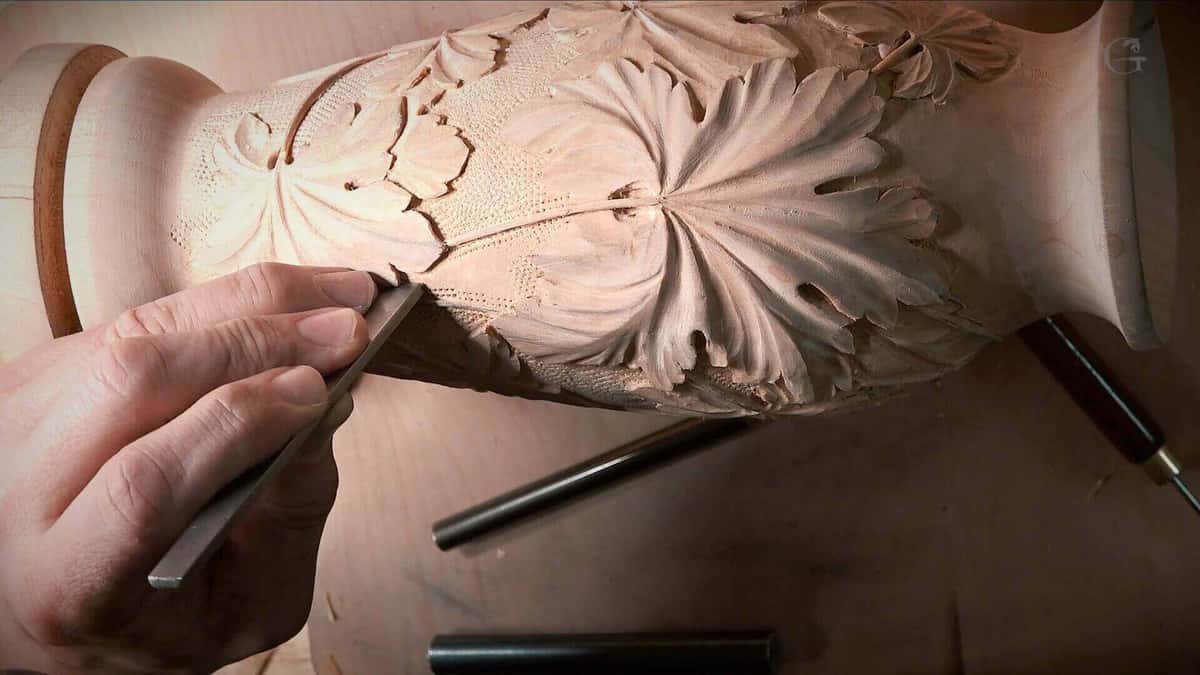
A flat slip against a turned vase.
Too dry is a real thing as well, and I met it once. I had to carve hard pine that was harvested in 19th century and dried for a long time. You can't even drive a nail in it. It was just so dry. I broke quite a few gouges on that job.
Two of my pages go deeper than a section can: how long wood takes to dry for carving and what wood shrinkage means.
What does a sharp gouge change about all of this?
Sharp tools. Break the rules. A student in one of my in-person classes said the first half and I finished it, and between them those five words answer most wood questions I get asked. If you do have sharp tools, really doesn't matter. You can go against the grain, along the grain.
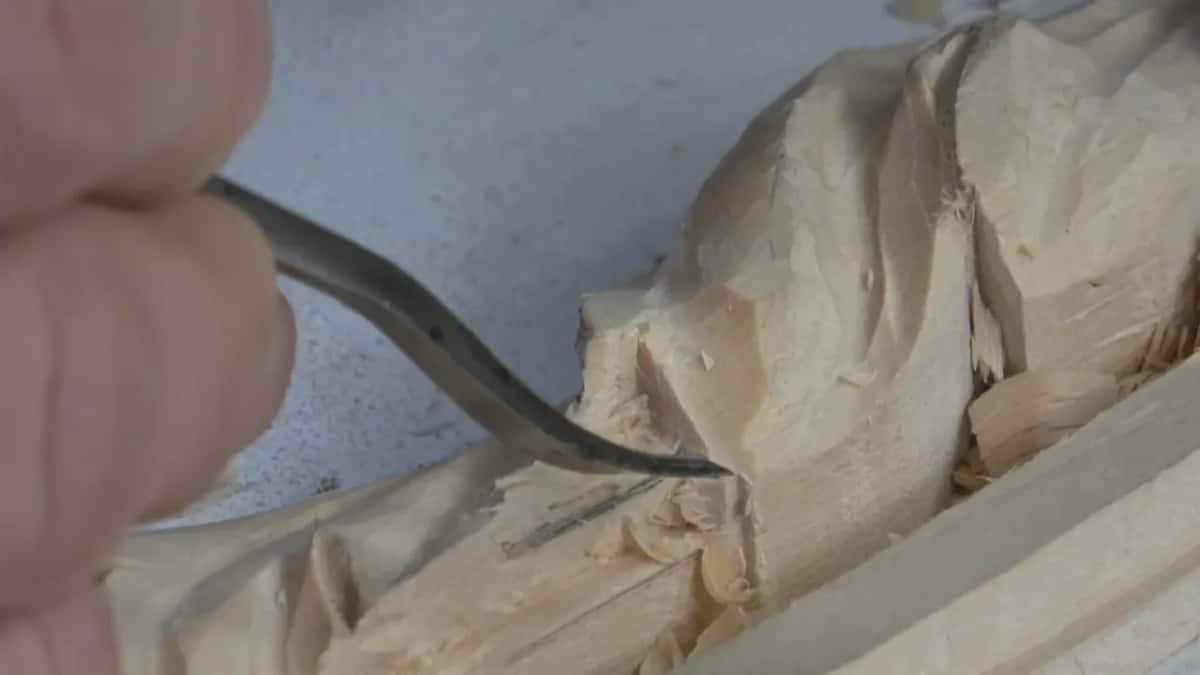
Steel disappearing under pale wood.
Grain is still worth learning, and I wait until day three of a class to teach it. People don't understand in all until they experience, and they have a question, how do I approach the grain if it just fights me. I explain it with drinking straws and a dog. Pet a dog against the grain and you feel exactly what your gouge feels.
Popular Woodworking has a plain guide to reading grain direction, and it also carries a piece on tear-out. Wikipedia on sharpening covers the mechanics.
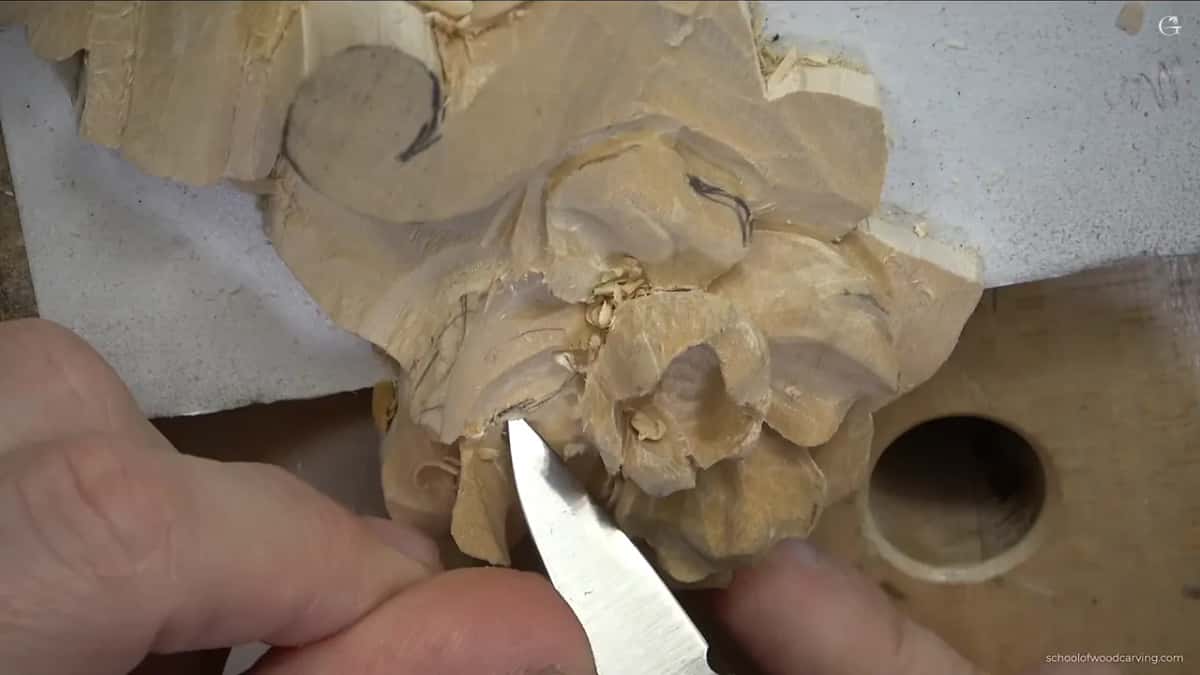
The knife working behind the rose petals.
Britain gave me three of the brands on my bench, and that is a debt worth saying out loud. Actually, three brands from England. From England, I do have Ashley Iles, I do have Henry Taylor, and I do have original Marples before they sold it overseas. Really good steel they use.
Britain also handed me a word I now use in class. All it takes now, just hooking out. Or if you are in England, it would be called hoiking out. Just hoik that material out.
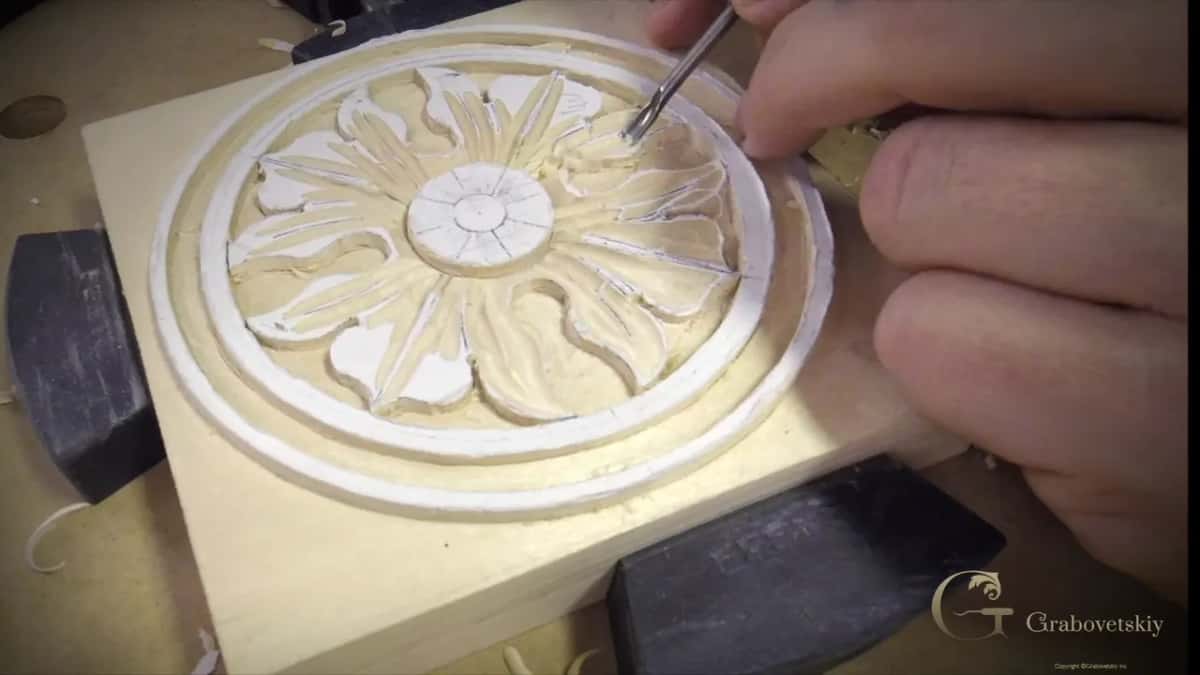
Twelve petals, finished.
Stuck on tools rather than wood? Then begin with what to look for in a carving tool set, then why the direction of the grain matters. For the order to learn things in, try how to start learning wood carving.
Bring one lime board to the bench and I will take you through the first three cuts myself, in Wood Carving: First Cuts for Beginners. Shall we carve?
Frequently asked questions
Is lime the same wood as basswood?
Close enough for a carver. Basswood is the American tree, lime is the British one, and both belong to Tilia. They are pretty much the same wood under my gouge. Buy whichever of the two your own yard happens to have racked up this week.
Where can I buy lime for carving in Britain?
Four merchants named earlier on this page cut home-grown lime into blanks and boards. Beyond them, hunt for a hardwood yard that supplies furniture makers rather than builders and joiners. A club can get free wood, though not every club, and the question is always how big a piece you can get.
Can I practice on offcuts instead of buying a board?
That is exactly what offcuts are for. Keep every offcut piece you make, because a scrap the size of your palm is enough to learn one cut on. Whole projects have come out of leftovers from my bigger jobs.
Should a beginner start on oak instead of lime?
Start on lime. Brown oak is crunchier, it carries a lot of grain, and it dulls an edge quicker, so more of your bench time goes on sharpening. Come to English oak once you can pull a clean shaving off lime.
How much grain should I see on a good carving board?
Almost none, for an easy first project. Lime has grain your eye simply cannot find, so what you see is the shape you carved rather than the stripes under it. Loud grain is a second design competing with yours.
What if the only wood I can get is pine?
Pine will carve. I do not enjoy carving it, since the grain shows badly and distracts, and in old England pine was the timber cheap carvings were made from. Practice cuts on it, then buy lime for the piece you keep.
Filed under
- affordable wood for carving
- beginner friendly carving wood
- beginner wood carving ideas
- best wood for carving tools
- best woods for beginners carving UK
- carving wood buying guide
- common wood used for carving
- easy wood to carve for beginners
- how to start wood carving
- practice wood carving for beginners
- resources for wood carving beginners
- safe wood for carving projects
- smooth texture woods for carving
- straight grain wood for beginners
- types of wood for novice carvers
- UK wood options for carvings
- Understanding Wood for Carving
- wood carving for new hobbyists
- wood carving tips for beginners
- wood texture for beginners
- wood types that are fun to carve