
September 9, 2024 · Updated August 25, 2026
By Alexander Grabovetskiy — Master Woodcarver · Founder, School of Wood Carving · 20 min read
What are the best types of wood in Cameroon for beginners to practice carving?
The best types of wood in Cameroon for a beginner are ayous, which the trade also calls obeche, and the khaya offcuts a furniture shop might sell you. That ranking is the sources speaking, not my own bench. What I do know is how a board tells you, before you pay, whether it will fight you.
My students live all over the world, and some of them live in Africa. Cameroon's own timber I will not judge from my own bench, so ayous and iroko and sapele get their say here from the sources rather than from me. The page that used to sit at this address said basswood is the wood for a beginner in Cameroon, in my voice. That sentence is not mine.
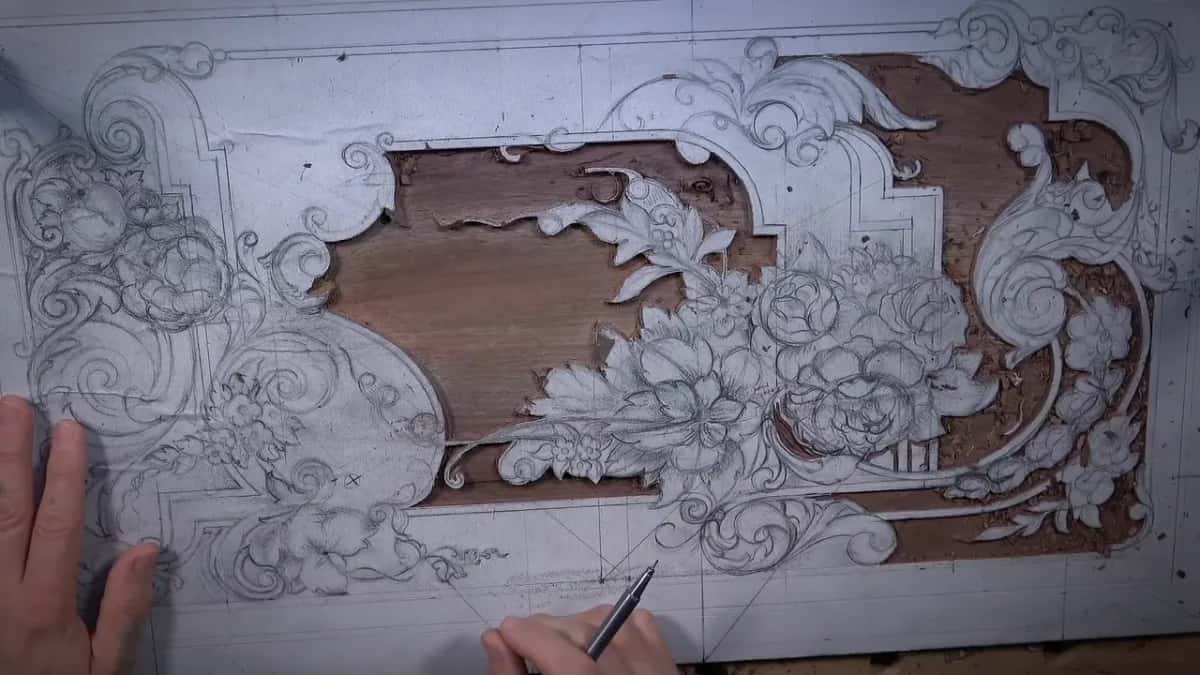
The drawing still whole, the ground opened to bare dark wood.
So here is my trade. Every fact about your timber arrives with a link. The rest is mine: what soft wood does to an edge, and how to read the end of a plank in a yard.
We walk the woods your mills actually cut. Then the law, because two of them touch this timber and people muddle them. Then six checks that work on any board. Then the edge.
- Ayous, sold in the trade as obeche, is the soft local board a beginner can simply buy.
- Sapele and iroko tear and blunt, per The Wood Database, so leave them for later.
- Ebony from Cameroon is not a CITES timber. Ebony from Madagascar is. Both are poor first boards.
- Six African entries do need CITES papers to cross a border, and that list grew in 2023.
- A sharp edge beats a clever species choice.
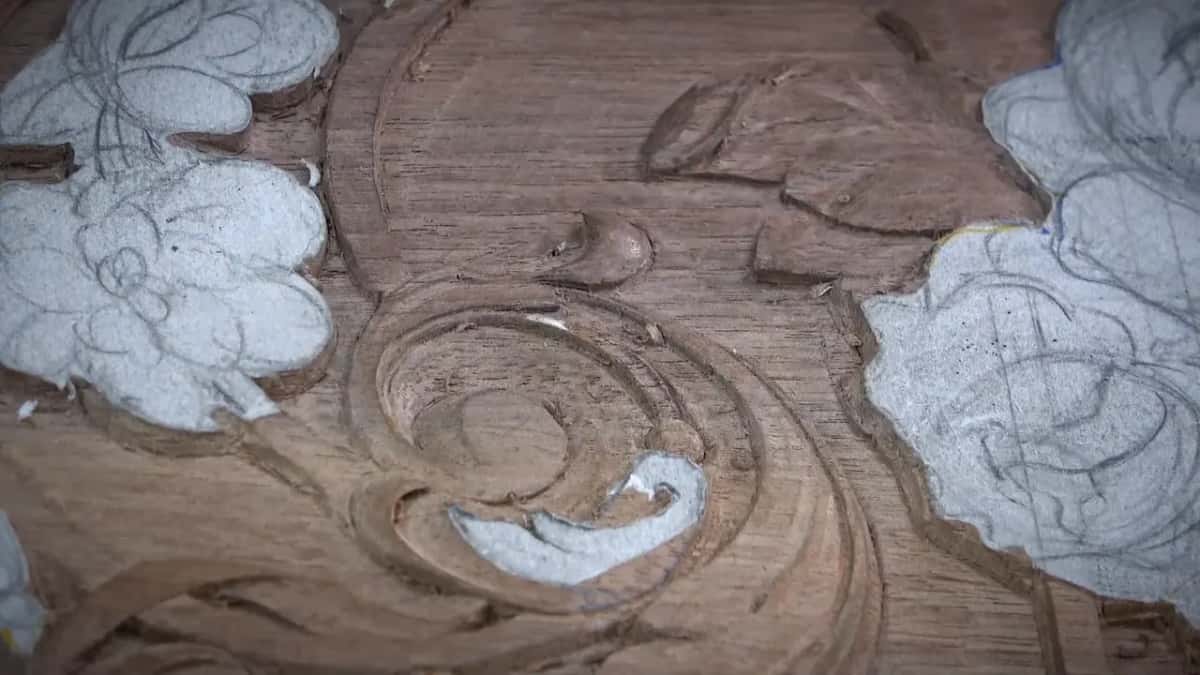
Tool facets running right across the eye of a reddish-brown carved scroll, no hands in the frame.
Which wood should I start on if I live in Cameroon?
Start on ayous, the pale wood the export trade calls obeche. Over on The Wood Database, the obeche entry calls it light, soft and low in density. Soft is the first thing I want in a first board.
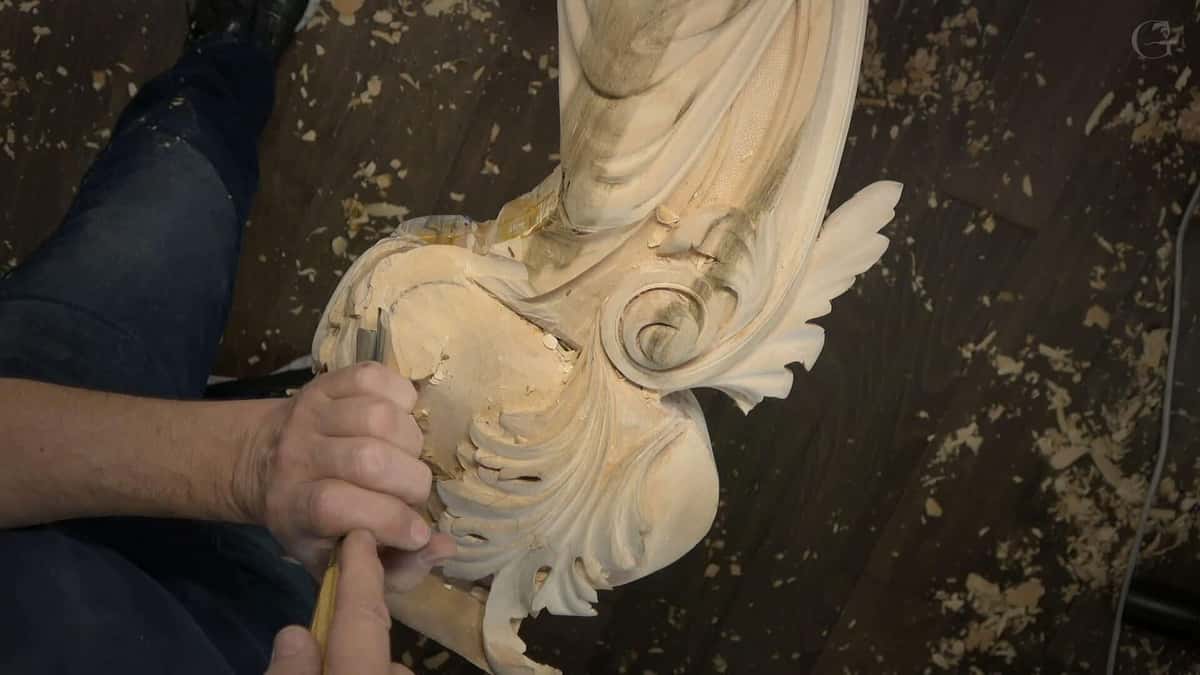
A pale panel on a dark plank floor.
And ayous is not rare where you stand. PROTA, the Plant Resources of Tropical Africa record for Triplochiton scleroxylon, calls it economically the most important timber species of Cameroon and Ghana, and puts it at roughly 35 percent of the volume of timber products Cameroon exports. A third of everything leaving the country. Which should mean the mills handle it constantly, so an offcut bin is the first place I would look.
Now the cost, from PROTA: sharp edges are needed for a smooth finish, and the wood tends to tear in mortising. PROTA also reports obeche as a sensitiser, so wear a mask. A blunt gouge drags those fibers up instead of slicing them away, and you will blame the wood for your edge.
My whole test for a beginner's board runs two words long. Soft enough, and it still holds the detail. Ayous gives you the first half on paper. You learn the second half by carving one and looking hard at the cut. The wider case for starting soft sits in my ranking of the softwoods, with the judging habit in how to tell whether wood is good for carving.
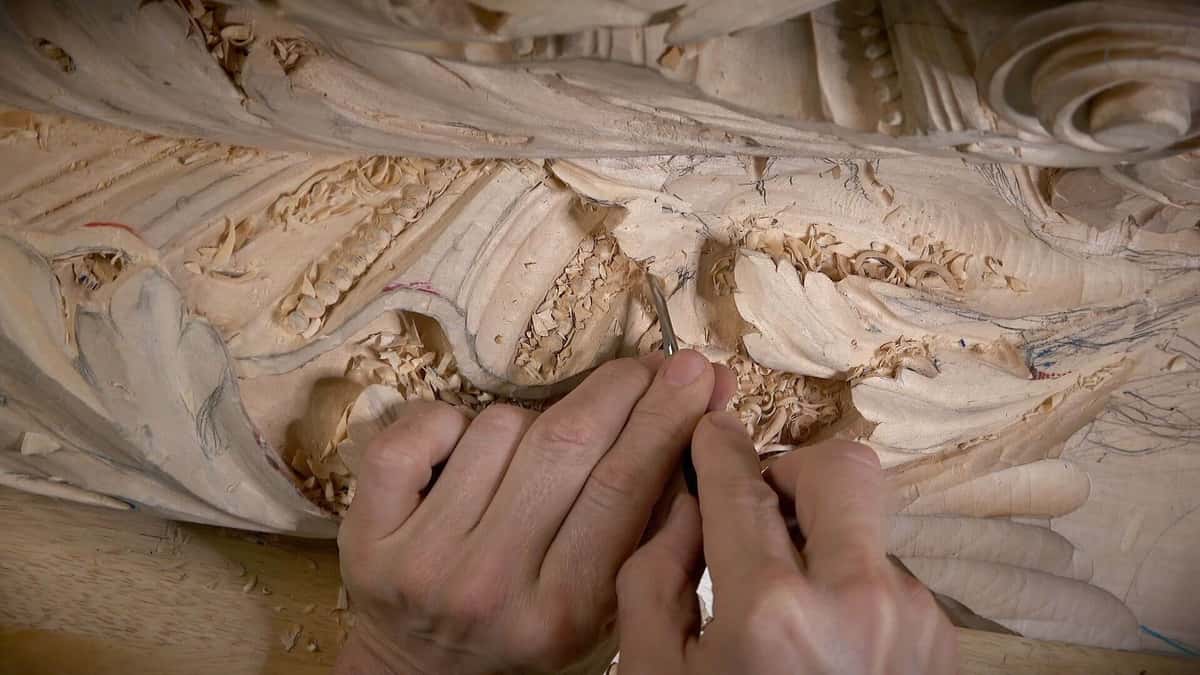
Chips everywhere, and the pencil layout lines still readable underneath.
For botany rather than trade, the World Agroforestry species profile for Triplochiton scleroxylon carries the distribution and the growing habits.
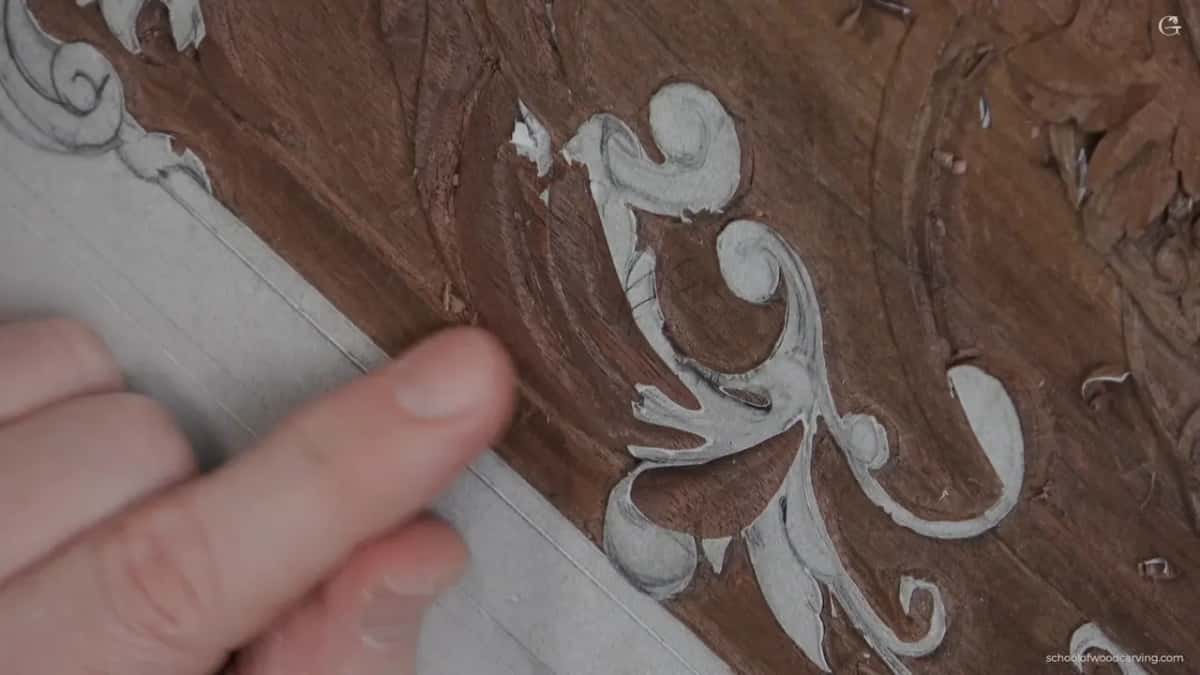
A pale acanthus drawing standing above ground already lowered.
Why does the wood I teach on carry five different names?
One tree, five languages, and each country is certain its own name is the real one. Much of the advice you read out there names a wood you cannot even buy.
Here is how I put it in the beginner course. You will need some type of wood, and I suggest to use basswood. It's one of the best. In European culture, it's called lime wood or linden wood, because it's a beautiful wood. There is no grain in it, almost no grain visible. Of course, there is a grain, but no visible grain. And you can achieve great results. It's soft enough, and it still holds the detail.
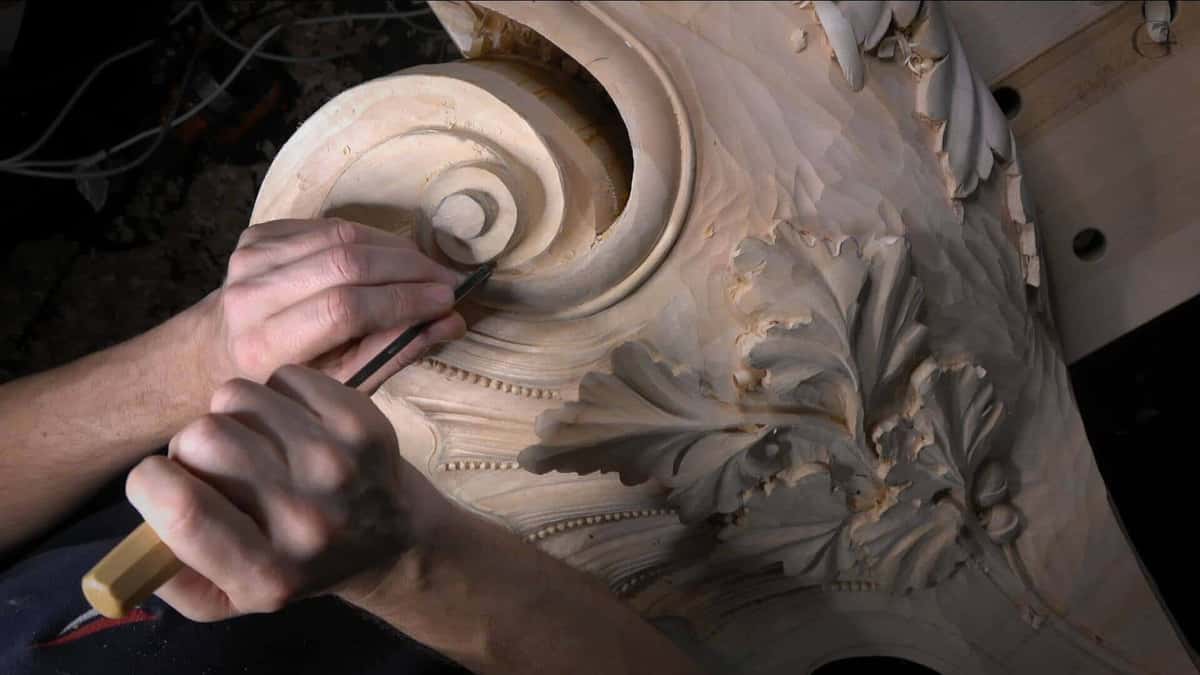
The spiral eye of a big volute, bead row running beneath.
Then I tell them where to get it. In United States there is a store called Michaels, and there is basswood planks you can buy. Woodcraft sells them too. If you are in a different part of the world, I'm pretty sure you can find some suppliers who would supply you.
Read that last sentence slowly, because it is the honest one. That is as far as I can take you, and I know my own shops by name. Yours I will not name for you.
The names I do know. If you're in England, it would be called lime timber, which is where the beginner wood guide for the UK begins. I'm from Russia, and we call that wood lipa. Germany says linden. Some cultures call it a tea tree, because you can brew the linden flowers, and it is beautiful tea.
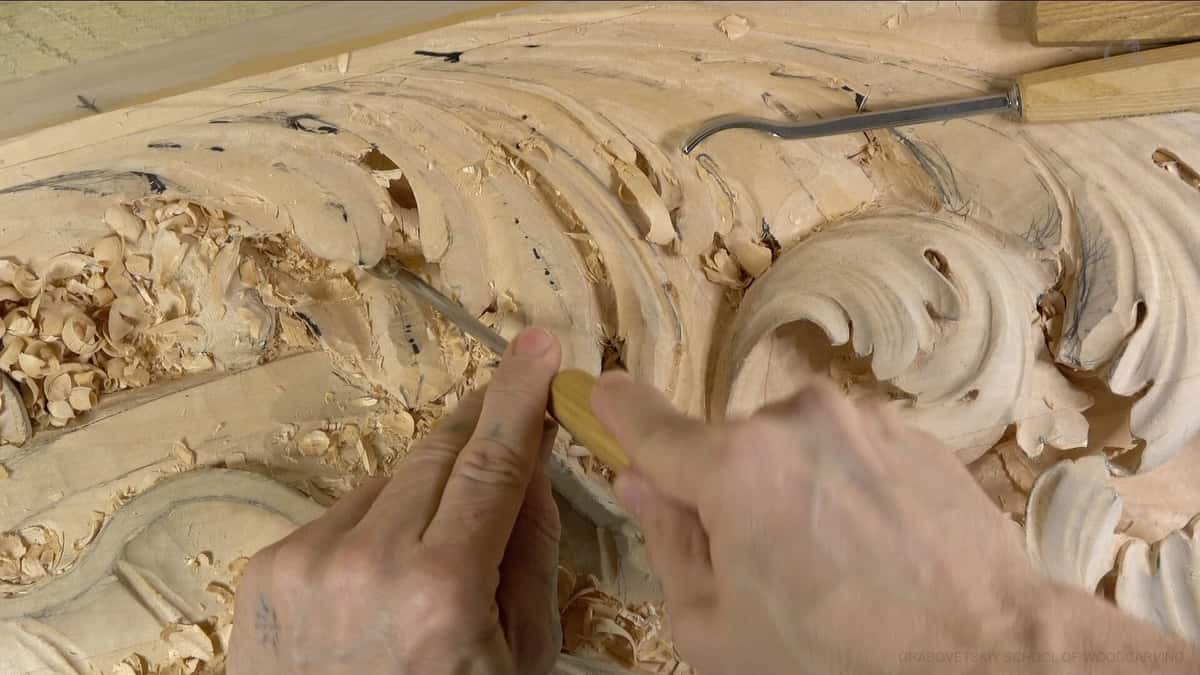
Long shavings banked to the left of a broad acanthus scroll.
Australia and New Zealand cannot buy basswood locally, and my students there ship it from European stores. The other wood I have named for them is jelutong, and I think I am pronouncing that correctly. Same shape as yours, which the Australian version of this page works from.
Is it a soft wood, then? Both answers live in my own lessons. In the sharpening lessons I call it soft wood, plainly. Elsewhere I say they call it soft wood, but it's not really soft, and you'd be surprised how nicely that wood keeps the detail. Old European culture did not class it as soft. Lime counted as a hardwood there, and pine was the soft one. Both are true. So I keep landing on soft enough. More sits in the wood guide page for basswood.
How do I test a board in the yard before I buy the stack?
Six checks, and not one of them needs a meter or a machine. This part of the page works anywhere on earth, because it is about the plank in your hands rather than the map.
Step 1, read the end of the board before you look at the face
When I buy wood I look at the edge. Rings tell you how the log was sliced. On a straight cut they run across the end in long curves, and I try not to buy that, because it moves a lot and it cups. Quarter sawn or rift cut is what I hunt for. Either one I would take home.
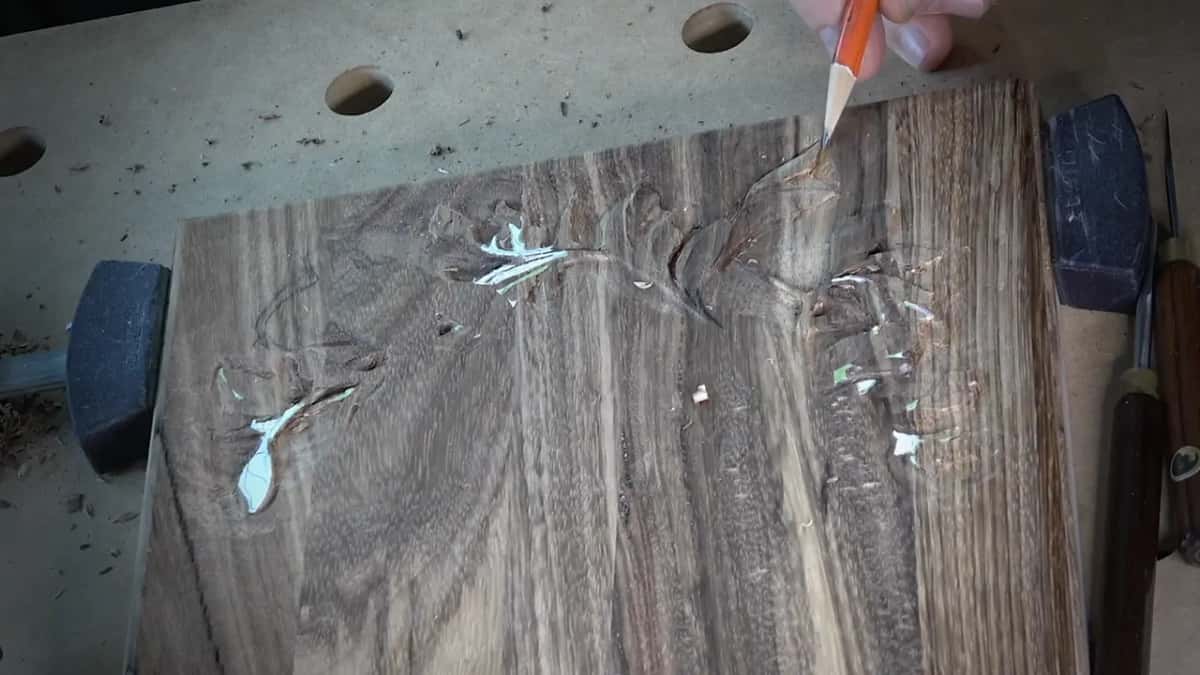
An orange pencil re-marking one line.
Step 2, expect the grain to fight one way and not the other
In the yard you can only look. The feel arrives on the first cut, and I explain it with a dog. Pet a dog against the hair and you feel what your gouge is about to feel. Under the top fibers sits a longer fiber holding them up, and carving toward the unsupported end makes them rise and fight.
Step 3, carve one pass and listen to the sound
Woods answer differently. Oak is more crunchy. Lime wood is absolutely different, and I cannot write that difference down for you. Naming what you hear does not matter. Noticing that it changed does, because the fiber changed under your edge, and that is the moment to take a smaller chunk.
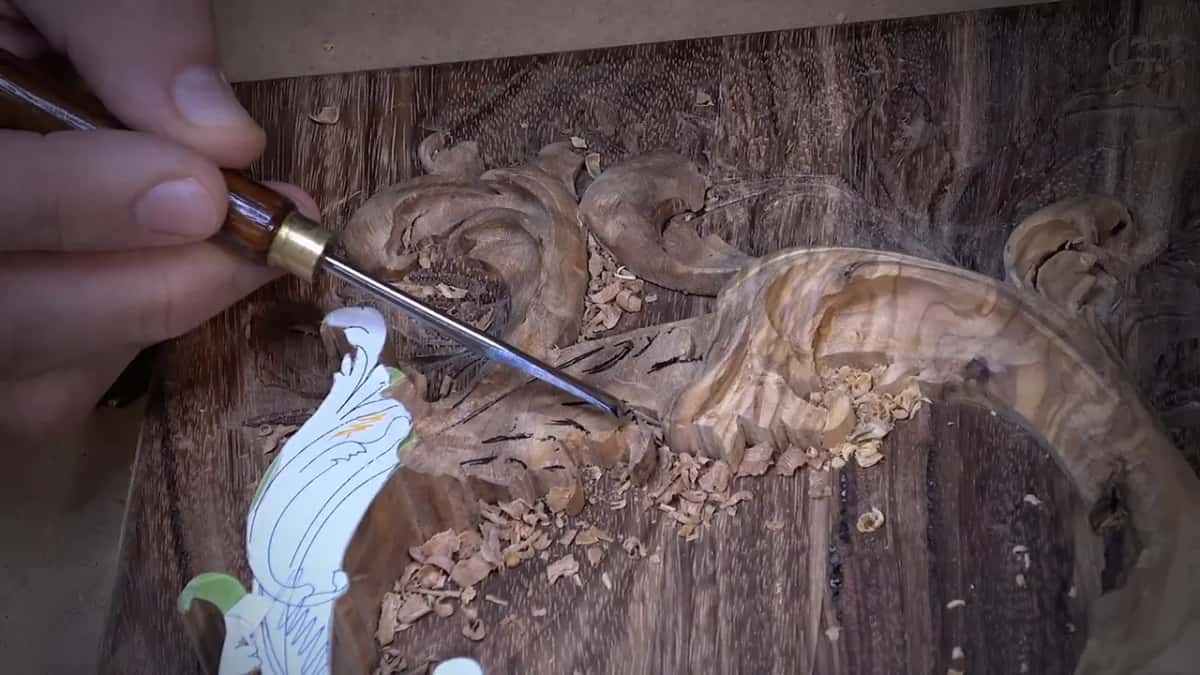
A long thin gouge into a figured scroll.
Step 4, sharpen the tool before you blame the wood
Some people say the best wood is a soft wood and your tools shouldn't get dull. That's not necessarily truth. It is soft wood, and your tools still get dull, really quickly sometimes. Much depends on the tools you own. With sharp tools it really doesn't matter, you can go against the grain or along it. Sharp tools break the rules.
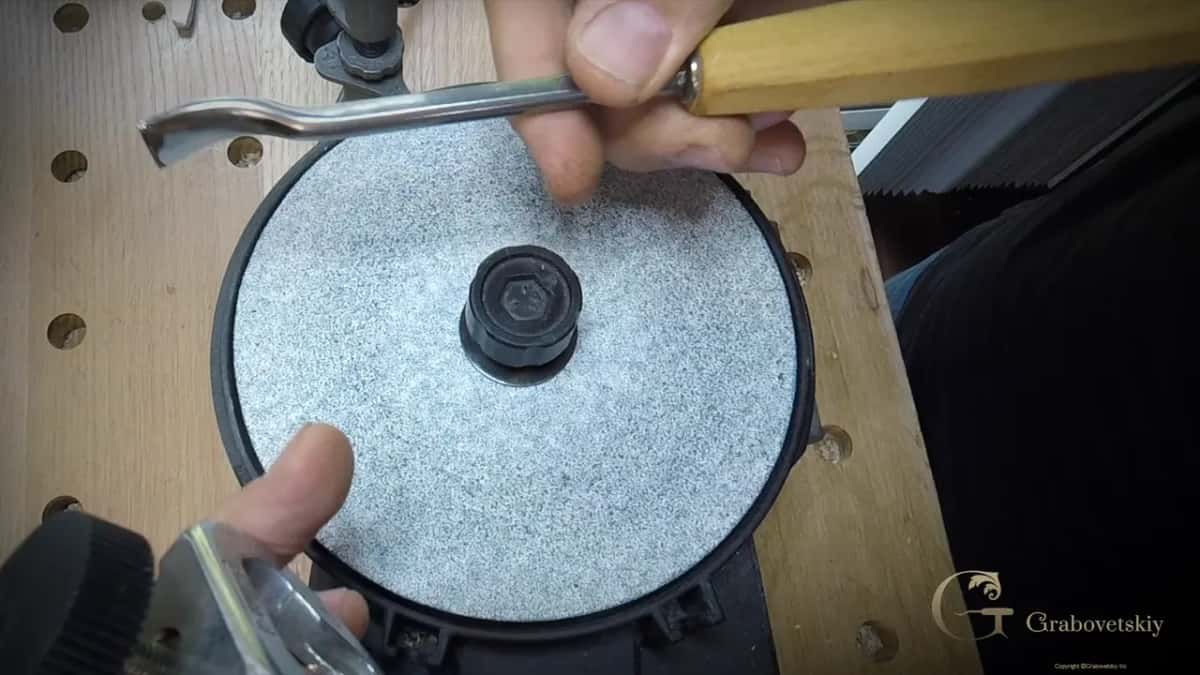
Two hands holding a bent gouge flat on a grey honing disc at the bench.
Step 5, carve the offcut first and keep every scrap
Please make sure you keep all offcut pieces. There is absolutely no waste anywhere in this kind of work. I once chose a thin board on purpose, seven eighths of an inch, when a two inch board was there for the taking. My goal was to prove you can use every single inch of a board. Your first pass on a new wood belongs on a scrap.
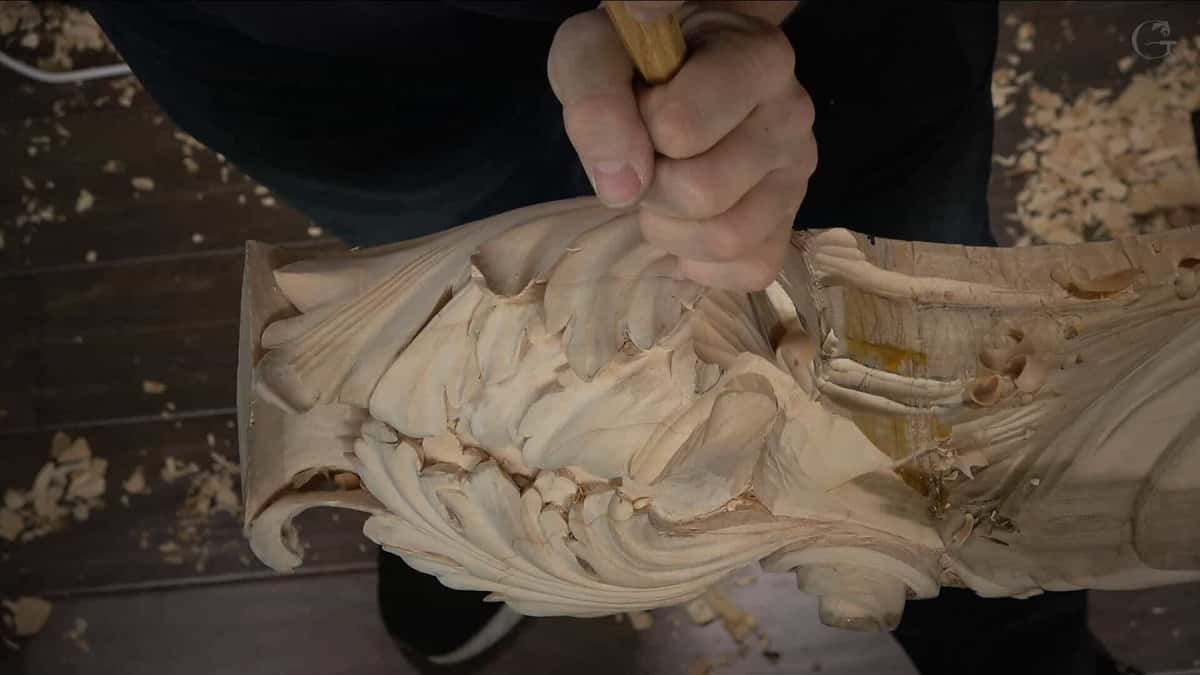
A roughed leaf held up, facets uncleaned.
Step 6, ask the yard who sells to furniture makers
Not any lumberyard. Walk into a construction lumberyard and it will not be there. You have to go to the lumberyard who is actually selling to the furniture makers. So check on your location where furniture makers shopping. Search for a hardwood lumberyard and start calling. And the obvious, out loud: treat that as a method, never as my recommendation of a yard where you live.
Why does sapele tear out when I carve it?
Sapele grain runs in two directions inside the same board. Interlocked grain is the trade name for it, and the Wood Database page on sapele says the wood tears out on a carving pass unless your tools are very sharp.
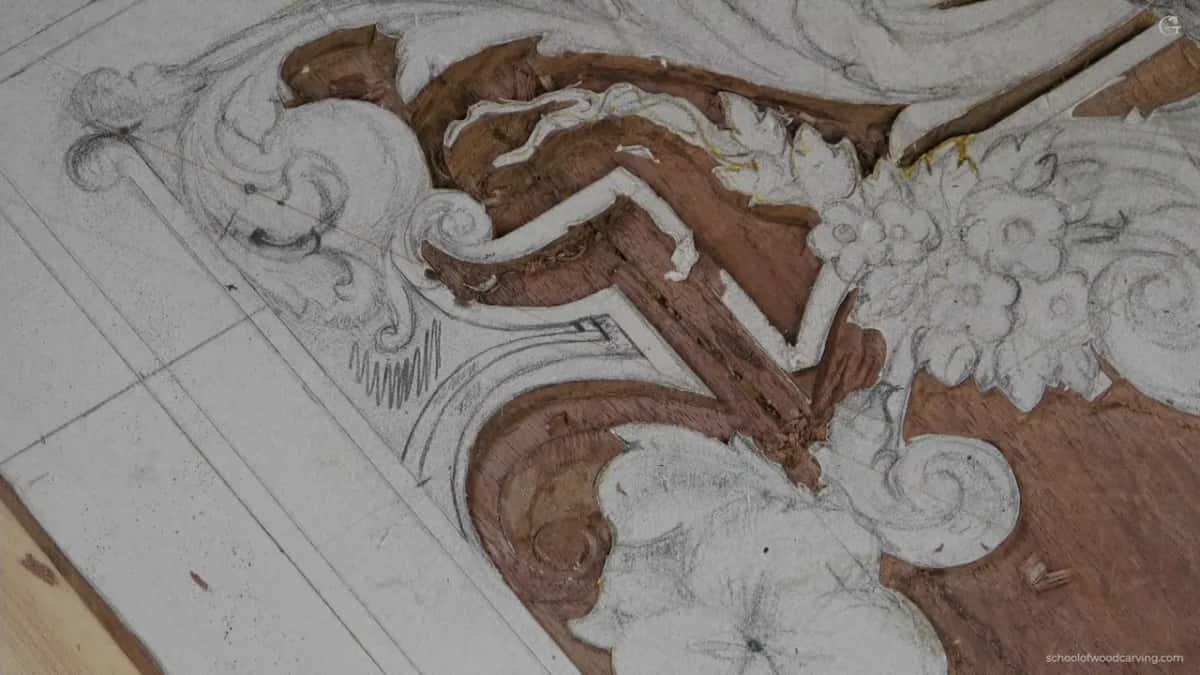
Ground taken down in steps to raw reddish wood.
Picture that with a gouge in your fist. On a plain board one wall of a channel comes away clean and the other rough, and the cure is easy, you work in from each side. Interlocked grain removes the choice, because the direction flips where nobody can see it.
Iroko stacks a second problem on that. The Wood Database iroko record describes a durable teak substitute with interlocked grain, and names calcium deposits inside the timber. Stone, sitting in your line. Deposits like that blunt an edge.
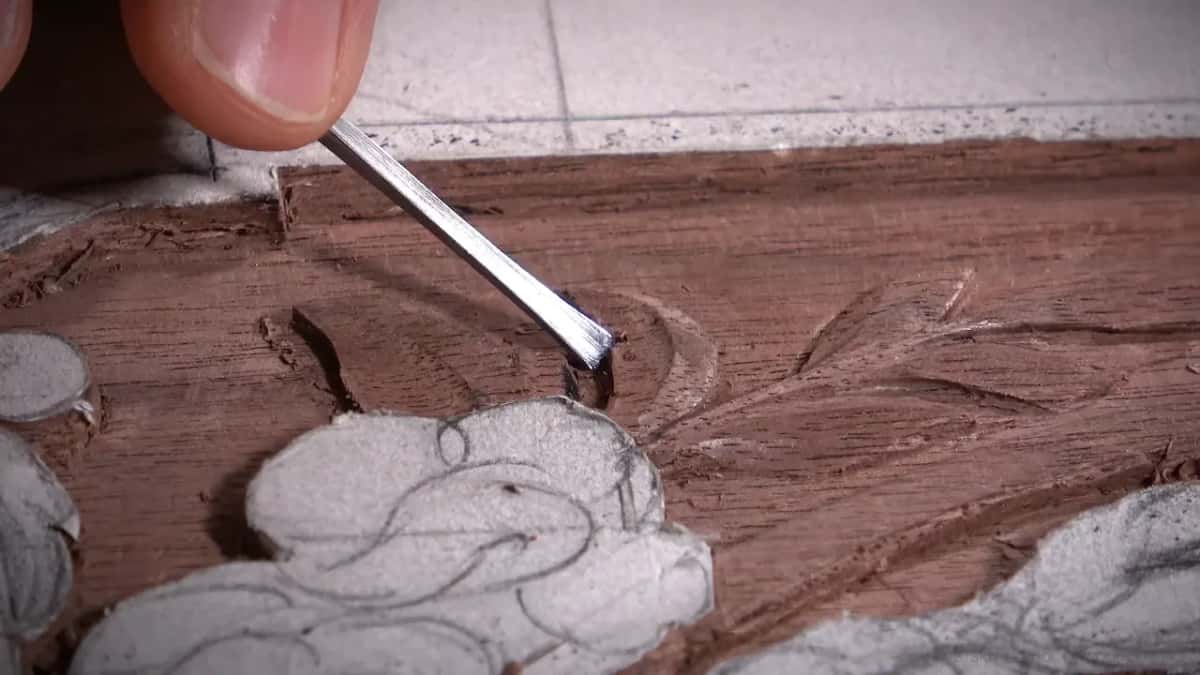
A flat chisel tip set into a reddish-brown carved leaf, with black shadow at the point.
None of this makes those woods bad. You can use almost any wood pretty much, but it's going to be difficult, and difficult is a poor place to spend a first month. Return to sapele once your sharpening has become boring. My long argument sits in why the grain direction matters, with the drills in handling different grain directions.
Two more names turn up on any Cameroon timber list, and neither is worth starting on. The ekki page, filed under azobe as well, calls it among the hardest and heaviest African timbers, a wood for bridges and docks. And the wenge page warns it is coarse and splintery, with dust and splinters that are a known health hazard.
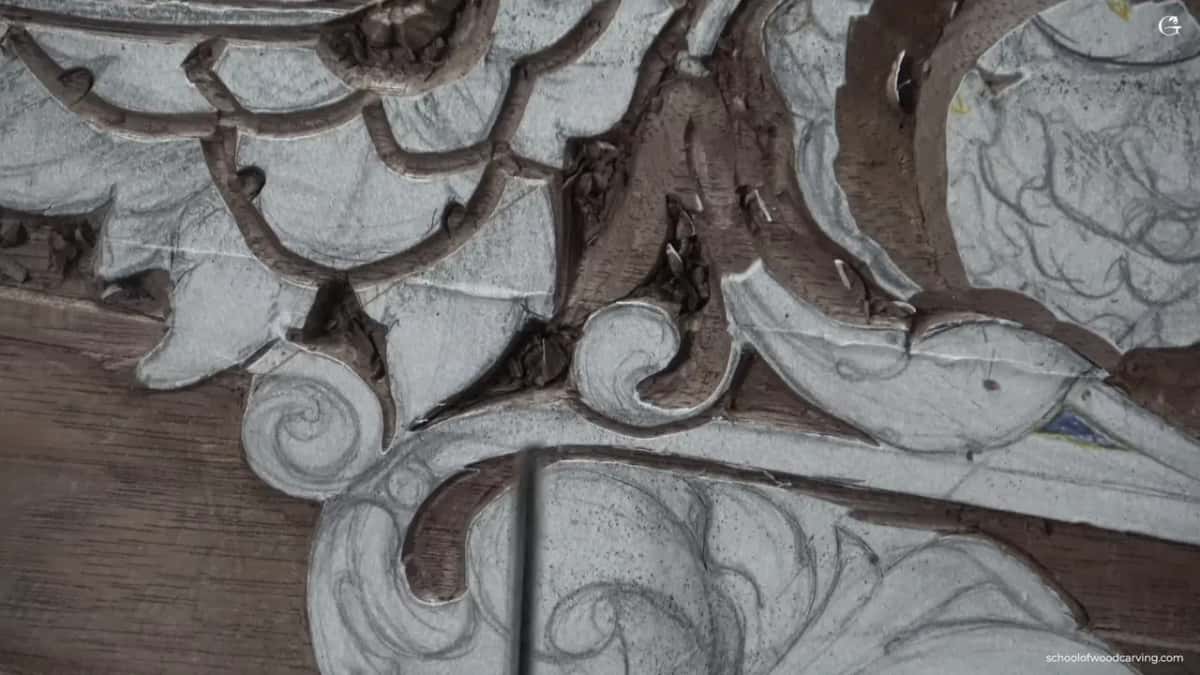
Layered acanthus, deep shadow between every layer.
Khaya is the kind one in that group. The African mahogany file says Khaya works and carves easily, and it is the mahogany that genuinely ships out of West and Central Africa. Mahogany I do carve. My job is to understand the wood I'm using, because it behaves nothing like lime wood. The harder woods, oak and walnut and mahogany, ask a different hand.
Should a beginner carve ebony because Cameroon has the best of it?
Leave ebony alone for now. The gaboon ebony entry puts it plainly: extremely dense, it blunts tools, and the dust is a sensitiser.
Dense is no compliment while you are learning. Every pass wants more push. The tool stops steering and starts skating. Your shoulder does work your edge should be doing, and you carve worse without noticing.
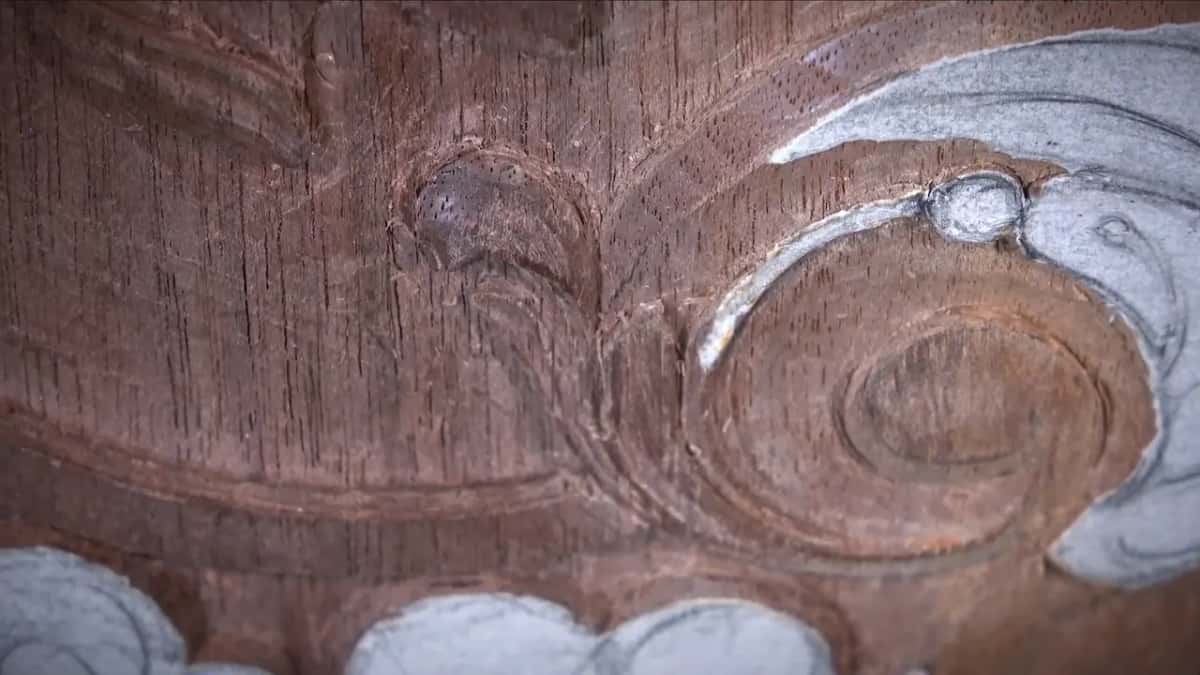
A small bud above a rolled scroll, nothing else in frame.
Read the trade record before buying any. The PROTA record for Diospyros crassiflora carries distribution, growth, wood properties and a long history of use in carving and turnery. So it does belong in a carver's hands. Just not in a first week.
Now the part that nearly every cheerful article gets backwards. Cameroon ebony is not a CITES timber. The Wood Database table of restricted and endangered species lists Diospyros under Appendix II from December 2011 for wood from Madagascar only. What is true instead is harder and sadder. The World Resources Institute reports that ebony was overharvested across the Congo Basin and Madagascar until Cameroon became the one place it stays commercially available. Your national forest law and its permits do the work there, not a treaty. Beginners get this wrong both ways, which is why it sits alongside the other mistakes beginners make.
Which Cameroon woods need papers before they cross a border?
Six entries in the Cameroon trade sit on CITES Appendix II, four genera and two single species. A trade rule, then, and no carving rule at all, and it bites the day sawn boards or logs leave the country.
Hold one sentence and you will never muddle this again. CITES governs crossing a border. National law governs cutting the tree. A species can be caught by one, both, or neither, and people lose real money assuming the two are the same paper.
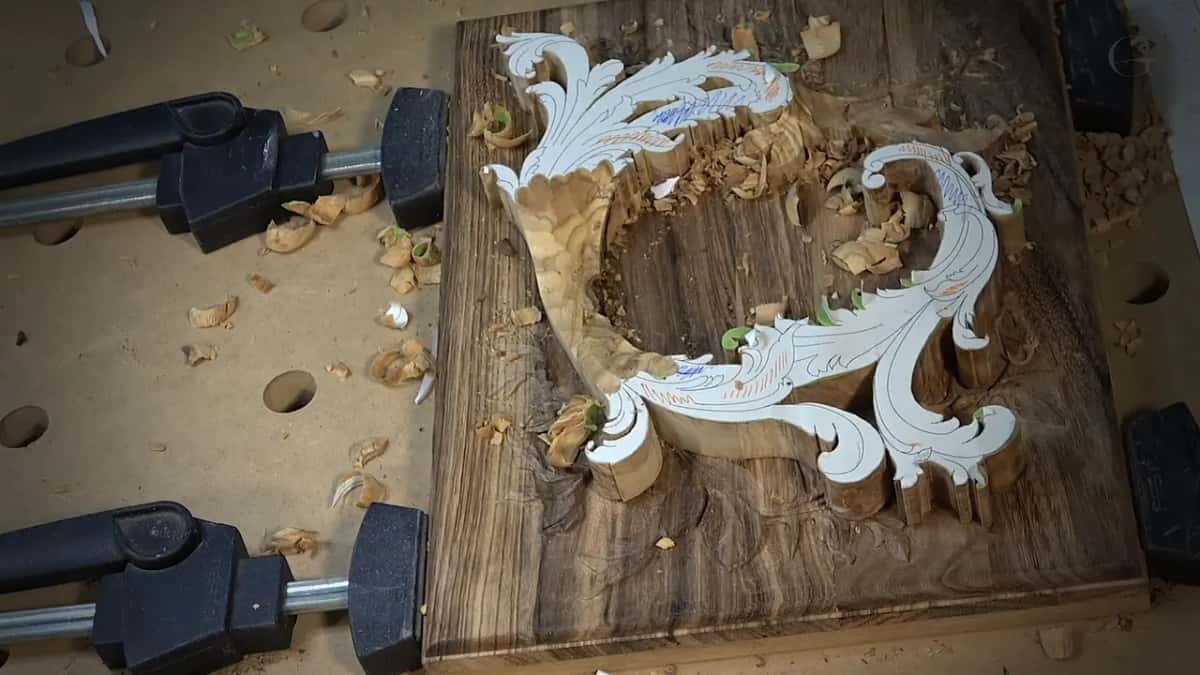
A white paper pattern pasted to a clamped dark board.
The 2023 additions caught the trade by surprise, and the Forest Trends brief on the CITES CoP19 African timber listings sets out what changed. Every date below comes out of that same restricted species table.
| Trade name | Botanical name | CITES appendix and start |
|---|---|---|
| African rosewood, sold as padauk | Pterocarpus | Appendix II, 23 February 2023, all African species of the genus |
| African mahogany | Khaya | Listed the same day in 2023, African wood only |
| Doussie, also called apa | Afzelia | Appendix II dated the same February, and African wood only |
| Bubinga | Guibourtia | Listed 2 January 2017, and it catches finished pieces over 10 kg |
| Afrormosia, also called assamela | Pericopsis elata | Listed 11 June 1992 |
| Red stinkwood | Prunus africana | Appendix II since 1995, and the listing reaches finished wood products too |
| Ayous, sapele, iroko, azobe, wenge | five separate genera | free of CITES entirely |
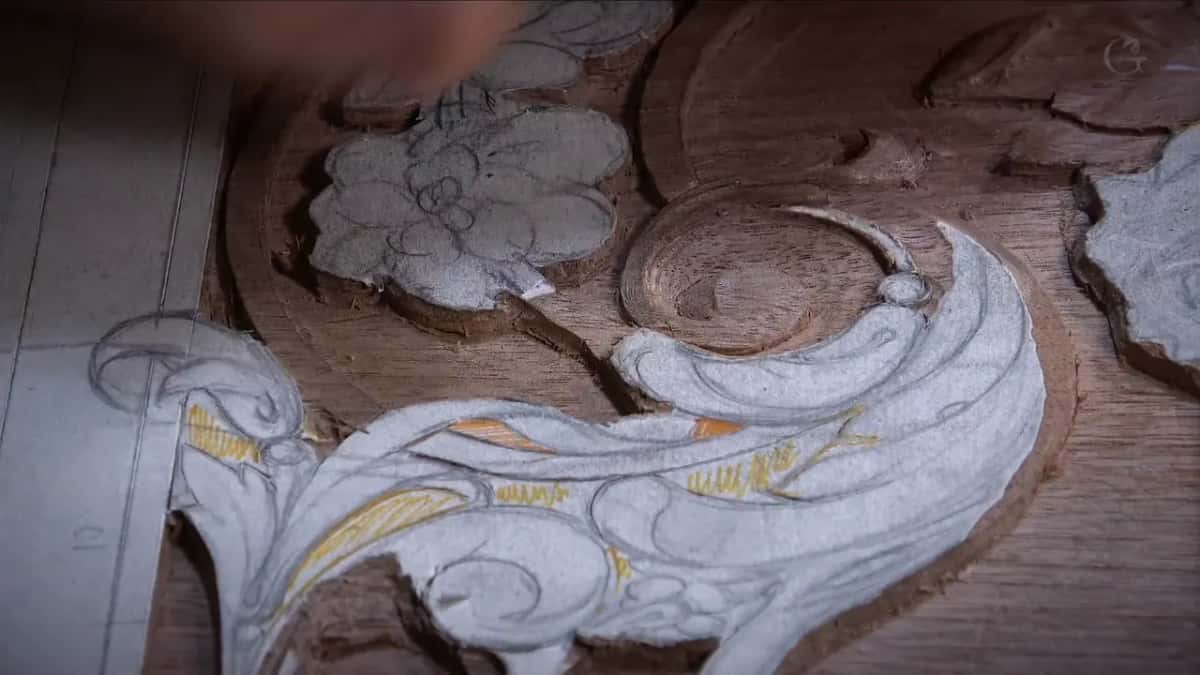
A deep round hollow, with the drawing beside it marked in yellow.
That last row explains why this page sends you to ayous instead of anything grander. Soft, sawn where you live, carrying none of that paperwork. Check any species against that readable table, then against Species Plus, the official lookup run by UNEP-WCMC and the CITES Secretariat, which needs JavaScript to search. The record there is official, and it changes.
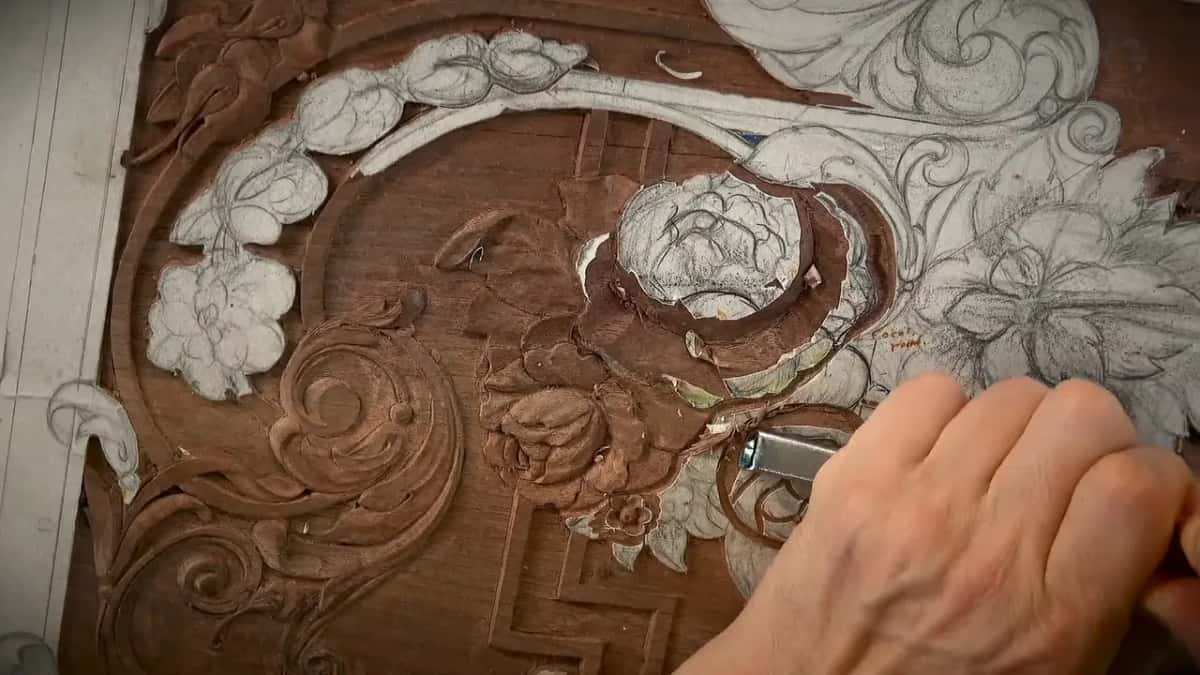
A round boss ringed by a deep trench.
Let me be careful. I carve for a living and I am nobody's lawyer, so you get the documents rather than an opinion. Read them. Then ask a seller for his paperwork, and watch how he answers. South African carvers face a mirror image in the South Africa page, and Icelandic carvers the opposite problem in the Iceland page.
Does a hard board want a different edge on the gouge?
A harder board wants a shorter bevel. Where the local hardwoods mostly run dense, that single fact matters more than any species list I could hand you, so I filmed it.
In that lesson I hold up three copies of the same number 3 gouge, ground three ways, and the whole argument sits there in one hand. A long bevel is what I normally use on my own tools. It also runs thin behind the edge, and that metal becomes really weak at the point. Push that grind into oak or cherry and the steel gives up first.
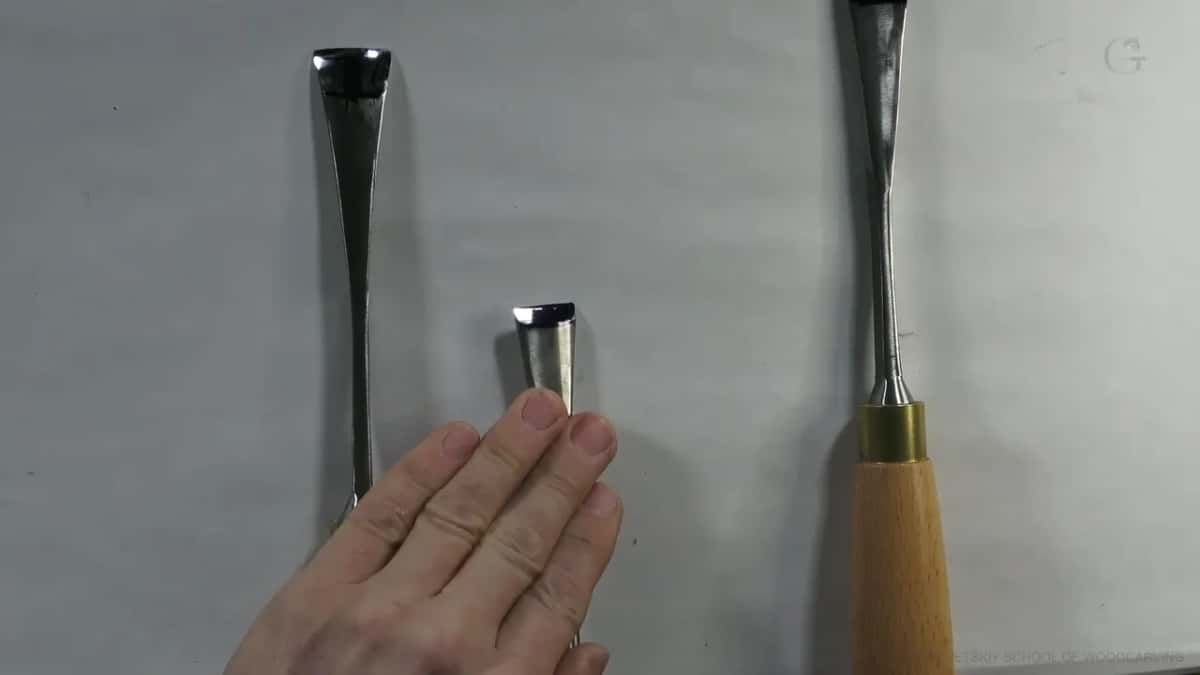
The three gouges from that lesson, bevels to the camera.
Short bevel, I use harder woods, like oak. Sometimes instead of grinding shorter I round the heel away, which keeps the length and still lets my hand stay low. Grind too short and you pay another price. You have to raise your elbow and your shoulder, and if you do that all day long you get some pain. You get tired.
The hard woods I name there are white oak, red oak, brown oak and cherry. Temperate stuff. Iroko and azobe get no verdict from me. Geometry does not care what the tree was called, but you deserve to know which boards I ground for. The tool side has a course at all about tools for wood carving, and the hand side sits in improving your carving technique.
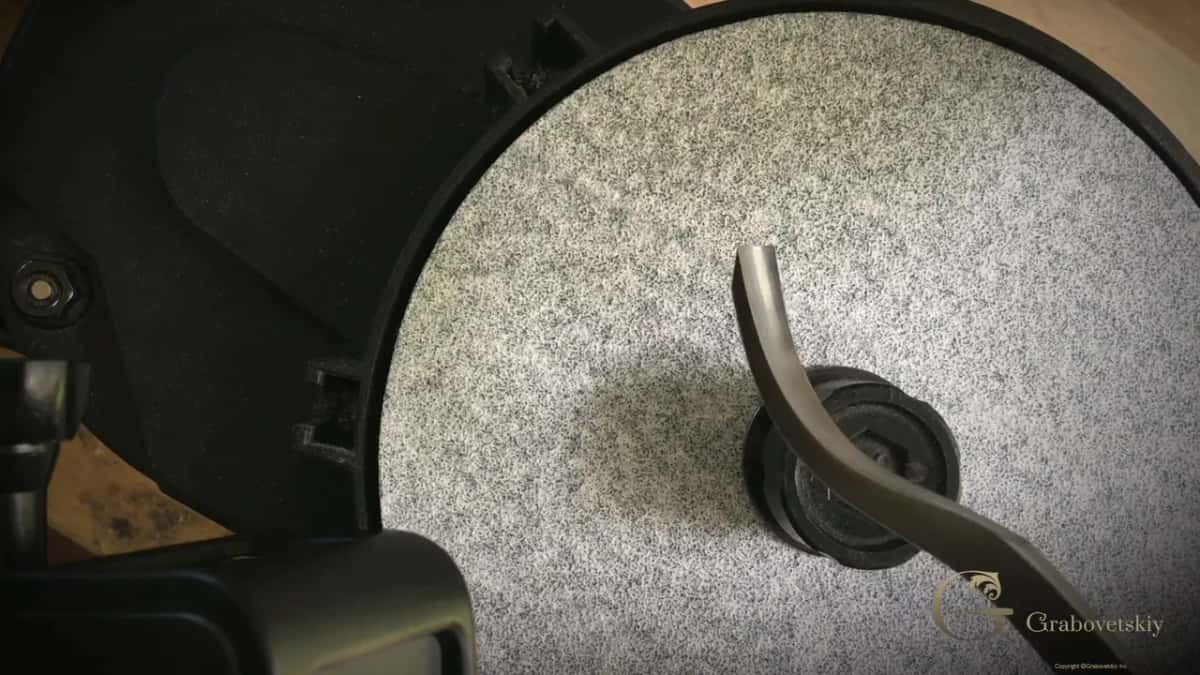
A bent gouge lying on the grey abrasive wheel.
This lands hard on your page, since most of the woods on that Cameroon list are hard ones. For the numbers behind that word I would send anybody to the Wood Handbook from the USDA Forest Service. A denser board is a slower board. I chased the trade-offs in whether denser wood is stronger.
What can I learn from the carvers of the Cameroon Grassfields?
More than you will ever get from a wood list, and that includes this one. Before spending money on timber, go and look at what your own country already carved.
One such piece sits in a museum you can open right now. The Cleveland Museum of Art holds a Bamileke prestige stool, a kuo fo from the Bandjoun Kingdom, possibly made in the 1800s, and notes that bead-covered stools and thrones are among the most common art forms of the Cameroon Grassfields.
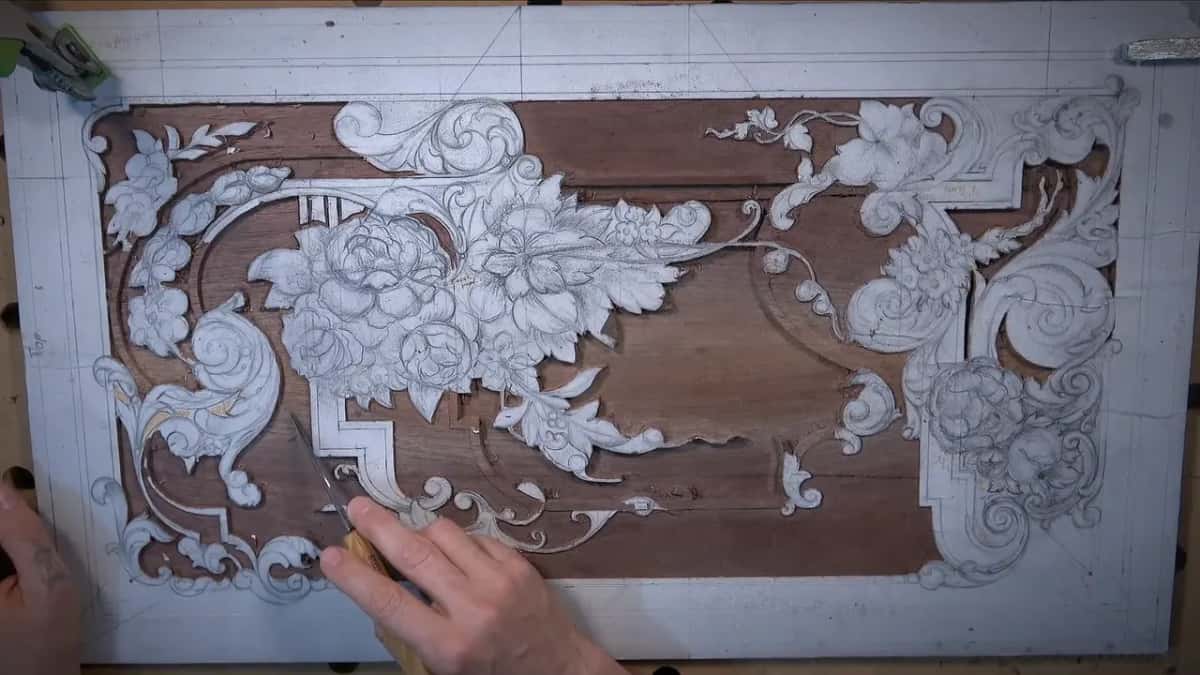
The same panel later, far more ground gone.
Royal objects, carved long before anybody there could have heard my opinion about basswood.
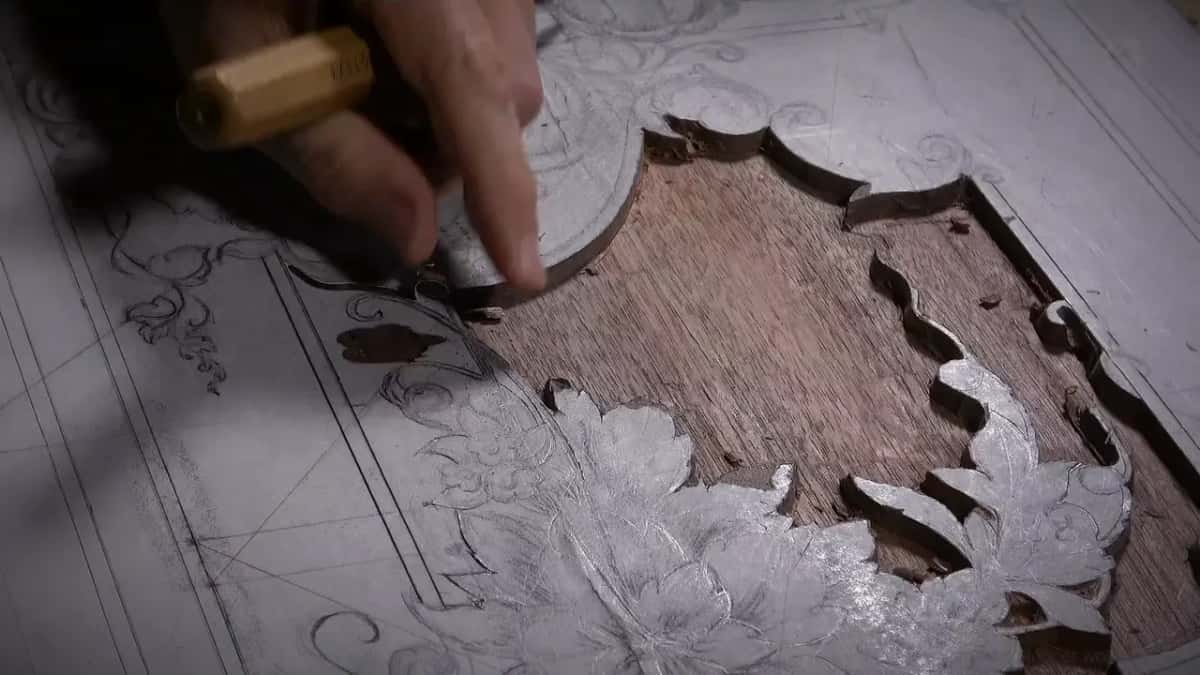
Chisel and mallet taking the ground down to bare dark wood.
I say something similar about the Vikings. Go to 10th century Norway and those people put acanthus movements on their boats. All they had is pretty much just a knife and axe. But they did a really great job, actually, with the knife and axe in wood carving.
My shop is not the price of entry. A piece of wood, some type of table, a sharp edge. I have done lots of projects on the kitchen table, so all you need is a surface, which is the point of carving without much space. The first move gets laid out in how to start learning wood carving.
Why is the local market not the same wood as the export ship?
Two trades run here, side by side, and only one of them is aimed at you. Knowing which one you are standing in changes the price you pay and the questions you ask.
The CIFOR and FAO report on the state of the timber sector in Cameroon describes a large informal domestic sawing sector running alongside the industrial export concessions. So a small sawyer's board and a container bound for a port are not one market. Species overlap. Paperwork and price do not.
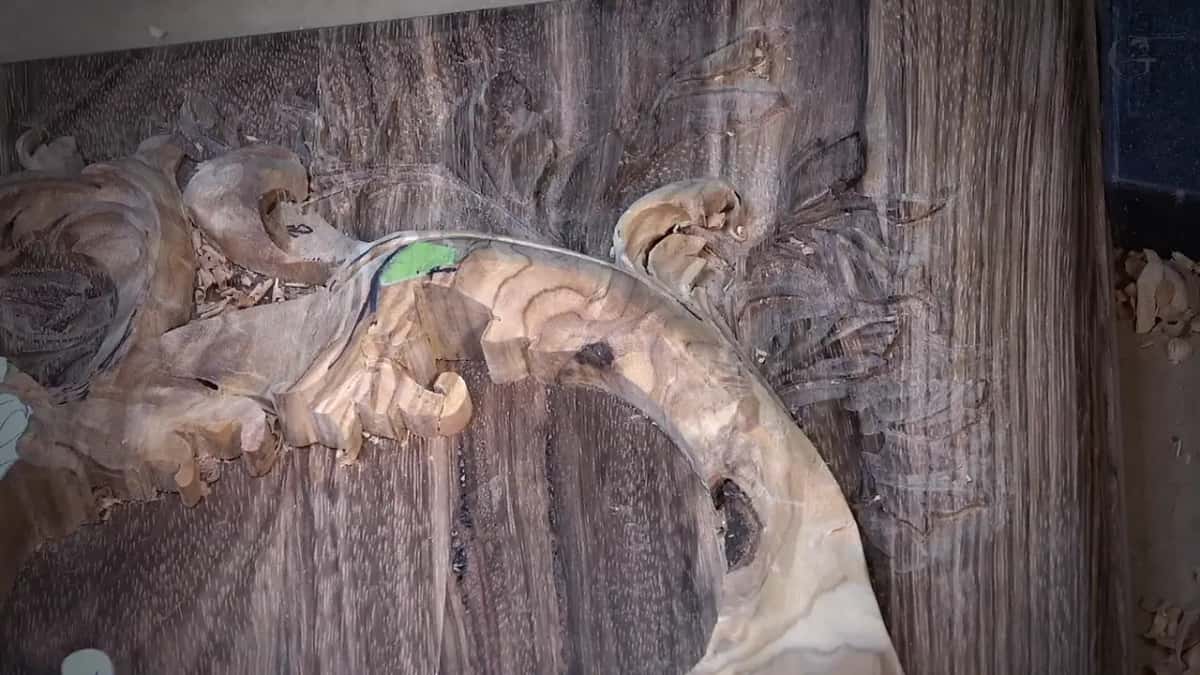
A lighter scroll rising out of dark grain, chips banked left.
Your homework sits right there. The Forest Trends timber legality risk dashboard for Cameroon sets out what legal timber must carry on paper and where the risk of illegality sits. For trade numbers instead of a risk picture, the biennial review statistics from the International Tropical Timber Organization hold the official production and export figures.
The CIFOR-ICRAF Agroforestry Species Switchboard gathers the authoritative databases for one African species.
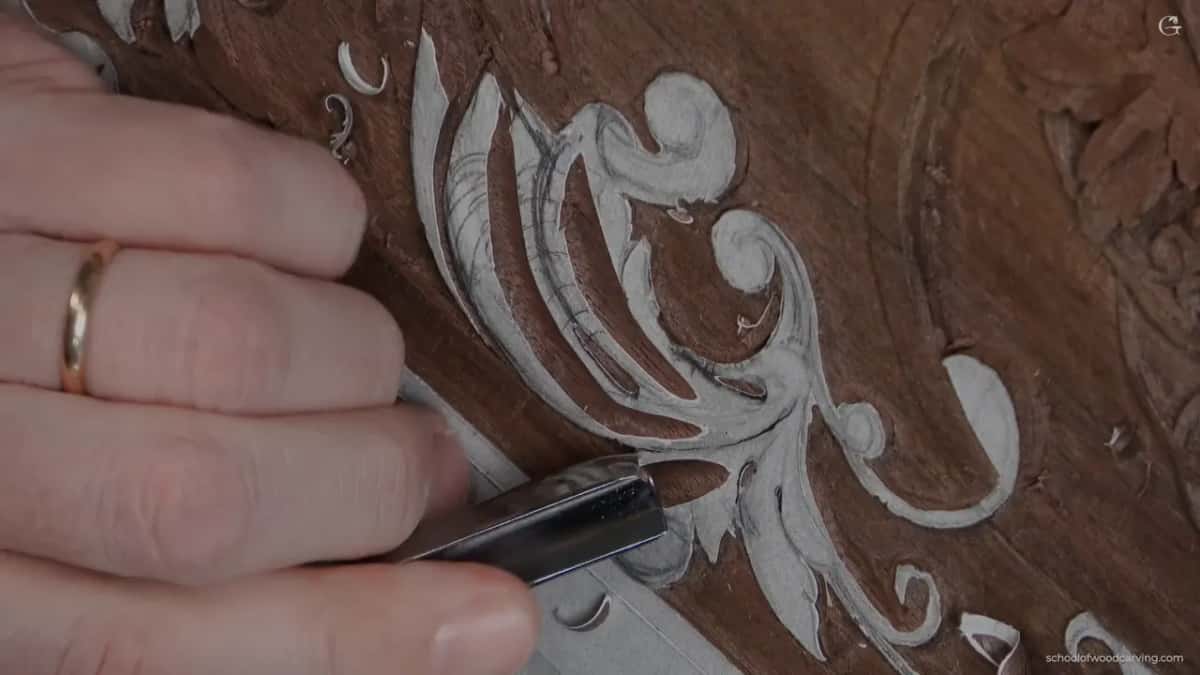
A polished blade against the drawn edge.
Now a human trick that works in any market. Spot somebody selling planks online, find out who is actually selling, and contact them directly. Ask whether they will sell direct with some discount. Most of the time they are just people, business people like everybody else, and they are really open to it.
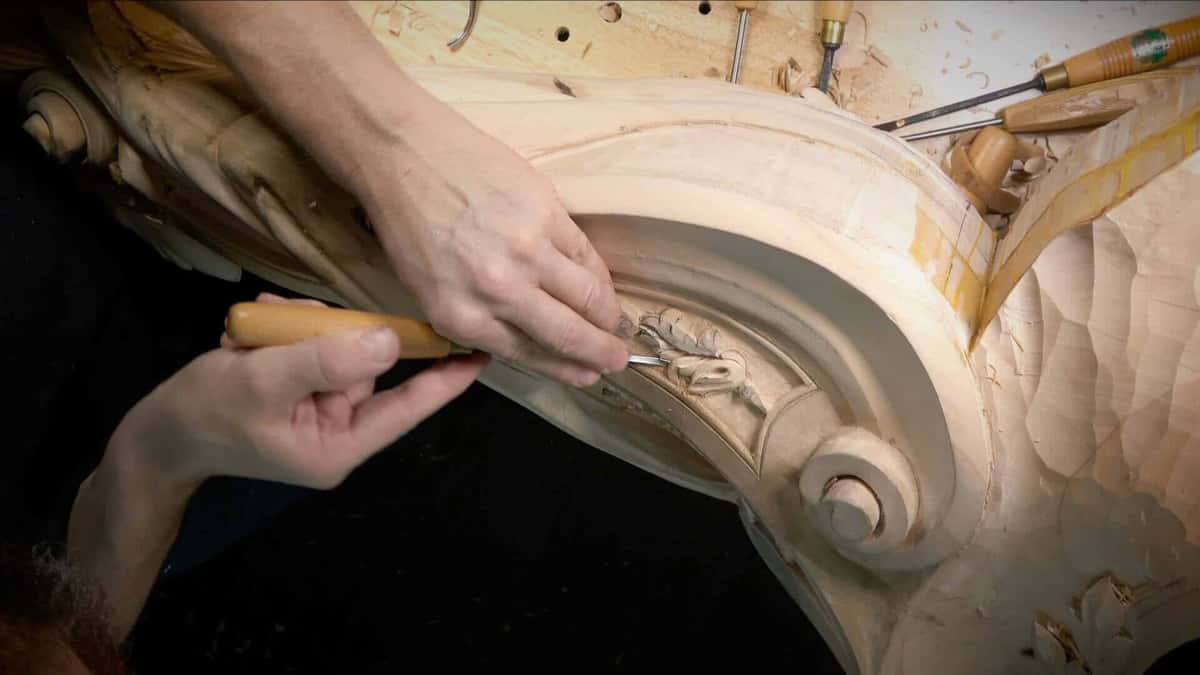
Fine work on a curved rail, gouges racked behind.
One number, and read the label on it. My own hardwood supplier in Florida used to want a 300 dollar minimum order and now wants 500. That is my supplier, in my state, for my wood. No price in Cameroon follows from that. I give it so you know a real yard sells in quantity, and because the first-year cost of carving is mostly wood and steel, and then preparing a rough plank is its own job.
How dry does a board have to be before I carve it?
Dry enough that it has stopped moving, and a kiln-dried board still moves on me. Wet wood carves sweetly and moves on you after the piece is done.
Wood from a lumberyard is usually kiln-dry. They use that big stove and just cook the water out of it. I found that it moves a lot more. Air-drying eliminates that movement, and my own stock is all air-dried. The gap between a kiln and natural dryness is not small.
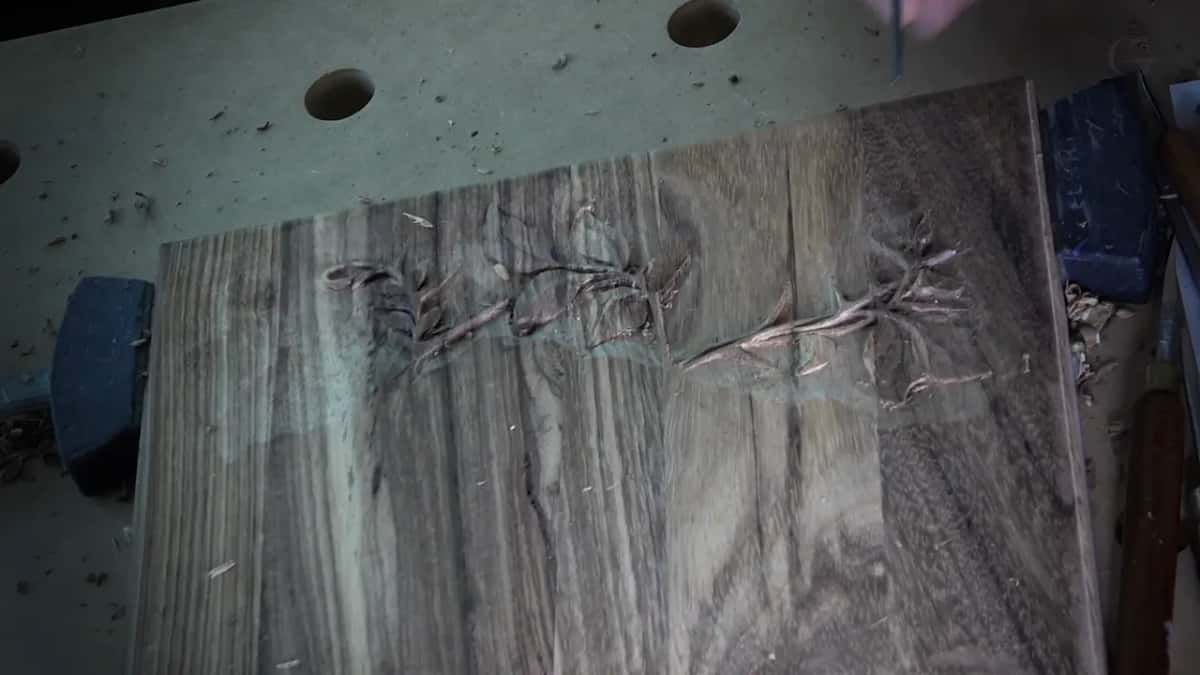
Three small sprigs in shallow relief, almost lost in the streaked grain of the board.
How long is a while, in my shop? Over ten years untouched, for some of it. Twenty years for a few boards I have not opened up. The point is that wood does not read your calendar.
Air-dried stock keeps getting harder to find. Buy wood today and it will likely be kiln-dried, and all the puffiness of the wood is creating the problem you meet later. How much that matters depends on your own air, and the physics is written down in the full Wood Handbook text from the USDA Forest Products Laboratory, in the chapters on moisture relations and shrinkage.
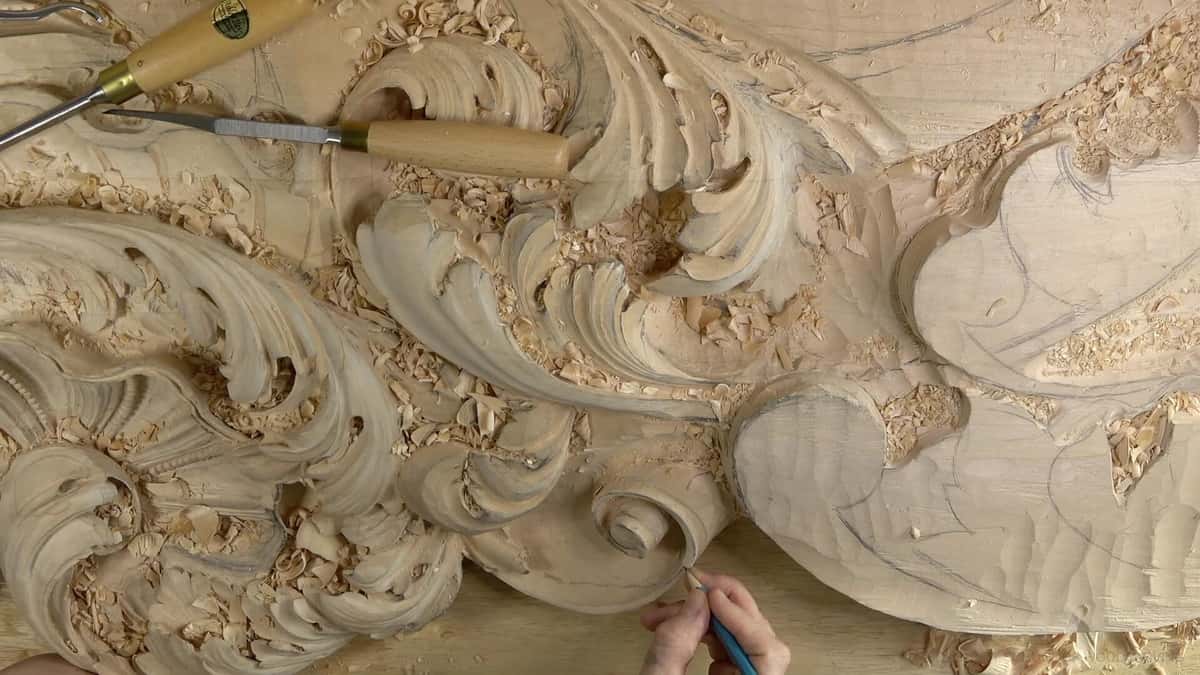
Two gouges laid across a rococo panel, one side still only drawn.
A limit exists at the far end. The hardest board I ever met was hard pine, harvested in the 19th century and dried so long you could not drive a nail in it. Too wet, the board moves. Too dry and it fights you back on every pass. Between those, it carves. Timing gets a page in how long wood takes to dry, with the plain yes-or-no in whether drying is required at all.
My other habit costs nothing. I am careful gluing pieces together and I pay attention to grain, so a big panel will not tear itself apart. So a large carving moving does not keep me awake, and neither does the idea that a thicker board is automatically better.
If you want somebody beside you while your hands learn what a board is telling them, that is what the beginner course was built for. Shall we carve?
Frequently asked questions
Can I carve ayous with hand tools only?
Yes. The obeche entry I linked calls it light and low in density, which is what a hand tool wants. Keep the edge honest and shallow work needs no mallet. The catch is denting, so support the board and rest your weight on the bench.
Is Cameroon ebony banned from export?
Not by CITES. The Appendix II listing for Diospyros from December 2011 covers wood from Madagascar only, the detail most articles get wrong. Cameroon ebony sits under national forest law and its permits instead. Ask your seller for the paperwork, and check the species before money changes hands.
What thickness of board should I look for?
Thin is fine, and thin is cheaper. I once picked a seven eighths board on purpose when two inches was available, purely to prove you can save material. Glue thin boards face to face if you want depth. Watch the grain while you do it, or the panel argues with itself.
Do I need a workshop before I begin?
No, and I mean that literally. Wood, something to rest it on, and decent light will do. Plenty of my own projects happened on a kitchen table. Buying a costly bench before you have carved anything spends a carving budget on furniture.
How do I know when my gouge is sharp enough?
Push it across the grain on a scrap. A sharp edge leaves a face that shines without sanding, and needs no extra force. My own test beats any jig. If I have to lean on the tool, it is telling me to go back to the stone.
Is khaya mahogany a fair second board?
A fair second, yes. Khaya works and carves easily, says The Wood Database, and it is the mahogany that really ships out of West and Central Africa. Watch the CITES side. Khaya went on Appendix II in February 2023, so sawn boards need papers. The Forest Trends brief on that listing says finished carvings are not regulated.
Filed under
- beginner carving woods in Cameroon
- benefits of carving with local wood
- best practices for carving beginners
- best wood types for carving in Cameroon
- Cameroonian wood carving techniques
- characteristics of Cameroonian wood
- common wood types for beginners
- exploring wood carving materials
- famous wood types for carving
- how to select wood for carving
- influences of culture on wood carving
- local artists in Cameroon
- local wood carving schools in Cameroon
- popular woods for carving
- regional wood varieties in Cameroon
- resources for learning wood carving
- tips for beginner wood carvers
- types of carvings in Cameroon
- Understanding Wood for Carving
- where to find quality wood in Cameroon
- wood carving culture in Cameroon